
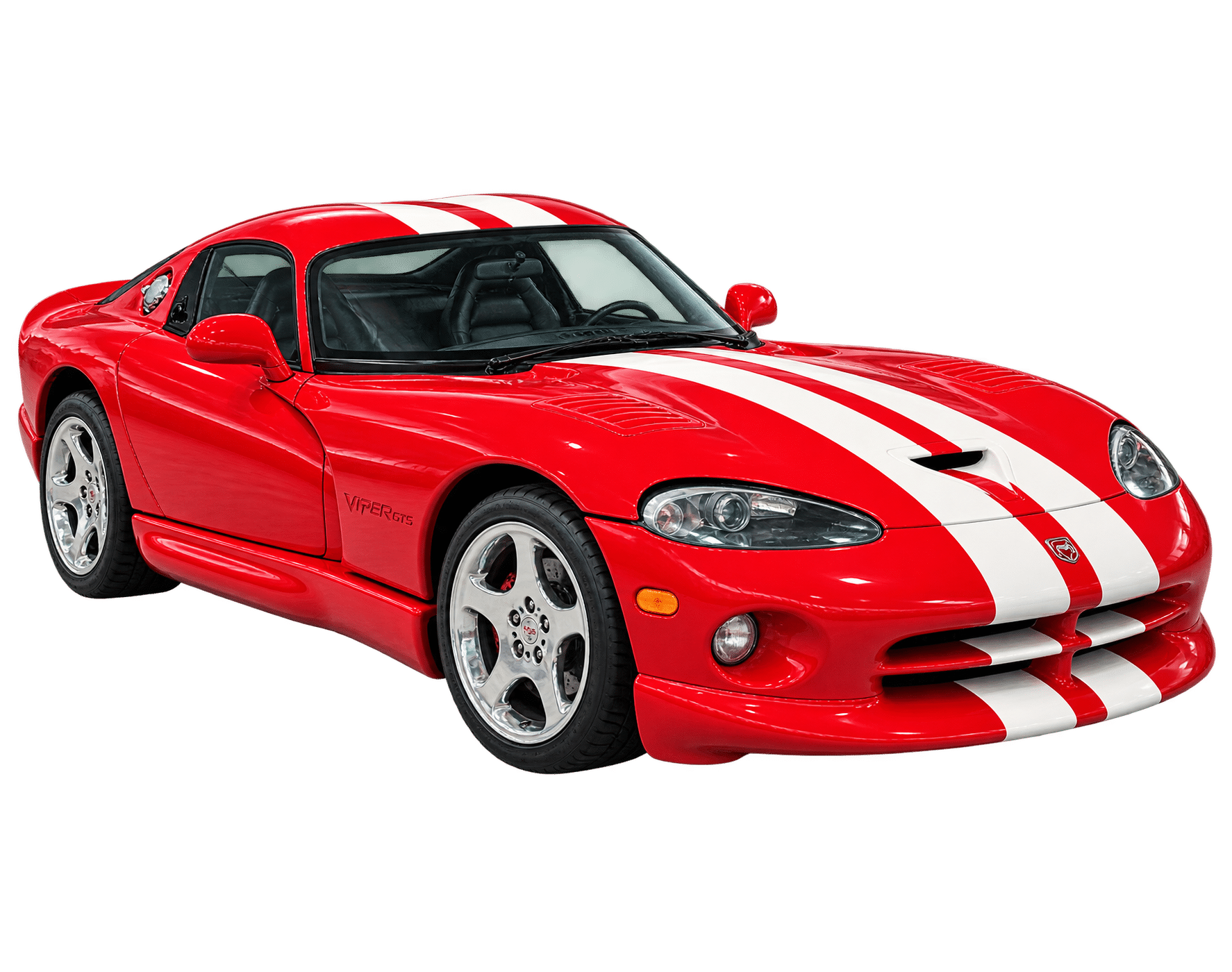
The Dodge Viper, produced from 1992 through 2017, with a production hiatus after 2010, was one of the most uncompromising American sports cars of the modern era. Conceived as a spiritual successor to the Shelby Cobra, it combined an enormous naturally aspirated V10 engine, rear-wheel drive, a six-speed manual transmission and dramatic styling. Even as its engineering became more sophisticated, the Viper retained an unusually direct and demanding driving character.
Across five generations, the Viper evolved from a minimalist 400-horsepower roadster into a 645-horsepower supercar capable of challenging the world’s most accomplished performance cars. Its development included the introduction of the GTS coupe, increasingly powerful engines, major chassis improvements and the track-focused ACR models. Successful international racing programs, including three consecutive class victories at Le Mans, established that the Viper was considerably more than an exercise in American horsepower.
Discontinued after the 2017 model year, the Viper occupies a distinctive position in automotive history. Its combination of naturally aspirated V10 power, manual-only transmission, relatively limited production and exceptional performance has made it increasingly attractive to collectors.
Origins: A Modern Shelby Cobra
The Viper originated during the late 1980s, when Chrysler executives sought a dramatic performance car that could revitalize the company’s sporting image. Chrysler president Bob Lutz championed the project, envisioning a modern interpretation of the Shelby Cobra built around an exceptionally powerful engine and a lightweight, minimalist chassis.
Chrysler designer Tom Gale and his team developed a striking concept featuring a long hood, compact cockpit, muscular fenders and side-exit exhaust pipes. Carroll Shelby’s involvement reinforced the connection to the original Cobra, although the Viper would ultimately become a much larger and more powerful automobile.
The Viper RT/10 concept debuted at the 1989 Detroit Auto Show, generating enough enthusiasm to convince Chrysler to approve production. The resulting car retained much of the concept’s appearance, an unusual achievement for a vehicle with such radical proportions and specifications.
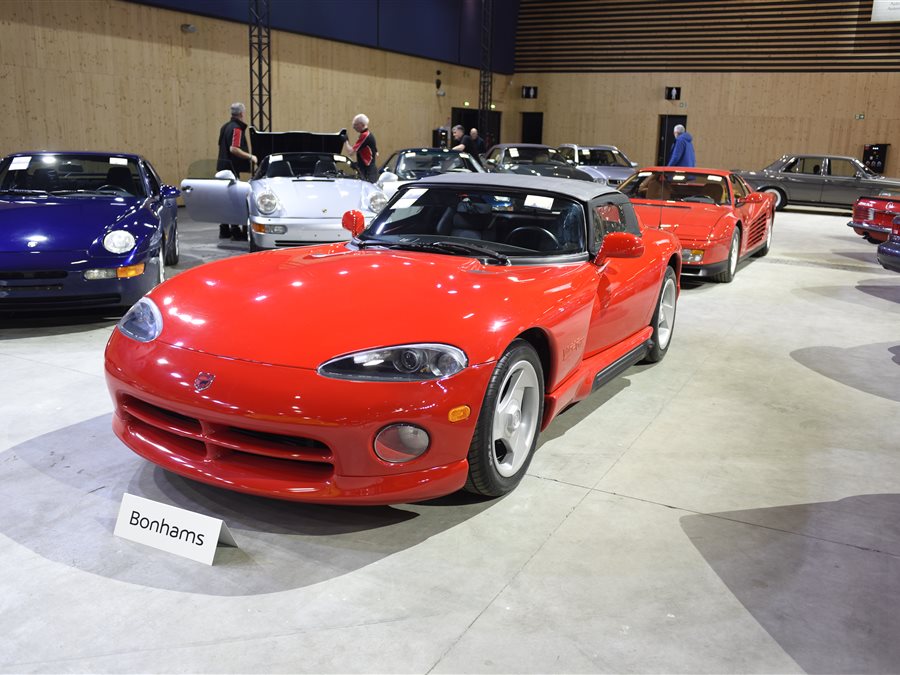
1992 Dodge Viper RT/10 convertible, from an auction in Paris on February 1st, 2023
First Generation: 1992–95 Viper RT/10
The production Viper RT/10 arrived for the 1992 model year, immediately establishing itself as one of America’s most extreme road cars. It featured a long hood, wide rear fenders, side-exit exhaust and minimal weather protection. Early examples lacked exterior door handles, conventional roll-up windows, air conditioning and anti-lock brakes.
The car also had no traction control or electronic stability system. Its powerful engine, wide tires and relatively short wheelbase demanded considerable driver skill, particularly on wet pavement or during abrupt throttle application.
The original Viper used an 8.0-liter naturally aspirated V10 producing 400 horsepower and 465 lb-ft of torque. The engine was developed with assistance from Lamborghini, then owned by Chrysler, and featured an aluminum block and cylinder heads. Although its architecture was related to Chrysler’s truck-engine program, the Viper engine was extensively redesigned for high-performance use.
The V10 employed a pushrod valvetrain with two valves per cylinder, emphasizing tremendous low- and midrange torque rather than high engine speeds. It was paired with a Borg-Warner T-56 six-speed manual transmission, establishing the mechanical formula that would define every production Viper.
The RT/10 used a tubular steel chassis with composite body panels and independent double-wishbone suspension at all four corners. Performance was exceptional for 1992, with 0–60 mph acceleration in approximately 4.5 seconds and a maximum speed around 165 mph.
The original Viper was physically demanding, noisy and difficult to maneuver, but those characteristics were central to its appeal. It offered a driving experience increasingly uncommon among contemporary sports cars.
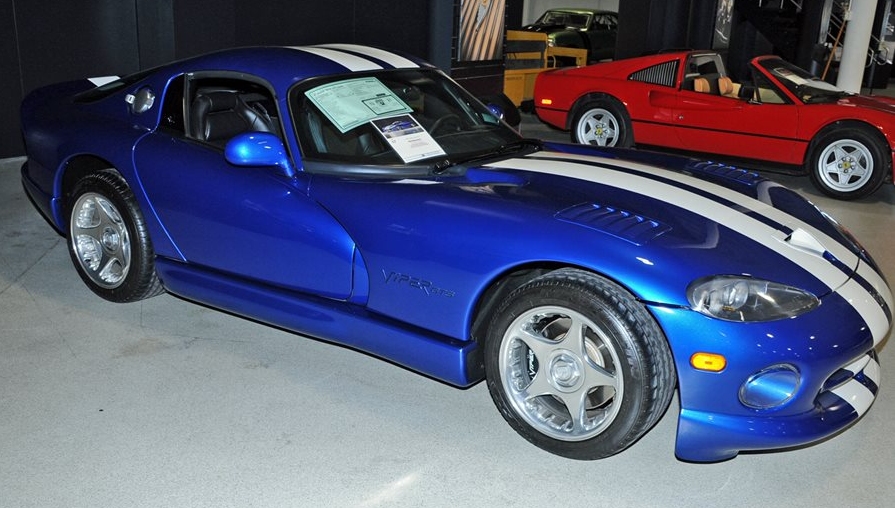
1996 Dodge Viper GTS coupe, from an auction in Scottsdale on January 23rd, 2021
Second Generation: 1996–2002
The second-generation Viper, introduced in 1996, retained the original architecture but incorporated substantial improvements to the engine, chassis and equipment. The most important development was the introduction of the Viper GTS coupe, which broadened the model’s appeal and provided the foundation for its successful international racing program.
The GTS featured a fixed roof, distinctive double-bubble roofline and fastback rear body inspired partly by the Shelby Daytona Coupe. Its improved aerodynamics and greater structural rigidity made it more capable at high speeds than the original roadster.
The revised 8.0-liter V10 produced 450 horsepower and 490 lb-ft of torque in the GTS, while the RT/10 subsequently received similar improvements. The coupe could reach approximately 185 mph, placing it among the fastest production cars of its era.
The GTS also offered conventional windows, improved weather protection, air conditioning and a more practical interior. Although still demanding, it was considerably more usable than the original RT/10.
The second-generation roadster continued alongside the coupe through 2002. Later RT/10 models benefited from increased engine output, improved equipment and revised chassis components while preserving the open-air character of the original.
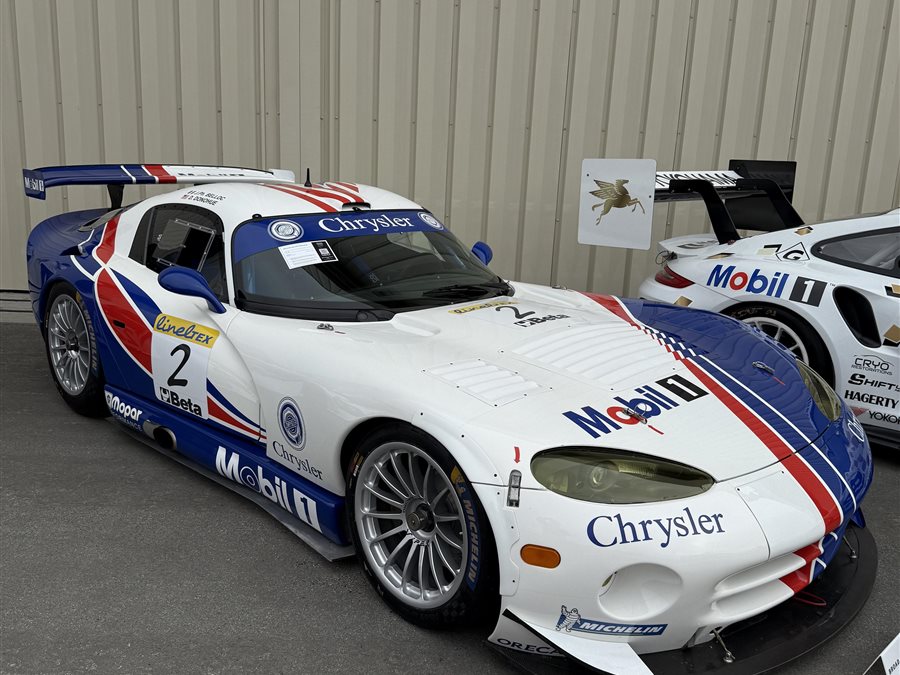
1999 Dodge Viper GTS-R ORECA Works racer, from an auction at the Monterey Jet Center on August 13th, 2025
The Viper GTS-R and International Racing Success
The Viper’s reputation changed dramatically during the late 1990s through the success of the Viper GTS-R, developed with assistance from specialist racing organizations including Oreca and Reynard.
The GTS-R used a heavily modified V10, lightweight construction and extensive aerodynamic development. It competed in international GT racing, including the FIA GT Championship and major endurance events.
The Viper achieved three consecutive class victories at the 24 Hours of Le Mans in 1998, 1999 and 2000, establishing itself as a serious competitor to Porsche, Ferrari and other established racing manufacturers.
The program also demonstrated the durability and performance potential of the V10 engine. Its success became an important part of the Viper’s identity and helped establish the model’s credibility in international motorsport.
The 1998 Viper GT2 Championship Edition
To commemorate the GTS-R’s racing achievements, Dodge introduced the 1998 Viper GT2 Championship Edition, a limited-production version of the GTS.
The GT2 featured white paint with blue racing stripes, distinctive aerodynamic components, special interior trim and an engine producing approximately 460 horsepower. Only 100 examples were built.
Its limited production, distinctive appearance and direct connection to the Viper’s international racing success have made the GT2 one of the most collectible second-generation variants.
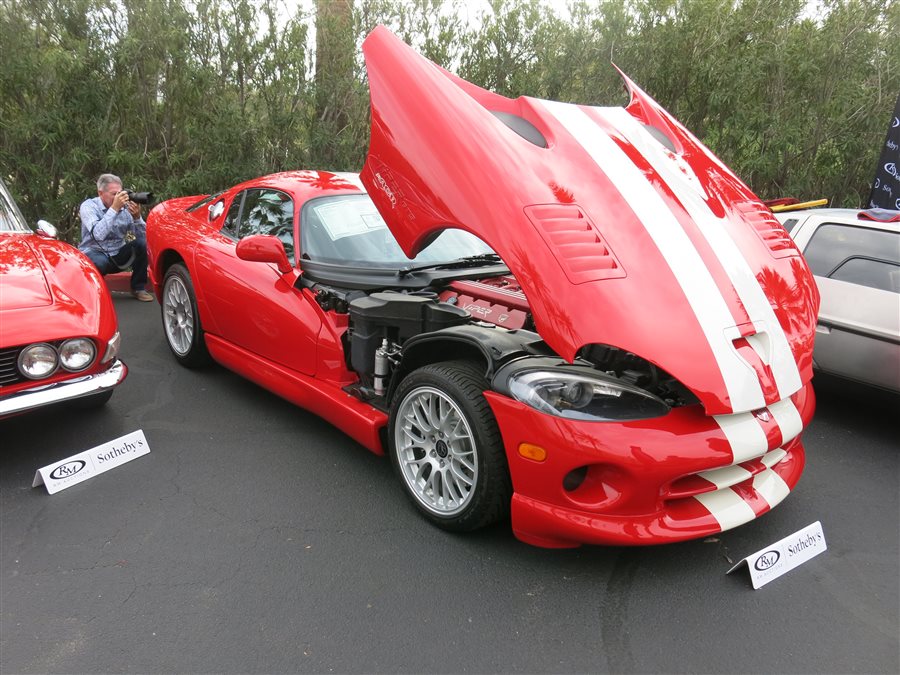
2002 Dodge Viper ACR Final Edition coupe, from an auction in Arizona on January 16th, 2020
The 1999–2002 Viper ACR
The Viper ACR, introduced for 1999, was a track-oriented version of the GTS. The designation stood for American Club Racer, reflecting its intended use in club racing and track events.
Rather than substantially increasing engine output, Dodge concentrated on reducing weight and improving handling. The ACR incorporated specialized suspension components, lightweight wheels and reduced comfort equipment.
The ACR established a tradition of track-focused Vipers that would continue through later generations. Its emphasis on suspension tuning and mechanical grip distinguished it from standard models, which were designed primarily for high-performance road use.
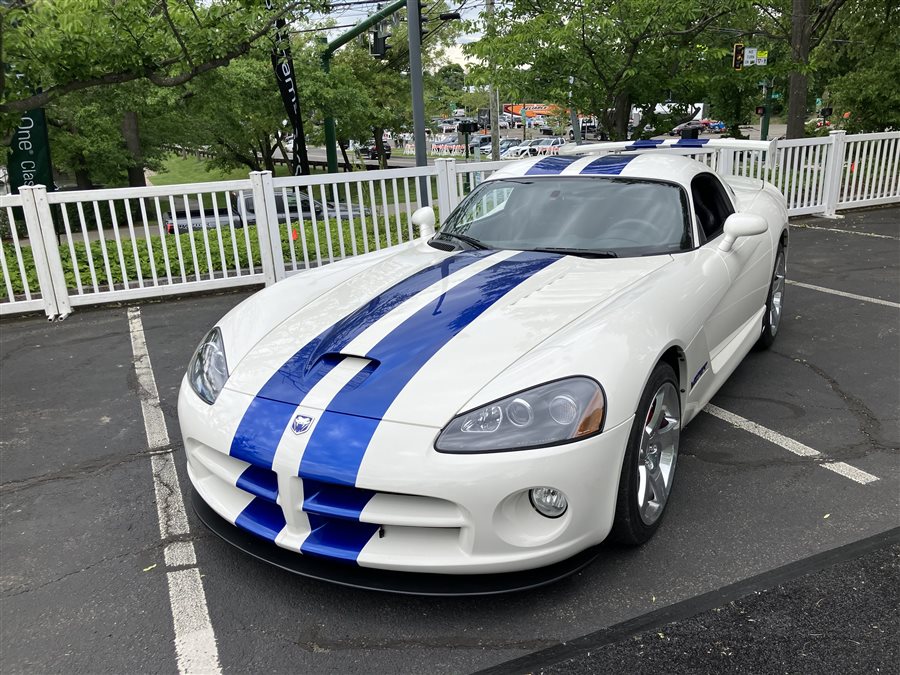
2006 Dodge Viper SRT-10 VOI.9 Edition coupe, from an auction in Greenwich on May 31st, 2026
Third Generation: 2003–06 Viper SRT-10
The third-generation Viper, introduced for 2003, represented the first complete redesign of the model. Developed by Chrysler’s Street and Racing Technology organization, it was marketed as the Viper SRT-10.
The new car featured sharper styling, a revised chassis, improved braking and a more modern interior. The original RT/10 designation was discontinued, with the roadster becoming the primary body style at launch.
Engine displacement increased to 8.3 liters, with output rising to 500 horsepower and 525 lb-ft of torque. The V10 retained its naturally aspirated pushrod architecture, delivering enormous torque throughout the operating range.
The SRT-10 could accelerate from 0–60 mph in approximately four seconds and approach 190 mph. Despite its improved refinement, it remained a demanding sports car with a heavy clutch, substantial torque and limited electronic driver assistance.
For 2006, Dodge introduced the SRT-10 Coupe, restoring the fixed-roof configuration popularized by the earlier GTS. The coupe featured a double-bubble roof, fastback styling and improved aerodynamic performance.
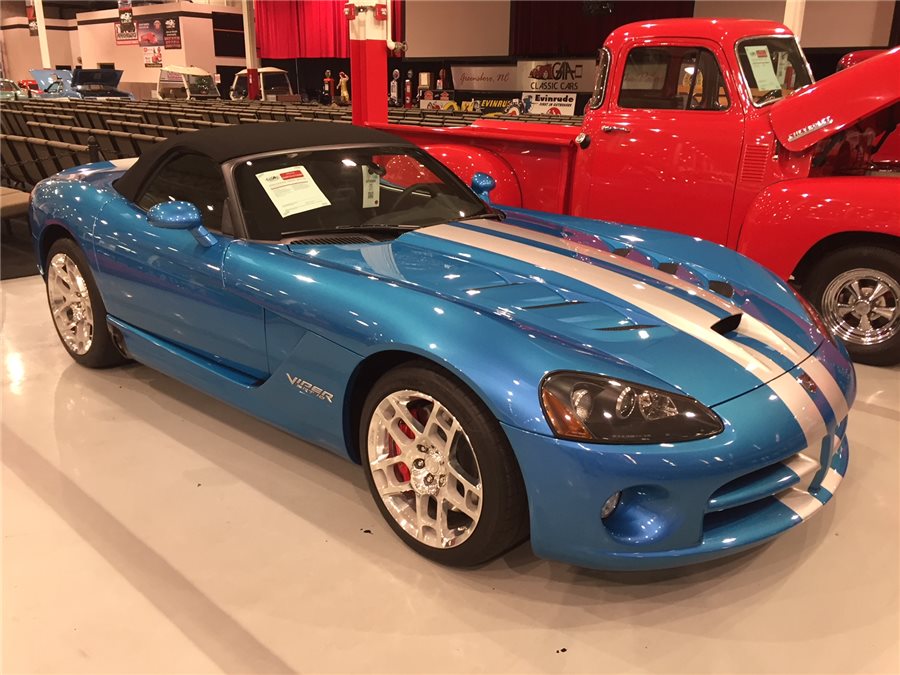
2008 Dodge Viper SRT-10 convertible, from an auction on March 1st, 2018
Fourth Generation: 2008–10
The fourth-generation Viper, introduced for 2008, retained much of the third-generation body and chassis architecture but incorporated major engine and drivetrain improvements.
The V10 increased to 8.4 liters, producing 600 horsepower and 560 lb-ft of torque. Revised cylinder heads, variable valve timing and improved induction and exhaust systems substantially increased performance while preserving the engine’s naturally aspirated character.
A revised six-speed manual transmission, improved clutch and updated suspension components accompanied the engine changes. The resulting Viper was capable of competing with considerably more expensive European supercars in acceleration and track performance.
Production continued through 2010, when Chrysler temporarily discontinued the model. Limited-production Final Edition cars commemorated the end of this phase of Viper manufacturing.
The 2008–10 Viper ACR
The 2008 Viper ACR transformed the already formidable SRT-10 Coupe into one of the most capable track-oriented production cars of its era.
The ACR retained the 600-horsepower V10 but incorporated a large adjustable rear wing, front splitter, revised aerodynamic components, adjustable suspension and specialized tires.
Its development emphasized lap times rather than maximum straight-line speed. The aerodynamic equipment generated substantial downforce, while the suspension and tires allowed the car to exploit its enormous power more effectively.
In 2008, the Viper ACR established a production-car lap record at the Nürburgring Nordschleife. Then, a 2010 Dodge Viper ACR Hardcore set a time of 7:12.13 in September 2011, which made it the fastest production car on the track at the time. Later, a community-funded effort with a 2017 Gen 5 ACR Extreme achieved a 7:01.3 lap time in 2017 before experiencing a tire blow-out.
These achievements significantly enhanced the Viper’s international reputation.
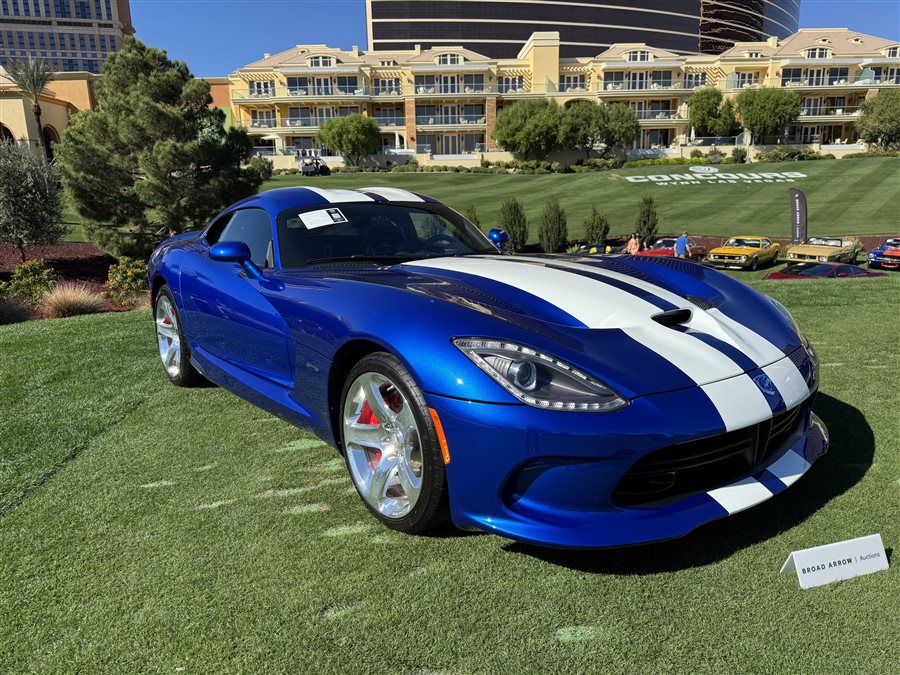
2013 Dodge Viper coupe, from an auction in Las Vegas on October 31st, 2025
Fifth Generation: 2013–17
The fifth-generation Viper, introduced for the 2013 model year, was the most sophisticated version of the car. Initially marketed under the SRT brand, it returned to Dodge branding for 2015.
The redesigned body revived several styling themes from the original GTS, including a long hood, double-bubble roof and muscular rear fenders. Extensive use of aluminum and composite materials helped control weight, while the chassis incorporated major structural improvements.
The 8.4-liter V10 initially produced 640 horsepower and 600 lb-ft of torque, increasing to 645 horsepower for 2015. The engine retained its naturally aspirated pushrod design and was paired exclusively with a six-speed manual transmission.
For the first time, the Viper incorporated modern electronic stability control and traction management, making its enormous performance more accessible without fundamentally changing its character.
The fifth-generation Viper could accelerate from 0–60 mph in approximately 3.5 seconds, depending upon conditions and specification, while certain versions were capable of exceeding 200 mph.
The range included the standard Viper, the more luxurious GTS and the intermediate GT, which offered additional comfort and performance equipment.
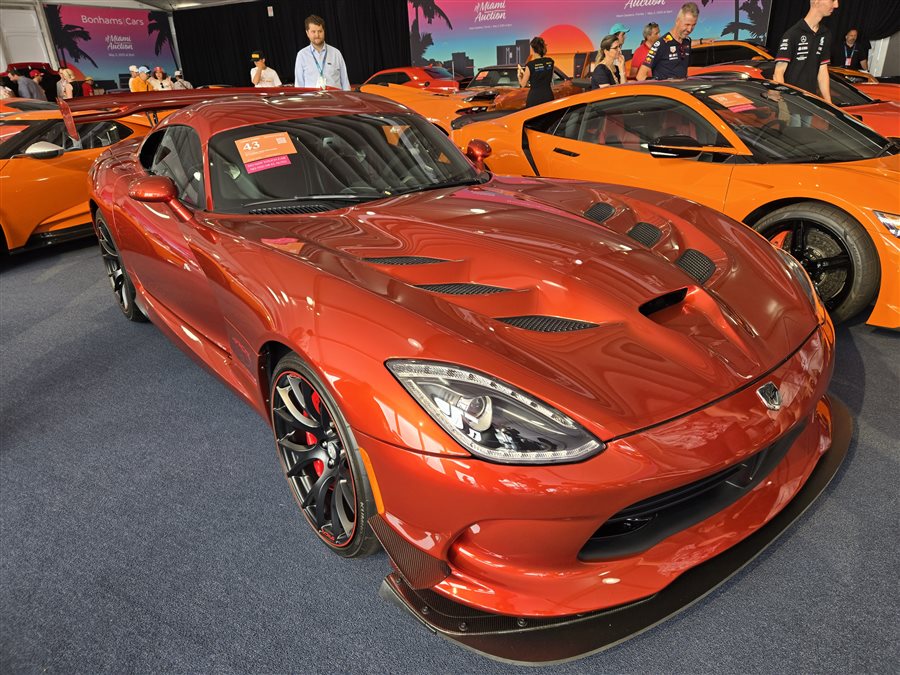
2016 Dodge Viper ACR coupe, from an auction in Miami on May 3rd, 2025
The 2016–17 Viper ACR
The 2016–17 Viper ACR represented the ultimate track-focused development of the model. It retained the 645-horsepower V10 but incorporated extensive aerodynamic, suspension and braking improvements.
The optional Extreme Aero Package included a massive rear wing, aggressive front splitter, additional aerodynamic elements and a rear diffuser. The package generated exceptional downforce, allowing the ACR to achieve extraordinary cornering and braking performance.
Adjustable suspension, specialized tires and high-performance brakes further emphasized circuit capability. The ACR was considerably less comfortable than standard Vipers, but its performance rivaled that of much more expensive track-focused supercars.
The final ACR is particularly significant because it represents the highest level of factory-developed Viper handling performance before production ended in 2017.
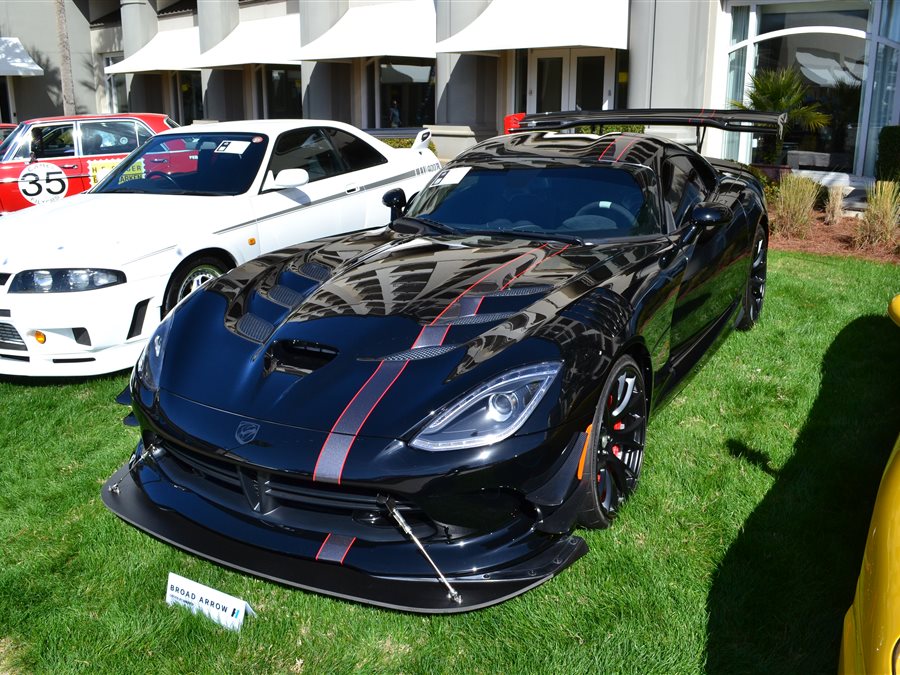
2017 Dodge Viper Voodoo II Edition ACR Extreme coupe, from an auction at Amelia Island on March 6th, 2026
Chassis, Suspension and Handling
Throughout its production history, the Viper used a tubular steel chassis with lightweight composite body panels. Later generations incorporated substantial structural improvements to increase rigidity and reduce weight.
All Vipers used independent double-wishbone suspension at all four corners. The basic arrangement remained consistent, but suspension geometry, spring rates, dampers and electronic systems evolved considerably.
Early cars emphasized mechanical grip and direct feedback, with virtually no electronic assistance. Their enormous torque and wide rear tires required careful throttle control, particularly in poor weather.
Later models benefited from improved suspension tuning, larger brakes and more sophisticated electronic systems. The fifth-generation Viper was substantially more predictable than the original RT/10, although it remained a demanding high-performance car.
The ACR variants were developed specifically for maximum track capability, with specialized suspension and aerodynamic packages that significantly increased performance at the expense of everyday comfort.
Brakes, Steering and Tires
The original Viper lacked anti-lock brakes, a notable omission for a car capable of such high speeds. ABS became standard for 2001, improving braking control and safety.
Later generations incorporated larger brakes, improved calipers and more advanced electronic systems. Track-focused ACR models used specialized braking components designed to withstand repeated high-speed stops.
Steering remained direct and relatively heavy, particularly on early cars. The Viper’s wide tires and substantial mechanical grip contributed to steering effort, while later suspension revisions improved precision and stability.
Correct tire specification is especially important because the Viper’s enormous torque can overwhelm inappropriate or aged tires. Tire condition, alignment and suspension settings have a major effect on handling and safety.
Interior and Ergonomics
The Viper’s interior evolved substantially during its production history. The original 1992 RT/10 was deliberately minimalist, with limited weather protection, basic instrumentation and few comfort features.
The 1996 GTS introduced a more conventional enclosed cockpit, improved seats and additional equipment. The 2003 SRT-10 brought a redesigned dashboard and better ergonomics, while the 2013 fifth-generation Viper incorporated substantially improved materials, digital instrumentation and more supportive seats.
Despite these developments, the Viper remained less practical than many contemporary sports cars. Wide door sills, a low seating position, limited luggage space and substantial cabin heat were persistent characteristics.
The later cars are considerably more comfortable, but none completely abandoned the Viper’s performance-first philosophy.
Engine Reliability and Maintenance
The Viper’s V10 is generally robust when properly maintained, but its enormous displacement and specialized construction require careful attention.
Cooling-system condition is particularly important. Radiators, hoses, water pumps and cooling fans should be inspected regularly, especially on cars used for track events. Overheating can cause expensive engine damage.
Early engines can develop oil leaks, gasket problems and age-related cooling-system issues. Later engines incorporated improvements, but neglected maintenance remains a significant concern.
The V10’s pushrod architecture is relatively straightforward compared with some high-revving European engines, although specialized parts and limited production can make major repairs expensive.
A comprehensive service history is especially valuable, particularly for cars that have been modified or used extensively on racetracks.
Clutch, Transmission and Differential
The Viper’s six-speed manual transmission is generally durable, but its enormous torque places substantial demands on the clutch and drivetrain.
Hard launches, aggressive driving and track use can accelerate clutch wear. Replacement is expensive because of the labor required, making clutch condition an important pre-purchase consideration.
Transmission synchronizers, bearings and shift mechanisms should be checked for excessive wear. A properly maintained gearbox should shift positively without grinding or difficulty engaging gears.
The rear differential and half-shafts also experience significant loads. Cars used for drag racing or repeated hard launches may develop worn differential components, damaged joints or excessive drivetrain backlash.
Bodywork and Accident Damage
The Viper’s composite body panels resist conventional rust but can be expensive to repair or replace. Cracks, mismatched panel gaps and evidence of poor repairs should be investigated carefully.
The underlying steel chassis can corrode, particularly on cars exposed to road salt or prolonged moisture. Suspension mounting points and structural components require careful inspection.
Accident damage is a significant concern because the Viper’s high performance can lead to serious crashes. Poorly repaired chassis or suspension components can compromise handling and safety.
Replacement body panels and trim components can be difficult to obtain for certain generations, particularly limited-production models.
Understanding the Major Dodge Viper Variants
- Viper RT/10 (1992–95): Original roadster with 8.0-liter V10 producing 400 horsepower and minimal electronic assistance.
- Viper RT/10 (1996–2002): Revised roadster with improved engine output, chassis and equipment.
- Viper GTS (1996–2002): Fixed-roof coupe with 450-horsepower 8.0-liter V10 and distinctive double-bubble roof.
- Viper GT2 Championship Edition (1998): Racing-inspired GTS with approximately 460 horsepower. Only 100 built.
- Viper GTS ACR (1999–2002): Track-oriented GTS with revised suspension and lightweight equipment.
- Viper SRT-10 Roadster (2003–06): Redesigned third-generation model with 8.3-liter V10 producing 500 horsepower.
- Viper SRT-10 Coupe (2006): Fixed-roof third-generation model with improved aerodynamics.
- Viper SRT-10 (2008–10): Updated model with 8.4-liter V10 producing 600 horsepower.
- Viper ACR (2008–10): Track-focused version with extensive aerodynamic and suspension modifications.
- Viper Final Edition (2010): Limited-production commemorative version marking the temporary end of production.
- SRT Viper (2013–14): Fifth-generation redesign with 8.4-liter V10 producing 640 horsepower.
- Dodge Viper (2015–17): Final-generation model with 645-horsepower V10 and revised equipment.
- Viper GTS and GT (2013–17): More extensively equipped fifth-generation versions emphasizing improved comfort and usability.
- Viper ACR (2016–17): Ultimate track-focused Viper with extensive aerodynamic equipment, adjustable suspension and 645-horsepower V10.
What Matters to Collectors
For any Viper, originality, accident history, maintenance documentation and evidence of track use are among the most important considerations.
The 1992–95 RT/10 has particular historical significance as the original Viper. Early examples in factory-correct condition are increasingly appreciated for their uncompromising character and connection to the model’s introduction.
The 1996–2002 GTS is especially desirable because of its iconic styling, improved performance and racing associations. Limited-production versions such as the 1998 GT2 Championship Edition and 1999–2002 ACR have additional collector appeal.
The 2008–10 ACR is highly regarded for its Nürburgring achievements and track capability, while the 2016–17 ACR represents the ultimate performance development of the model.
The final-generation Vipers are attractive because they combine the highest engine output with improved chassis engineering and modern electronic systems.
Cars with original drivetrains, factory-correct equipment and comprehensive service records generally command greater collector interest than heavily modified examples.
Important Sales Reviewed by SCM Experts
In each month’s issue for the past 38 years, SCM’s analysts have reviewed 5 to 7 significant cars sold at auction, and discuss what options, history, or details made that particular more or less valuable. They give their expert opinion on the market for these cars, and whether this car was well bought or well sold. If you’re thinking of purchasing a Dodge Viper, you’ll likely find these profiles critical in helping you make the right decision. Each of the following is an article from our print magazine on a Dodge Viper sold at auction.
 2013 Dodge SRT Viper GTSFollowing discontinuation of the fourth-generation Dodge Viper in 2010, the Mopar fan favorite returned to mark a new chapter in 2013. Dodge whet the appetite of enthusiasts once again with the introduction of a fifth-generation car — this time carrying a new name. The SRT Viper broadened the rear-wheel-drive halo car’s rough-cut appeal. Available in […]Read more
 2008 Oreca Dodge Viper GT3Originally built in 2008, this Viper GT3 was initially raced in the British GT by Aaron Scott and Craig Wilkins. It was subsequently repurposed for the 2011–14 Dutch Supercar series and appeared in the U.K. again in 2018 to contest the GT Cup in the hands of David Krayem and Speedtec Motorsport. Under the bonnet […]Read more
 1992 Dodge Viper RT/10 RoadsterPopular Videos about the Dodge Viper Unbelievable 🤯 Dodge Viper Impossible Parking #shorts M7HU 97,464,836 views Dodge Tomahawk vs Dodge Viper RH 16,547,249 views Dodge Viper vs Mustang GT vs Shelby Cobra — DRAG RACE High speed Snail 9,030,587 views Why Was Dodge Viper Discontinued? #automobile Blady 5,645,800 views Epic 1992 Dodge Viper Junkyard Restoration! […]Read more
 2006 Dodge Viper SRT-10 Coupe2,741 miles from new Optional Viper Racing Yellow paint Black racing stripes Polished aluminum wheels No videos found for "Dodge Viper SRT-10 Coupe".Read more
 1998 Dodge Viper GTS-R coupeWell-preserved second-generation Viper One of 100 GTS-R specification cars About 10,000 miles 488-ci, overhead-valve V10 engine Electronic fuel injection 460 hp at 4,600 rpm 6-speed manual transmission Four-wheel independent suspension Four-wheel disc brakes Aerodynamic package White with blue stripes Racing harnesses Popular Videos about the Dodge Viper Unbelievable 🤯 Dodge Viper Impossible Parking #shorts […]Read more


Cars For Sale
Quick links to listings for this make and model online:
Books on the Dodge Viper


Note that as an Amazon Associate, we earn from qualifying purchases of the above books.
Past Auction Sales – Dodge Viper
Average Dodge Viper Sale Price by Year from SCM’s Platinum Auction Database:
Includes sales listed as Dodge SRT-10, Dodge Viper SRT-10, Dodge Viper RT/10.
Dodge Viper Sales from SCM’s Platinum Auction Database:

PCarMarket
Condition: 2
Oct 9, 2026
$88,200

Kruse Auctions
Condition: 2+
Sep 3, 2026
$72,800

GAA Classic Cars
Condition: 3+
Jul 23, 2026
$86,400

GAA Classic Cars
Condition: 1-
Jul 23, 2026
$108,000

Barrett-Jackson
Condition: 3-
Jun 26, 2026
$41,800

Barrett-Jackson
Condition: 3
Jun 26, 2026
$60,500

Bonhams Cars
Condition: 1-
May 31, 2026
$84,000

Broad Arrow Auctions
Condition: 1-
Mar 6, 2026
$593,500

Sotheby's Motorsport
Condition: 2-
Jan 7, 2026
$273,000

Broad Arrow Auctions
Condition: 2+
Oct 31, 2025
$145,600

Remlinger Collector Car Auctions
Condition: 3+
Oct 10, 2025
$35,520

Saratoga Motorcar Auctions
Condition: 1-
Sep 19, 2025
$50,600

Cars & Bids
Condition: 2
Sep 11, 2025
$150,140

Owls Head Transportation Museum
Condition: 2
Aug 22, 2025
$39,600

Bonhams Cars
Condition: 1-
Jul 11, 2025
$69,839

Bring a Trailer
Condition: 2-
Jun 1, 2025
$58,800

Bonhams Cars
Condition: 1-
May 3, 2025
$291,200

Barrett-Jackson
Condition: 2
Oct 10, 2024
$121,000

Barrett-Jackson
Condition: 1-
Oct 10, 2024
$220,000

Hemmings
Condition: 2
Jul 8, 2024
$67,200

Bring a Trailer
Condition: 2+
Apr 17, 2024
$239,500

Bring a Trailer
Condition: 2-
Nov 30, 2023
$76,650

Barrett-Jackson
Condition: 2
Sep 28, 2023
$55,000

PCarMarket
Condition: 2+
Sep 11, 2023
$33,600

Cars & Bids
Condition: 3
May 10, 2023
$121,277

Barrett-Jackson
Condition: 2+
Apr 13, 2023
$82,500

Bonhams
Condition: 2+
Feb 1, 2023
$116,253

Barrett-Jackson
Condition: 2
Apr 9, 2022
$110,000

Barrett-Jackson
Condition: 3+
Jan 30, 2022
$47,300

Mecum Auctions
Condition: 1-
Jan 16, 2022
$93,500

Bonhams
Condition: 1-
Sep 18, 2021
$62,559

Russo and Steele
Condition: 1-
Aug 11, 2021
$132,070

Mecum Auctions
Condition: 3-
Mar 18, 2021
$57,200

Worldwide Auctioneers
Condition: 1-
Jan 23, 2021
$70,560

Worldwide Auctioneers
Condition: 1-
Jan 23, 2021
$122,080

Worldwide Auctioneers
Condition: 2-
Sep 5, 2020
$125,000

Bonhams
Condition: 2
Aug 14, 2020
$39,200

Barrett-Jackson
Condition:
Jul 6, 2020
$55,000

RM Sotheby's
Condition: 2+
Mar 20, 2020
$38,500

RM Sotheby's
Condition: 1-
Jan 16, 2020
$114,800

Bonhams
Condition: 2+
Jan 16, 2020
$40,320

Barrett-Jackson
Condition: 2+
Jan 13, 2020
$55,000

Worldwide Auctioneers
Condition: 1
Aug 23, 2018
$31,900

Barrett-Jackson
Condition: 1-
Jun 20, 2018
$48,400

Silver Auctions
Condition: 2
Jun 16, 2018
$25,920

Motostalgia
Condition: 1-
Mar 10, 2018
$41,800

Bonhams
Condition: 2-
Mar 8, 2018
$42,560

Bonhams
Condition: 1-
Mar 8, 2018
$91,840

GAA Classic Cars
Condition: 1
Mar 1, 2018
$76,000

Bonhams
Condition: 1-
Jan 18, 2018
$79,200
See all 64 sales in SCM’s Platinum auction database: Dodge Viper · Dodge SRT-10 · Dodge Viper SRT-10 · Dodge Viper RT/10
Forums & Communities
Popular Videos about the Dodge Viper


