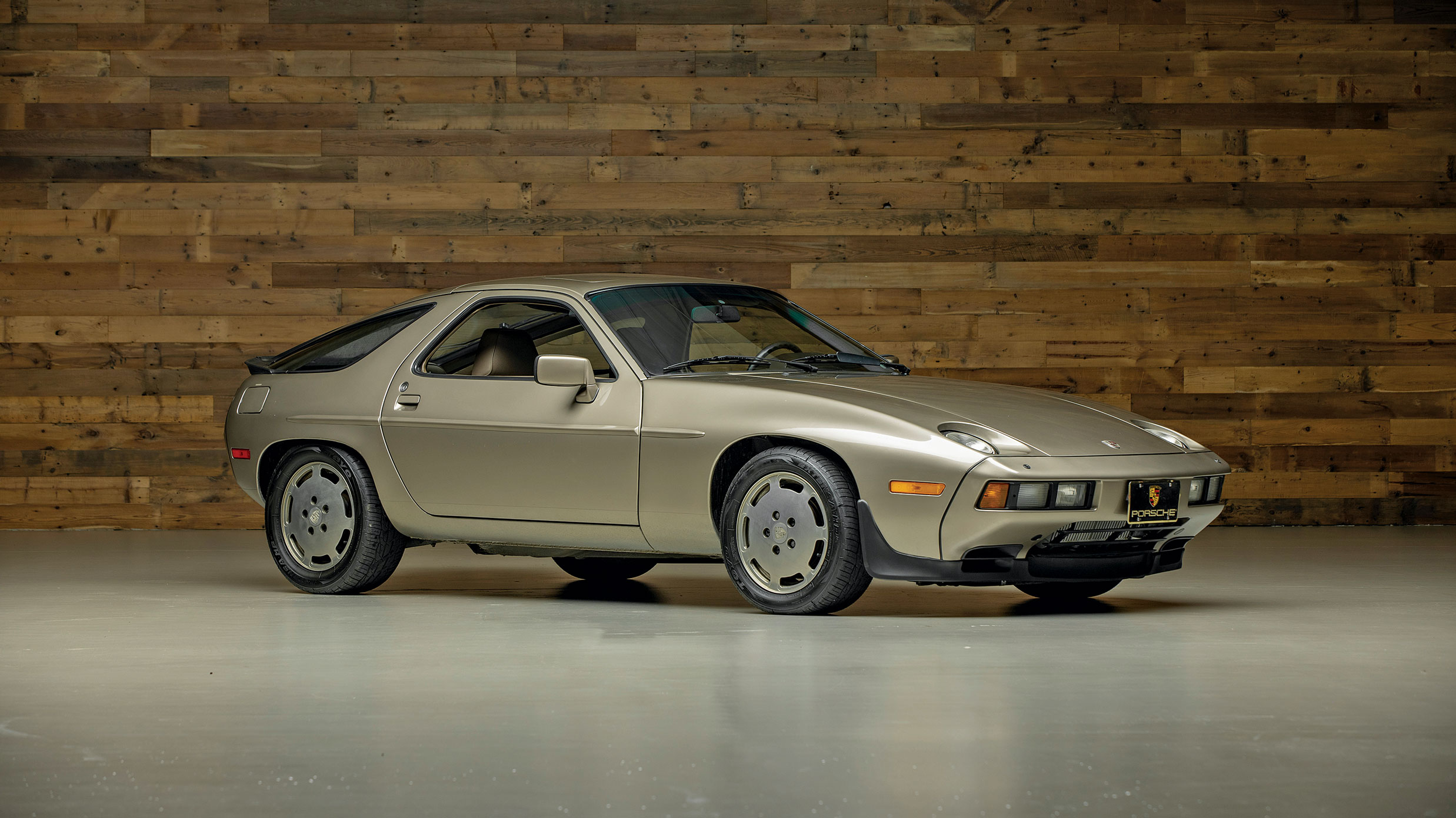
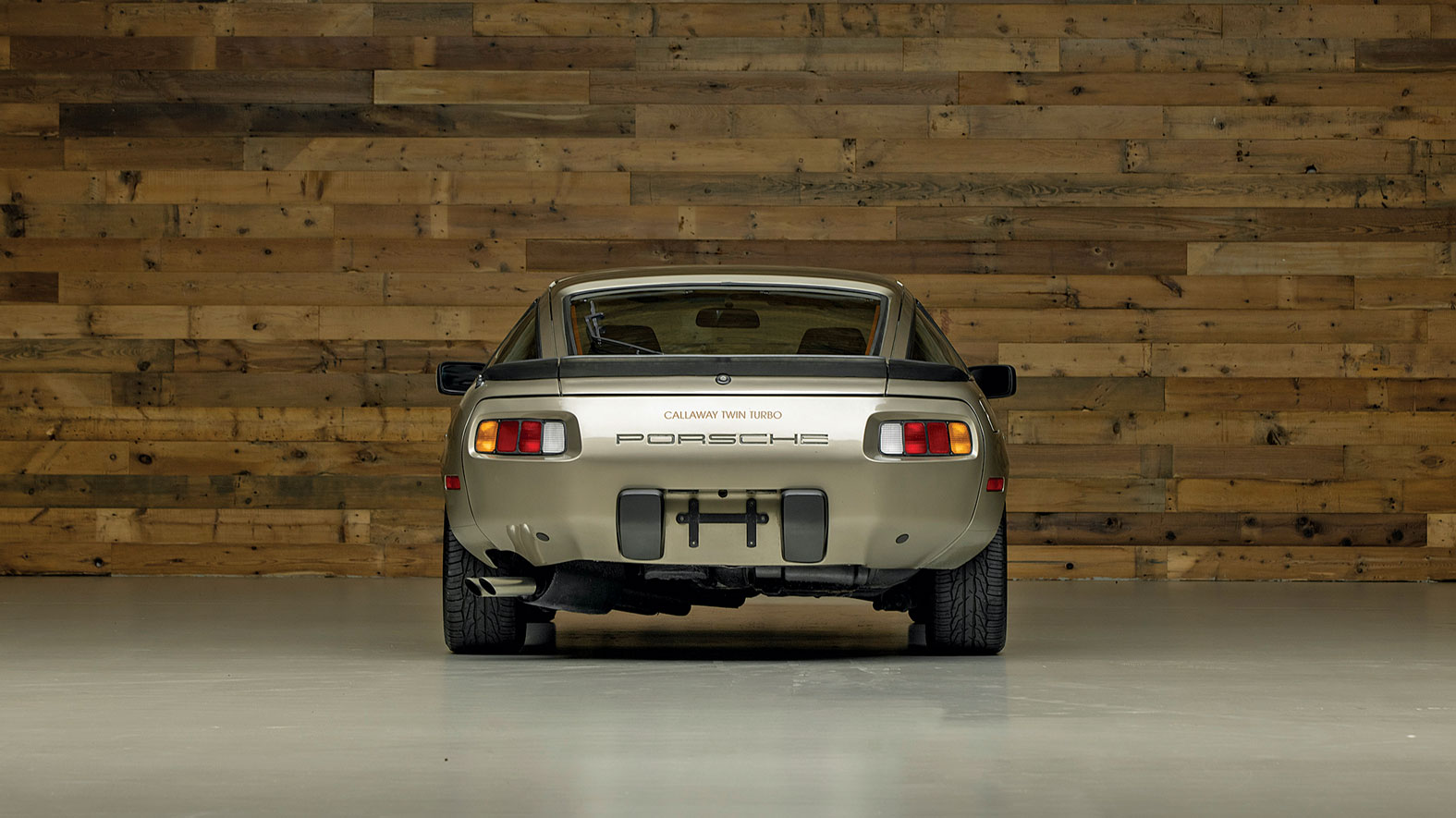
This car, Lot 506, sold for $44,800, including buyer’s premium, at Kruse Auctions’ Auburn, IN, sale, on September 5, 2026.
Reeves Callaway was a fixture in the turbocharging field for 40 years. His eponymous company is still at it today, although he died in 2023 at age 75. He is best known for his twin-turbocharged Corvettes, over 500 of them factory-optioned, plus numerous shorter-series turbo conversions and one-off customer cars.
My close friend, the late David “Chip” Hall, introduced me to Callaway, the two having been college mates at Colgate University. Callaway had installed a Porsche 3.2-liter Carrera engine in Chip’s VW camper bus, which Chip used to tow his 1964 Porsche 904 on an open trailer to vintage races. We caravaned together on our way to Watkins Glen for the SVRA Zippo Vintage Races in September 1988. I was in a 1985 Suburban (with a “port injection” 5.7-L V8, a slug) towing a 1968 911R in a heavy 26-foot Wells Cargo trailer. On the Route 15 “big hill” outside Montgomery, NY, Chip casually pulled a lead of 1.5 miles on a three-mile hill. Those were CB days, and the truckers lugging up the hill with me in the added “slow lane” were all yelling about being passed by a VW camper going 75 mph while towing a car and trailer. That was cool.
Go your own way
Reeves Callaway III was the son of Ely Callaway, who made his fortune in clothing — U.S. Army uniforms, then Burlington Industries. With a buyout from Burlington, he founded Callaway Vineyards. He sold the vineyard and bought a small Southern California-based golf club company that became Callaway Golf. Powered by “Big Bertha” and a focus on amateurs, Callaway Sr. ended up a rich man.
His son had to earn his own way. He wanted to be a race-car driver and he had success in Formula Vee. Without outside financial backing, he settled for instructing for Bob Bondurant. After driving a Bondurant-school BMW 320, he was impressed with the chassis but not the engine. He asked BMW for a shot at turbocharging it; they said yes. Callaway did so, and got a break when Car & Driver wrote about it. Callaway quickly offered turbo kits for the BMW and his future was set.
A few years later in 1977, Reeves founded Callaway Cars in Old Lyme, CT. He developed, sold and installed turbo kits in at least six different marques. After the Alfa Romeo factory contracted with Callaway for about 35 turbocharged GTV6s, General Motors took notice. It signed Callaway to produce a factory option, RPO B2K, for twin-turbocharged Corvettes starting in 1987–88. Chevy sold over 500 of those Callaway-optioned ’Vettes. The cars were sent from the Corvette plant in Bowling Green, KY, to Old Lyme, where they were converted and then shipped to the selling Chevrolet dealers. Callaway and Corvette became intertwined for the next 40 years. In 2008, Reeves Callaway was inducted into the National Corvette Museum’s Hall of Fame.
Sledgehammer moment
Callaway’s “moment” was probably when his firm developed the 1988 Sledgehammer — a one-off, twin-turbocharged Corvette with custom bodywork, that was fully street-equipped, including air conditioning. That car set the world’s top speed record for a production model: 255 mph at the Ohio Transportation Research Center. Reportedly, the record stood for 22 years until 2010, when a Bugatti Veyron Super Sport took the title. Callaway’s claim to fame was that he engineered balanced engines, modifying whatever was needed for both performance and reliability, from the crankshaft to the muffler.
Callaway currently has operations in Old Lyme, plus Temecula, CA, and Leingarten, Germany. Under Reeves’ son, Michael, the Callaway firm is currently converting seven different GM models.
Porsche turbo tuning
Here in Connecticut, local Porsche owners would occasionally ask Callaway to turbocharge their cars. It wasn’t a big deal — Porschephiles already had factory-built 911 (930) Turbos, then 924 Turbos and still later 944 Turbos. But if you loved your normally aspirated Porsche and wanted more power, Callaway was local and not too expensive.
For reasons long lost to history — probably just to fill another market niche — Callaway decided to twin-turbocharge six customer-ordered 928s. Porsche’s grand-tourer had its steadfast enthusiasts who eschewed the 911 and 930 for the 928’s greater comfort. Callaway’s 1982–84 928 S offered more performance, always with a 5-speed manual gearbox in lieu of the more-popular 4-speed Mercedes automatic transmission. The base 928 S had a 4.7-L V8 (before the 5.0-L engine introduced in 1985) to which Callaway added twin liquid-cooled IHI turbochargers and bespoke exhaust manifolds. Against the 928’s stock 234 hp, Callaway reported about 425 hp with torque of 450 lb-ft. Those numbers delivered 0–60 mph in 4.8 seconds, a quarter-mile in the muscle-car time of 13.4 seconds, and a top speed of 170 mph.
A boost for the buyer
The car that Kruse offered at Auburn in September was the sixth and last 928 S that Callaway modified. Kruse reports that Reeves kept it as a personal car for a couple of years, after which it went through several enthusiast owners who apparently maintained it well. The car was painted Platinum Metallic with a tan interior and showed 68,628 miles. Kruse noted only that the interior was original, which might imply that the car was repainted. It had a recent service to include new timing belts, brakes, water pump and all fluids, plus a tune-up.
The car hammered sold for $40,000 for a final all-in price of $44,800. In my humble opinion, that was grand theft auto. Kruse auctions are not mainstream for sports-car buyers, and a bright soul took advantage here. It is difficult to place this Callaway 928 S relative to the wider market. Perhaps the 1992–95 928 GTS manual-gearbox cars are a good starting point. Those usually sell between $100,000 and $200,000 with five over $200,000 in the last year. My guess is that this Callaway buyer waltzed out with this car at 50%–60% off — well bought.