
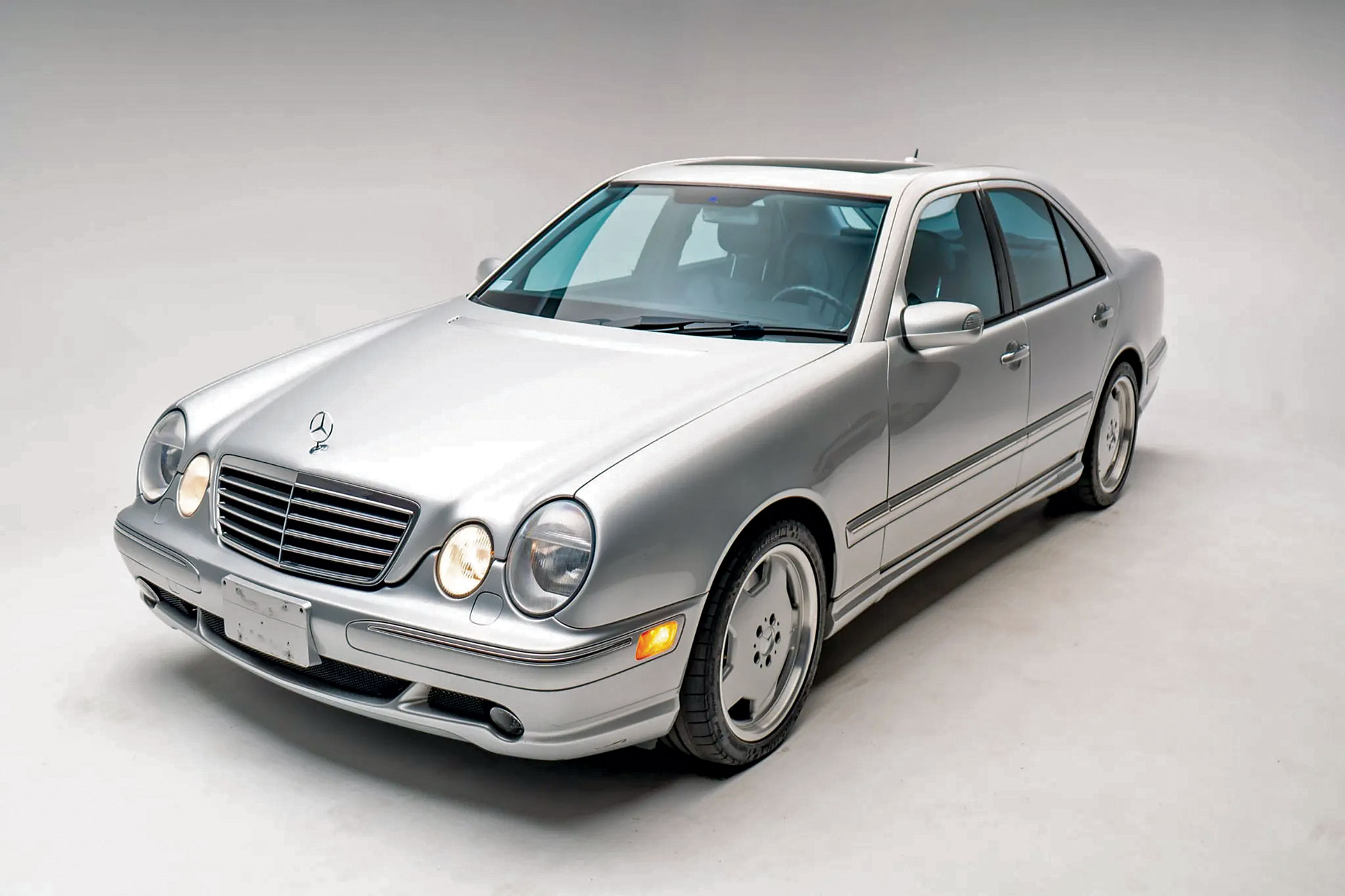

The 1990s were an important time in Mercedes-Benz history. Since the late 1960s, AMG had been modifying Mercedes vehicles as an independent performance shop, but in 1993 the plucky tuner signed a contract of cooperation with Mercedes-Benz to gain access to its dealer network and to co-develop AMG-branded models. By 1999, Mercedes owned the majority of AMG’s stock and brought the company in-house as the performance sub-brand Mercedes-AMG. Among the many benefits of the merger was the ability to mass-produce AMG-engineered cars, which had previously been bespoke. Even today, there’s a cachet to owning a “pre-merger” AMG. However, the new paradigm […]
The 1990s were an important time in Mercedes-Benz history. Since the late 1960s, AMG had been modifying Mercedes vehicles as an independent performance shop, but in 1993 the plucky tuner signed a contract of cooperation with Mercedes-Benz to gain access to its dealer network and to co-develop AMG-branded models. By 1999, Mercedes owned the majority of AMG’s stock and brought the company in-house as the performance sub-brand Mercedes-AMG.
Among the many benefits of the merger was the ability to mass-produce AMG-engineered cars, which had previously been bespoke. Even today, there’s a cachet to owning a “pre-merger” AMG. However, the new paradigm made the AMG magic available to a much wider customer base — especially in America, with its particular safety and emissions regulations.
Muscle Mercedes
While it wasn’t the first AMG-modified Mercedes to hit the American market, the 1999 E55 AMG was pivotal in introducing AMG to U.S. buyers. The E-Class had long been Mercedes’ bread-and-butter passenger car, and this new hot-rod midsize sedan was based on the W210 platform, on sale in the U.S. since 1996.
The 1999 E55 AMG was outrageous compared to the typically staid E-Class offerings, which included a turbodiesel, standard 3.2-liter V6 and mild 4.3-liter V8 with 275 horsepower. In the E55, however, power came from a 5.4-liter versiobn of that V8, naturally aspirated and rated at 349 horsepower and 391 pound-feet of torque. This put it in the same performace class as the E39 BMW M5 at 394 horsepower and the Audi S6 with its 335-hp 4.2-liter V8 — and even the Chevrolet C5 Corvette at 345 horses.
The E55 AMG hit 60 mph in just 5.5 seconds, on its way to a governed top speed of 157 mph. The E55 also delivered excellent stopping power, braking from 70 mph to a stop in just 156 feet. At 0.88g, the E55 also offered grip in the corners. European buyers could get the E55 outfitted as a wagon and with Mercedes’ 4MATIC all-wheel drive, but those options were not offered here. However, now that 25 years have passed since the earliest E55s, rest-of-world examples are importable if you can find one.
Through the four years of production for the U.S., Mercedes brought over about 500 E55s per year, but about 12,000 were sold worldwide. The 2001–02 cars received a light refresh, with 354 horsepower and a newly upgraded suspension that used progressive springs and stiffer anti-sway bars. These model years are preferred by collectors and generally sell for a premium price.
Parts and labor
When it comes to cost of ownership, E55 owners are generally satisfied. Dealer service is never cheap, but the E55 doesn’t tend to subject its caretaker to unreasonable abuse. Electronics were improving in the late 1990s, but gremlins can still appear — especially if there is water intrusion. The M113 engine in the E55 is a workhorse and offers no predictable troubles, given routine maintenance. There was an issue with harmonic balancers, but that was resolved years ago with a recall, and all affected cars should be fixed by now. Also, the E55’s interior is a marvel of Mercedes quality and should still be in good condition after 25 years.
If you live in an area that suffers from rust, keep an eye on the front spring perches that are spot-welded to the chassis platform. They’re painted with rust-resistant coating, but if they do get cancer, they may rip apart at the inner fender, leading to a front-suspension collapse. You may also spot rust on the trunk lid near the latch, on the hood ornament and in the usual places around door frames and window seals.
Another thing to watch out for is the transmission. Mercedes used an electronically controlled 5-speed automatic in this era, similar to those used in the ML-Class SUV and other Mercedes models. There’s a wiring harness that goes to the transmission, and it has an O-ring to keep the transmission fluid in the gearbox. If that leaks, oil can travel up the wiring harness and take out the transmission controller.
Affordable mile-gobbler
At roughly 25 years of age, E55 values have bottomed out and represent a lot of car for your money. Prices typically range from $10,000 to $20,000, with really special cars topping $30,000. Online auction sites such as Bring a Trailer and The MB Market are good bets for shopping a variety of cars, although a fair number also appear on local Craigslist ads and in the Mercedes-Benz Club of America classifieds. With a little patience, you can bring home a solid, well-kept example for less than half the price of a comparable E39 BMW M5.
As with any older premium car, a thorough pre-purchase inspection at a dealer or a qualified independent shop is always a good idea. It’s money well spent to be sure you aren’t taking over someone else’s problem car. Once you find a good one, drive it like the engineering hooligans in Affalterbach intended. ♦