
Buy What You Love, Pay What You Should
Etceterini
-
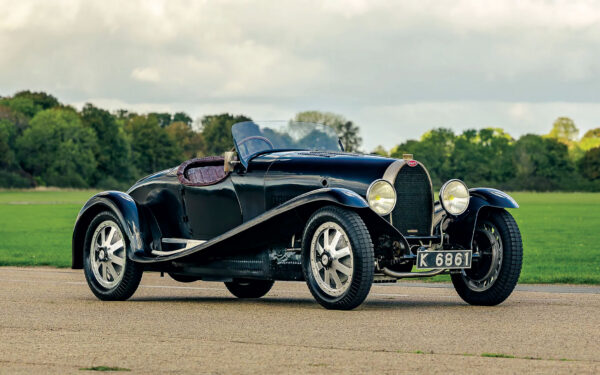
1929 Bugatti Type 43 Roadster
A darling of Bugatti collectors faces a challenging pre-war market Of the approximately 160 examples produced, the Bugatti Type 43 chassis number 43248 was assembled in the Molshiem workshop and invoiced to the Belgian Bugatti agent Joeseph Reinartz for the amount of 95,940 francs, then delivered new with a temporary 2-seater body on January 15,…
-
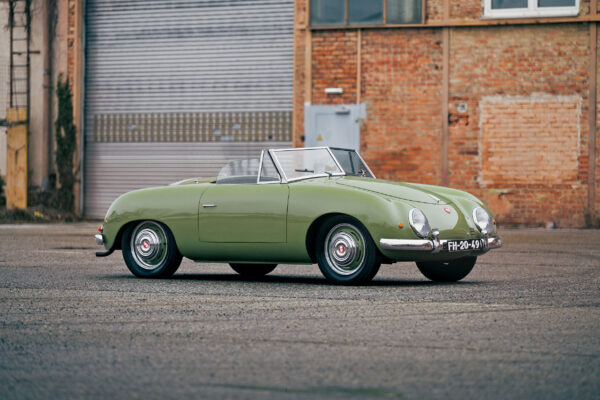
1954 WD Denzel 1300
Photos courtesy RM Sotheby’s An incorrect engine and older restoration contribute to a disappointing result Chassis number DK28 was one of the handful of WD Denzel 1300s supplied new by Auto Portuguesa. This example was registered on April 15, 1954, to first owner Mr. Joaquim Filipe Nogueira, with the license plate “FH-20-49.” Nogueira was a…
-
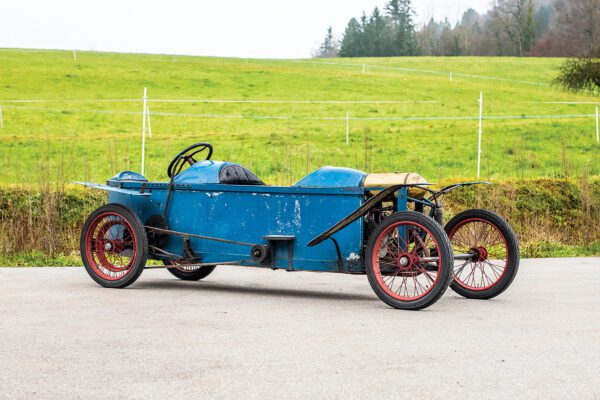
1912 Bedelia BD2 10CV
It is said that Bedelia cars originated when two impecunious students, Robert Bourbeau and Henri Devaux, crashed a motorcycle and could not afford to replace it. Instead, they built the remains into a two-seat tandem car, with steering operated from the rear seat and a belt drive running from the front-mounted engine to the rear…
-
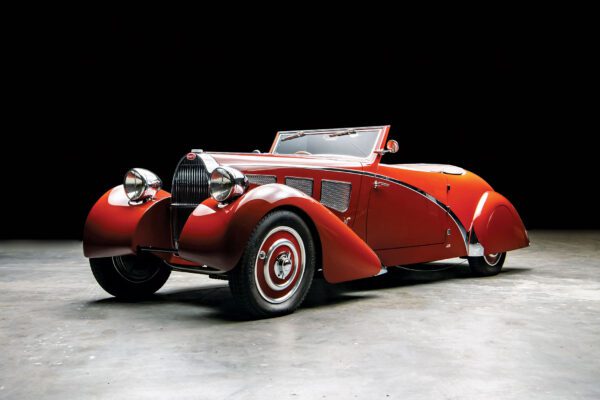
1937 Bugatti Type 57 Cabriolet
A beautiful early example of Jean Bugatti’s masterfully engineered touring model, this unique Type 57 is numerically just the 56th example built and among the first 30 cars invoiced. The chassis was clothed with Bugatti’s 4-door pillarless saloon Galibier coachwork and was delivered through Parisian agents Bucar to the Belgian rally driver Ginet Trasenster on behalf…
-
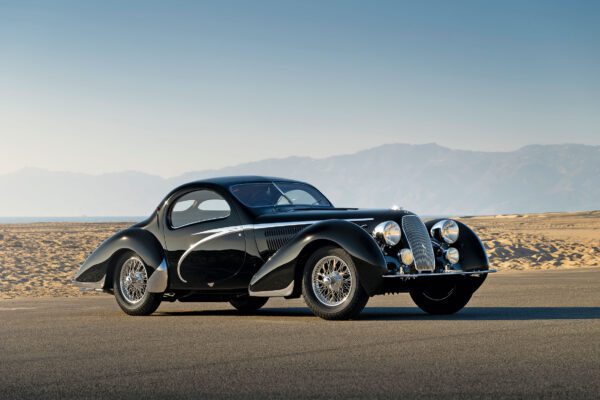
1938 Talbot-Lago T150 C Lago Spéciale Teardrop
Following Anthony Lago’s assumption of control at Automobiles Talbot in 1935, the company, now rebranded as Talbot-Lago, shifted its focus to a fresh lineup of sports cars. With engineer Walter Brecchia’s innovative designs, Talbot-Lago introduced a new 4.0-liter engine and modern chassis concepts, alongside a racing team led by René Dreyfus. In June 1936, at…
-
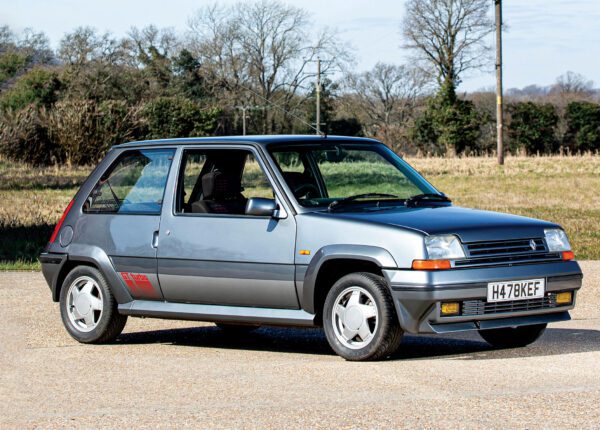
1990 Renault 5 GT Turbo
Introduced in February 1985, the original Renault 5 GT Turbo used what — even by the standards of the day — would seem an unpromising engine for a sporting car. A 1.4-liter 8-valve pushrod-4, the 5 GT’s engine punched well above its weight thanks to Renault’s turbocharging technology, a spin-off from the French manufacturer’s successful…
-

1938 Peugeot 402 Darl’mat Special Sport Coupe
The Peugeot Darl’mat Special Sport was a remarkable achievement in the world of 1930s coachbuilt automobiles. Émile Darl’mat, a Peugeot dealer with a deep passion for performance and innovation, harnessed some of the greatest talents of the era to create a truly great machine. Darl’mat hired Marcel Pourtout and Georges Paulin for coachbuilding and design,…
-
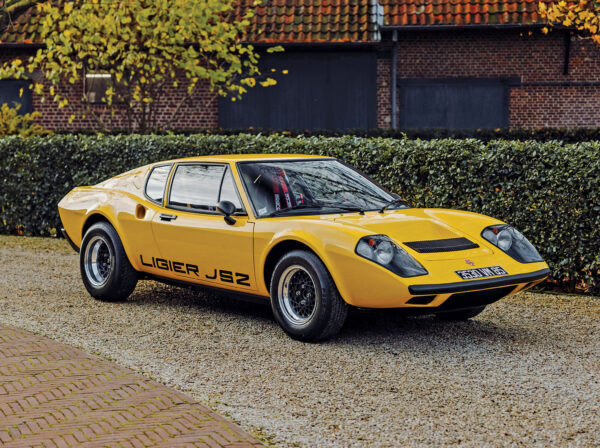
1972 Ligier JS2
Today Ligier is best remembered for its 20 years representing France in Formula 1 (1976–96). Before then, the company founded by former rugby player-turned-motor-manufacturer Guy Ligier built roadgoing sports cars, principally the JS2. First seen in production form at the 1971 Paris Salon, Ligier’s lightweight coupe was powered by the Maserati-developed 2.7-liter (later 3.0-liter) four-cam…
-
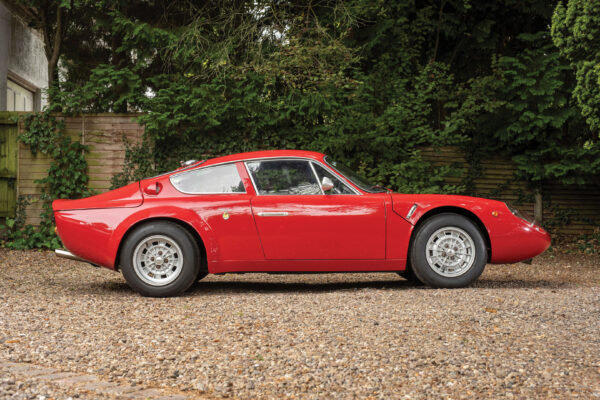
1965 Abarth-Simca 2000 GT
The first of these Abarths had short-nose, roundtail bodies and either 1,300-cc or 2,000-cc Abarth engines, but during the next three years the body changed to the much more modern and attractive ducktail design and, eventually, from the end of 1964, the more-aerodynamic long-nose cars. It is estimated that only some 15 of the latter…
-
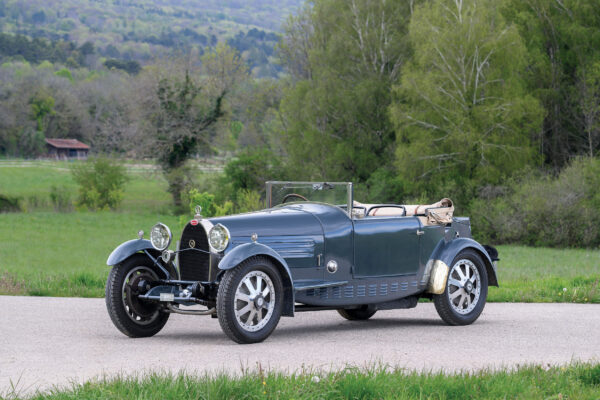
1928 Bugatti Type 43
Assembled in the factory during the summer of 1928, chassis 43264, fitted with engine 124 and crankshaft 159, would not be mentioned for the first time until May 13, 1929, in the factory archives, along with two other chassis and inscribed “Prix Bugatti.” These three cars were destined to be the prizes awarded to the…