
Buy What You Love, Pay What You Should
Toby Ross
-
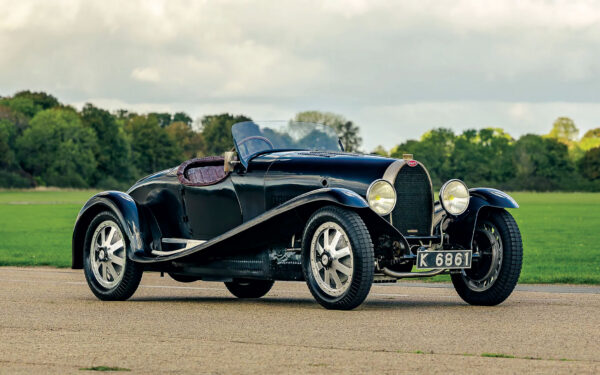
1929 Bugatti Type 43 Roadster
A darling of Bugatti collectors faces a challenging pre-war market Of the approximately 160 examples produced, the Bugatti Type 43 chassis number 43248 was assembled in the Molshiem workshop and invoiced to the Belgian Bugatti agent Joeseph Reinartz for the amount of 95,940 francs, then delivered new with a temporary 2-seater body on January 15,…
-
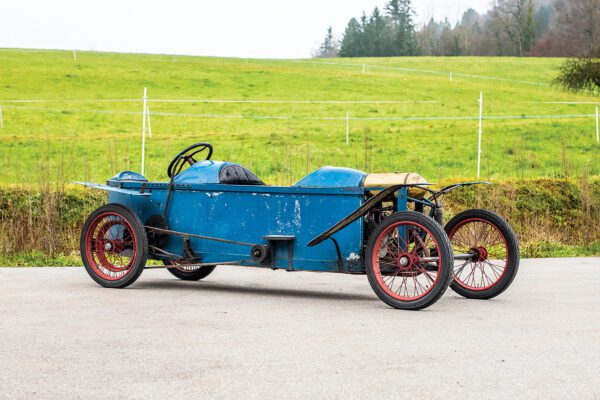
1912 Bedelia BD2 10CV
It is said that Bedelia cars originated when two impecunious students, Robert Bourbeau and Henri Devaux, crashed a motorcycle and could not afford to replace it. Instead, they built the remains into a two-seat tandem car, with steering operated from the rear seat and a belt drive running from the front-mounted engine to the rear…
-
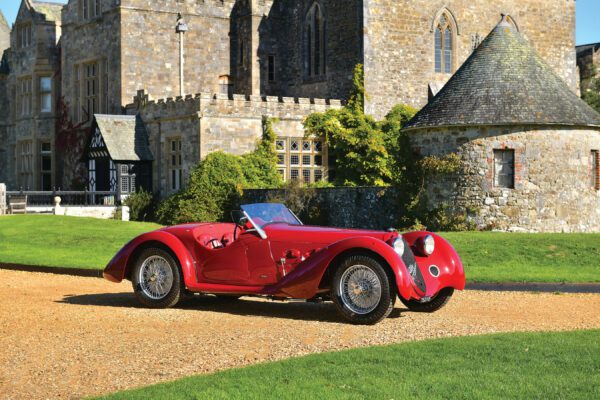
1937 Alfa Romeo 8C 2900 B Spider
Only 38 examples of the 2900 were produced by Alfa Romeo, with fewer known to exist today. Some of the most desirable of these are the long-chassis Spiders — “long” being a relative term, as the wheelbase was only extended by 20 centimeters but provided the most luxurious platform for a 2-seater body. Built in…
-
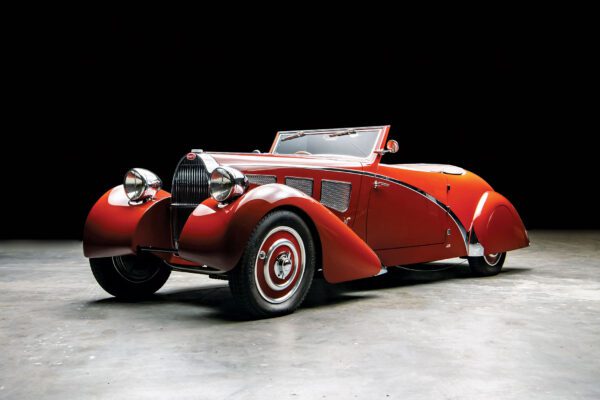
1937 Bugatti Type 57 Cabriolet
A beautiful early example of Jean Bugatti’s masterfully engineered touring model, this unique Type 57 is numerically just the 56th example built and among the first 30 cars invoiced. The chassis was clothed with Bugatti’s 4-door pillarless saloon Galibier coachwork and was delivered through Parisian agents Bucar to the Belgian rally driver Ginet Trasenster on behalf…
-
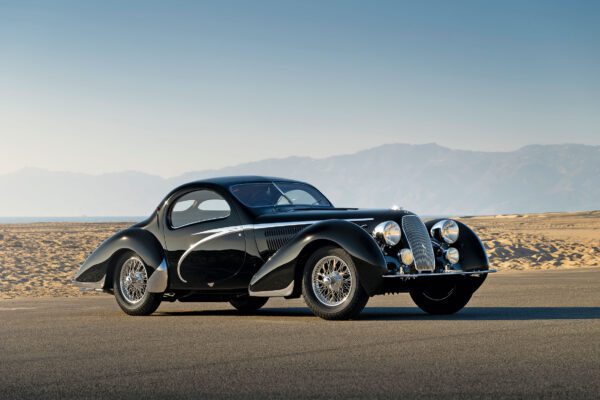
1938 Talbot-Lago T150 C Lago Spéciale Teardrop
Following Anthony Lago’s assumption of control at Automobiles Talbot in 1935, the company, now rebranded as Talbot-Lago, shifted its focus to a fresh lineup of sports cars. With engineer Walter Brecchia’s innovative designs, Talbot-Lago introduced a new 4.0-liter engine and modern chassis concepts, alongside a racing team led by René Dreyfus. In June 1936, at…
-

1938 Peugeot 402 Darl’mat Special Sport Coupe
The Peugeot Darl’mat Special Sport was a remarkable achievement in the world of 1930s coachbuilt automobiles. Émile Darl’mat, a Peugeot dealer with a deep passion for performance and innovation, harnessed some of the greatest talents of the era to create a truly great machine. Darl’mat hired Marcel Pourtout and Georges Paulin for coachbuilding and design,…
-
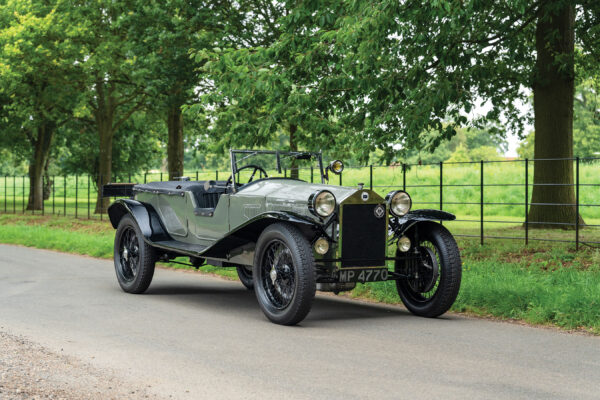
1928 Lancia Lambda
This car is the only known survivor of the nine cars that Lancia prepared for the 1928 Mille Miglia. According to the consignor, it retains its original body, engine and special Mille Miglia features; it also has a continuous history from new. The special features include a cut-down driver’s door; long, flowing wings; high running…
-
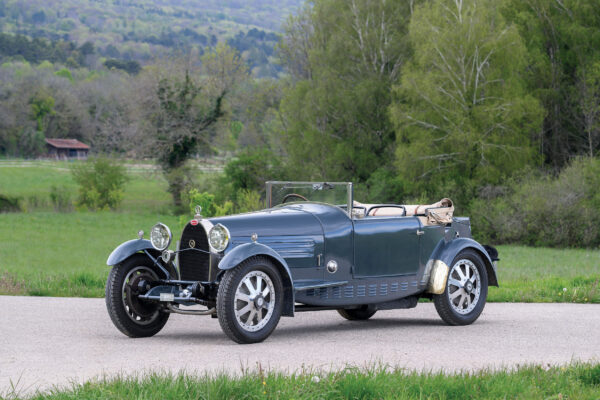
1928 Bugatti Type 43
Assembled in the factory during the summer of 1928, chassis 43264, fitted with engine 124 and crankshaft 159, would not be mentioned for the first time until May 13, 1929, in the factory archives, along with two other chassis and inscribed “Prix Bugatti.” These three cars were destined to be the prizes awarded to the…
-
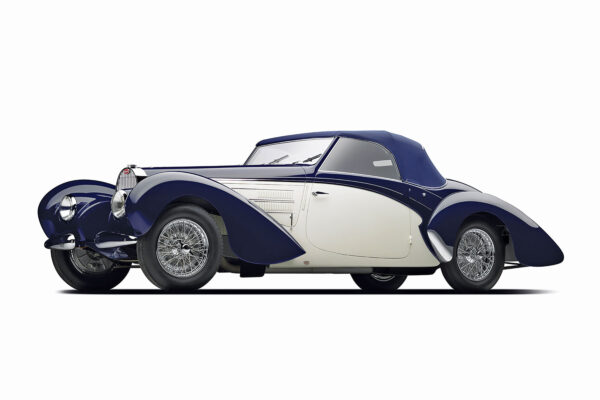
1938 Bugatti Type 57C Aravis Special Cabriolet
Introduced in 1934, the Type 57 is widely regarded as a masterpiece by the hand of Jean Bugatti. Like all Bugattis that preceded it, the Type 57 handled with finesse and possessed a delicate feel characteristic of these magnificent automobiles. Graceful, exquisitely made and incredibly exclusive, the Type 57 was instantly recognizable as a conveyance…
-
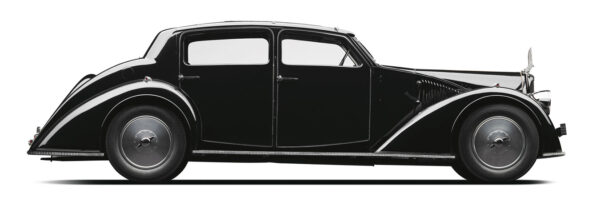
1935 Voisin C28 Clairière Berline
Among French automakers of the Art Deco era, Avions Voisin was unique. With a background in architecture, industrial design, engineering, and a successful career in aviation, Gabriel Voisin reached the height of his automotive career in the 1930s. Each Voisin automobile was designed as a whole in response to the number of passengers and their…