
Buy What You Love, Pay What You Should
Toby Ross
-
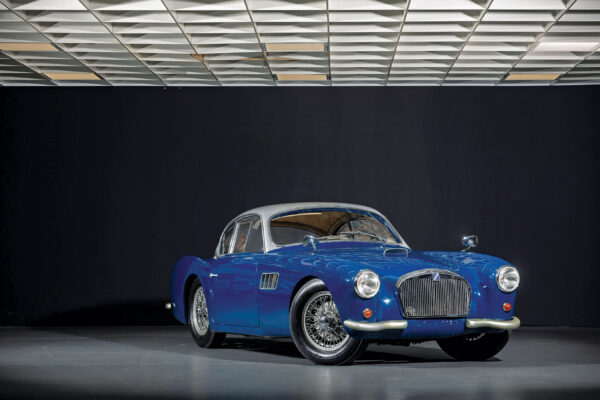
1957 Talbot-Lago America
The factory record supplied by the Talbot Club states that this example was delivered on December 3, 1957, to a Mr. Cassiers in Belgium. This document confirms that the current engine number is indeed the original one and that the car was painted in Light Blue “Salon,” with “Cordoual matic 250” interior and chromed wire…
-

1936 Bugatti Type 57 Atalante
The Type 57 presented here in its striking original color scheme is chassis no. 57432, which left the Bugatti coachbuilders on July 13, 1936. This is one of the four known surviving sunroof cars, described in factory records as “Coupé Atalante 57432, black and ivory, tan leather.” It was ordered by Gaston Descollas, the Bugatti…
-
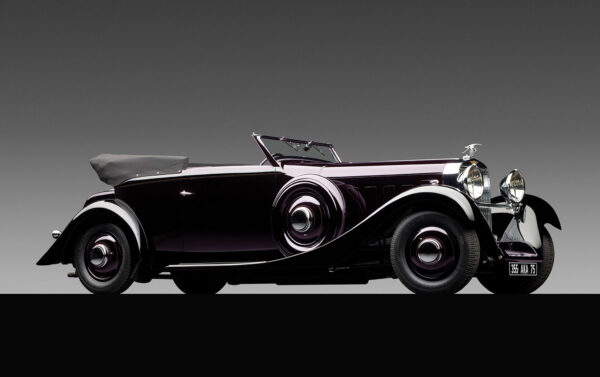
1936 Hispano-Suiza J12 Cabriolet
Factory records on file for chassis 14018 list a delivery date of December 30, 1936, with coachwork specified by Saoutchik. Jacques Saoutchik is best known for flamboyant designs often accessorized with ornate trim. In contrast, this masterfully penned cabriolet demonstrates a great degree of restraint on the part of the designer, while incorporating a lengthy…
-
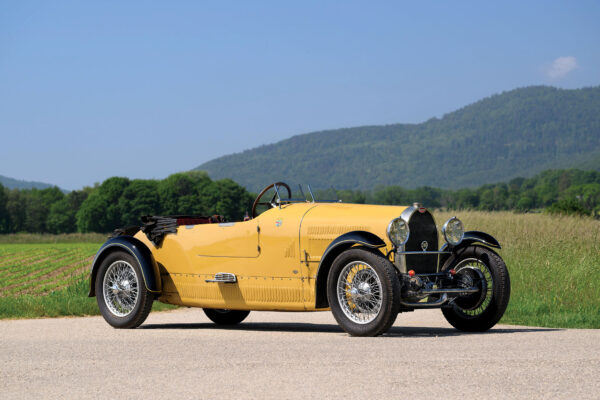
1929 Bugatti Type 44
In the spring of 1966, the Bugatti Owners Club’s Bugantics published the following advertisement: “Type 44 for sale in Poland. Photo shows car number 44380 in tired original condition. It is for sale but only in exchange for a modern car, as this is the only way to get a car out of Poland. It belongs to…
-
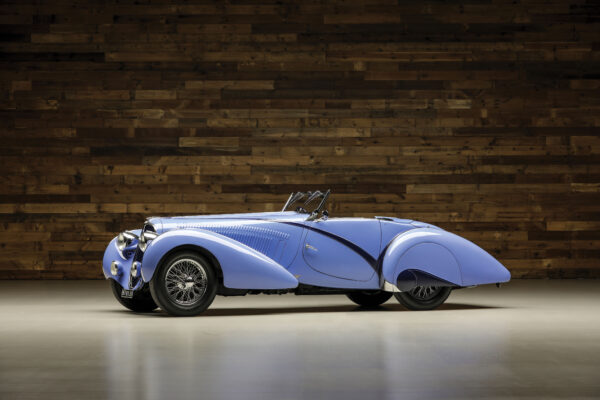
1936 Delahaye 135M Competition Court Cabriolet
Dubbed the “father” of teardrop styling, no one, not even Jean Bugatti, was able to master the sweeping, streamlined and voluptuous coachwork quite like Giuseppe Figoni could. A celebrated French designer, Figoni would form a partnership with Italian businessman Ovidio Falaschi in 1935, and the rest is history. Birthed with undeniable and incomparable aesthetics, beauty…
-
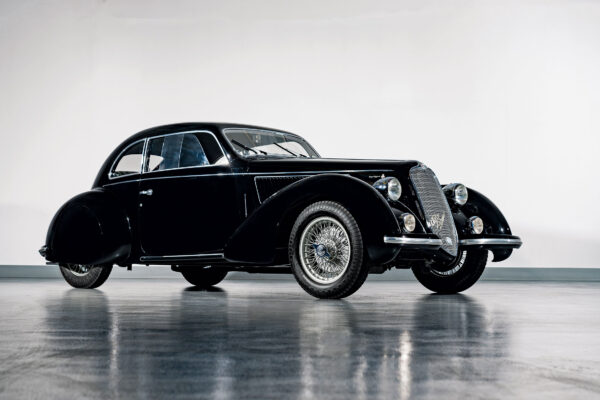
1938 Alfa Romeo 6C 2300B Mille Miglia Berlinetta
This magnificent 6C 2300B Mille Miglia left the Portello Works in April 1938. Its early ownership is unknown, but it is first recorded as being owned by Herr Hoffer of Geneva in 1946. In 1953, Herr Hoffer sold the car to Jean-Louis Fatio for the princely sum of 500 Swiss francs. According to correspondence on…
-

1927 Bugatti Type 35B
The magnificent car we are privileged to offer here is an early Bugatti Type 35B. The 2.3-liter Type 35T engine, number 127, was modified at the factory on April 15, 1927, as a Type 35B unit with a supercharger added. Its proud owner since 1975, Baron d’Huart, a true Bugatti enthusiast and gentleman racing driver,…
-
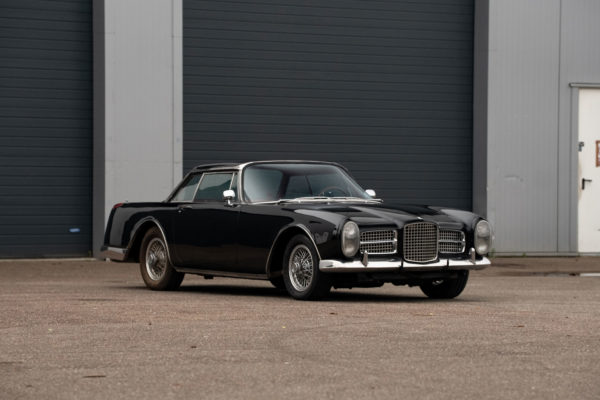
1964 Facel Vega Facel II Coupe
In its relatively short life, the French firm of Facel produced approximately 2,900 cars, all of which were stylish, luxurious and fast. Hand built, they were necessarily expensive — the Facel II was priced in Rolls-Royce territory — and bought by the rich and famous seeking something exclusive and distinctive. Launched in 1961, the Facel…
-

1937 Talbot-Lago T150C SS Teardrop Coupe
The Talbot-Lago T150C SS presented here, chassis 90107, is widely regarded as the most beautiful and unique of the Figoni-bodied Teardrops. Of the precious few Figoni et Falaschi Teardrops built, 90107 is the only original-bodied example of the definitive Modéle New York design with fully enveloping front fenders. A prizewinner at the 1938 Concours d’Elegance…
-

1959 Alfa Romeo 2000 Spider
Introduced in 1958, the 102 Series 2000 succeeded the celebrated 1900 in Alfa Romeo’s model line. The 2000 was available in three body styles, including the short-wheelbase Spider, and it was powered by the manufacturer’s highly developed 2-liter inline 4-cylinder engine. The Spider coachwork, built by Touring of Milan, was characterized by lavish details such…