Ferruccio Lamborghini’s first production car, the Touring-styled 350GT, was launched at the 1964 Geneva Motor Show, featuring a glorious 4-cam 3.5-liter V12 engine by Giotto Bizzarrini, which was housed in a chassis that was the work of Gian Paolo Dallara. The line of front-engine grand tourers continued with the 4-liter 400GT and Islero 2+2s, the Espada 4-seater saloon and finally, in 1970, the Jarama GT, the last of Lamborghini’s front-engine road cars.
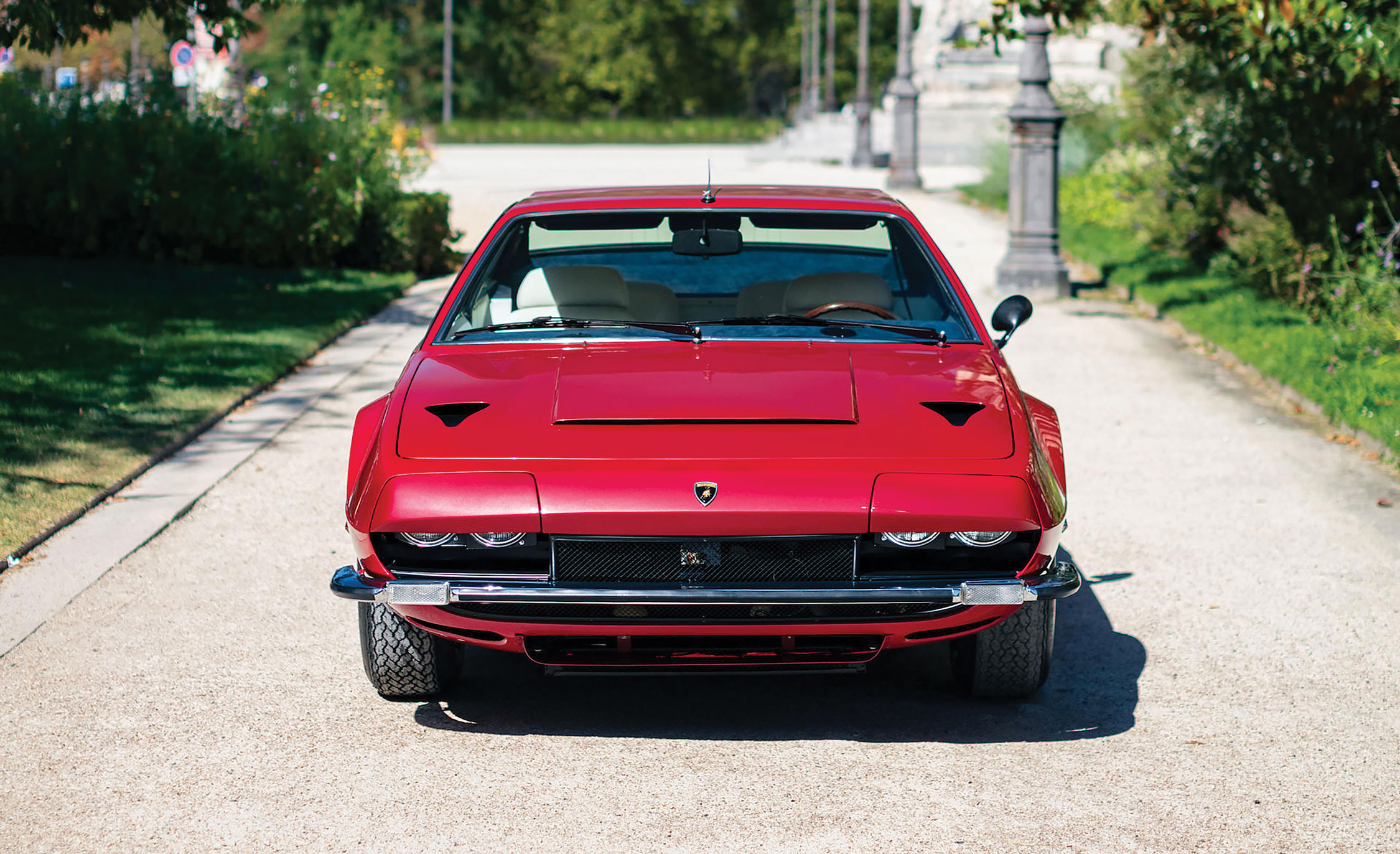
Launched at the 1970 Geneva Motor Show and named after a region of Spain famous for its fighting bulls, this new 160-mph (257-km/h) 4-seater abandoned Lamborghini’s original spaceframe chassis in favor of a platform-type unitary construction, based on the Espada’s but of shorter wheelbase. An unusual styling feature was the nose with its quadruple headlamps partially obscured by electrically raised covers. The Jarama was styled at Carrozzeria Bertone by Marcello Gandini, the man responsible for the Miura, but with bodies assembled by Marazzi.
An improved S version with a 365-hp V12 engine appeared in 1972, while later developments included TorqueFlite automatic transmission and power-assisted steering. The Jarama continued in production until 1976, by which time 327 cars had been built, 150 of them to S specification. Of these, 23 were built in right-hand-drive configuration, of which only 18 were the superior Jarama S model.
A desirable manual-transmission model built to European specification, this Jarama S (chassis number 10378) is the 190th Jarama and 14th S model built. The car was delivered on September 29, 1972, to the Lamborghini dealer in Rome, Italy: S.E.A. Automobili at 44 Via Francesco Siacci. Its original color scheme was the very nice combination of Pomegranate Metallic with white interior. Little is known of the Jarama’s subsequent history until it appeared on the market toward the end of November 2016 among the 750 lots of a collection seized by the Italian government. The odometer reading at that time was 87,432 kilometers and the exterior color had been changed to Night Blue Metallic; the Lamborghini was registered “Z 25872-Roma.”
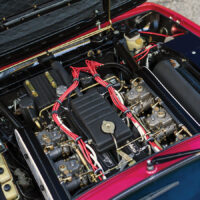
Purchased by the current vendor in 2016, it has been comprehensively restored, preserving the original leather and its patina, and repainted in the original Pomegranate Metallic, which suits it so well. Records detailing the restoration process are on file. Early in 2023, renowned Lamborghini historian Olivier Nameche saw 10378 in France where it was awaiting an engine tune-up, and he confirms the car’s high level of detailing and its conformity, as well as the nice paintwork. The odometer reading at that time was 87,824 kilometers.
The Jarama is presented today in generally excellent condition, although the tires need to be changed. This rare and exciting Lamborghini Gran Turismo is offered with a canceled Italian registration document, invoices for various parts totaling in excess of €23,000, photographs of the restoration and a history supplied by Olivier Nameche.