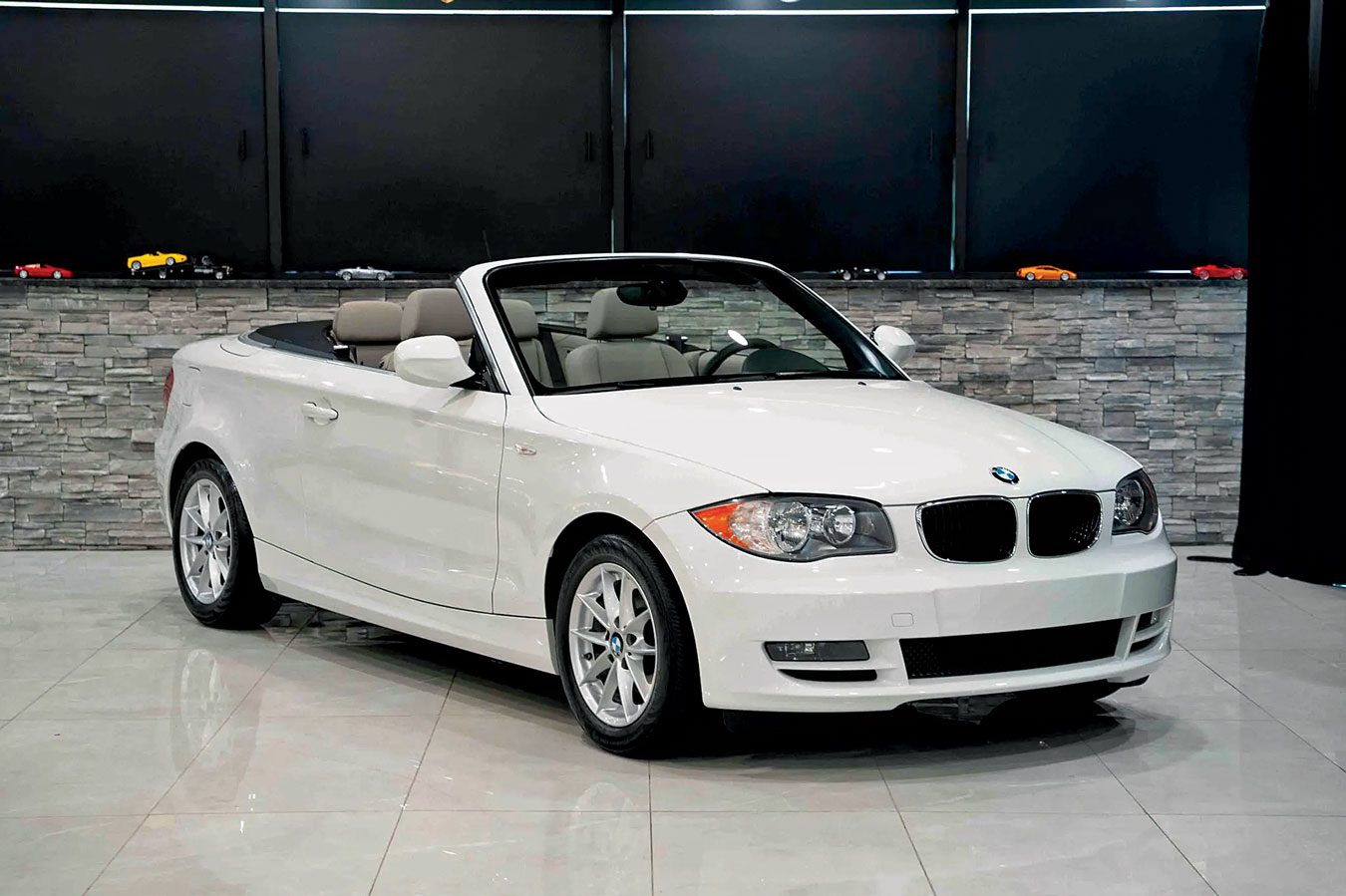

The 2002 of the 1960s–70s introduced a legion of enthusiasts to fun-to-drive BMWs, but as time went on, the Bavarian brand’s models grew in size. BMW struggled to strike the right balance with “compact” versions of both the E36 and E46 3 Series but finally struck the right balance with the 1 Series coupe and convertible in 2008. Big plans, small cars After teasing audiences with the CS1 concept in 2002, BMW initially launched the 1 Series outside North America two years later in hatchback form. The inaugural 1 Series was developed in lockstep with the E90-generation 3 Series and shared […]
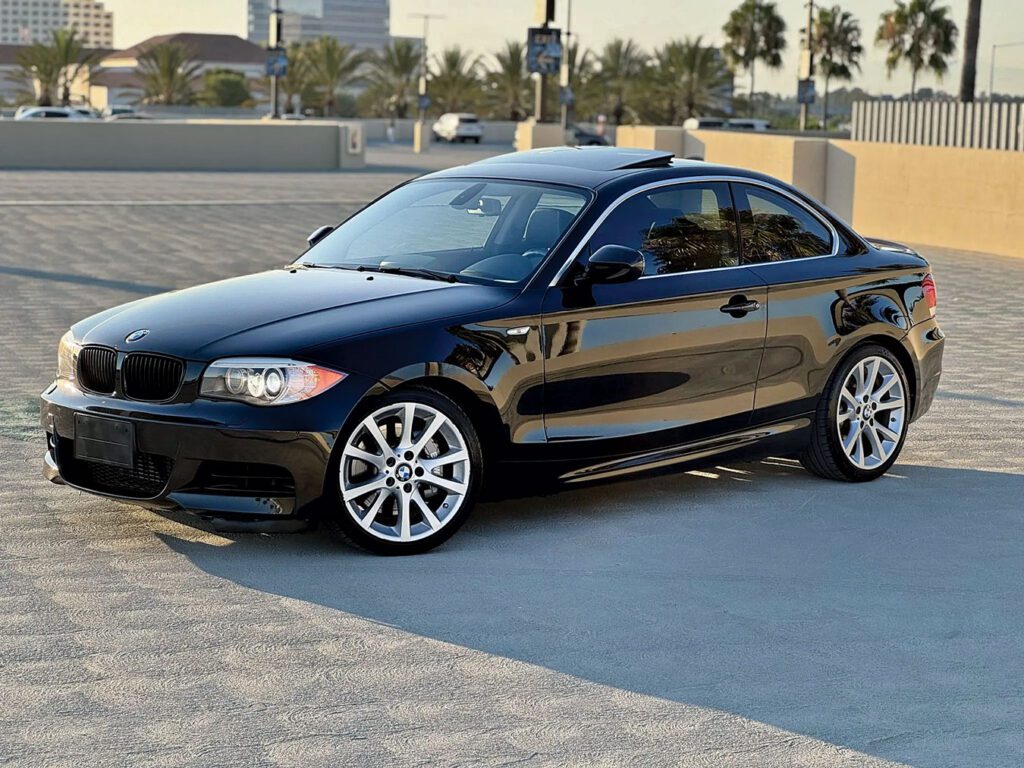
The 2002 of the 1960s–70s introduced a legion of enthusiasts to fun-to-drive BMWs, but as time went on, the Bavarian brand’s models grew in size. BMW struggled to strike the right balance with “compact” versions of both the E36 and E46 3 Series but finally struck the right balance with the 1 Series coupe and convertible in 2008.
Big plans, small cars
After teasing audiences with the CS1 concept in 2002, BMW initially launched the 1 Series outside North America two years later in hatchback form. The inaugural 1 Series was developed in lockstep with the E90-generation 3 Series and shared nearly 60% of its components, including the MacPherson front struts and five-link coil-sprung rear IRS, and of course, its rear-wheel-drive architecture.
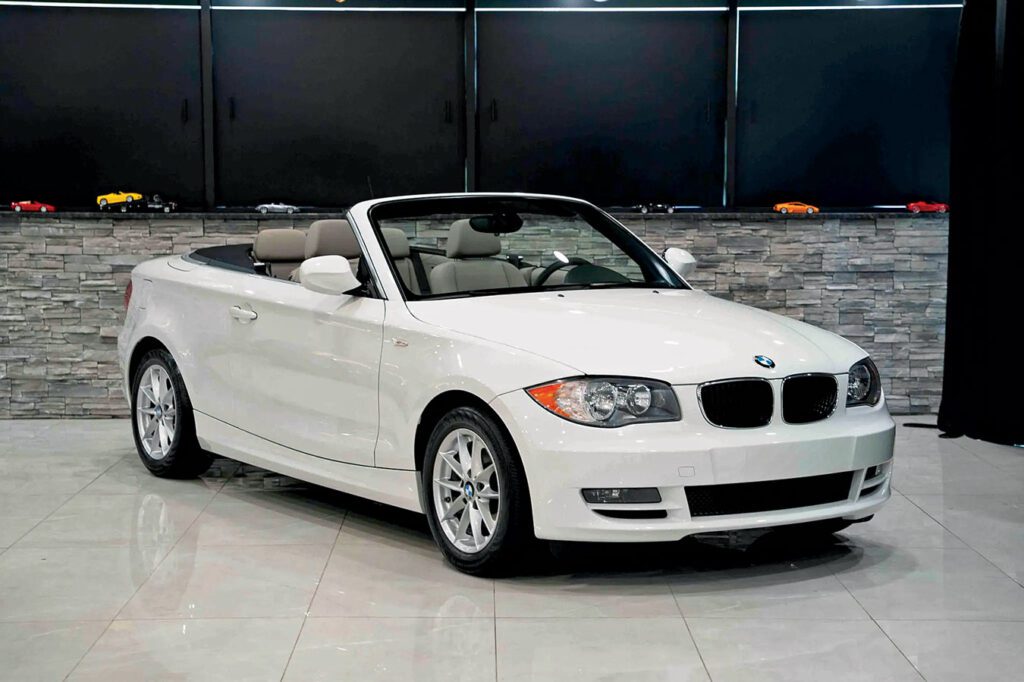
The main difference between the two is size. When the 1 Series finally spawned a proper 2-door coupe and convertible in 2008 — the only body styles imported here — they were nine inches shorter, 1.4 inches narrower and roughly 150–200 pounds lighter than a comparable 3 Series. Coupled with communicative hydraulic power steering and near-50/50 weight distribution, the 1 Series quickly became known not only for its “just right” dimensions, but also its crisp handling.
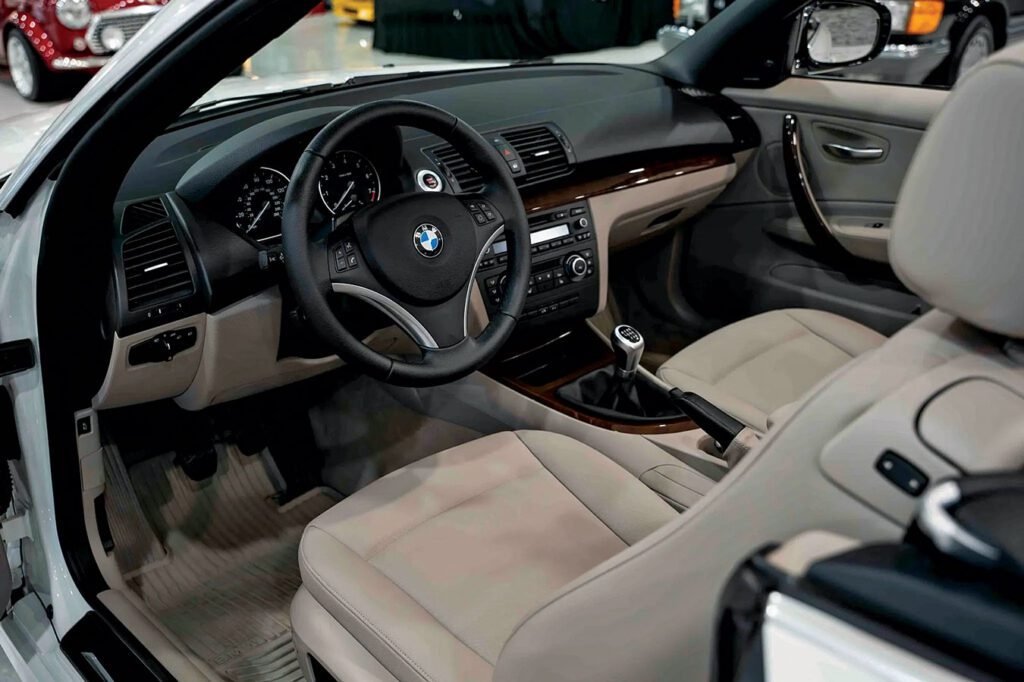
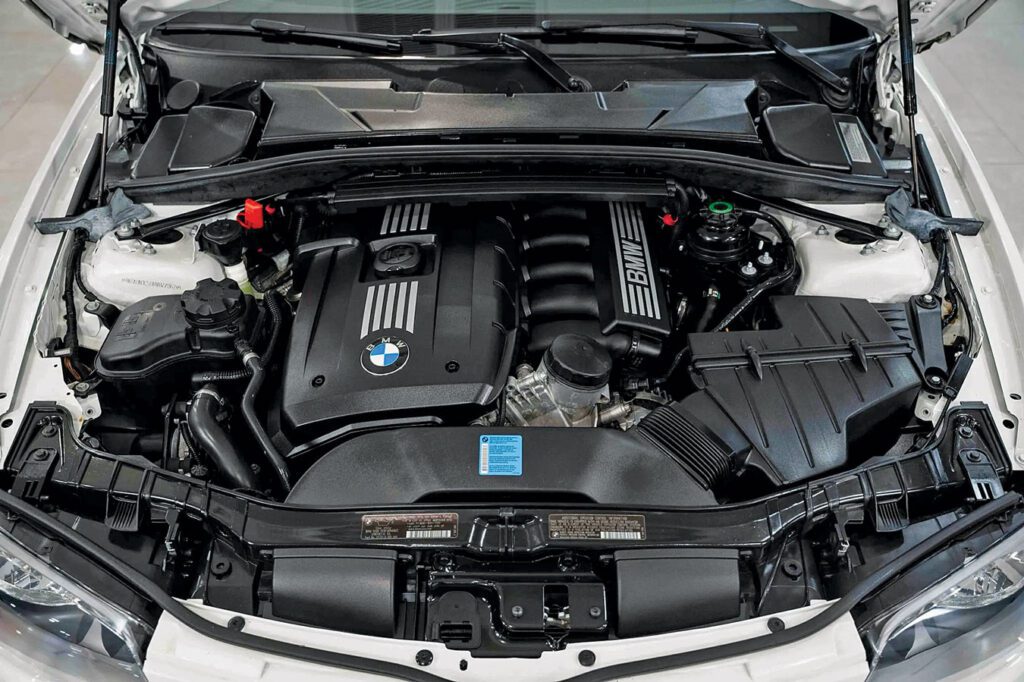
BMW North America initially offered the 1 Series in two guises. The 128i utilized a naturally aspirated, direct-injected 3.0-liter N52 inline-6 and served up 230 horsepower and 200 lb-ft of torque through either a 6-speed manual transmission or an optional automatic. The 135i, however, utilized the N54, a twin-turbocharged version of the same engine. That forced induction helped produce a stout 300 hp and 300 lb-ft of torque, the latter delivered between 1,400–5,000 rpm — enough to push the 135i to a 4.7-second 0–60-mph run.
These 135i models gained a small but significant change in 2011, when the twin-turbo N54 was replaced with the N55, an evolution of the engine now sporting a single turbocharger. Power output remained unchanged, except peak torque was now available beginning at a mere 1,200 rpm. Simultaneously, BMW replaced the conventional automatic gearbox on 135i models with a 6-speed dual-clutch transmission.
More power, less volume
If that somehow wasn’t enough power, BMW’s M division had an answer with the 1 Series M Coupe, which was built only for 2011. Instead of the new N55 engine, the 1M had a uniquely tuned variant of the older twin-turbo N54, making 335 hp and 332 lb-ft, although an overboost function allowed 369 lb-ft for brief intervals. Coupled with unique bodywork, along with suspension components and a proper limited-slip differential lifted from the M3 Competition, the 1M was a powerful track toy, happy to oversteer with judicious application of throttle. No wonder the 930 cars sent to North America moved quickly off dealer lots, often with added markup.
To celebrate the end of the first-generation 1 Series in North America, a brief run of 135is cars was imported in 2013, with cooling and exhaust upgrades previously found in a dealer-installed M Performance Power Kit, bumping output to 320 hp and 317 lb-ft of torque. Approximately 600 135is examples were sold stateside.
Cheap fun
Predictably, the 1M may push most definitions of “affordable,” with driver-condition examples trading hands in the mid-to-high-$50,000 area, and lower-mileage examples eking towards six figures. Thankfully, other 1 Series variants remain much more accessible, with well-kept 128i and 135i models typically ranging between $15,000–$25,000.
We don’t fault horsepower junkies for gravitating to 135i classifieds, but a manual-transmission 128i coupe without the available M Sport Package allows for tailoring a 1 Series coupe to personal preference, thanks to a robust aftermarket. Unsure if the lower ride height and higher spring rate of the M Sport Package is ideal for your local roads? Fret not, as it can always be added after the fact. Spending more time than anticipated at the track? Aftermarket limited-slip differentials are spendy but previously required stepping up to the 1M.
Before you buy…
Given the newest examples are now over a decade old, it’s probably worth looking at the condition of sway-bar links and bushings, along with rear subframe bushings. If they are looking worse for wear, good news — parts aren’t expensive nor tremendously difficult to replace, and there are plenty of aftermarket options to further tighten up handling.
Unsurprisingly, a 1 Series with evidence of regular maintenance is desirable, especially when it comes to these N52/ N54/ N55 engines. Cars treated to oil changes at 5,000- or 6,000-mile intervals instead of the 10,000-mile threshold published by BMW are less likely to exhibit some costly issues.
All three engine variants do share some maintenance quirks at this point in their lifespan — the electric water pump usually lasts about 60,000 miles, and it’s considered good practice to replace the thermostat at the same time. Oil leaks aren’t uncommon, usually at the valve covers, oil pan and oil-filter housing. The latter is the most crucial — if ignored, the serpentine belt can slip off its tensioner and be pulled into the engine through the front crank seal.
As direct-injection models, engines can require some special care and extra cost, namely fuel injectors or high-pressure fuel pumps. (The N55’s solenoid-style injectors are somewhat less spendy than the piezo-type units on the N52 and N54). The high-pressure fuel pump in 2010 135i models was recalled in 2015, so be sure it’s been replaced. Like many aging DI gasoline engines, carbon deposits can build up on intake valves requiring cleaning (ask your local specialist about “walnut blasting”).
One of the trickiest service jobs pertains to 135i models with the N54, whose turbochargers have a reputation for developing wastegate failure. Given the associated cost and time for replacement, listen carefully for wastegate rattle during a test drive.
Fortunately, all these issues are well known to most BMW technicians, and many are even approachable by a DIYer with a weekend to spare. Despite potential needs, the back-to-basics E80 1 Series remains an affordable, attainable and enjoyable reminder of what made many of us BMW enthusiasts in the first place.