
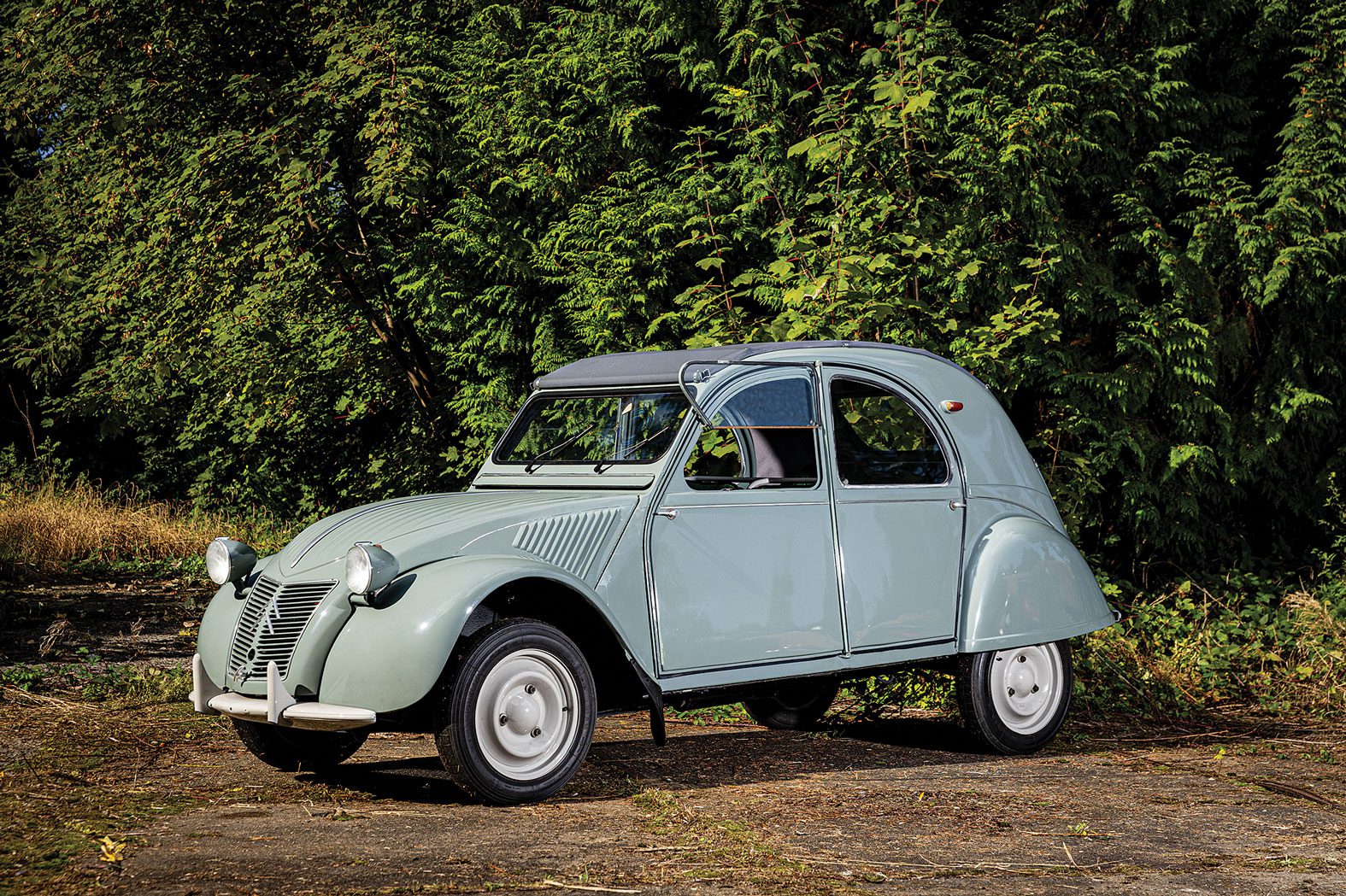

If there’s a more recognizable instance of French motoring than a Citroën 2CV, we’ve yet to encounter it — and perhaps for good reason. Not only did the “Deux Chevaux” effectively put the nation on wheels in the aftermath of World War II, but it did so with unique character, making it an affable, approachable and affordable car, even today. A very little car Michelin did more than pump liquidity into an insolvent Citroën in 1935 — it also pumped the brakes on developing yet another large luxury car. Instead, the tire giant determined the best way to sell more cars […]
If there’s a more recognizable instance of French motoring than a Citroën 2CV, we’ve yet to encounter it — and perhaps for good reason. Not only did the “Deux Chevaux” effectively put the nation on wheels in the aftermath of World War II, but it did so with unique character, making it an affable, approachable and affordable car, even today.
A very little car
Michelin did more than pump liquidity into an insolvent Citroën in 1935 — it also pumped the brakes on developing yet another large luxury car. Instead, the tire giant determined the best way to sell more cars (and tires) would be to create a simple, affordable and efficient car that appealed to the masses, including many of those in rural France still relying on equine transportation.
The design edict for the “Very Little Car” project was fairly simple yet surprisingly challenging. The finished product had to seat four adults, carry 110 pounds of produce to market at 30 mph while returning nearly 80 mpg, be capable of carrying a pair of large hogs or goats with the rear seats removed, comfortably traverse poorly maintained roads (and allegedly safeguard a basket of eggs driven over a plowed field), and be simple enough for farmers with precious little mechanical aptitude to maintain and repair on their own. Tres simple, non?
The end result was effectively complete by 1939, and was essentially a car distilled to its bare minimum. Early prototypes boasted front-wheel drive, hydraulic brakes, and water-cooled, horizontally opposed 2-cylinder engines, but wore canvas-skinned roofs and trunk lids and used only a single headlamp. Citroën brass deemed this fit for production, but the timing couldn’t have been worse; the outbreak of war, followed by the German occupation of France, halted development and sent prototypes into exile.
Long may you run
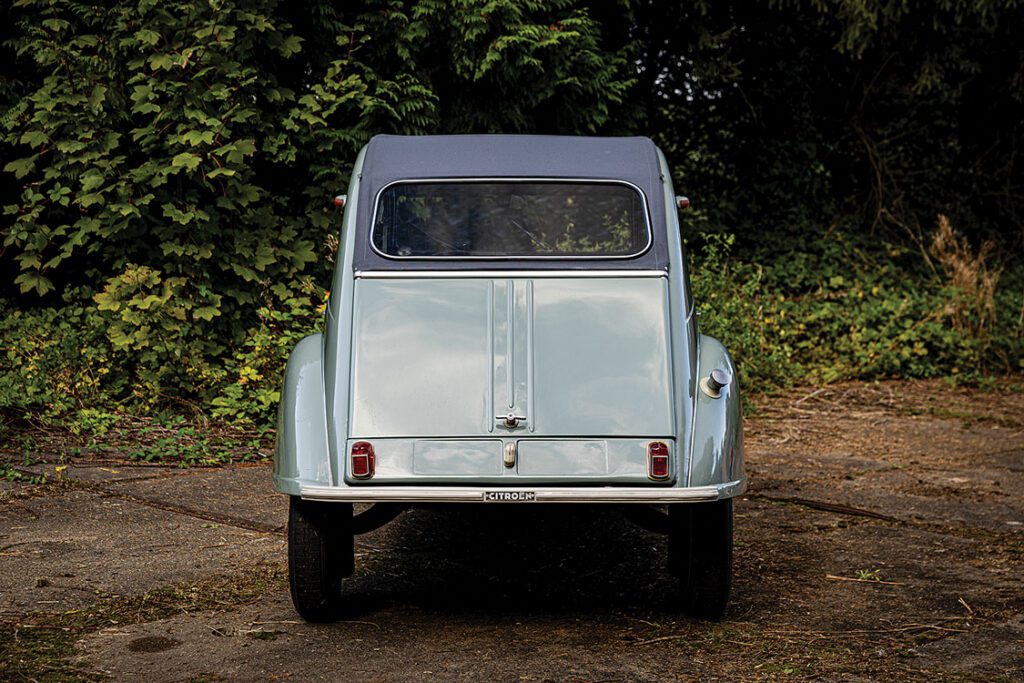
Development work resumed in 1944, but Citroën didn’t simply pick up where it left off. It refined the concept further, concocting an interesting blend of ingenious engineering and mechanical simplicity. The liquid-cooled engine gave way to a 375-cc, 9-hp air-cooled twin that needed no fan belt, distributor or even head gaskets, while the gearbox gained a fourth overdrive speed. Independent front and rear suspension remained, although each side’s leading and trailing arms were now connected through a set of longitudinal coil springs, mounted parallel to the chassis frame. And while the car gained an electric starter and a complete pair of head- and taillamps, the windshield wipers were mechanically driven from the speedometer cable.
Citroën unveiled the finished 2CV, officially christened after its taxable horsepower rating, at the 1948 Paris motor show. While the press was initially dismissive of the car, the French public was not — Citroën’s stand was mobbed with consumers eager to see a car they could not only use, but afford to own (so long as they were willing to subject themselves to a years-long waiting list).
The 2CV soon found success in most corners of the world, save for the U.S., where only 1,000 examples are believed to have been officially imported before new federal vehicle-safety standards brought things to a halt in 1968. Back home in Europe, the 2CV spawned a number of derivatives (including two that tried but failed to replace it outright) and evolved to include luxuries such as electric-driven wipers, three-point seat belts and a “big-block” 602-cc engine, good for anywhere between 26 and 33 hp, depending on model year.
The 2CV maintained a cult following well into the 1980s, but nothing lasts forever. Shifting preferences among new-car buyers, to say nothing of evolving crash and emission standards, effectively crimped the 2CV’s market potential. French production ended in 1988, but la dernière 2CV rolled off a Portuguese assembly line in 1990. At that point, Citroën had built 3.8 million 2CV sedans; factor in 2CV variants like the Ami, Dyane and Mehari beach car, and that figure jumps to just under 9 million.
It’s the simple things…
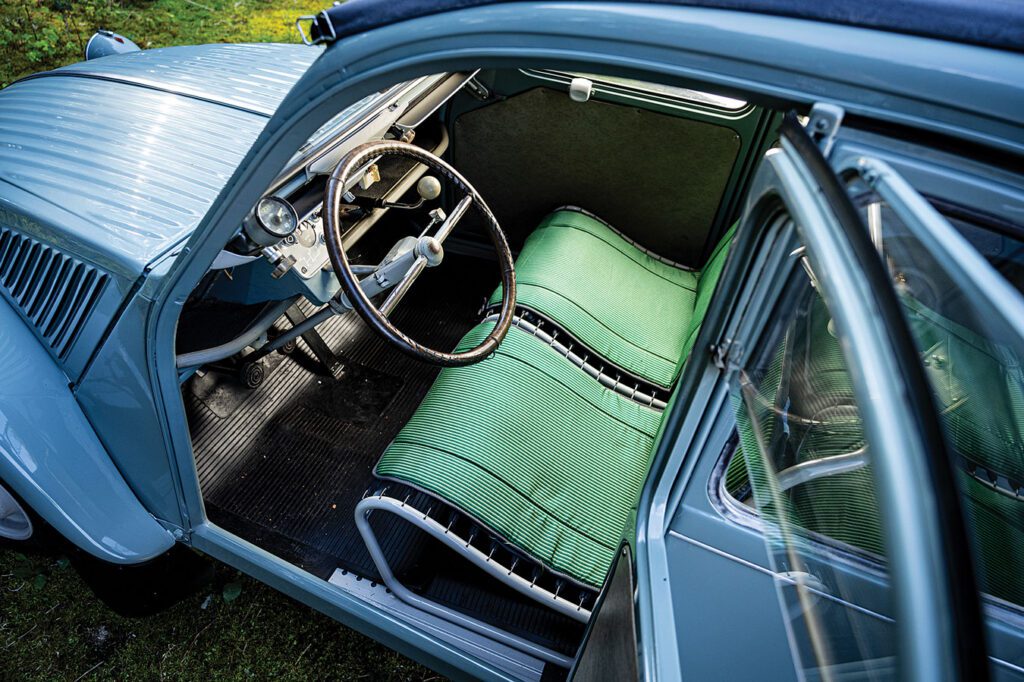
If the 2CV’s charisma doesn’t strike you at first glance, try slipping behind the wheel. Driving a 2CV is a unique experience, to say nothing of an unusual dichotomy. On the one hand, its supple ride, laissez-faire pace and hammock-like seats are relaxing. On the other hand, 2CVs implore you to remain engaged not only to avoid lumbering modern traffic, but to make the most of any gathered momentum when approaching intersections, corners or miniscule changes in elevation.
Early 2CVs may tempt with their pure character, but their scarcity, spartan nature and glacial top speeds may render them difficult to acquire and impractical for regular use in modern traffic. Late-model 2CVs with the more-powerful 602-cc engine are not only more plentiful, but are more tractable in contemporary traffic. Examples in driver condition typically fetch anywhere in the $13k–$22k range.
From Europe with love
Maintaining or even restoring a 2CV is a fairly simple proposition, possibly the next best thing to building a working car from an Erector set. Aftermarket support and parts availability for these cars remains incredibly robust and affordable, although most vendors are based in Europe; budget for shipping costs accordingly.
Still, especially given the 2CV’s highly affordable nature, buy the best example your budget allows. While 2CV running gear is generally robust with regular servicing and maintenance, body shells and frames are extremely rust-prone, especially in firewalls, A-pillars, trunk-floor stampings and floorboards. Replacement panels and galvanized frames are sold today, but shipping may prove an expensive challenge, making finding a structurally solid example all the more important. Find a good one and make your weekend Cars & Coffee, farmers’ market runs and other excursions all the more memorable.