

The Nissan 240SX wound up being a commercial failure over its 10-year production run, yet it was a cultural success long into the decade that followed. After years of strong sales of its inexpensive front-engine, rear-drive Silvia in Japan and other markets, Nissan decided to bring the car to the United States in 1989. It was a seemingly brilliant plan, as the U.S. was just entering a sports-car renaissance when cheap, fun cars would once again be celebrated. But Nissan didn’t trust its instincts. The version of the car it sent to the U.S. didn’t use either of existing powertrains that […]
The Nissan 240SX wound up being a commercial failure over its 10-year production run, yet it was a cultural success long into the decade that followed. After years of strong sales of its inexpensive front-engine, rear-drive Silvia in Japan and other markets, Nissan decided to bring the car to the United States in 1989. It was a seemingly brilliant plan, as the U.S. was just entering a sports-car renaissance when cheap, fun cars would once again be celebrated.
But Nissan didn’t trust its instincts. The version of the car it sent to the U.S. didn’t use either of existing powertrains that would have made it a winner. Instead, a low-revving truck engine was substituted under the hood, trading high-rpm thrills for another soulless upshift.
The 240SX was a fantastic sport coupe, offering plenty of engaging driver feedback, good looks and appropriate pricing. But with a buzzy, underachieving lump under its hood, what followed was unsurprising. Sales, which started reasonably strong, ultimately plummeted.
A decade of fun
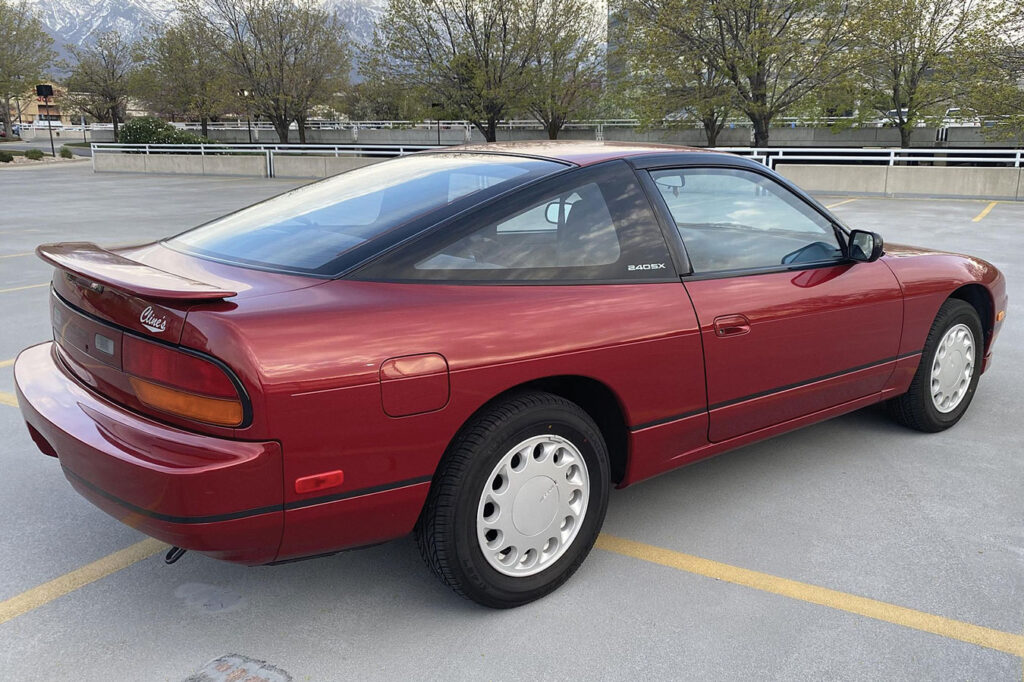
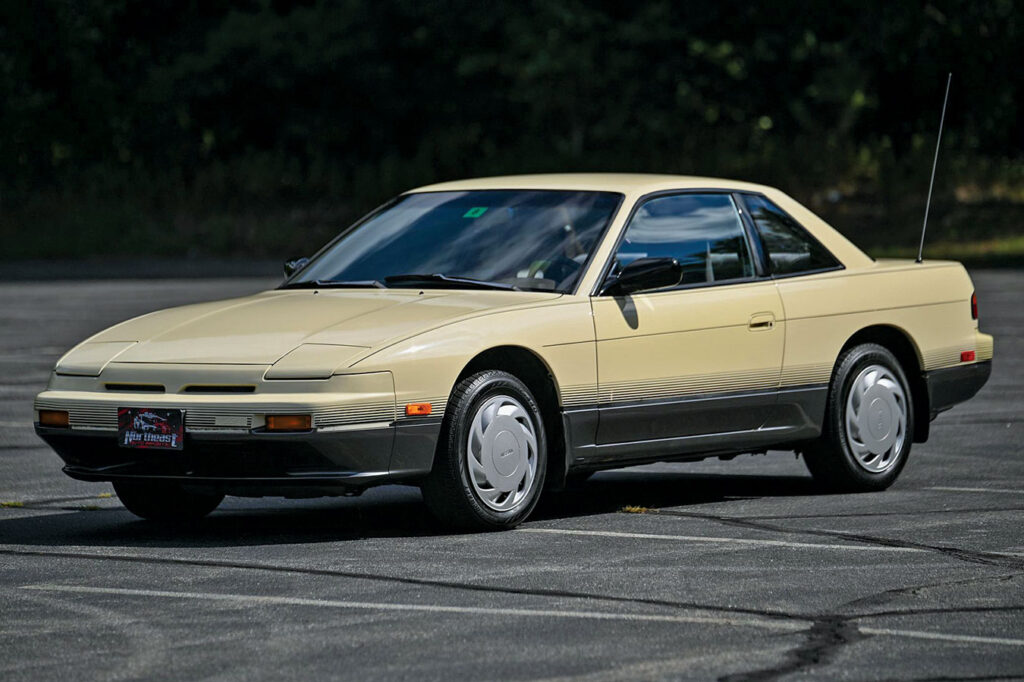
The first-generation 240SX, known as the S13, ran from 1989 through 1994. It came in three body styles: coupe, convertible and hatchback. Two transmissions were available to pair with its 4-cylinder engine, a 5-speed manual or 4-speed automatic.
The front suspension used struts while the rear was a sophisticated multilink setup. A handling package was available that added rear-wheel steering (called Super HICAS), a viscous limited-slip differential, summer tires, and stiffer springs and dampers.
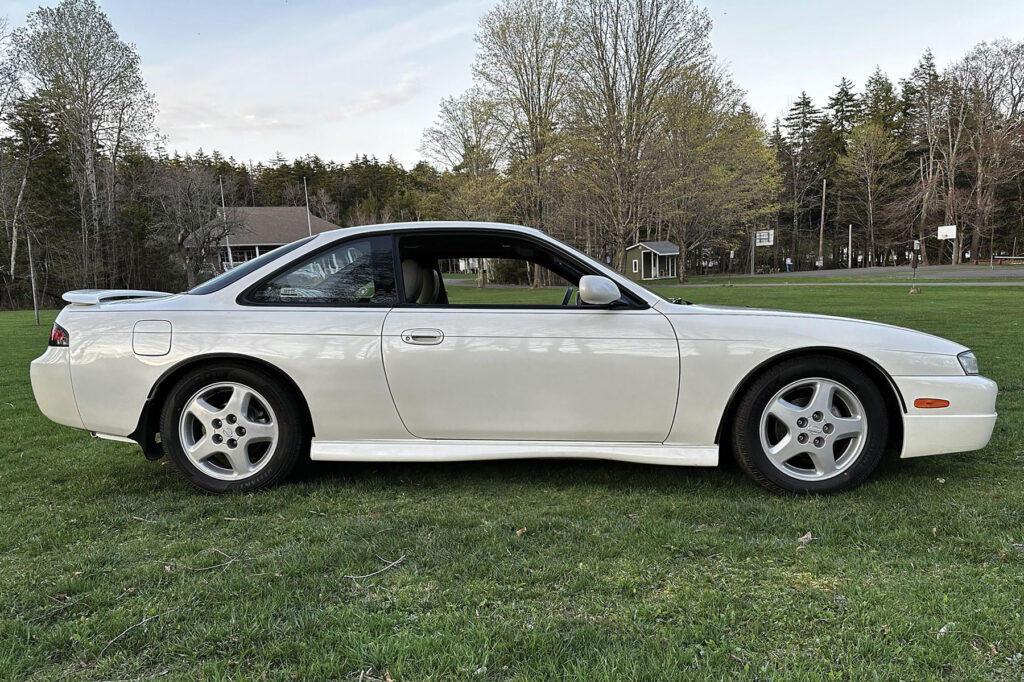
Nissan refreshed the 240SX for the 1995 model year, increasing its wheelbase by two inches, to 99.4, which made the car heavier, but it came with no additional power. S14s looked more aggressive and were only offered as coupes, which were revised again in 1997 with more-angular headlights. In 1998, after two generations and 10 model years, the 240SX vanished from the U.S. market. Few missed it at the time.
Boost envy
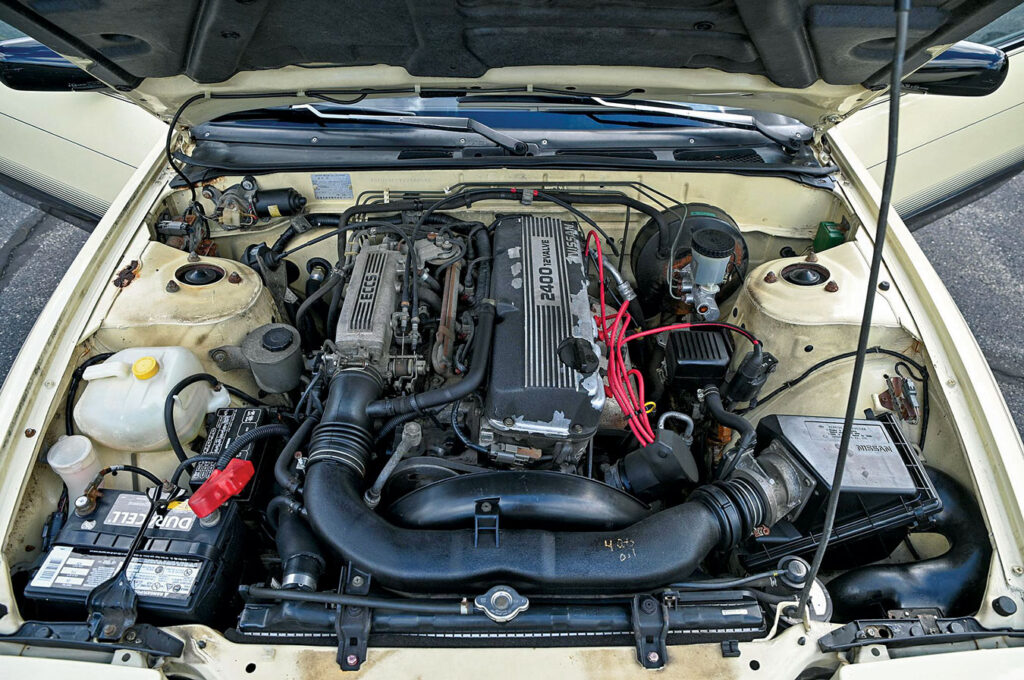
The iron-block KA24E single-overhead-cam 2.4-liter inline-4 under the 240SX’s hood was the culprit, wheezing out 140 horsepower for drivers with the patience to endure its vibrato. The big four was plagued by unpleasant resonance throughout its disappointingly low rev range, a result of its long 89-mm stroke and lack of balance shafts. Despite an optimistic 6,900-rpm redline, power peaked at a thrill-sucking 5,600 rpm.
Nissan knew this was a problem and upped the KA’s output some 15 horsepower in 1991 by adding a second camshaft, four valves, and a letter to the engine code (now the KA24DE). But the power increase still left it about 40 horses down on the class leaders.
The problem was that enthusiasts knew what they were missing. In 1991, the Nissan Sentra SE-R arrived in the U.S. with the 7,500-rpm, 140-horspower SR20DE, the naturally aspirated, aluminum-block engine that powered the Silvia in other markets. Though slightly less torquey than the KA24, its high-spinning power delivery offered the sporty character that the 240SX deserved. It propelled the 80-pound-lighter front-drive Sentra to 60 mph a full 1.2 seconds quicker than the ostensibly sportier 240SX could manage (7.4 vs. 8.6 seconds).
Of course, the engine America should have been entitled to was the far more enticing SR20DET — a turbocharged marvel that powered the top Silvia and 200SX variants in other markets. Its 247 horsepower was an undeniable source of envy for boost-starved Americans.
The opportunity to build a DIY Silvia wasn’t lost on tuners, however. While the Silvia remained on sale in Japan through 2002, many domestic S13s and S14s were fitted with JDM or Australian-market versions of the SR20DET. Perhaps the most sought-after swap is with the engine found in the Spec R version of the final-generation S15 Silvias. With variable-intake cam timing, a Garrett ball-bearing turbo and a large, front-mounted intercooler, it propelled the 6-speed S15 to 60 mph in about 5.5 seconds — a number that would have embarrassed all of the 240SX’s domestic competition.
Still affordable, still desirable
The 240SX has become synonymous with drifting culture in the United States, thanks to its rear-wheel-drive layout and affordability. As drifting grew in popularity in the early 2000s, so did interest in the 240SX. Both the S13 and S14 found new life on the drifting scene, although many cars met their fate sideways against a concrete barrier.
Still, the 240SX remains less popular than the Z32 300ZX, which makes it a quite affordable path into a textbook rear-drive project car. If you can find one, low-mile, one-owner examples sell for less than $30k. Unmodified mid-mileage cars sell for $10k to $15k. S13 versions are far more abundant than S14s, which makes them easier to locate.
Despite its anemic engine, the 240SX manages to be a well-balanced, inexpensive, rear-drive coupe. And since there’s not enough power to get in much trouble, the 240SX is a great starter car for a young driving enthusiast. Since the entire platform offers massive upgrade potential for anyone willing to do the work, it’s also a great basis for an engine-swap or project car. ♦