Mercedes-Benz:The AMG Cars: A Journey Through 30 Yearsof Performance Icons By Brian Long, 480 pages, Veloce, March 2026, $80 This is an ambitious chronicle of AMG’s evolution from independent tuner to fully integrated performance arm of Mercedes-Benz. As with much of the author’s work, the approach is chronological, methodical and clearly well researched. The narrative moves through AMG’s officially sanctioned 1990s offerings, the explosive supercharged and naturally aspirated V8 era, and into today’s turbocharged and hybrid landscape. It functions as both narrative history and usable reference, striking a solid balance between storytelling and specification. There is nothing superficial here. A particularly […]
Mercedes-Benz: The AMG Cars: A Journey Through 30 Years of Performance Icons
By Brian Long, 480 pages, Veloce, March 2026, $80
This is an ambitious chronicle of AMG’s evolution from independent tuner to fully integrated performance arm of Mercedes-Benz. As with much of the author’s work, the approach is chronological, methodical and clearly well researched.
The narrative moves through AMG’s officially sanctioned 1990s offerings, the explosive supercharged and naturally aspirated V8 era, and into today’s turbocharged and hybrid landscape. It functions as both narrative history and usable reference, striking a solid balance between storytelling and specification. There is nothing superficial here.
A particularly welcome feature is the inclusion of separate AMG engine-data sheets for many of the most important models and engine types. For enthusiasts who care about internal designations, displacement changes, output figures and cross-platform applications, these inserts add meaningful depth. This is more than a coffee-table book — it is a reference material you can pull out to verify details.
Production quality is strong throughout. Photography is plentiful, the layout clean and the presentation appropriate for a volume of this scale. A small-but-thoughtful touch is the inclusion of a tassel bookmark. If there is one shortcoming, it is that the pre-merger AMG years could have benefited from deeper exploration. Those early, semi-independent cars possess a raw character and mystique that warrants additional context.
Still, this is a comprehensive and well-produced volume that will appeal to AMG collectors, Mercedes enthusiasts and marque historians alike. For anyone seeking a structured understanding of AMG’s modern lineage, it earns its place on the shelf.
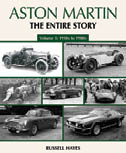
Aston Martin: The Entire Story
By Russell Hayes, 704 Pages, Evro Publishing, January 2026, $275
Russell Hayes’s two-volume history of Aston Martin sets out to chronicle one of Britain’s most storied automotive marques, and the result is an impressively researched and attractively produced reference work. Spanning more than 700 pages and presented in a sturdy slipcase, the set feels substantial from the outset, clearly intended as a serious shelf reference rather than a casual coffee-table book.
Hayes is well suited to the task. A veteran automotive journalist and historian, he has authored numerous books on sports cars and motorsport, including titles covering Porsche, Lamborghini and the broader history of British performance cars. That experience shows in the structure and pacing of the narrative, which traces the company’s story from its early days as Bamford & Martin through the David Brown years, the long era of V8 road cars and into the modern period under Ford ownership and beyond.
The writing style is comprehensive but easy to read, balancing detailed historical research with a clear narrative flow. Hayes draws on a wide range of period sources and historical accounts to tell the story of a company that has endured repeated financial crises while producing some of the most charismatic sports cars of the past century. Along the way, he covers the marque’s racing successes, its cultural impact (including its enduring association with James Bond), and the personalities who shaped its direction over the decades.
The presentation is first-rate. The layout is clean and readable, supported by a generous selection of photographs. Informative sidebars appear throughout the volumes, condensing useful technical and historical information without interrupting the narrative. Another welcome feature is the use of endnotes at the conclusion of each chapter, providing clear sourcing for readers interested in the research behind the text.
Given the sweeping scope of Aston Martin’s history, some periods inevitably receive more emphasis than others. Regardless, the result is a thoughtfully assembled account of this charismatic marque.