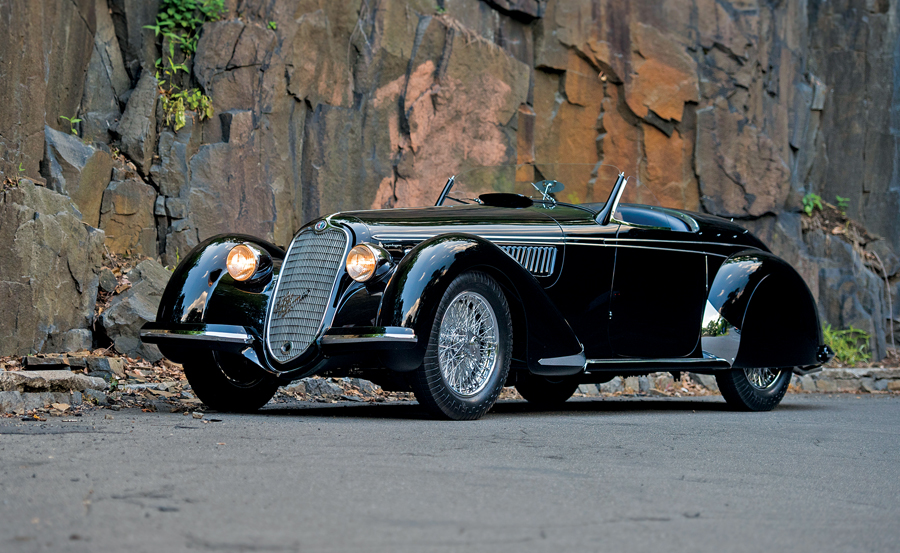
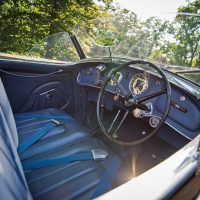
This car, Lot 234, sold for $19,800,000, including buyer’s premium, at RM Sotheby’s Monterey auction on August 20, 2016.
That the Alfa Romeo 8C 2900 is one of a handful of true automotive legends is beyond doubt. In any objective review of attributes of value, the number present in this one model is impressive. Rarity, beauty, performance, historical importance and usability head the list. Even for enthusiasts who are not generally moved by pre-war cars, an Alfa 8C makes an impression.
In this profile, I will not sell the virtues of a car that proclaims them so obviously. Instead, I’d like to discuss what it means to own and sell a car such as this one. There are some traditional rules of the market that fail to apply in the transaction of this Alfa.
One of the first rules is that a prime consideration in the ownership of a collector car today is usability. Whether your enthusiasm runs towards concours display, vintage tours or rallies and racing, you can find something worthwhile to do with this car. In fact, it’s most likely that the number of invitations you might receive would exceed your availability to attend.
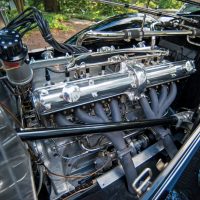
I will pause here to take slight exception to the catalog writer’s use of the quote which describes the Alfa 8C 2900B as “Italy’s version of the Bugatti Atlantic,” and he goes on to compare it to the Type 57SC. While I love the Bugatti, by most objective measures it was not a showcase for the “best engineering of its generation,” which the Alfa arguably is. But, I digress.
Closely following usability is provenance as an important attribute for a valued object. Most cars are sold at auction by anonymous consignors, but this car was an exception. The auction company prominently marketed the identity of the seller, and the lot was extensively marketed as the property of Sam and Emily Mann — very experienced and well-known collectors based in New Jersey and California.
The Manns have fielded cars that have won Best of Show at the Pebble Beach Concours d’Elegance no fewer than four times —more than any other private-party entrant.
Sam and Emily also don’t limit their involvement with cars to static display on lawns. They are enthusiastic participants in tours and rallies, and our subject car has been lovingly thrashed on a host of vintage rally and tour events, including those restricted to other pre-war Alfa 8Cs. For, like a later iconic Italian performance car, the Ferrari 250 GTO, ownership of a pre-war Alfa Romeo 8C automatically enrolls one in a very select club.
A complicated story — but so what?
Another part of provenance is history, and another attribute of value is originality. They don’t necessarily have the same weight in all types of vehicles. I have been quite vocal for a number of years about the role of originality as it relates to the value of competition cars. Race cars are designed to be useful tools to accomplish a very specific goal in a particular place at an exact time. I am not alone in believing that the valuation rules applied to road cars should be used when it comes to a car used in anger.
Add to that some trim elements on the coachwork of this car which have been recently added. While they may not have been there originally, they are in the style of similar cars, and I feel strongly that anything that an original or early owner might have had the carrozzeria that built the car do for him and that suited the car is perfectly fine. As long as all know who did what, when and why, there’s no crime committed. After all, the next owner can reverse it all.
The auction company was quite thorough in describing the somewhat complicated — if not messy — history of this car. It’s a task rendered much easier by the wonderful work of Simon Moore and his devotion to pre-war Alfas, the 8C, and its 2900 version in particular.
When it comes to these vehicles, there are very few, if any, secrets. The production was sufficiently small and the cars desirable enough that it would be difficult to make one up out of whole cloth and have no one aware of it. However, many of these cars have a less-complicated story than this one.
Sam and Emily’s car
Another potential challenge for this car was its close identification with Sam and Emily Mann. There’s a strange phenomenon that occurs in real estate, most often in the Northeast and upper Midwest of the United States — but sometimes in the Southeast as well. The house in which you live is often referred to by the name of the previous resident. “Oh, yes, of course I know Donald Osborne — he lives in the old Smith place.” It’s never your house until you leave it. Then it becomes a case of hearing, “Yes, that nice new couple moved into the Osborne house.”
As collectors, most of us have a certain amount of ego, and a collector who spends just short of $20 million for an object might be less self-effacing than most. To show up at an event with your desired object of passion and have it called “The Sam Mann 2.9” might not be what would make the new owner feel warm and fuzzy.
It’s happened before, when well-known, high-profile cars change hands. Many restorers have been the beneficiaries of re-restorations involving the changing of the color and trim on a car that is perfectly presentable and arguably correct — simply to make it the psychic property of the new caretaker.
It’s likely to happen here, as the car has been sold to another owner in the United States.
Making its own rules
Taking into account all the factors mentioned above, our Alfa still sold for over 300% more than the last example of its type previously best sold at public auction, the “ex-Terry Cohn,” which is to say, the Lawrence Auriana 8C 2900B Corto Pinin Farina cabriolet.
That car, chassis 412012, also restored by Tony Merrick, achieved a then-stunning $4,072,500 at Christie’s Pebble Beach sale in August 1999. Adjusted for inflation, that equals about $5.9 million, so most of the difference between the 1999 sale and this one at $19.8m is purely buyer interest and object availability.
Gooding & Company sold a 1933 8C 2300 Monza at Pebble Beach for $11.9m, further underscoring the magic of a vintage 8-cylinder Alfa.
There’s little doubt that the current market handsomely rewards the unrepeatable and most desirable.
The full measure of one of the greatest cars of all time is that the traditional rules of determining interest and value fly out the window.
This car was certainly well sold, but I would seriously doubt that after the new owner takes “The Sam Mann 2.9” out for his first 100-mph sprint, he (or she) will ever be likely to complain about the price. ♦
(Introductory description courtesy of RM Sotheby’s.)