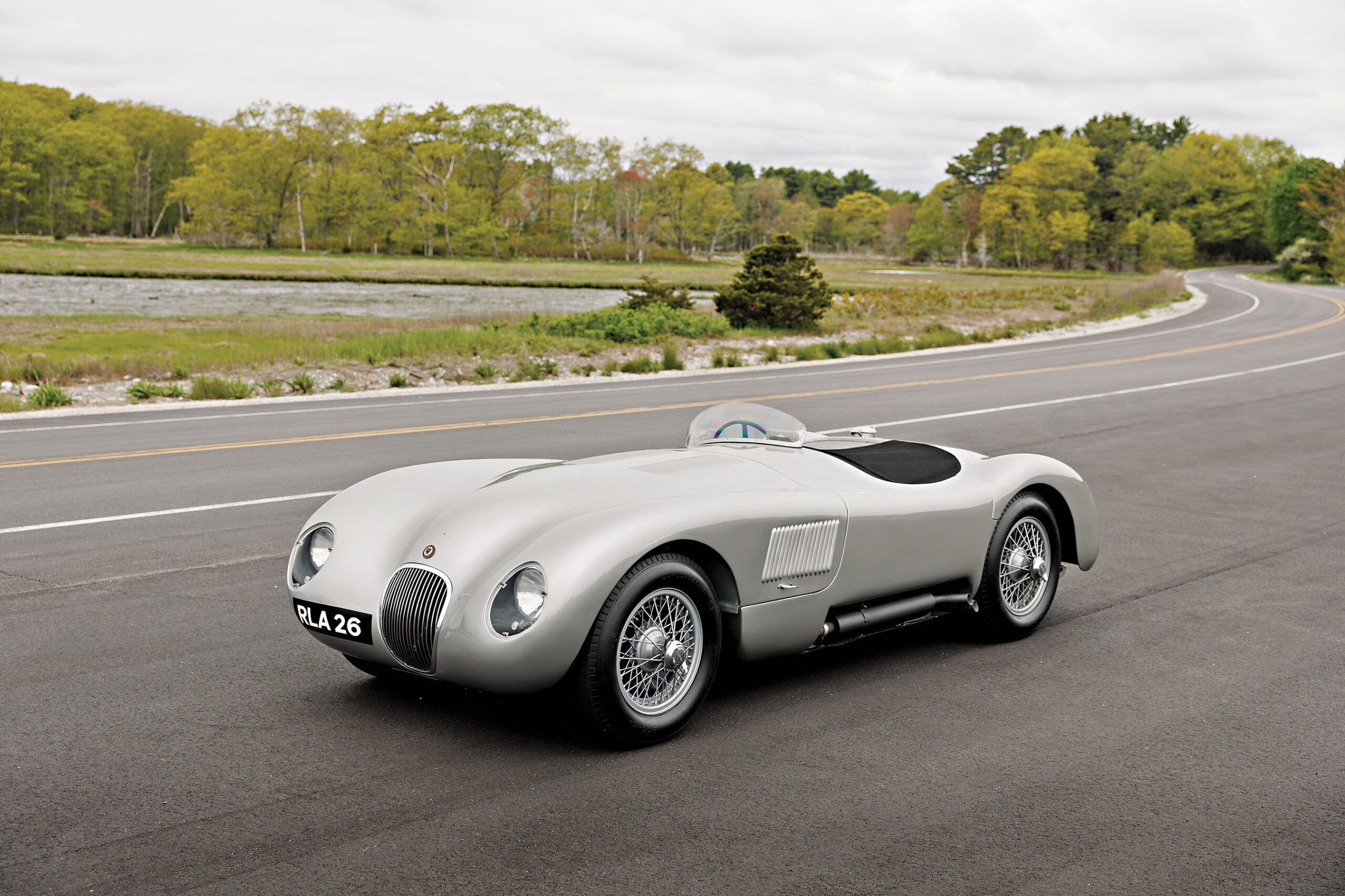
Chassis Number: XKC028

See articles and past auction sales of the Jaguar C-type.
This car, Lot 148, sold for $3,635,000, including buyer’s premium, at Gooding Christie’s Pebble Beach, CA, auction on August 16, 2025.
Post-war life for the vanquished in continental Europe was dreary and difficult, as ravaged cities struggled to rebuild from bombed-out rubble. But there was not much in the way of spoils going to the neighboring victors, either. Even the most basic of goods in post-war Britain were being rationed, housing was in short supply, and the harsh winter of 1947 further strained limited fuel supplies.
Imagine, then, the sight of Jaguar’s sexy XK120 prototype, launched at the 1948 London Motor Show, the first after the war. The team that had assembled this groundbreaking car was led by the multi-talented William Lyons, who sketched out a 2-seat roadster just a few weeks before the show’s opening.
While it was the car that stole the show, its real purpose was to promote Jaguar’s new 3.2-liter overhead-cam straight-6 “XK” engine. Lyons, ever the brilliant marketeer, felt that the snappy Open Two Seater would be a far better launchpad for the new engine than the saloon that had been originally planned as the engine’s first application. The response was overwhelming and the XK120 soon went into production, first as a limited run of alloy-bodied cars and later with steel bodies. No less an enthusiast than actor Clark Gable bought one, telling Road & Track that it was a “masterpiece of design and construction for a production car.”
Sell on Monday
Racing on Sunday was an essential tool for driving showroom traffic in the 1950s, so Jaguar unsurprisingly wanted to get the 120 out on the track, where it notched some notable wins. But none matched the marketing value of a grueling 24-hour fight to the finish in France. When Lyons, wrote Paul Fearnley in Motor Sport, “realized that Hollywood leading man Clark Gable was far from alone in lusting for one, he was sold: Le Mans became Jaguar’s most important showcase of the year.”
After a promising start there in 1950 with three modified XK120s, the Jaguar team addressed the XK120’s competitive constraints […]
With an SCM subscription, you’ll have the information, tools, and advice you need from 50+ world-renowned authorities on collector cars to make the best decisions for buying, selling and collecting classic and sports cars.
- 18 printed issues per year: 12 monthly magazines + 6 special guides
- 150+ printed pages every month that help you be a smarter collector
- Access to 38 years of back issues
Already a subscriber? Login for full access to all articles.
| Vehicle: | 1952 Jaguar C-Type |
| Years Produced: | 1951–53 |
| Number Produced: | 53 |
| Chassis Number Location: | Right-hand side of firewall |
| Engine Number Location: | Right-hand side of firewall |
| Club Info: | Jaguar Club of North America |
| Website: | https://www.jcna.com |
| Alternatives: | 1953–56 Aston Martin DB3S, 1953 Ferrari 340 MM, 1953–54 Maserati A6GCS |
| Investment Grade: | A |
This car, Lot 148, sold for $3,635,000, including buyer’s premium, at Gooding Christie’s Pebble Beach, CA, auction on August 16, 2025.
Post-war life for the vanquished in continental Europe was dreary and difficult, as ravaged cities struggled to rebuild from bombed-out rubble. But there was not much in the way of spoils going to the neighboring victors, either. Even the most basic of goods in post-war Britain were being rationed, housing was in short supply, and the harsh winter of 1947 further strained limited fuel supplies.
Imagine, then, the sight of Jaguar’s sexy XK120 prototype, launched at the 1948 London Motor Show, the first after the war. The team that had assembled this groundbreaking car was led by the multi-talented William Lyons, who sketched out a 2-seat roadster just a few weeks before the show’s opening.
While it was the car that stole the show, its real purpose was to promote Jaguar’s new 3.2-liter overhead-cam straight-6 “XK” engine. Lyons, ever the brilliant marketeer, felt that the snappy Open Two Seater would be a far better launchpad for the new engine than the saloon that had been originally planned as the engine’s first application. The response was overwhelming and the XK120 soon went into production, first as a limited run of alloy-bodied cars and later with steel bodies. No less an enthusiast than actor Clark Gable bought one, telling Road & Track that it was a “masterpiece of design and construction for a production car.”
Sell on Monday
Racing on Sunday was an essential tool for driving showroom traffic in the 1950s, so Jaguar unsurprisingly wanted to get the 120 out on the track, where it notched some notable wins. But none matched the marketing value of a grueling 24-hour fight to the finish in France. When Lyons, wrote Paul Fearnley in Motor Sport, “realized that Hollywood leading man Clark Gable was far from alone in lusting for one, he was sold: Le Mans became Jaguar’s most important showcase of the year.”
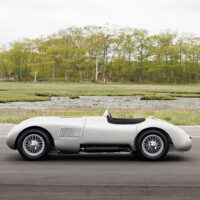
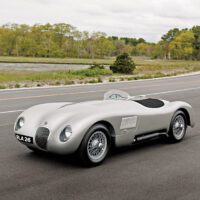
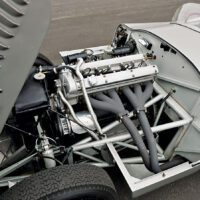
After a promising start there in 1950 with three modified XK120s, the Jaguar team addressed the XK120’s competitive constraints in three main areas for the “competition” derivative planned for 1951. These were noted as pushing the XK engine to achieve 150 mph, improving aerodynamics through wind-tunnel testing, and reducing weight via a tubular, triangulated chassis covered with an aluminum skin. While its function-driven styling may have lacked some of the XK120’s design drama, its long hood, short deck proportions and faired-in headlamps made a remarkable visual statement and left no doubts about its purpose.
It worked — just six years after the end of the war and only three years after the launch of the XK120, the C-type would win the most challenging race in the world. “The victory brought tremendous rewards,” wrote Philip Porter in his detailed history of the C-type and its successors. “It was headline news everywhere and suddenly the Jaguar name was famous throughout the world.” Sell on Monday, indeed. A second win in 1953, enabled by new Dunlop disc brakes and other upgrades, further cemented the C-type’s reputation as a car that ably bridged the sports- and racing-car worlds.
Rare and fair
By 1954, however, the C-type’s Le Mans career was over, superseded by the D-type. Just 53 C-types were built, with 43 of those going to privateers. Thanks to their seductive styling, racing pedigree and bespoke engineering, they became highly sought-after sports racers — though many lived hard lives, succumbing to crashes or other calamities that damaged their precious aluminum shells.
Upper-end pricing for C-types has been driven by racing pedigree, headlined by the three “lightweight” cars built for Le Mans in 1953. One of these sold for $13.2 million at RM Sotheby’s 2015 Monterey sale (SCM# 266148), but that was a decade ago. Two regular C-types that have crossed the block more recently were no-sales, bid to $3.5m at RM Sotheby’s Monterey in 2023 (SCM# 6958245) and $5m at RM Sotheby’s London in 2021 (SCM# 6948536), suggesting a new ceiling for these hand-built and nearly bespoke cars. This is perhaps not helped by the large number of replicas available at a fraction of the price, even from Jaguar itself by way of its contemporary “continuation” cars.
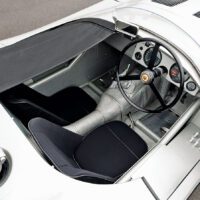
The lack of significant period racing history for our subject car was more than made up for by its balance of restoration and preservation. Its seller may have realized that settling for a more-modest result was preferred over holding out for an uncertain higher price. The new owner receives a singularly significant competition-bred car that has a guaranteed seat in next year’s Mille Miglia, as well as front-row parking at any major concours. Well bought.