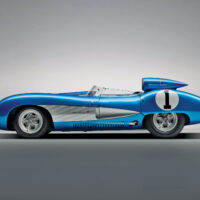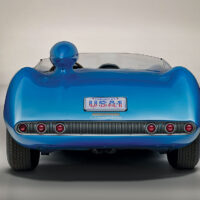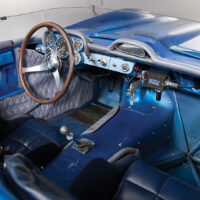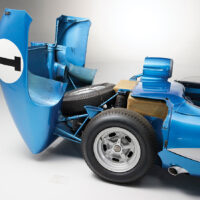
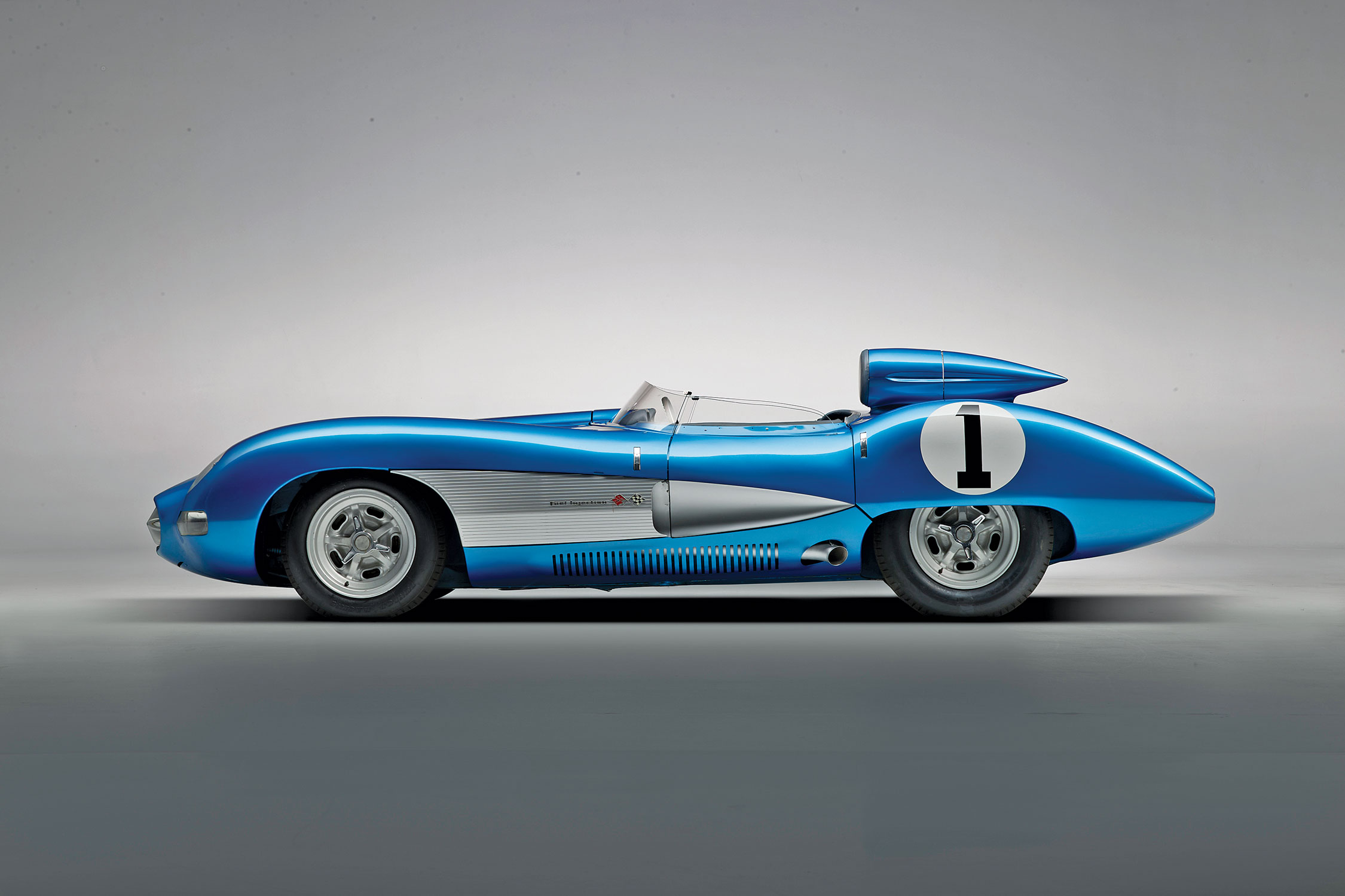
In early October 1956, following approvals from GM’s top brass, Ed Cole, then General Manager of the Chevrolet Motor Division, assigned Zora Arkus-Duntov with the task of building a Chevrolet race car that would be known internally as Project XP-64, later officially named the Corvette SS (Super Sport).
Zora Arkus-Duntov hand-picked a talented team of draftsmen, stylists, mechanics and electricians who worked around the clock, with the lofty goal of campaigning a finished car in 1957. The team operated in a skunkworks-type environment, in a cordoned-off section of the Chevrolet Engineering Center. The new purpose-built race car was to be an exercise in lightweight construction and aerodynamics.
Independent suspension was implemented at the front, with the rear featuring a De Dion setup. A unique front and rear drum-brake system, each with its own individual vacuum-assist unit system, was operated by one pedal. At the front, composite cast-iron brakes with finned outer aluminum drums were mounted at the wheels, while at the rear, brakes were inboard, as on the Mercedes-Benz W196 R.
All of this culminated in a stunning finished product. The aerodynamic, lightweight design of the SS had an impressive power-to-weight ratio the likes of which Detroit had never seen. The SS weighed in at 1,850 pounds dry — nearly 1,000 pounds less than a production Corvette.
Zora Arkus-Duntov had set his sights on competition with the SS, with the goal of competing at Le Mans. First, however, they would need to put the new prototype through its paces. The 12 Hours of Sebring provided the perfect opportunity. The Corvette SS was completed just a week before and arrived just the day before the race. John Fitch had his former Mercedes-Benz teammate, Italian Piero Taruffi, joining him in driving the SS.
Fitch began the race along with the lead pack and would hold 6th place for a number of laps. The speed of the SS was on full display, with the car gapping Jaguar D-types on Sebring’s long straightaway. However, there were issues. The experimental brake system was touchy and prone to locking up, and a faulty connection forced Fitch to swap the coil on the circuit. Further problems arose with the rear suspension chattering and the tires beginning to hit the fenders going over bumps. Not wanting to risk driver safety or damage to the car, Duntov ordered the SS in. Despite these issues, the SS still impressed, leading many to ask what was next for Chevrolet’s new race car.
Then, on June 6, 1957, racing fans and the auto industry alike were hit with shocking news. The Automobile Manufacturers Association (AMA) agreed to end factory-supported racing efforts. This decision effectively ended Chevrolet’s Project XP-64 program.
The car remained in the ownership of GM and was occasionally used for promotional purposes. It is rumored that Arkus-Duntov played a cat-and-mouse game with GM accountants for years, moving the SS around to various buildings to keep it “off the books” and avoid the crusher, a sad fate of most prototypes of the era. The Corvette SS was officially presented to Anton “Tony” Hulman Jr. for display at the Indianapolis Motor Speedway Museum on May 29, 1967.
In the mid-1980s, work was completed on the SS including an exterior refinish, interior retrimming, a new Lexan windshield and a refinish of the wheels. Today, presented in running order and offered for public acquisition for the very first time, the Chevrolet Corvette SS is a once-in-a-lifetime opportunity to acquire a storied experimental car — one conceived and designed by the legend himself, Zora Arkus-Duntov.
(Introductory description courtesy of RM Sotheby’s.)