
Chassis Number: MA200

This car, Lot 248, sold for $482,454 (£368,000), including buyer’s premium, at Bonhams Cars’ Chichester, U.K., sale on July 14, 2023.
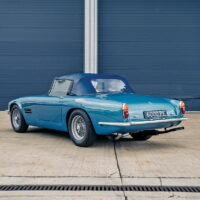
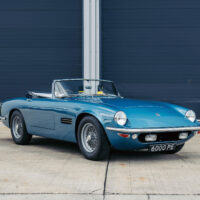
This unique car had been hanging around unloved for some years before an owner in the U.S. took pity and had it restored. Though the press speculated at the time it first appeared in 1963 that it might have been a replacement Cobra, it was nothing of the sort. Larger, and more in the GT mold, this was a concept that, finally, became a reality many years later with the new Brooklands Ace of the ’90s, though few cars were built.
One-off wonder
As it was, AC’s planned move upmarket from the Cobra into GT territory was pinned on the 428, a much simpler solution arrived at by stretching the Mk III Cobra chassis and sending it to Frua in Italy to be clothed. Then it was packed with Ford’s FE V8, also used in some Cobras. Only 80 or so of those were built in both coupe and convertible guise, and many have been flooding back to the market lately with two in this sale alone (also see “Buy/Sell/Hold,” September 2023).
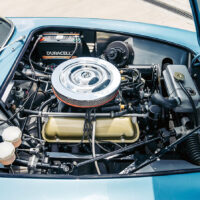
So where does that leave this prototype? It’s larger than both the Cobra and the Ace it was derived from and differed under the skin with a spaceframe chassis, made from box-section tubes in English style rather than that effete round-tube Italian nonsense! Like the Cobra and 428, it’s independently sprung all around, but using a different layout: cantilevered upper links and lower wishbones at the front with struts and wishbones at the rear, and inboard rear disc brakes. The Hi-Po motor was said to have been gifted to AC by Ford after it had run two Cobras at Le Mans using its engines, though it might have been a spare left over from that effort.
As history shows us, the Cobra became the focus. AC was presumably flat-out building the cars for Shelby to put engines into, along with the successive developments of rack-and-pinion steering and coil springs. As an expedient solution to the need for […]
With an SCM subscription, you’ll have the information, tools, and advice you need from 50+ world-renowned authorities on collector cars to make the best decisions for buying, selling and collecting classic and sports cars.
- 18 printed issues per year: 12 monthly magazines + 6 special guides
- 150+ printed pages every month that help you be a smarter collector
- Access to 38 years of back issues
Already a subscriber? Login for full access to all articles.
| Vehicle: | 1963 AC MA-200 Convertible Prototype |
| Years Produced: | 1962 |
| Number Produced: | 1 |
| Tune Up Cost: | $500 |
| Chassis Number Location: | Top of underhood chassis rail on right, near steering column |
| Engine Number Location: | Right rear of block, near oil pan |
| Club Info: | AC Owners Club |
| Website: | https://www.acownersclub.co.uk |
| Alternatives: | 1964–67 Sunbeam Tiger, 1965–73 AC 428 convertible, 1993–96 AC Brooklands Ace |
This car, Lot 248, sold for $482,454 (£368,000), including buyer’s premium, at Bonhams Cars’ Chichester, U.K., sale on July 14, 2023.
This unique car had been hanging around unloved for some years before an owner in the U.S. took pity and had it restored. Though the press speculated at the time it first appeared in 1963 that it might have been a replacement Cobra, it was nothing of the sort. Larger, and more in the GT mold, this was a concept that, finally, became a reality many years later with the new Brooklands Ace of the ’90s, though few cars were built.
One-off wonder
As it was, AC’s planned move upmarket from the Cobra into GT territory was pinned on the 428, a much simpler solution arrived at by stretching the Mk III Cobra chassis and sending it to Frua in Italy to be clothed. Then it was packed with Ford’s FE V8, also used in some Cobras. Only 80 or so of those were built in both coupe and convertible guise, and many have been flooding back to the market lately with two in this sale alone (also see “Buy/Sell/Hold,” September 2023).
So where does that leave this prototype? It’s larger than both the Cobra and the Ace it was derived from and differed under the skin with a spaceframe chassis, made from box-section tubes in English style rather than that effete round-tube Italian nonsense! Like the Cobra and 428, it’s independently sprung all around, but using a different layout: cantilevered upper links and lower wishbones at the front with struts and wishbones at the rear, and inboard rear disc brakes. The Hi-Po motor was said to have been gifted to AC by Ford after it had run two Cobras at Le Mans using its engines, though it might have been a spare left over from that effort.
As history shows us, the Cobra became the focus. AC was presumably flat-out building the cars for Shelby to put engines into, along with the successive developments of rack-and-pinion steering and coil springs. As an expedient solution to the need for a new model, the 428 must have looked attractive.
Long, winding road
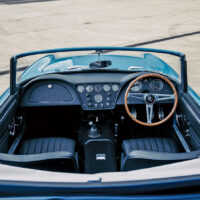
All the while, this prototype was on the radar of AC Owners Club members and the Shelby Registry and has been well documented in books and magazine features. It was last registered in 1997 to an address in Bristol, before being acquired by Mark Gold in 2006. It was in a pretty poor state when he shipped it to the U.S., as galvanic reaction between the steel frame and aluminium skin had promoted corrosion; prototypes weren’t necessarily built to last.
During the strip-down at The Creative Workshop, the car revealed its secrets. Shop owner Jason Wenig told us, “The car was a mess when it came to us with numerous incorrect changes and horrible repair and restoration work over the years.”
The transmission was a rare early Fairlane type, the radiator was borrowed from a 3.8-liter E-type, and the taillights are from a Ford Taunus (fairly obscure now, even in Europe). It was discovered that the replacement V8 fitted for Dr. Field was, in fact, a 289 enlarged to 302 that had been used at the beginning of the Ford GT40 program. An original Hi-Po was what was needed to return the car to its original spec, and Gold managed to find a unit just 218 numbers away, #1445. (A sale-room notice in the catalog erroneously stated the car’s engine number as the original #1664.)
After a three-year restoration, its unveiling at Amelia Island in 2010 was the first time the car had been seen in public in its original form in 40 years. It then appeared at the 2014 Concours d’Elegance of America at St John’s in Plymouth, MI. In 2021 was sold to a new owner in the U.K.
A historical curiosity
This AC prototype is, therefore, storied. But it’s still a unicorn, of questionable value to anyone other than serious collectors, one of whom bought it. The huge cost of restoration will no doubt have influenced the rather stiff-looking estimate of £450k–£550k ($590k–$720k), which it missed by a mile.
It’s a “unique factory prototype” for sure, but that’s for good reason. As a historical curiosity, or dead end if you prefer, I would never have expected it to reach Cobra money and thought that it sold quite well. ♦
(Introductory description courtesy of Bonhams.)