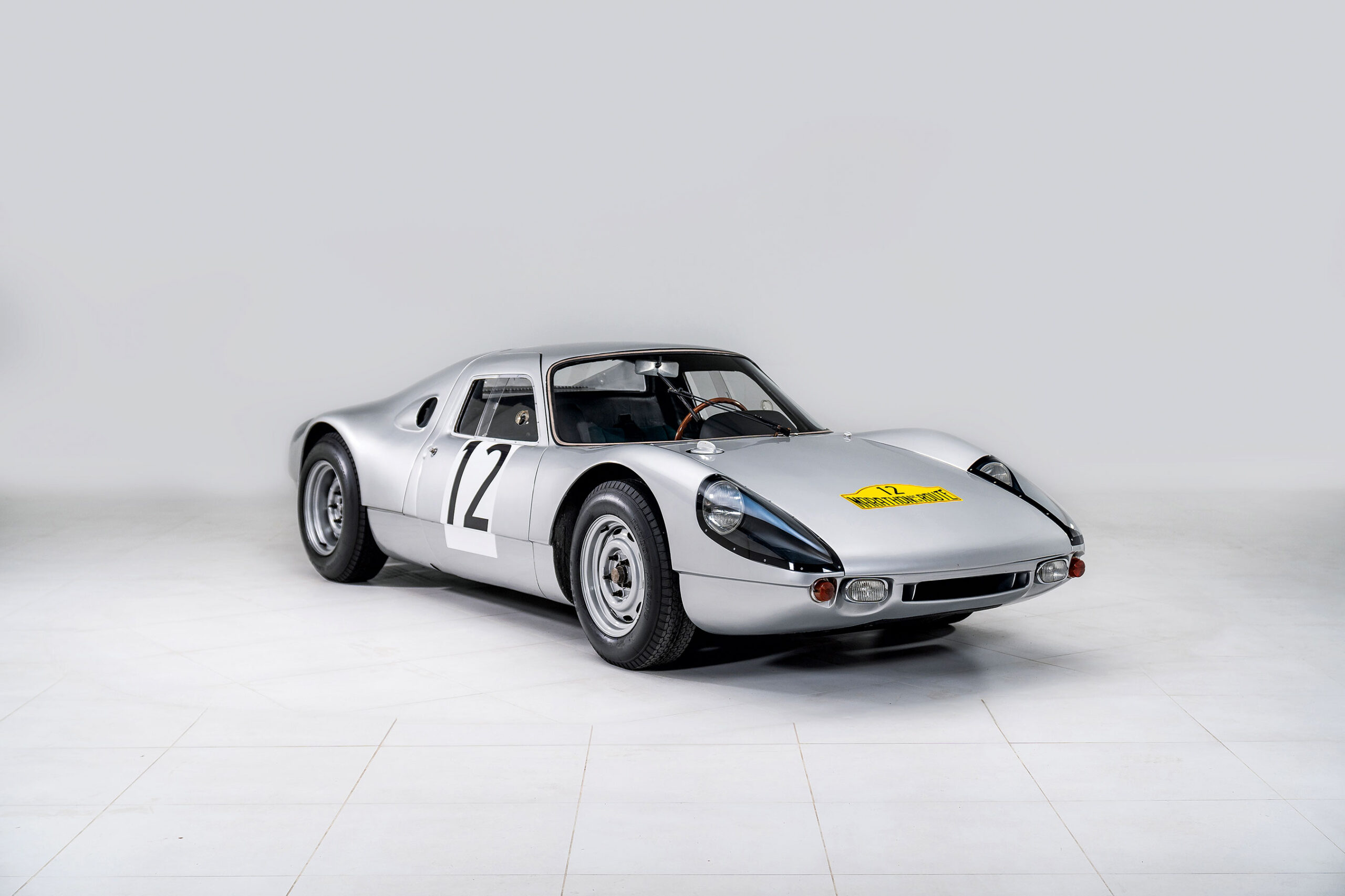
This car, Lot 157, sold for $2,205,000, including buyer’s premium, at Gooding Christie’s Amelia Island, FL, auction, on March 7, 2025.
In comparison with other purpose-built racing Porsches, 904s are relatively common, with 108 originally produced. As such, the market is well established. If you know where to look, there are always four or five quietly available, and their value falls in a predictable range. This car, however, sold for substantially more than would be expected. Why it achieved this result is an interesting question: Has the market moved, was this an aberration, or is there something else to consider?
Racing realities
Racing has always been central to Porsche’s identity, but through the 1950s the realities of German post-war recovery restricted it to the under-2-liter classes. Porsche was successful there, and as the 1960s dawned, the managers dreamed of contesting the biggest stage: Formula 1. Having experimented in 1961, Porsche introduced the flat-8-powered 804 as a regular entrant in 1962. It was not a failure (Gurney won the French GP), but Porsche quickly realized that the costs relative to the marketing potential were unsustainable. The automaker had to return to racing cars that it could produce and sell.
In the ever-evolving world of international FIA racing, low-production racers were moved to the prototype class, while the serious championship points were reserved for GT-category cars with a minimum production of 100 units. This posed a bit of trouble for Porsche, as all its earlier racing cars, from the 550 through 718, had a tube-frame chassis with hand-built aluminum bodywork. There was no practical way to build and sell 100 cars with that approach, so the engineers got to work.
A new approach
Ferdinand “Butzi” Porsche designed the all-new fiberglass body. To create an extremely light, strong and stiff chassis that could be produced in quantity, engineers came up with a sheet-steel box frame (like a ladder frame, but with tall, thin, fabricated side members and cross frames) that was permanently bonded into the fiberglass body structure. Heinkel Aircraft, just down the road, could produce these at a rate of two per day. They were then delivered to Porsche for mechanical assembly and completion. The front suspension was lifted from the 804 Formula 1 design, the rear from the 718, and the steering from the new 911. ATE disc brakes provided stopping power.
Porsche’s original intent was to use the new 901 (911) 6-cylinder engine, but it wasn’t developed enough to trust. Instead, 1964 cars for GT homologation used the 4-cylinder, 4-cam Carrera engine. It was light, powerful and dependable, but incredibly complex, being more of a Swiss watch that made horsepower than a normal motor. Factory build time (with tooling and an experienced mechanic) was 120 man-hours. Breaking one was very bad news. Porsche experimented with both 6- and 8-cylinder engines in the 904 chassis for the Prototype class in 1964. For 1965, the flat-6 was homologated for GT racing, and six 904s were built with that engine.
An important bit of arcana is that the 1964 4-cylinder cars were numbered from 904-1, while the 1965 6-cylinder cars were numbered from 906-1 (the later 906 racers were numbered from 906-101). There is a further issue in that the chassis structure was such that if you hit something hard enough to bend it, the repair option in the day was to ship it back to Stuttgart, where Porsche would move your mechanical bits to a new chassis retaining the original number, then stack the bent one in a corner. Much later, some of those wrecked chassis have been made back into cars, with resulting conflicting chassis numbers.
The 904 proved to be a wonderful racer, with Porsche finishing second in overall points and dominating the under-2-liter class in both 1964 and 1965. It showed a great combination of speed, handling, driver comfort and durability. Sitting on the cusp of a huge technological revolution that changed the nature of racing cars forever, it also is the last racing Porsche that is truly dual purpose. Within constraints imposed by its racing pedigree, it can legally and comfortably be used on public highways. The downside of this is that by 1966, the 904 was fundamentally obsolete as a serious racing car.
Usability over originality?
Collectors can be a curious bunch, and one of the obsessions has to do with originality and “matching numbers.” It all started when Ferraris became the vogue 50 years ago. Ferrari in the early days was a shoestring operation that couldn’t afford its race cars breaking. It engineered and built cars so conservatively that they could last almost indefinitely with the original components. This is fine for street use but an outlier in racing. For serious competition, most English and German marques treated engines and transmissions like rounds in a chamber: Use them up, change them, then go back out.
No matter; originality and matching numbers remain a huge determining factor in the value of old racing cars. With the Porsche 904 in today’s market, the overall value range appears to be $1.5m–$2.4m for good cars. The best have excellent race history, clean provenance, and their original engine in pristine condition. With their mechanical complexity, rebuilding a worn-out or broken 4-cam can easily be a $100k proposition. The 1965 6-cylinder is much more desirable, being more powerful and easier to maintain. But only six cars left the factory that way.
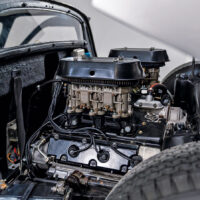
Until a few years ago, any 904 that lost its 4-cam and got a 901 flat-6 was consigned to the bottom of the collectibility range, but this appears to be changing. What gives? My sources suggest that there is a shift happening in the demographic who buys them. It used to be vintage racers and static collectors, but now younger buyers are more interested in driving them in road events. Because of the 1965 cars, any 904 can be FIA-legal with a suitable 901 engine. You can race them if you want, but more to the point, a 6-cylinder car makes a far more enjoyable tour entrant.
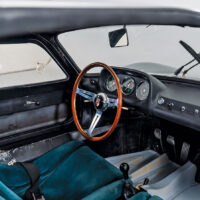
Our subject appears to have ticked almost all the boxes: excellent racing history, known provenance, no serious accidents, and a single loving street user for 52 years so it should be in great condition. It has had its carbureted 901 engine since circa 1970, so it is what it is. The new generation of buyers appears willing to assign value to practical joys as well as pure correctness. It appears to me to have been better sold than bought, but the future market may see it differently.