
Profiles
-
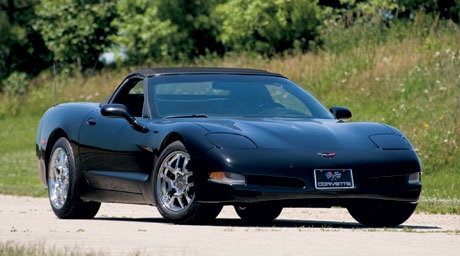
2000 Corvette Convertible
Following an absence of more than a decade, Chevrolet reintroduced the convertible roof option for the 1986 Corvette. This may require some explanation for younger readers, as in the mid-1970s the American car industry thought all convertible cars had one foot in the grave. With the introduction of the 5 mph bumper—and other innovations—federal crash…
-
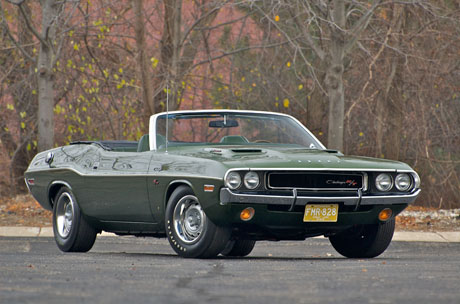
1970 Dodge Challenger R/T Hemi Convertible
Finding a Hemi Challenger convertible today is no ordinary thing, especially when one considers that Dodge produced only nine such cars in 1970. Our subject car, the second one produced, and the first to hit the street, did so under unusual circumstances: it was sold by the dealer principle at cost to a friend while…
-
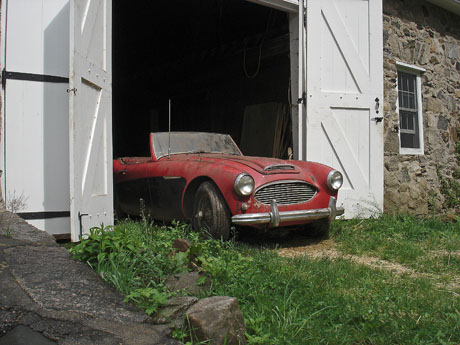
1957 Austin-Healey 100-6 BN4 2+2 Barn Find
Introduced for 1956, the 100-6 represented the most radical step forward in the “Big Healey” sports car development. Despite its initial success, sales of the original Austin-Healey 100 had begun to decline by the mid-1950s, so the model was revamped as the 100-6, BMC’s 2.6-liter C-series six-cylinder engine replacing the original four-cylinder Austin Atlantic unit.…
-
1961 Cisitalia DF85 Coupe
{vsig}2010-9_2524{/vsig}Established by Piero Dusio in 1939, Consorzio Industriale Sportiva Italia manufactured and sold a variety of sporting goods. After World War II, Dusio built a number of Fiat-powered racing cars using the extended acronym Cisitalia, and branched out into passenger cars in 1947. The Cisitalia 202 had a space frame with Fiat 1100 mechanicals, and…
-
1957 Ferrari 250GT LWB Berlinetta TdF
{vsig}2010-9_2525{/vsig}The LWB Berlinetta was one of the great Ferrari racing cars and was the start of the 250 GT Berlinetta’s competition career. It would win more races than either of its legendary successors, the 250 GT SWB Berlinetta or the 250 GTO. Introduced in October, 1954 at the Paris Salon, it was a refined evolution…
-
2002 & 2003 BMW Z8
{vsig}2010-9_2526{/vsig}The Z8 was a break from tradition that BMW had not attempted in many years, perhaps even since the M1. It was more than a heavily modified production car; it was an entirely new roadster, based on the Henrik Fisker-designed Z07 concept and paying homage to the Count Albrecht Goertz-designed 507 of the 1950s with…
-
1959 Elva Mk V
{vsig}2010-9_2528{/vsig}Frank Nichols’ first sports-racer was built in 1954, designed by Mike Chapman, competing immediately and successfully against the similar small-displacement Lotus sports-racers of Colin Chapman. Its success encouraged Nichols to emulate its design with the first few Elva live rear axle sports-racers. Mk II featured a De Dion rear axle. The Mk IV had fully…
-
BMW M6: Still Hot After All These Years
{vsig}2010-9_2521{/vsig}For BMW enthusiasts, the E-24 generation 6-series is one of the marque’s most beloved models, introduced in 1976 to replace the outgoing 3.0 CS and CSL. In 1983, BMW unveiled the ultimate specification of the series, the M635CSi. Specially outfitted by the “M” division with the 3.4-liter DOCH six-cylinder engine of the legendary M1, this…
-
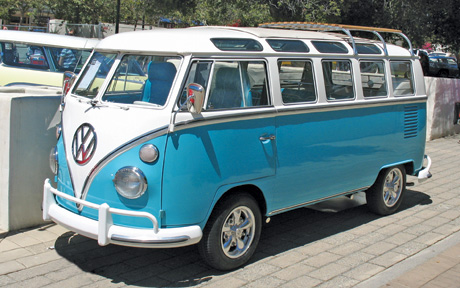
1950-1967 Volkswagen Microbus
During the 1950s, the people charged with the task of selling imported cars were often more in tune with what the market wanted than the manufacturers. Witness the string of successes that U.S.-based BMW and Porsche importer Max Hoffman had with the Porsche Speedster, BMW 2002 and Bavaria. In the case of the VW Microbus,…
-
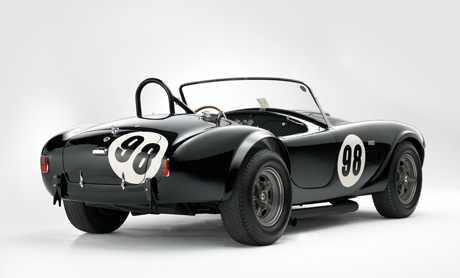
1963 Shelby Cobra 289 “Le Mans” Roadster
In April 1963, Shelby prepared two cars for Le Mans that summer. Features included Dunlop magnesium wheels with larger fender flares, FIA hood scoops and a 37-gallon fuel tank. The engines, stated to be “moderate tune,” had four Weber downdraught carburetors. One team car entered by AC Cars, managed by Stirling Moss and driven by…