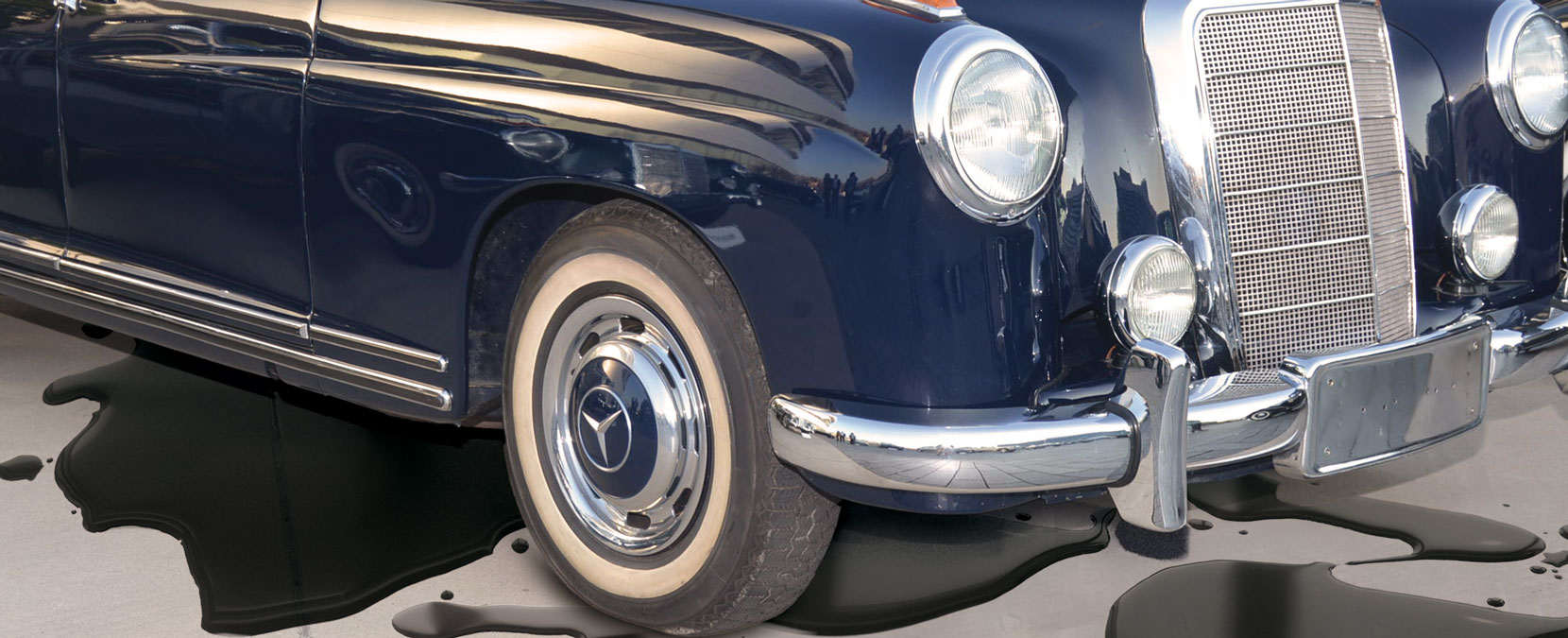
“Harry” and “Sally” are longtime Irish car collectors. At 78, Harry hasn’t given up on cars, and ended up being the high bidder in an online auction on Car & Classic. The prize was a 1955 Mercedes-Benz 220A cabriolet that hammered sold at a bid of €112,100 (about $123k).
What makes this an interesting story is an unusual feature of Car & Classic — it offers an escrow service that protects bidders from buying a misrepresented car. The procedure is seemingly straightforward, with the winning bidder sending the full purchase price to Car & Classic, which then holds it in escrow.
Bid with confidence
This is how the process is described on Car & Classic’s website: “Our secure, third-party escrow process gives you peace of mind for buyers and sellers. Payment goes into a separate, third-party account and is only released when both sides are happy. This protects both buyer and seller.” In another section of the site it reads, “When both you and the seller have confirmed the transfer, your funds will be released from our secure account and paid to the seller.”
Harry and Sally were greatly comforted by this procedure, and it turned out to be helpful. As soon as they were able, they visited the consigning dealer in the Netherlands to inspect the Mercedes. Sally describes the visit: “In the showroom, the car battery was on the floor beside the car and we could not drive it. When they put it on a lift there was oil leaking from everywhere. There was a hole in the windscreen. It was a disaster and not fit for purpose.”
Harry and Sally objected to the condition of the Mercedes, and informed the dealer they did not want the car. No resistance was given.
Back home, they immediately informed Car & Classic that they were dissatisfied with the condition of the Mercedes and rejected it. Car & Classic agreed the funds would stay in escrow pending resolution, confirmed in writing: “As explained on the phone with you this week, the funds will remain escrow [sic] until this has been resolved, and we will speak with you first before any action is taken, so please do not worry about the money in escrow.”
Let’s make another deal
Harry and Sally state that they had further communications with the dealer, who suggested that they instead accept a 1970 Mercedes-Benz 280SE coupe that was in better condition and might be more to their liking. It was also cheaper at €92,100, which would entitle Harry and Sally to a €20,000 refund. They agreed to the proposition. Four bad things then happened.
First, Harry and Sally got word from Car & Classic that their money had been released to the dealer since they had resolved the dispute.
Second, the dealer explained to Harry and Sally that the 280SE had been included in an auction and could not be pulled. Their purchase would have to wait for the conclusion of the auction.
Next, the dealer informed them that the 280SE had indeed sold at the auction. But not to fear, the dealer promised to find another car. It informed them that “…you now have a shopping credit with us for the amount paid to Car & Classic (minus auction costs). Now we would need to find a suitable car for you to use it on.”
Finally, the dealer came up with another car. Unfortunately, it was offered at €370,000, which was well beyond their budget.
That was the last straw, and Harry and Sally contacted their counsel, Phillip Sharpe at Wilmot & Co. Solicitors LLP, in Cirencester, U.K. Sharpe made several attempts to resolve the matter with the dealer and Car & Classic, to no avail. They are now in the process of instituting litigation to get their money back.
How escrow is supposed to work
“Legal Files” has often recommended escrows as a good way to protect both parties and still honor the adage that the seller should never have the car, the money and the title at the same time.
An escrow agent is given both the money and the title documents. When the parties give the “all clear,” the escrow agent sends the money to the seller and the title to the buyer. The car is then released to the buyer, and the car can even be stored with a neutral party pending that event.
The escrow agent serves a valuable function for both parties — the buyer who doesn’t want to give up his money until he gets the car, and the seller who doesn’t want to give up his car until he gets his money. Car & Classic is providing a useful service here.
But while the parties are protected, the escrow agent is placed in a position of risk. It is imperative for them to act only on unassailable instructions. If they don’t have that, and they release the funds or documents improperly, they subject themselves to liability for damages.
Harry and Sally insist that Car & Classic agreed not to release the money without approval from both parties, and that they never gave their approval. If that is found to be the case in the litigation, then Car & Classic will be obligated to repay Harry and Sally their money, and possibly their legal fees based upon the terms of the escrow contract and applicable law.
Car & Classic can then go after the dealer to get its funds back. If it can’t, then it takes the loss. That risk is why escrow agents are always careful and never inexpensive.
Under U.S. law, the dealer’s position that Harry and Sally are left with a “credit” for their €112,100 is patently ridiculous. A defaulting dealer just can’t do that. If a sale fails, the dealer must refund the money paid by the buyer. It doesn’t get to keep the money and force the customer to take some other merchandise that they did not try to buy.
Sale at a distance
Sharpe also explained an interesting set of European Union regulations involving “sales at a distance.” These regulations resulted from a public outcry over notorious window salespeople who pressured people into buying new windows either through telephone or in-home solicitations. Such sales were categorized as being “at a distance” since they were not made at a bricks-and-mortar store.
Under these regulations, items purchased “at a distance” are subject to a 21-day right of cancellation for a full, no-questions-asked refund. If the seller does not give notice of that cancellation right, then the cancellation period runs for 12 months. The regulations make an exception for live auctions, since those sales are deemed made at the auctioneer’s premises. That is the case even for remote-auction bidders.
The dealer has suggested that the regulations are inapplicable because Harry and Sally reside outside the EU. Sharpe disagrees completely, so we’ll see how that debate turns out. He also thinks that there are several ways that Harry and Sally might be entitled to recover their legal fees, although that doesn’t seem ironclad.
This is a key point, as the litigation costs are estimated to be in the £80k–£100k range ($102k–$127k). If you add up the same budget for both the dealer and Car & Classic, everyone’s combined legal fees approach three times the amount at stake.
Still a good idea
While it looks like this escrow deal went awry, don’t take that as a blanket indictment of escrow arrangements. They are still the best approach to closing the sale and purchase of a collector car. It’s just that you have to pick a good escrow agent who will pay attention to all of the details.
Of course, you can sidestep this by having the buyer show up with a suitcase full of cash that he exchanges for the title and the car, but that plan has some obvious shortcomings.