

A common complaint in the collector car hobby involves a car owner who grows frustrated with a restoration shop that takes years and years to complete a restoration, no matter how hard it is pushed. Here’s an example of the complete opposite — an owner who won’t pick up his car. Do-over Bryant McCants wanted to get his 1970 Ford Mustang restored. He took it to his local Maaco shop, owned by Hanson Butler, for some body repairs and a new paint job. Seven months later, Butler told McCants that the Mustang was done and ready to be picked up. When […]
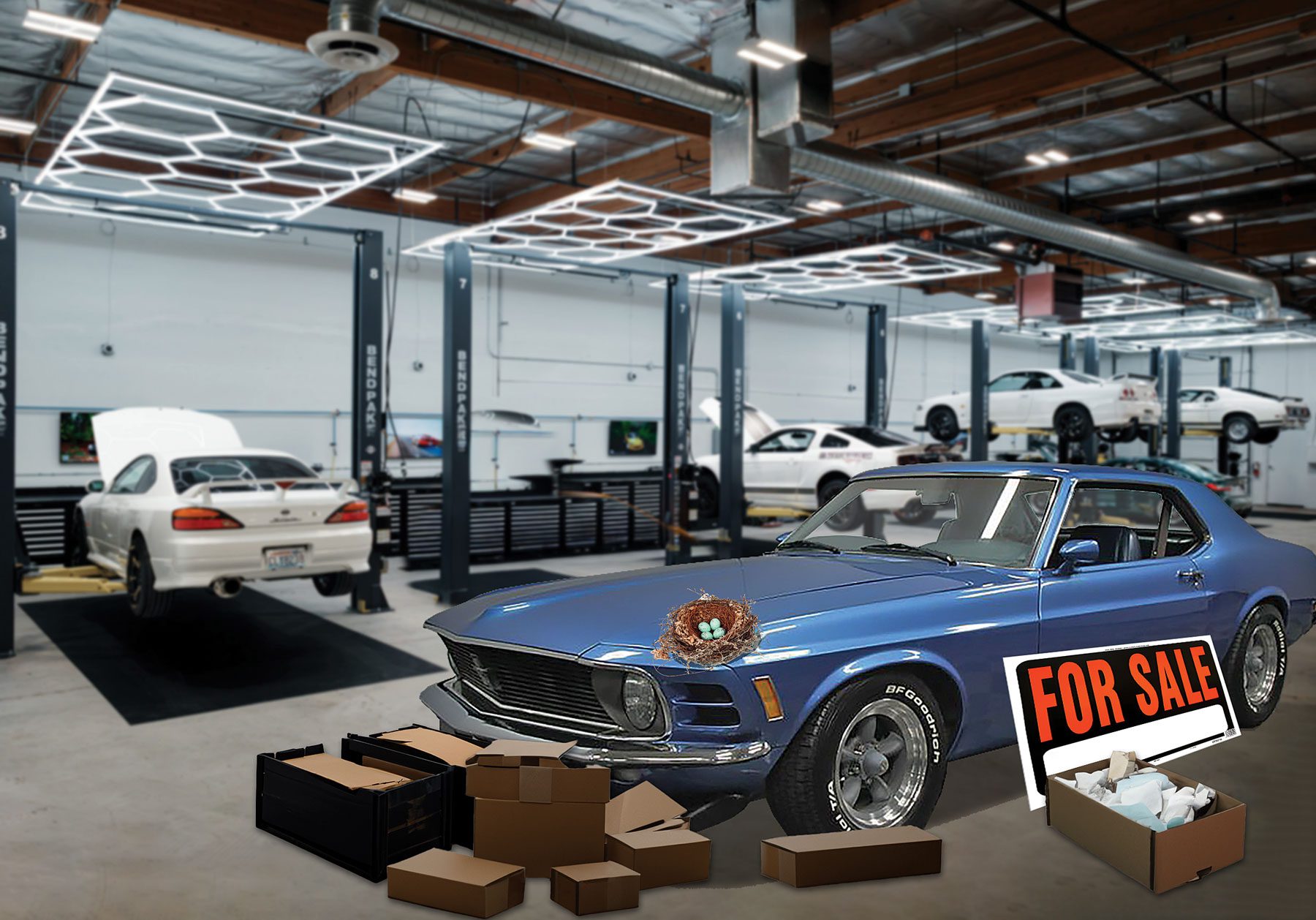
A common complaint in the collector car hobby involves a car owner who grows frustrated with a restoration shop that takes years and years to complete a restoration, no matter how hard it is pushed. Here’s an example of the complete opposite — an owner who won’t pick up his car.
Do-over
Bryant McCants wanted to get his 1970 Ford Mustang restored. He took it to his local Maaco shop, owned by Hanson Butler, for some body repairs and a new paint job. Seven months later, Butler told McCants that the Mustang was done and ready to be picked up. When McCants saw it, however, he was unhappy with the paintwork, and Butler agreed to repaint the car.
One month later, Butler texted McCants that the car was ready. No response. He tried again the following month, and McCants responded that he couldn’t get there until Saturday. But McCants didn’t show and texted that he was at the hospital with his mother. Butler sent several more texts to no avail. Finally, another month later, Butler tried one last time, asking, “Now what do I have to do to get you to get this car?”
There was no immediate response. A while later, however, McCants called Butler to tell him that he would be “traveling nonstop for the next three to four months,” and couldn’t pick up the car until he returned.
McCants did send a friend, a used-car dealer who rented storage space to McCants for his other collector cars, to the Maaco shop to inspect the Mustang. The friend claimed that it still needed some more paintwork.
Although McCants had already paid the full bill, the shop had the right to charge for storage when the car was not picked up promptly. Butler chose not to charge him because “he was a regular customer, and I just wanted the car off my lot.”
Sell-off
Exasperated, Butler decided to start the process to have the Mustang declared abandoned under the Virginia Abandoned Vehicle Act. That involved submission of an online application to the DMV, which sent a formal notice to McCants at his last known address, advising him that he had 15 days to get the car. Otherwise, it would be sold to a third party or sent to a demolisher. When McCants did not respond, Butler sold the Mustang to one of his mechanics for $2,000; the mechanic then went to the DMV and got a title issued in his name.
When McCants finally got around to picking up his car, he was informed that it had been sold to the mechanic, and he couldn’t have it. McCants responded by suing Butler and the Maaco shop for conversion, claiming that the abandoned-vehicle sale was improper because the shop had never finished work on the car and he had never received notice of the sale.
The jury agreed with McCants and awarded him $78,500 plus interest. Butler and the Maaco shop appealed.
Lack of notice
The Court of Appeals of Virginia didn’t have much trouble with the lack-of-notice claim. Once DMV received the abandoned-vehicle application, it searched its records and found nothing for McCants. It then checked the national crime and title databases and came up with an address for McCants in Michigan, to which it sent the notice.
McCants acknowledged that the Michigan address was what he called his “first address” — his parents’ residence. Apparently, he gave that address to the Michigan Secretary of State office (which handles vehicle services in the state) and never updated it. That was on him, as it was his duty to keep his address updated.
With no other information to go by, the Virginia DMV properly sent the notice to the Michigan address. Under the statute, if DMV follows the requirements of the statute, which it did, its notice “shall be sufficient regardless of whether or not it was ever received.”
Abandoned?
The tougher issue was whether the Mustang was actually an abandoned vehicle. Clearly, McCants never intended to leave the car there forever. But even though the Abandoned Vehicle Act appears to be aimed at dilapidated vehicles that are left behind on someone else’s property, it isn’t actually limited to those situations. Under this law, an abandoned vehicle is defined as a vehicle that “has remained for more than 48 hours on private property without the consent of the property’s owner, regardless of whether it was brought onto the private property with the consent of the owner or person in control of the private property.”
Essentially, when the vehicle overstays its welcome, it can be considered to be abandoned, even though that wouldn’t meet the normal dictionary definition of “abandoned.” That’s how laws work. They define terms, and their definitions prevail even if the normal meaning of a word might be different.
The Court of Appeals decided that McCant’s Mustang met this definition. It didn’t matter whether the work had been completed or not. It was enough that the Maaco shop declared it done and told him to come get it. When the Mustang remained on the property without the owner’s consent 48 hours later, it became an abandoned vehicle.
The Court of Appeals reversed the trial court’s judgment, deciding that the trial court should have ruled against McCants even though the jury found in his favor. Technically, the Court of Appeals decided that there was simply no evidence presented that would have enabled the jury to find in McCants’ favor. Butler and the Maaco shop owed McCants nothing, and the mechanic got to keep the Mustang. That was even though Butler testified that he started the abandoned-vehicle process only because he was just hoping that McCants would get the DMV letter, “know I was serious, and come pick up the vehicle.”
Takeaways
What can we learn from this?
First, it never pays to be a jerk. McCants displayed a lot of arrogance here, and it cost him a $78,000 Mustang plus his attorney fees at trial and on appeal, which likely exceeded the value of the car. We’re all busy, but we can’t ignore the value of other people’s time and expect them to conform to our schedules. The numerous texts and delays were bad enough, but the ultimate “I’m going to be gone for a few months, so hold on to my car” command was hugely disrespectful and just too much for any reasonable person to bear.
Second, when you push people too far and they get angry, it’s often difficult to get them to “be reasonable.” Even though Butler testified that he just wanted McCants’ attention and to get rid of the car, once the legal process started, his position hardened. At some point, it becomes more about pride and principle, not just money.
Third, the law affords a lot of legal protection to auto-repair shops. Our state legislatures see repair-shop employees and owners as workers who are just trying to make a living. They shouldn’t have to wait and bear legal expenses to get what they are due.
The laws give shops pretty powerful lien rights to help them get paid. They can hold your car until you pay your bill, and they can charge for storage. If they aren’t fully paid within the time allowed in the law, they can sell your car to get paid. As a car owner, you must respect that and take all necessary steps to prevent the sale from happening. Because once it happens, you don’t have any good way of undoing it and getting your car back.
Finally, the best time to get a problem worked out is before it blows up and the legal process starts. Once things get into the court system, all bets are off. Both sides have invested in legal help, and the ante has grown tremendously. The cost, as well as the emotional impact, makes it harder to work out a rational deal. An early deal is usually the best deal.
John Draneas is an attorney in Oregon and has been SCM’s “Legal Files” columnist since 2003. His recently published book The Best of Legal Files can be purchased on our website. John can be contacted at john@draneaslaw.com. His comments are general in nature and are not intended to substitute for consultation with an attorney.