
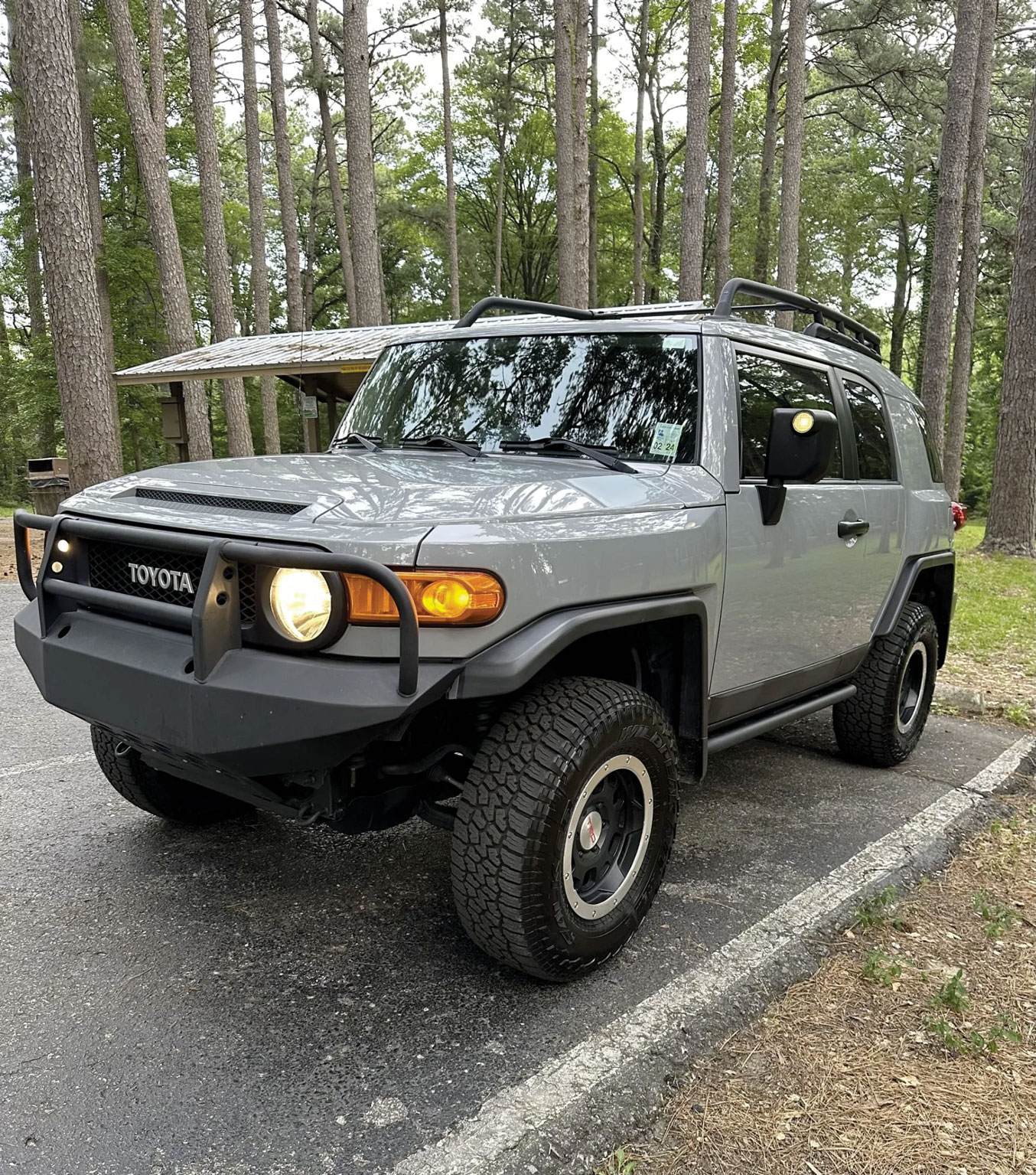

2013 Toyota FJ Cruiser Trail Teams Special Edition S/N JTEBU4BF8DK163278. 70,000 miles. “4.0-Liter 1GR-FE V6, 5-speed automatic transmission, dual-range transfer case, locking rear differential, Cement Gray paint, black-and-gray cloth upholstery, 16-inch TRD alloy wheels, Bilstein front shocks, rear air-bag suspension system, Trail Teams Special Edition, aftermarket front bumper, brush guard, roof rack, rock sliders and skid plates, TRD cat-back exhaust system, A-TRAC traction control, removed parts.” Condition: 1-. SOLD AT $33,600. Bring a Trailer, 7/18/23. We have been following FJ40s, FJ70s and FZJ80s for a while, but the revived FJ Cruiser (introduced for the 2007 model year) is getting old enough […]
2013 Toyota FJ Cruiser Trail Teams Special Edition
S/N JTEBU4BF8DK163278. 70,000 miles. “4.0-Liter 1GR-FE V6, 5-speed automatic transmission, dual-range transfer case, locking rear differential, Cement Gray paint, black-and-gray cloth upholstery, 16-inch TRD alloy wheels, Bilstein front shocks, rear air-bag suspension system, Trail Teams Special Edition, aftermarket front bumper, brush guard, roof rack, rock sliders and skid plates, TRD cat-back exhaust system, A-TRAC traction control, removed parts.” Condition: 1-. SOLD AT $33,600. Bring a Trailer, 7/18/23.
We have been following FJ40s, FJ70s and FZJ80s for a while, but the revived FJ Cruiser (introduced for the 2007 model year) is getting old enough to join the collector-car ranks as well. For most cars, steep initial depreciation is followed by a decade or more of prices dropping before they start bouncing back. Not so here. The FJ Cruiser sold for around $30,000 when new. Prices bottom out today at about $15,000 in the private market, but that’s for well-used trucks with a lot of miles. The nicest examples routinely exceed their original MSRP, and overall, the FJ Cruiser has maintained its value extraordinarily well over the decade since it has gone out of production. It’s both a comfortable daily driver and capable on trails. Its cartoonish looks and rear suicide doors have aged well. Later FJ Cruisers such as our subject car benefit from updates that fix issues found in earlier models such as water-pump leaks, oil leaks around the timing-chain cover and knock-sensor issues. This example is a Trail Teams limited edition (2,500 produced for 2013), featuring some TRD parts and a special color. Its sale price was in line with similar FJ Cruisers, and there is clearly some room for appreciation here. Well bought.
1991 Eunos Cosmo S
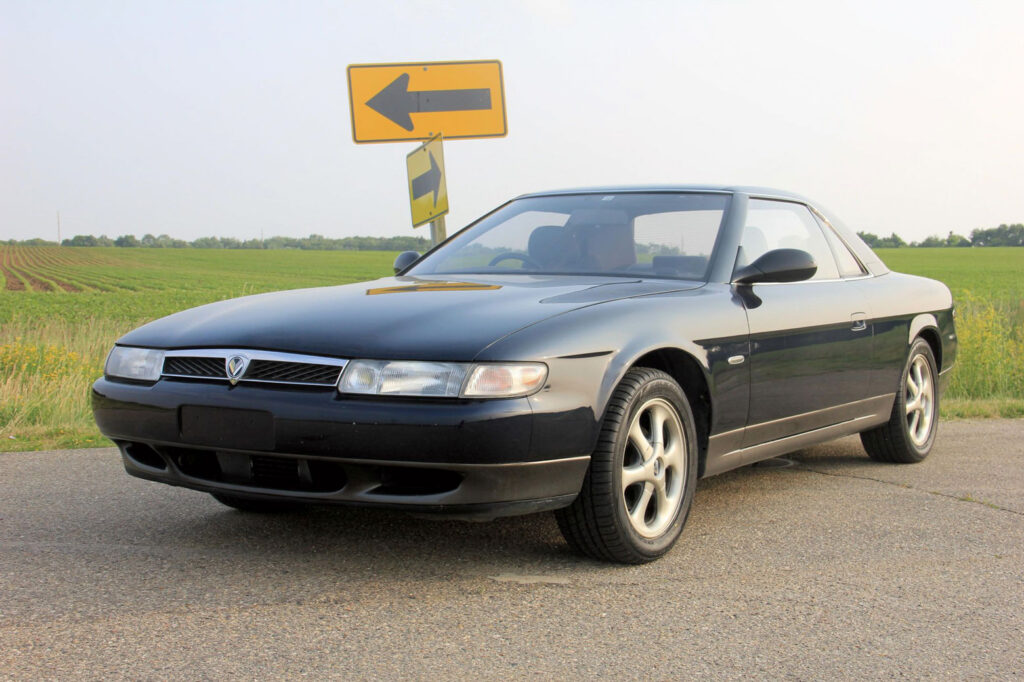
S/N JCESE102894. 61,700 kilometers (38,400 miles). “2.0-liter triple-rotor twin-turbocharged 20B Wankel engine, 4-speed automatic transmission, 280 horsepower and 296 lb-ft of torque, S “Sport” trim, one of 3,550 Cosmos, cloth upholstery, 16-inch alloy wheels, air conditioning, power-adjustable driver’s seat, an LCD dash display, a rear-seat air purifier, U.S. title.” Condition: 1. SOLD AT $30,450. Cars & Bids, 7/05/23.
While this may look like a Mazda MX-6, the Cosmo was actually Mazda’s upscale tourer. Eunos was Mazda’s attempt at a Lexus-like luxury brand, with all of the latest tech for the 1990s. It was the first car to offer a GPS navigation system, which used a CRT touchscreen. The most exciting feature of this particular Cosmo is the twin-turbocharged 20B engine. It is similar to the 13B engine found in the third-generation RX-7 (FD), except with an extra rotor. This three-rotor engine was the largest rotary ever offered by Mazda. It was only available in the Cosmo and less than half of them had it. That has made it a popular RX-7 engine swap, and in Japan a 20B engine alone can sell for around $10k–$12k. Our subject car sold for more than it would have made in the Japanese market, but having already been imported and titled definitely helped. Well sold, for now.
1984 Toyota Celica GT-S coupe
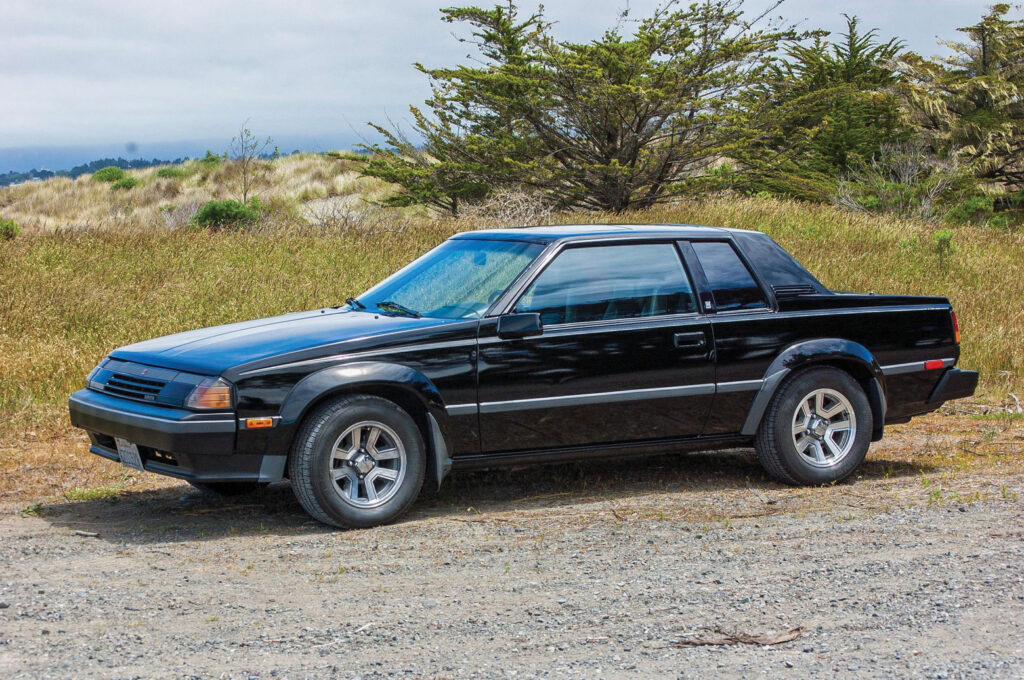
S/N JT2RA65C4E4035627. 167,600 miles. “22RE 2.4-liter 4-cylinder engine, 5-speed manual transmission, rebuilt engine with a ported and polished cylinder head, stainless-steel oversized valves on bronze guides, upgraded fuel injectors, Thrush stainless-steel non-baffled exhaust, KYB front shocks, Tokico rear shocks, A/C system converted to R134a refrigerant.” Condition: 1. SOLD AT $8,360. Cars & Bids, 7/10/23.
Many Toyotas from the 1980s are reaching collector status: Land Cruisers, AE86 Corollas, MR2s, 4Runners, Supras, the Hilux/Pickup, and even Celicas. Well, this is a Celica — it should be collectible, right? Not necessarily. Toyota made different model variants in the era; some were more successful than others. The Celica lineup included the liftback (with pop-up headlights similar to our subject car), and the Celica Supra, which looked similar to the liftback but with a more-aggressive front end. And then there was this variant, the coupe, the least sporty of the three. Celica trim levels included GT and GT-S, which got you independent rear suspension rather than the solid axle on the GT. Other upgrades included fender flares, larger wheels and a sportier interior. The biggest downside to the base Celica over the Celica Supra was under the hood. The standard engine was the same one Toyota used in its pickups at the time, the 4-cylinder 22R. The Celica Supra came with the more-powerful 6-cylinder 5M-GE. As a collector car, the liftback Celica looks close enough to the Celica Supra that it’s still somewhat desirable. The coupe, on the other hand, has not generated a lot of interest outside of those who might have nostalgic memories for one. Our subject car is in great shape and has a freshly rebuilt motor, making it well bought for the right person but I doubt it will prove to be much of an investment. ©