

The first Monte Shelton Northwest Classic Rally was held in 1988. Sponsor Shelton was a Jaguar and Rolls-Royce dealer and sports-car racer in Portland. At that time, the Northwest Classic was the only large multi-day touring event for old cars in the region. It grew quickly, with over 100 entries some years. I entered that first rally in our 1965 Alfa Romeo Giulia Spider Veloce, which was 23 years old at the time. I don’t recall the exact eligibility cutoff date, but it had to be sometime in the mid 1970s, as the newest cars I recall back then were G-body […]
The first Monte Shelton Northwest Classic Rally was held in 1988. Sponsor Shelton was a Jaguar and Rolls-Royce dealer and sports-car racer in Portland.
At that time, the Northwest Classic was the only large multi-day touring event for old cars in the region. It grew quickly, with over 100 entries some years. I entered that first rally in our 1965 Alfa Romeo Giulia Spider Veloce, which was 23 years old at the time.
I don’t recall the exact eligibility cutoff date, but it had to be sometime in the mid 1970s, as the newest cars I recall back then were G-body Porsche 911s. It’s hard to believe that some of those cars were only 15 years old at the time. Regardless, we considered them all classics.
Rebel, rebel
In those days, we were rebels. We set out for three days of driving on Oregon backroads, where breakdowns were frequent. Most of these 15-to-30-year-old cars had not been driven this distance — nearly 1,000 miles — in years, and many of these older cars were far from reliable to begin with. But mechanics accompanied the route, and nearly every car that started managed to finish.
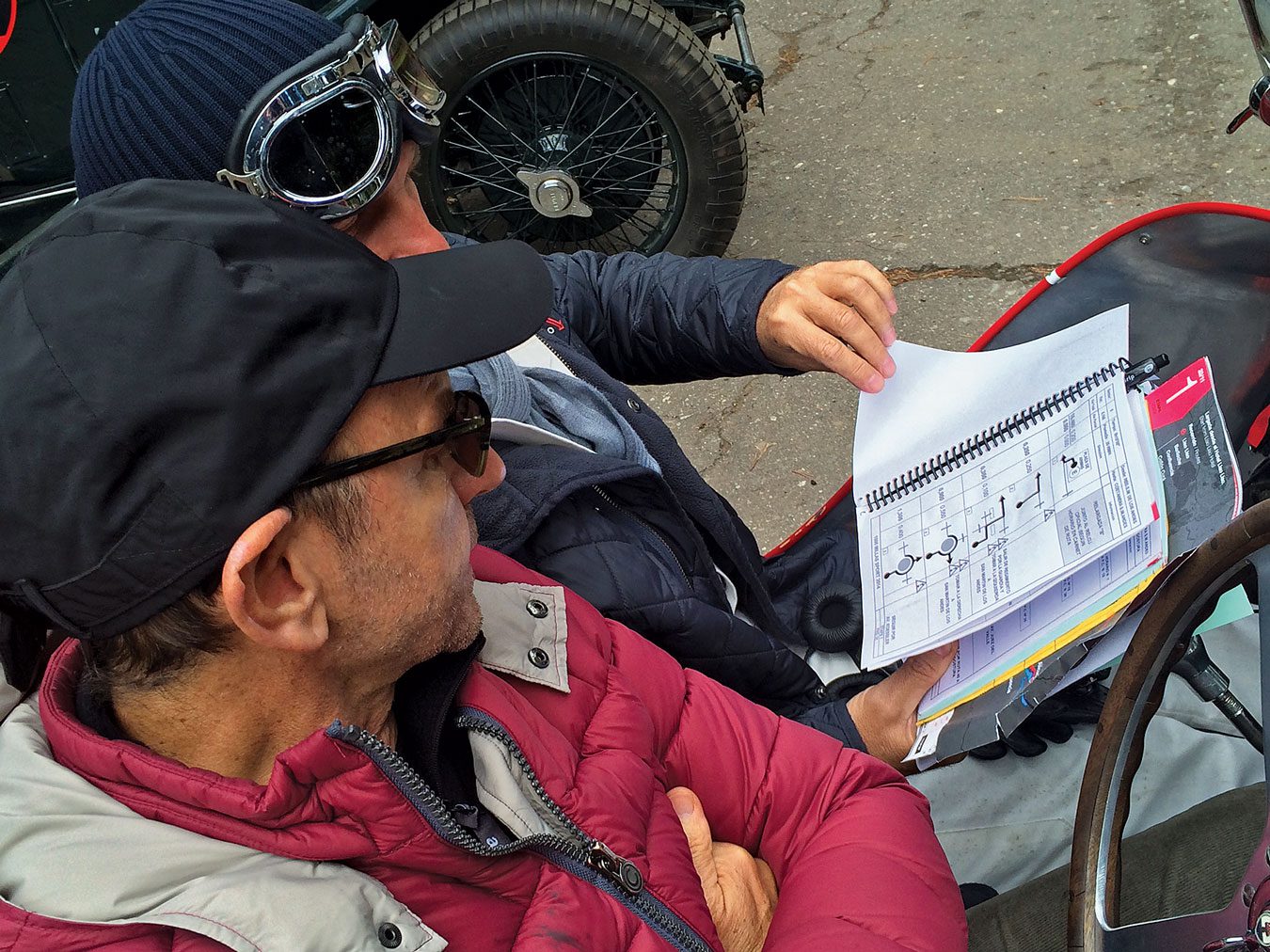
A unique aspect to this event was its TSD (Time-Speed-Distance) element, where to score well you were supposed to hit exact points on the route at exact times. Being a part of a TSD is a little like eating gruel. Either you enjoy the sadomasochistic element of taking a pleasant drive and making it a chronometric terror of early and late checkpoints, or you just ignore all the written instructions and worry about hitting apexes instead.
I chose the latter. While it meant that I never won a coveted “Top 40 Finisher” belt buckle, it also meant that my navigator and I enjoyed the drive rather than a tour full of argumentative counting of fractions of seconds and constantly fiddling with mechanical stopwatches that we could never get synchronized.
State of the art
We used to say that any car that made it to 25 years old was a “classic car,” a definition that stems from the ’50s and ’60s. That now seems outdated. Today, there are hundreds of thousands of cars on the road that are more than 25 years old, and we don’t consider them classics in any way.
Thirty-eight years have passed since that first Northwest Classic. That GSV (which we still own) is now 61 years old. I’m sure the Alfa engineers had no idea that more than half a century later it would still be on the road — and still driven con brio. Although it was built using the best technology that was available to Alfa Romeo in the mid-1960s, the continuum of models within which it exists has progressed wildly.
The most recent convertible Alfa was the 4C Spider, a high-tech car with a carbon-fiber tub and a turbocharged 1.8-liter engine that made 237 horsepower. It has very little in common with the 1965 car. Time and technology have moved on.
Evolutionary, not revolutionary
Yet with modern cars, the changes we have seen over the past 25 years have been primarily evolutionary, electric vehicles notwithstanding. Most of the features that have come to define modern cars — airbags, anti-lock brakes, multi-speed automatic transmissions, and automatic heating and cooling systems — are improvements and refinements of technologies that were already common when we went on that first Northwest Classic.
Most cars built 25 years ago have capabilities close to the performance of brand-new ones. Certainly, there’s no problem “keeping up with traffic” in a 25-year-old car. Thanks to quality improvements in engineering and manufacturing, a 25-year-old car that is well maintained can be expected to be reliable for hundreds of thousands of miles. A mechanic looking at a 2000 Porsche 911 and a 2025 911 would find them surprisingly similar.
In short, tremendous progress was made in automotive technology between 1965 and my first classic-car tour in 1988. Development has slowed and shifted focus since, especially in the past two decades where automakers have spent billions developing EVs and autonomous vehicles.
If you pull up in a 2003-model-year car today — a car which is the same age my GSV was on the inaugural Northwest Classic — no one is likely to ask, “How do you like driving a classic?”
Old-fashioned fun
Where and how we drive has changed as well. In 1965, when the GSV was new, the Interstate Highway System had not yet been completed, and much of our travel was on two- and four-lane “blue highways.” Our cars of the ’60s were well-suited to cruising at 60 mph, and passing on a two-lane highway was a required skill.
Today, most long-distance travel is on expressways with four (or more) lanes, with cruising speeds of 80 mph and more not unusual. Further, supersize vehicles such as 4-door SUVs and crew-cab pickups weren’t common in the ’50s and ’60s. Many modern vehicles weigh three times as much as our classic cars, sometimes even more. Can there be anything more uncomfortable than going 65 mph, top down, in your MGB and being passed by a progression of pickups doing 85?
Let’s decide to agree that a car that is 25 years old is not automatically a classic. Rather, let’s define classic cars by their old-fashioned attributes: less-powerful engines, weak brakes, overly compliant suspensions, a lack of safety features and a propensity to break down no matter how many times we’ve repaired them. A car built in 1965 will always be an archaic vehicle with tremendous limitations, which is also part of its charm.