Chassis Number: ZFFCZ56B000136072

See our buyer's guide for the Ferrari Enzo.
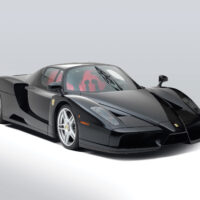
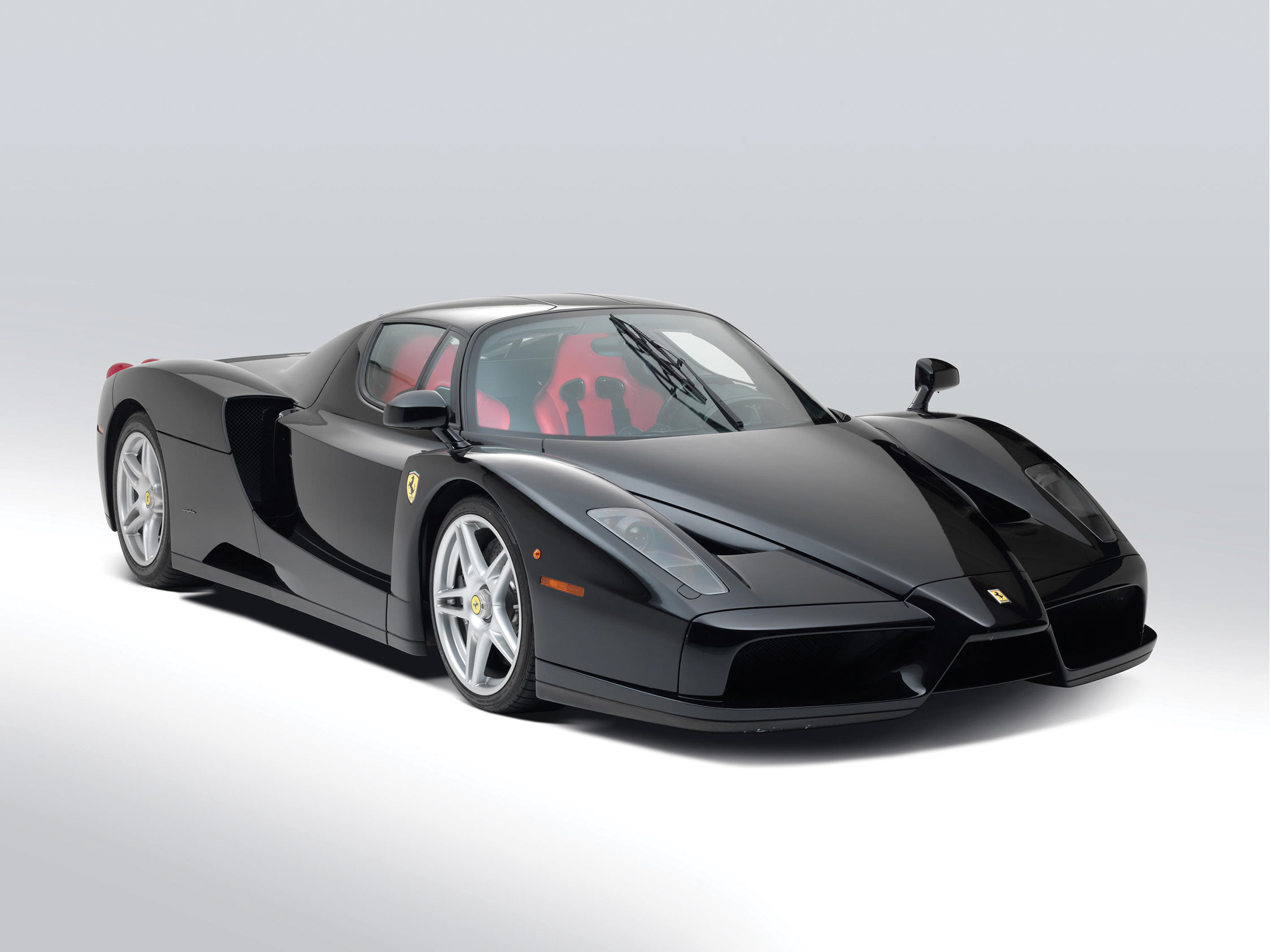
This car, Lot 135P, sold for $4,228,474 (€3,910,000), including buyer’s premium, at Bonhams Cars’ Paris, FRA, auction on February 1, 2024.
Ferrari categorizes the Enzo Ferrari (as it is officially named, but infrequently referred to) as a Gran Tursimo. To everyone else it is a supercar, the fourth model in Ferrari’s modern supercar line, following the 288 GTO, the F40 and the F50. Building exclusive ultra-high-performance supercars was business as usual for Ferrari, but until “supercar” was coined, these halo models did not have a proper designation.
It has been over 40 years since the 288 GTO joined the Lamborghini Miura to start the supercar era. The Porsche 959 soon joined the club and the segment has been overrun with supercars from new and existing manufacturers ever since. Ferrari’s models, though, have remained the stars of the class, being the most desired and valuable in the segment.
Easy to own
It might be hard to believe, but the Enzo was introduced over two decades ago. While the F40 and F50 were produced to honor anniversaries, the Enzo was introduced to celebrate the success of Ferrari’s Formula 1 team. It is fitting that the car designed to honor Enzo Ferrari’s passion is named after him.
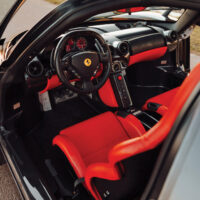
Like most Ferraris, the Enzo was well engineered. It is high-performance without being too high-tech. It is not without mechanical gremlins, but common complaints are confined to clutch and brake-pad wear. There is little to go wrong in the Enzo’s sparsely appointed interior. On the exterior, the headlight lenses are prone to get blotchy, but little else is notable.
Enzo parts supply, however, is an issue. Windshields are out of stock and new headlights are unobtainable. Mechanical service parts are readily available, but Ferrari’s inventory of trim parts and other odds and ends has been exhausted.
Compared with the horror stories about Bugatti Veyron and McLaren F1 maintenance, Enzo service might be considered reasonable. There is no need for flying in specialists or sending the car back to the mother ship for service. All of it can be done at a Ferrari dealer. Tires are expensive […]
With an SCM subscription, you’ll have the information, tools, and advice you need from 50+ world-renowned authorities on collector cars to make the best decisions for buying, selling and collecting classic and sports cars.
- 18 printed issues per year: 12 monthly magazines + 6 special guides
- 150+ printed pages every month that help you be a smarter collector
- Access to 38 years of back issues
Already a subscriber? Login for full access to all articles.
| Vehicle: | 2004 Ferrari Enzo |
| Years Produced: | 2002–04 |
| Number Produced: | 400 |
| SCM Valuation: | $1,800,000–$4,400,000 |
| Tune Up Cost: | $7,500 |
| Chassis Number Location: | On top of the steering column |
| Engine Number Location: | In the “V” between the heads |
| Club Info: | Ferrari Club of America |
| Website: | https://www.ferrariclubofamerica.org |
| Alternatives: | 1994–98 McLaren F1 2004–05 Maserati MC12 2001–06 Saleen S7 |
| Investment Grade: | B |
This car, Lot 135P, sold for $4,228,474 (€3,910,000), including buyer’s premium, at Bonhams Cars’ Paris, FRA, auction on February 1, 2024.
Ferrari categorizes the Enzo Ferrari (as it is officially named, but infrequently referred to) as a Gran Tursimo. To everyone else it is a supercar, the fourth model in Ferrari’s modern supercar line, following the 288 GTO, the F40 and the F50. Building exclusive ultra-high-performance supercars was business as usual for Ferrari, but until “supercar” was coined, these halo models did not have a proper designation.
It has been over 40 years since the 288 GTO joined the Lamborghini Miura to start the supercar era. The Porsche 959 soon joined the club and the segment has been overrun with supercars from new and existing manufacturers ever since. Ferrari’s models, though, have remained the stars of the class, being the most desired and valuable in the segment.
Easy to own
It might be hard to believe, but the Enzo was introduced over two decades ago. While the F40 and F50 were produced to honor anniversaries, the Enzo was introduced to celebrate the success of Ferrari’s Formula 1 team. It is fitting that the car designed to honor Enzo Ferrari’s passion is named after him.
Like most Ferraris, the Enzo was well engineered. It is high-performance without being too high-tech. It is not without mechanical gremlins, but common complaints are confined to clutch and brake-pad wear. There is little to go wrong in the Enzo’s sparsely appointed interior. On the exterior, the headlight lenses are prone to get blotchy, but little else is notable.
Enzo parts supply, however, is an issue. Windshields are out of stock and new headlights are unobtainable. Mechanical service parts are readily available, but Ferrari’s inventory of trim parts and other odds and ends has been exhausted.
Compared with the horror stories about Bugatti Veyron and McLaren F1 maintenance, Enzo service might be considered reasonable. There is no need for flying in specialists or sending the car back to the mother ship for service. All of it can be done at a Ferrari dealer. Tires are expensive but do not require special equipment for installation.
What was I thinking?
In an effort to discourage speculation, Ferrari required Enzo buyers to honor an embargo prohibiting resale for a reported 18 months. Exceptions were made for resale to the selling dealer, but a premature resale generally meant the seller would no longer be welcome to purchase a limited-production Ferrari supercar.
The first recorded auction sale was $1,265,000 in August 2004 (SCM# 34856). The car was a 2003 model, which meant the owner probably decided their potential half-million-dollar profit was more important than the opportunity to buy a Ferrari supercar in the future.
The next auction sale was in June 2005, a new 2005 model that sold for $1,275,000 (SCM# 38615). That car was the 400th Enzo built, and Ferrari presented it to the Pope to be sold for charity. In my infinite wisdom, I declared at the time, “While the purchaser did not overpay, he did not make a good financial investment either. In the near future his car will never be worth more than it was on auction day.” Why I chose to bet against a sure thing is beyond my comprehension.
For the next 10 years, Enzos sold at auction between $1m–$2m. The variance can be attributed to the condition and configuration of the car, and the venue. In August of 2015, the purchaser of the Pope’s Enzo humbled me with a sale of over $6m (SCM# 6796725). That signaled the end of mere million-dollar Enzos, as $2m–$3m became the norm. Then, in 2022 a $4.1m sale (SCM# 6954927) moved the average sale price to over $3.5m.
Up and up
Bonhams Cars’ 2004 Enzo is the second-most-valuable Enzo to sell at public auction, ignoring the Pope’s car. As one of five to break the $4m mark, it is not an outlier. Battery and technical issues with its successor, the LaFerrari, make the Enzo a more attractive purchase for some buyers, and the Enzo is now more valuable. Although this Enzo had a repainted fender, it is an original-owner, sub-6,000-mile example with all the original accessories, save one piece of luggage which the owner’s widow kept.
This car is also a final-year example in the rare and desirable black livery. The color, the pedigree and condition are everything a buyer could want, and at least two bidders bit. The final price might have been a tad high for a car that was essentially on static display for as long as a decade. The late owner’s estate should be ecstatic with the result. The buyer paid all the money for the car, but it represented the current initiation fee for the Ferrari Enzo club. It will not be going down. ♦
(Introductory description courtesy of Bonhams Cars.)