Keith Martin has been involved with the collector car hobby for more than 40 years, and is the founder and publisher of this magazine. Keith has also written for the New York Times, Automobile, AutoWeek, Road & Track and other publications, has been an emcee for numerous concours, and had his own show, “What’s My Car Worth,” shown on Velocity. He has received many honors, including the Lee Iacocca Award, the Edward Herrmann Award, was inducted into the Concorso Italiano Hall of Fame, and more. He has served on the board of directors of The LeMay Museum and Oregon Ballet Theater, and was formerly the chair of the board of the Meguiar’s Award. Learn more about Keith here.
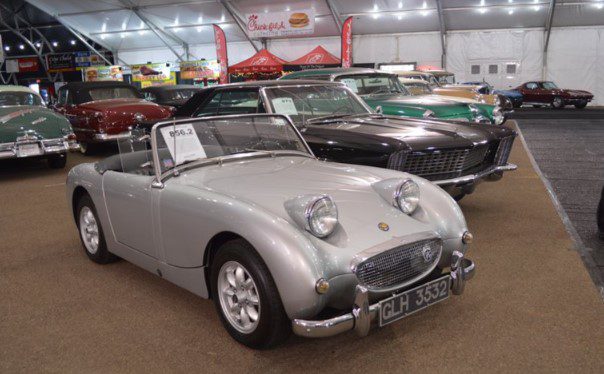
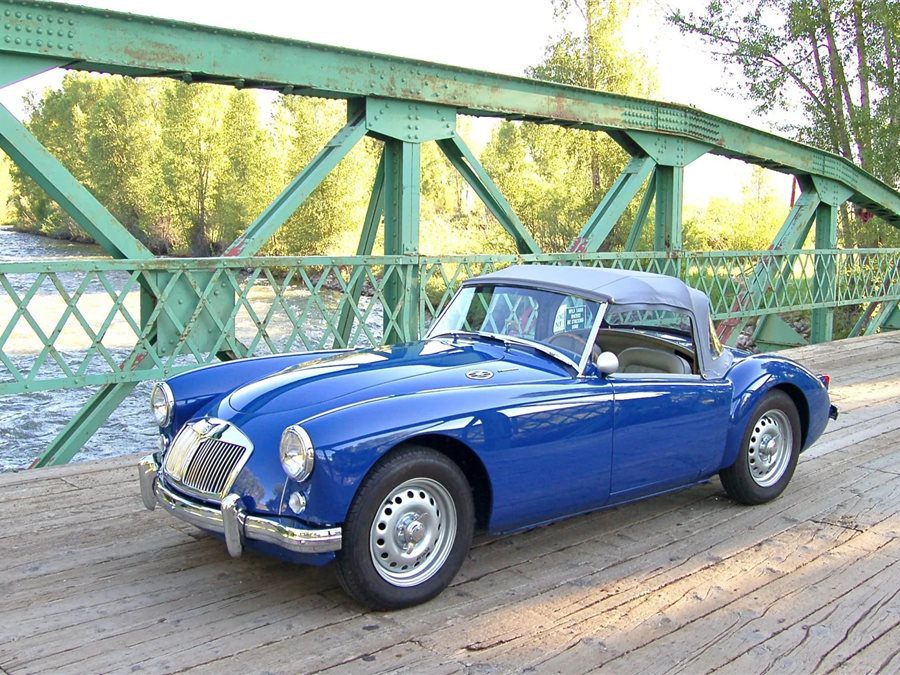
As the days begin to lengthen, our thoughts of how to use our classic cars become more inviting. As SCM Contributor Miles Collier as puts it so succinctly, “It’s all about engagement.” We all have cars of varying ages and degrees of performance. What endears them to us is the degree of competence each requires to work properly. My first two cars were both English and with non-synchronized first gears. Whether in my 1959 Bug Eye or my 1958 MGA, I recall the immense feeling of satisfaction got when I double de-clutched and snicked past the straight-cut gears from second into […]
As the days begin to lengthen, our thoughts of how to use our classic cars become more inviting. As SCM Contributor Miles Collier as puts it so succinctly, “It’s all about engagement.”
We all have cars of varying ages and degrees of performance. What endears them to us is the degree of competence each requires to work properly. My first two cars were both English and with non-synchronized first gears. Whether in my 1959 Bug Eye or my 1958 MGA, I recall the immense feeling of satisfaction got when I double de-clutched and snicked past the straight-cut gears from second into first.
When I first had the chance to drive a Bugatti Type 35, I recall a similar feeling as I used just enough force, and just enough revs, to navigate through the non-synchro box. I was demonstrating my ability to properly operate a crash-box – and I was thrilled.
With all the current folderol about automatic transmissions vs dual-clutch, paddle-shift PDK-style units, what is left out of the conversation is the issue of engagement. To shift a manual effectively, you have to be engaged with the gearbox. It’s not a “flick and forget” operation.
In fact, one of the great surprises of the Sportomatic semi-automatic gearbox in our 1975 2.7L 911S is how satisfying it is to manually stir the wand as you select a gear.
No, the Sporto will never shift as quickly as a PDK. But in the end does it matter? Let me know if you have ever driven an auto or semi-auto gearbox that is a engaging as a manual?
I look forward to your answers below.
1960 Austin-Healey Bugeye Sprite convertible, sold for $33,000 at Barrett-Jackson Scottsdale1959 MG A Twin Cam roadster, sold for $68.250 on Bring a Trailer
When I could no longer use my legs and had to use an automatic transmission, the Porsche PDK was the best alternative I could find.
David HedderlySmith
No.
Like you, I’ve got s bum left leg and try to stick to automatics – mostly just for safety. My left leg doesn’t move as quickly as it once did. Today I drive my 2017 Fiat 124 Spyder Abarth a fair bit. It’s got a great Mazda 6-speed automatic with sport mode and paddle shifters. It’s really a great little car and lots of fun to drive. But it’s not anywhere near as engaging as any of my former sporty cars – particularly my 1965 911 or my 1998 Boxster, both of which had 5-speeds. That’s just the way it is.
I do feel lucky to still be around (I’m 78) and to be able to still enjoy a drive in a sporty little car.
Todd Warren
Excellent question, Keith. I will always prefer a true manual gearbox to any other type – for me, it’s the most fun, the most engaging, the most satisfying to use. That said…
I think the poor reputation of many single-clutch paddle-shift transmissions is undeserved. A good single-clutch paddle-shift gearbox is my second-favorite type of transmission. It’s obviously not as objectively good as a dual-clutch transmission (DCT) such as Porsche’s PDK, or even the best modern paddle-shift torque-converter automatics. However, I enjoy driving a single-clutch automated manual much more than the other paddle-shift systems – because a single-clutch paddle-shift gearbox NEEDS the driver to DRIVE it properly (as does a manual, of course). That’s what gives you back so much (not all) of the involvement and engagement that is otherwise lost when the gear lever and clutch pedal aren’t there. A DCT or modern torque-converter automatic is so good that it doesn’t need the driver – they work perfectly well by themselves. That’s impressive, but not particularly fun or involving, in my opinion.
Each generation of single-clutch paddle-shift gearbox improved, of course. Many of the early ones are a bit slow to change gear, but the later ones are very fast, such as Ferrari’s F1 ‘box in the F430 or Aston Martin’s Sportshift III in the V12 Vantage S (which can change gear in just 70 milliseconds) As an Aston guy, the Sportshift III is better than the Sportshift II, which is better than the Sportshift I. The Sportshift III in my 2015 V12VS I find both very good – provided it is driven properly – and really fun to use. It’s not very good as an automatic – and I couldn’t care less. Use the paddles (always), lift the throttle the right amount and for the right duration as you pull the paddle for an upshift, and you get a perfectly smooth gearchange. At high RPM and near-full throttle, pull the paddle and keep the throttle down and it shifts much faster than a person ever could with 3 pedals and a gear lever. Downshifts don’t require the driver to match revs, but some finesse is still helpful and the automated rev-matching throttle blip sounds absolutely fantastic and adds to the experience. Also, I think the quality and tactility of the paddles themselves matter. Beautifully-made aluminum-and leather paddles that have a nice throw are an entirely different tactile experience from a cheap and flimsy plastic “paddle” that barely moves.
Should they give it a chance, I think many people who love a true manual might be surprised to discover that a good single-clutch paddle-shift gearbox is very engaging. I was.
David Andersen
To me, driving “engagement” has to do with many factors, not just whether a car has two or three pedals. While I’d agree that, in general, a manual car can be more physically engaging to drive than a non-manual car (whether single or dual clutch auto-manual, or torque converter automatic), not all three-pedal cars are all that engaging to drive in an overall sense. Some manuals are terrible to use, with sloppy or overly notchy shifting, or poorly chosen gear ratios. This can ruin a manual car’s overall driving experience, essentially negating the “joys” of operating a clutch and shifter.
A few years ago I had a 1970 911T “ST” clone that was a former vintage racer, with a 915 gearbox. You know where I’m going with this. I hated that gearbox. Even with a Wevo shifter I could never get that car to shift anywhere close to well. It was terrible. Of course, it was set up for racing with steel synchros and super-close gear ratios. Maybe on a racetrack this all would have been acceptable, but on the street it sucked, and I didn’t enjoy driving it.
My 1970 Corvette LT-1 coupe with its Muncie M21 4-speed (recently replaced with a Tremec TKX 5-speed) is great to drive. Good shifter and clutch action, gear ratios well-paired for road use with the 375-horse 350 V8 (except for lack of OD, which the Tremec solves). I would not want this car with an automatic, as good as GM TH350 or 400 automatics may be. It just wouldn’t be as much fun.
Conversely, some two pedal cars can be extremely engaging to drive, with fantastic tactility and an overall feel and personality of the car that just makes you want to drive it everywhere, all the time. My 2023 Alfa Romeo Giulia Quadrifoglio, with its excellent ZF 8-speed torque converter auto transmission and Ferrari-like shift paddles, is such a car. Utterly engaging and just superb. I’m not so sure a manual would make it all that much better or engaging. Certainly slower in acceleration. Personally, I’d go with the auto-box in this car. It just suits it well.
I think it all comes down to the specific car and how well it fits with one’s sensibilities, needs and priorities, whether two pedals or three.
William Boyd
Keith you’re spot on about engagement, both the Lotus Seven and Allard have non synchronized first and you’re more engaged driving them because of it. On the other hand I’ve got probably a couple of decades on you and I find being engaged while hustling the paddles in the C7 much easier. Is one better than the other absolutely not , they both can be enjoyed equally.


5 responses to “Keith’s Blog: Let’s Get Engaged”
When I could no longer use my legs and had to use an automatic transmission, the Porsche PDK was the best alternative I could find.
No.
Like you, I’ve got s bum left leg and try to stick to automatics – mostly just for safety. My left leg doesn’t move as quickly as it once did. Today I drive my 2017 Fiat 124 Spyder Abarth a fair bit. It’s got a great Mazda 6-speed automatic with sport mode and paddle shifters. It’s really a great little car and lots of fun to drive. But it’s not anywhere near as engaging as any of my former sporty cars – particularly my 1965 911 or my 1998 Boxster, both of which had 5-speeds. That’s just the way it is.
I do feel lucky to still be around (I’m 78) and to be able to still enjoy a drive in a sporty little car.
Excellent question, Keith. I will always prefer a true manual gearbox to any other type – for me, it’s the most fun, the most engaging, the most satisfying to use. That said…
I think the poor reputation of many single-clutch paddle-shift transmissions is undeserved. A good single-clutch paddle-shift gearbox is my second-favorite type of transmission. It’s obviously not as objectively good as a dual-clutch transmission (DCT) such as Porsche’s PDK, or even the best modern paddle-shift torque-converter automatics. However, I enjoy driving a single-clutch automated manual much more than the other paddle-shift systems – because a single-clutch paddle-shift gearbox NEEDS the driver to DRIVE it properly (as does a manual, of course). That’s what gives you back so much (not all) of the involvement and engagement that is otherwise lost when the gear lever and clutch pedal aren’t there. A DCT or modern torque-converter automatic is so good that it doesn’t need the driver – they work perfectly well by themselves. That’s impressive, but not particularly fun or involving, in my opinion.
Each generation of single-clutch paddle-shift gearbox improved, of course. Many of the early ones are a bit slow to change gear, but the later ones are very fast, such as Ferrari’s F1 ‘box in the F430 or Aston Martin’s Sportshift III in the V12 Vantage S (which can change gear in just 70 milliseconds) As an Aston guy, the Sportshift III is better than the Sportshift II, which is better than the Sportshift I. The Sportshift III in my 2015 V12VS I find both very good – provided it is driven properly – and really fun to use. It’s not very good as an automatic – and I couldn’t care less. Use the paddles (always), lift the throttle the right amount and for the right duration as you pull the paddle for an upshift, and you get a perfectly smooth gearchange. At high RPM and near-full throttle, pull the paddle and keep the throttle down and it shifts much faster than a person ever could with 3 pedals and a gear lever. Downshifts don’t require the driver to match revs, but some finesse is still helpful and the automated rev-matching throttle blip sounds absolutely fantastic and adds to the experience. Also, I think the quality and tactility of the paddles themselves matter. Beautifully-made aluminum-and leather paddles that have a nice throw are an entirely different tactile experience from a cheap and flimsy plastic “paddle” that barely moves.
Should they give it a chance, I think many people who love a true manual might be surprised to discover that a good single-clutch paddle-shift gearbox is very engaging. I was.
To me, driving “engagement” has to do with many factors, not just whether a car has two or three pedals. While I’d agree that, in general, a manual car can be more physically engaging to drive than a non-manual car (whether single or dual clutch auto-manual, or torque converter automatic), not all three-pedal cars are all that engaging to drive in an overall sense. Some manuals are terrible to use, with sloppy or overly notchy shifting, or poorly chosen gear ratios. This can ruin a manual car’s overall driving experience, essentially negating the “joys” of operating a clutch and shifter.
A few years ago I had a 1970 911T “ST” clone that was a former vintage racer, with a 915 gearbox. You know where I’m going with this. I hated that gearbox. Even with a Wevo shifter I could never get that car to shift anywhere close to well. It was terrible. Of course, it was set up for racing with steel synchros and super-close gear ratios. Maybe on a racetrack this all would have been acceptable, but on the street it sucked, and I didn’t enjoy driving it.
My 1970 Corvette LT-1 coupe with its Muncie M21 4-speed (recently replaced with a Tremec TKX 5-speed) is great to drive. Good shifter and clutch action, gear ratios well-paired for road use with the 375-horse 350 V8 (except for lack of OD, which the Tremec solves). I would not want this car with an automatic, as good as GM TH350 or 400 automatics may be. It just wouldn’t be as much fun.
Conversely, some two pedal cars can be extremely engaging to drive, with fantastic tactility and an overall feel and personality of the car that just makes you want to drive it everywhere, all the time. My 2023 Alfa Romeo Giulia Quadrifoglio, with its excellent ZF 8-speed torque converter auto transmission and Ferrari-like shift paddles, is such a car. Utterly engaging and just superb. I’m not so sure a manual would make it all that much better or engaging. Certainly slower in acceleration. Personally, I’d go with the auto-box in this car. It just suits it well.
I think it all comes down to the specific car and how well it fits with one’s sensibilities, needs and priorities, whether two pedals or three.
Keith you’re spot on about engagement, both the Lotus Seven and Allard have non synchronized first and you’re more engaged driving them because of it. On the other hand I’ve got probably a couple of decades on you and I find being engaged while hustling the paddles in the C7 much easier. Is one better than the other absolutely not , they both can be enjoyed equally.