Keith Martin has been involved with the collector car hobby for more than 40 years, and is the founder and publisher of this magazine. Keith has also written for the New York Times, Automobile, AutoWeek, Road & Track and other publications, has been an emcee for numerous concours, and had his own show, “What’s My Car Worth,” shown on Velocity. He has received many honors, including the Lee Iacocca Award, the Edward Herrmann Award, was inducted into the Concorso Italiano Hall of Fame, and more. He has served on the board of directors of The LeMay Museum and Oregon Ballet Theater, and was formerly the chair of the board of the Meguiar’s Award. Learn more about Keith here.
There is no shortage of car tours. They range from no-cost afternoon club tours to expensive, all-inclusive, super-deluxe, five-star to five-star routes with entries limited to modern supercars. When the first California Mille was held in 1990, it offered one of the few opportunities to exercise your classic car with other similar vehicles. As the Mille was an homage to the original Italian Mille Miglia, entries were limited to cars built in 1957 and earlier, with age flexibility at the discretion of the organizers. The Colorado Grand, arguably the greatest U.S. tour for its roads and quality of cars, has a […]
There is no shortage of car tours. They range from no-cost afternoon club tours to expensive, all-inclusive, super-deluxe, five-star to five-star routes with entries limited to modern supercars.
When the first California Mille was held in 1990, it offered one of the few opportunities to exercise your classic car with other similar vehicles.
As the Mille was an homage to the original Italian Mille Miglia, entries were limited to cars built in 1957 and earlier, with age flexibility at the discretion of the organizers.
The Colorado Grand, arguably the greatest U.S. tour for its roads and quality of cars, has a cutoff of 1962.
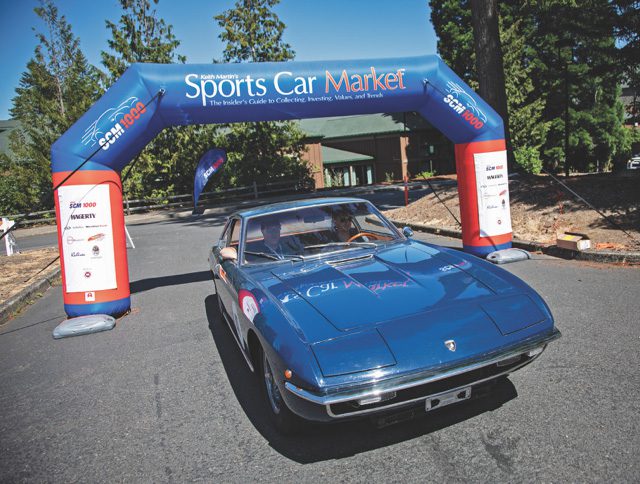
The five SCM 1000s we presented had a cutoff of 1974, as the following year saw a fundamental change in cars due to the implementation of smog and safety regulations (think: rubber bumpers).
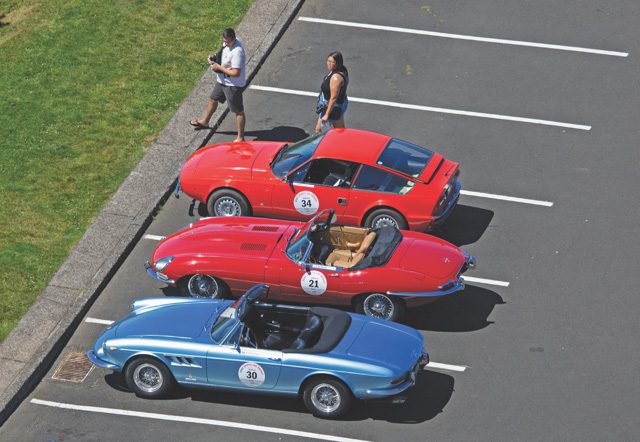
Our Skamania Lodge event in 2022 had a mouth-watering array of pre-1975 classics including a Ferrari California Spider. The advantage of an early-year cutoff is that most of the cars fall within the same performance envelope.
But time has moved on. As we muse about another SCM tour, our most heated discussions revolve around the cut-off date for eligibility.
Here are a few options. Tell us your thoughts in the comments below.
First, run what you brung. No limits, everything is welcome.
Second, leave the cutoff at 1974. Cars from that era play well together and enjoy the two-lane twisties our tours offer.
Third, set the cutoff at 1984. We move it up 10 years from the previous tours.
Fourth, set the cutoff at the year 2000. That still makes the cars over 25 years old, collectible by nearly any definition.
Which option would you like to see for a classic car tour?
1971 SCM Citroen DS21 on the 2022 SCM 10002022 SCM 1000Pre-75 sports cars on the tour
14 responses to “Keith’s Blog: What Cutoff Year on a Collector Car Tour?”
Truman McGhee
1984 seems like a good date. As the cars and the drivers age out, it is likely more difficult to keep the number of cars up.
Richard
1974
Victor Holtorf
Hi Keith,
I truly enjoyed the four SCM tours I have had the privilege of attending. I believe that keeping the performance envelope of all the cars in a somewhat similar range is important. For example, I attended a two-day rally, called Rockybaun, through the Colorado mountains a couple of weeks ago. All the cars were supercars, some new, and all built within the past few years, with some having well over 1000 hp. Silly me….. I drove a car designed in 1997. While making a pass of a couple of cars, the car closest to me abruptly pulled out to make his own pass of the first car, making me slam on the brakes at high speed to avoid hitting him. It was very close. Afterwards, we discussed the issue, and the offending party exclaimed that he gave me plenty of time to slow down, not realizing that my car didn’t have the carbon ceramic brakes all the other cars had. He just assumed all cars were like his. Granted, my braking performance was great for the nineties, but not comparable to new supercars. Ditto for the acceleration. I think it can be dangerous to have cars with vastly dissimilar performance on the same rally. I like the 1974 cutoff, but raising it up until even as late as 1990 (to get more attendance and variety), would probably keep the cars in a similar performance envelope, since performance improvements through the eighties were nominal. But after that, performance started leaping higher. My experience on that supercar rally really made me realize the dangers of cars on the same rally with grossly dissimilar performance envelopes.
David
There are huge differences in performance, safety & enjoyment between each 10 year period. How about separate tours within those windows of time, I.e. 1945-55. 55-65, 65-75, 75-85, 85-95 etc etc
DanChester
The cut off for our antique car club’s annual static event was 1972 for many years. A few years ago we changed it to 40 years old or older (1985 and older at this year’s event). 25 years old just seems to be too modern for our particular event and the later cars are just too common. We didn’t want to lose participation as time goes on, but we didn’t want to lose the focus on older cars either, hence the 40 year compromise. For a driving event there is a lot to be said for an age group that plays well together. You could argue for having two classes or separate events for pre-war and post-war cars (with a cut-off). It also depends on how big a group you can handle.
George B
Here’s a vote for any year pre-1992, the year the McLaren F1 was introduced, arguably the birth of the supercar (although ‘91 would include the first year of the NSX, which is also arguably a super car, but still has the soul of a sports car). Victor’s point is well made, there is just too great a difference in performance between 60’s through 80’s classics and modern “sports” cars that are really GTs on steroids and should not be running in the same pack, for both safety and enjoyment reasons.
While I haven’t yet had the pleasure of participating in an SCM tour, I have taken part in dozens of other tours and rallies around the world. I feel strongly that cars of similar age groups should have their own groups and drive together. Don’t have a prewar BMW 315/1 driving alongside a Ferrari F40. It is not enjoyable for anyone. Personally, I prefer the older cars (pre-1974), but if the tour or rally organizer needs to appeal to a broader group of participants, have the fastest cars go first and let them do their thing.
Eric Hoover
I’m definitely in the pre-74 camp. If I need to transport my car to a location over 1000 miles from my home I want to do a tour with cars of the era of my collectibles which is 1950’s and 60’s
Rob Buckles
Two groups? pre 1975 and run what you brung.
mike welland
I think 1994, or second choice 1984….these are all old cars now…and working A/C is a desireable option in our present excessive heat trend much of the year !
Doc
Set this year at 1984, then increment it up every year after?
Bruce Male
As a veteran participant in the Colorado Grand, the Copperstate 1000, the California Mille and the Mille Miglia retrospective, multiple times, I would vote for the 1974 limit. More modern cars, as indicated in previous comments, don’t mix well with the old classics – or at least their drivers don’t. To me it’s a safety issue. You’re either a classic car enthusiast or a modern car enthusiast – mixing them can be potentially dangerous,
Rand Wintermute
As a veteran of the California Mille, France Tour Auto, Rallye de Paris, Nirthwest Classic Rally ( 18 times ) and the Pacific Grove Rally ( 21 times ) I recommend a cut off at And include year 1967; 1968 was the beginning of the EPA smog and DOT requirements which changed motor sports drastically !
I bought a brand new 1968 Mustang from a Portland Ford Dealer after college graduation, and OMG, the problems I had with that car !
It was never ending !



14 responses to “Keith’s Blog: What Cutoff Year on a Collector Car Tour?”
1984 seems like a good date. As the cars and the drivers age out, it is likely more difficult to keep the number of cars up.
1974
Hi Keith,
I truly enjoyed the four SCM tours I have had the privilege of attending. I believe that keeping the performance envelope of all the cars in a somewhat similar range is important. For example, I attended a two-day rally, called Rockybaun, through the Colorado mountains a couple of weeks ago. All the cars were supercars, some new, and all built within the past few years, with some having well over 1000 hp. Silly me….. I drove a car designed in 1997. While making a pass of a couple of cars, the car closest to me abruptly pulled out to make his own pass of the first car, making me slam on the brakes at high speed to avoid hitting him. It was very close. Afterwards, we discussed the issue, and the offending party exclaimed that he gave me plenty of time to slow down, not realizing that my car didn’t have the carbon ceramic brakes all the other cars had. He just assumed all cars were like his. Granted, my braking performance was great for the nineties, but not comparable to new supercars. Ditto for the acceleration. I think it can be dangerous to have cars with vastly dissimilar performance on the same rally. I like the 1974 cutoff, but raising it up until even as late as 1990 (to get more attendance and variety), would probably keep the cars in a similar performance envelope, since performance improvements through the eighties were nominal. But after that, performance started leaping higher. My experience on that supercar rally really made me realize the dangers of cars on the same rally with grossly dissimilar performance envelopes.
There are huge differences in performance, safety & enjoyment between each 10 year period. How about separate tours within those windows of time, I.e. 1945-55. 55-65, 65-75, 75-85, 85-95 etc etc
The cut off for our antique car club’s annual static event was 1972 for many years. A few years ago we changed it to 40 years old or older (1985 and older at this year’s event). 25 years old just seems to be too modern for our particular event and the later cars are just too common. We didn’t want to lose participation as time goes on, but we didn’t want to lose the focus on older cars either, hence the 40 year compromise. For a driving event there is a lot to be said for an age group that plays well together. You could argue for having two classes or separate events for pre-war and post-war cars (with a cut-off). It also depends on how big a group you can handle.
Here’s a vote for any year pre-1992, the year the McLaren F1 was introduced, arguably the birth of the supercar (although ‘91 would include the first year of the NSX, which is also arguably a super car, but still has the soul of a sports car). Victor’s point is well made, there is just too great a difference in performance between 60’s through 80’s classics and modern “sports” cars that are really GTs on steroids and should not be running in the same pack, for both safety and enjoyment reasons.
While I haven’t yet had the pleasure of participating in an SCM tour, I have taken part in dozens of other tours and rallies around the world. I feel strongly that cars of similar age groups should have their own groups and drive together. Don’t have a prewar BMW 315/1 driving alongside a Ferrari F40. It is not enjoyable for anyone. Personally, I prefer the older cars (pre-1974), but if the tour or rally organizer needs to appeal to a broader group of participants, have the fastest cars go first and let them do their thing.
I’m definitely in the pre-74 camp. If I need to transport my car to a location over 1000 miles from my home I want to do a tour with cars of the era of my collectibles which is 1950’s and 60’s
Two groups? pre 1975 and run what you brung.
I think 1994, or second choice 1984….these are all old cars now…and working A/C is a desireable option in our present excessive heat trend much of the year !
Set this year at 1984, then increment it up every year after?
As a veteran participant in the Colorado Grand, the Copperstate 1000, the California Mille and the Mille Miglia retrospective, multiple times, I would vote for the 1974 limit. More modern cars, as indicated in previous comments, don’t mix well with the old classics – or at least their drivers don’t. To me it’s a safety issue. You’re either a classic car enthusiast or a modern car enthusiast – mixing them can be potentially dangerous,
As a veteran of the California Mille, France Tour Auto, Rallye de Paris, Nirthwest Classic Rally ( 18 times ) and the Pacific Grove Rally ( 21 times ) I recommend a cut off at And include year 1967; 1968 was the beginning of the EPA smog and DOT requirements which changed motor sports drastically !
I bought a brand new 1968 Mustang from a Portland Ford Dealer after college graduation, and OMG, the problems I had with that car !
It was never ending !
1974 and earlier