
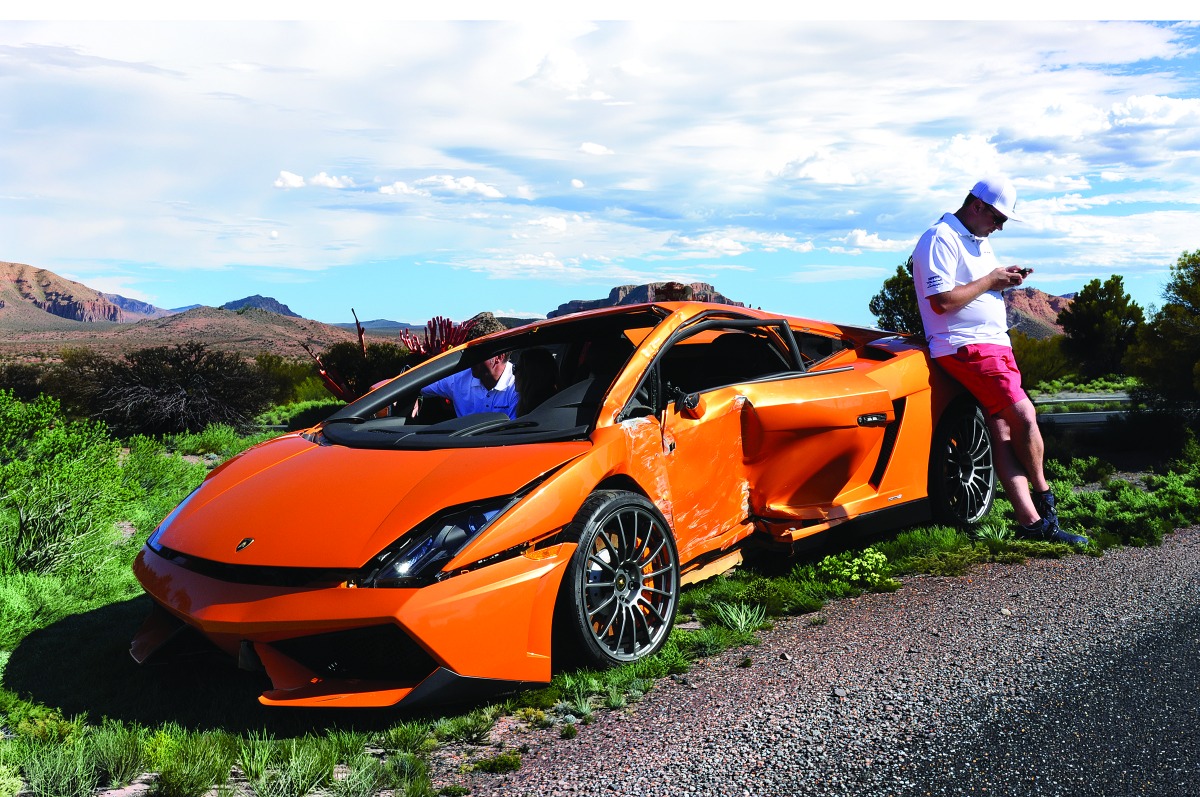

What to do if your collector car is involved in a crash Every time you drive your collector car, you are taking the risk that it might be involved in a crash. No matter how careful you are, things happen. The driver behind you is distracted (or impaired) and rear-ends you at a stop light. Or runs a stop sign and T-bones you in an intersection. Or your old car has a blowout or a suspension failure. Even worse, you could be the one who makes the mistake and causes the wreck. There is no end to how the unexpected can […]
What to do if your collector car is involved in a crash
Every time you drive your collector car, you are taking the risk that it might be involved in a crash. No matter how careful you are, things happen. The driver behind you is distracted (or impaired) and rear-ends you at a stop light. Or runs a stop sign and T-bones you in an intersection. Or your old car has a blowout or a suspension failure. Even worse, you could be the one who makes the mistake and causes the wreck. There is no end to how the unexpected can become the reality.
First steps
Are there any injuries? Before thinking about the damage to the car, think about the people. Are you or anyone else injured? If so, don’t hesitate — call for emergency help right away. If it’s you that is hurt, don’t be too quick to shrug it off. Adrenaline flows right away and you won’t necessarily feel pain until it subsides. Don’t play the tough guy and resist medical treatment.
Be careful what you say. You’re going to have to talk to the other driver, and it’s best to keep that interaction as cordial as possible. Yelling and screaming isn’t going to help the situation.
As a general rule, it is best to avoid saying anything that acknowledges fault on your part. Don’t apologize, or say you didn’t know what got into you, as everything you say can be remembered by the other driver and later used as an admission of liability.
Of course, this can go out the window when it is painfully clear that you were at fault. Say you rear-ended the other car at a stop sign because you were distracted by your phone. In that case, an apology can go a long way. But fault is not always that easy to pinpoint, and it can often be a heavily debated issue. That’s why the general rule is to not admit to anything.
On the other hand, feel free to let the other driver talk. Make good mental notes of exactly what he or she says. Feel free to ask open-ended questions like, “What happened?” Maybe they will say something that acknowledges their fault in the accident.
Preserve evidence
If there are any witnesses, be sure to get their names and contact information, as well as a sense of what they saw.
Take some pictures before moving the cars. At this point, you aren’t trying to document the damage. Rather, you’re trying to document the overall environment — where the cars sit in the traffic lanes, the road, the intersection, the traffic-control devices, etc. These are the things you want to document. Documentation of the surroundings can be useful later, when people are disagreeing about exactly what happened and who is at fault. Just be careful not to get run over while you’re taking pictures.
Once you’ve done that, it’s fine to move the cars to the side of the road, if that is possible. But before doing so, try to get photos of the other car’s license plate and the driver, just in case they drive off.
All drivers involved in a crash are legally required to provide their personal and insurance information to all other drivers. Take a photo of their driver’s license, vehicle registration and insurance card. And don’t hesitate to provide yours.
When finished, transport the car to a safe location. Then, just let it sit. Driving it risks someone claiming the damage occurred later. Insurance adjusters will want to inspect the damage. Getting repairs started risks debates about the extent of the damage and the appropriateness of the repair work.
Police and insurance claims
Whether or not you call the police depends. Everyone always wants to so the cops can write the other driver a ticket and establish fault for the crash. But they don’t always do that, and often just chalk it up to being a “civil matter” that the respective insurance companies should sort out.
If the crash is minor, you can save the time waiting for the police to show up and just document the scene and damage, and exchange information. But if it’s a serious crash, or if there are any injuries, definitely call the police.
If you think it is clear that the other driver was at fault, then make a claim with their insurance company. But still, report the incident to your own insurance company. Your policy requires you to report all claims within a specified time in order to have coverage. If you blow that, and the other driver’s insurance carrier insists it was your fault, you may end up with no coverage.
Repairing the car
You have the absolute right to select the shop that will repair your car. The insurance company cannot require that you use one of their approved shops.
But that doesn’t mean that there won’t be any arguments over how much they pay. Most consumer-oriented insurance companies write up their own repair estimates, which are often ridiculously low. They tell you to just take the estimate to your selected shop and start the repair. If more work is needed, the shop can report that to the insurance company and get an increased authorization.
If that seems sensible to you, understand that it’s not. The initial estimate is based upon the low shop labor rates that the “approved shops” typically charge. These rates can be half what specialty shops charge. These estimates also tend to minimize the work required, insisting that the supplemental authorizations will take care of that.
Some specialty shops will just refuse to take those jobs because they don’t want to discount their work or waste time fighting to get paid. That can become a sticky situation, and you may need legal help to get the work authorized.
Paint can also be a huge issue. The specialty insurance carriers know that you may have to repaint the whole car for a good color match. But the consumer-oriented carriers don’t buy that.
Resolution of these disputes can depend on which carrier is paying for the claim. As a general proposition, you have more leverage when you are making a claim on the other driver’s policy, as their carrier is paying the claim under the liability coverage where there are no exclusions and limitations. For example, an insurance policy might disclaim liability for diminished value, which can be justified when you are making a claim on your policy under its collision coverage. But the other driver’s policy can’t enforce that limitation because the other driver can be held legally liable for the diminished value.
But the fact is, insurance adjusters will typically handle every claim as though it is brought under their collision coverage, stating that the policy “doesn’t cover” that. It does, but you could well have a hard time persuading them.
Totaled cars
If your car is heavily damaged, the insurance company might declare it a total loss. In that case, the insurance company pays you the value of the car on the date of the crash, and it owns the remains (the “salvage”). Essentially, they buy the car from you.
This situation is a forced sale of your car. It might come at an inopportune time, perhaps at the low point of the market, and you may not come out very well.
As in any other sale situation, it is in the buyer’s interest to lowball the value of the car. A smart strategy is to start the negotiation process with an appraisal from a qualified appraiser. Many of us hate to make the first offer on anything, but I think it is the better practice here, as you know that the insurance adjuster isn’t going to start with a high number. Basically, your offer is always going to be the first real offer, so just start with it.
It may take some time for the appraisal to get done. Don’t hesitate to wait for it. Let the adjuster know you have an appraiser on the project, and that you won’t talk about money until you have the appraisal. If you can pull this off, it’s even better to not let the adjuster know about the appraiser and just stall while the appraisal gets done. That way, if the appraisal doesn’t come in as high as you expected, you can keep it secret and negotiate without it or even get a second one. If the adjuster knows about the appraisal, they will want to see it.
What happens with the salvage is always negotiable. The norm is that the insurance company owns the salvage after it pays the claim, but you can make that part of the negotiation. If you have a way of selling the parts, converting it into a race car, etc., you can come out ahead. Just be careful not to give too much for it.
Recognize that every time we take our collector cars out for a drive, we are assuming the risk that something unexpected might happen.
One response to “Accidents Happen”
Great post and excellent advice! This is every car guy’s or gal’s worst nightmare (assuming no injuries or worse), especially with a particularly beloved car. I have a 2000 Ferrari 550 Maranello that I love, and have stated value coverage on it that I recently increased due to increased market values of these cars. It ain’t cheap to insure, but who cares? The added coverage is worth it just for peace of mind. Were it to be heavily damaged or “totaled” in a wreck, I’ve thought about what I might do. Buying it back from the insurance company as a salvage car, then turning it into a street-legal Prodrive 550 GT1 race car “tribute” would be a cool alternative. Knock on carbon fiber that never happens!