
Buy What You Love, Pay What You Should
Columns
-
1935 Mercedes-Benz 500K Special Roadster
In 1933 the first of a new generation of Mercedes-Benz cars were issued from the Untertürkheim factory, incorporating advanced features for the time. The Mercedes-Benz 380 offered a fully independent suspension chassis with coil springs, unprecedented for the time. Front suspension was by dual A-arms, at the rear swing axles were used, giving ride and…
-
1932 Ford Hot Rod Roadster — “Golden Rod”
In the days following WWII, man’s “need for speed” manifested itself in many different ways. If your name was Kimberly or Cunningham, you wrote a $10,000 check for a red European sports car. This wonderful obsession for performance had nothing to do with family fortunes, however, and was just as keenly felt by the garage…
-
1965 Alfa Romeo Giulia Sprint GTA
The official build record states that this GTA was completed on December 16, 1965. It was the 54th car of the model to be produced and the 14th given over to Alfa’s competition partner, Autodelta. Its works racing career ended in 1970, when it was returned to Alfa Romeo and used for testing. In 1988,…
-
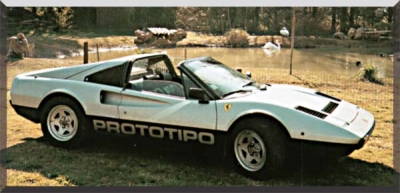
1982 Ferrari 308 GTS QV “Prototipo”
This is the first 308 to have a four-valve engine installed, a prototype built by the factory in 1981. Emmanuel Joffret described the car and its dark and mysterious life in the magazine Auto Hebdo, which specializes in Ferraris. Supposedly, this prototype was stolen from the factory in Maranello during 1981. A year after the…
-
1957 MGA 1500 Roadster
A successful outing for three EX182 pre-production prototypes at the Le Mans 24 Hours race in 1955 provided perfect pre-launch publicity for MG’s new sports car. Conceived as a replacement for the traditional T-Series MGs and launched in 1955, the MGA combined a rigid chassis with the Austin-designed, 1489-cc engine that had first appeared in…
-
1960 Maserati Tipo 60
This astonishing machine has remained complete and original in its condition as last raced in 1964, and has been in single ownership since purchased by the vendor in 1966. It is a time-warp example of the rare Type 60, being the first full production car after the construction of the prototype, which had subsequently been…
-
Going, Going, Gone Forever
Monterey is a bellwether weekend, as RM, Christie’s and Bonhams & Brooks duke it out. Each is offering a delectable array of first-tier collectible automobiles, and the automotive investment world watches and holds its breath as four-hundred special cars cross the block.Will collectible autos get caught up in the widespread financial misery reflected by the…
-
1984-89 Porsche 911 Carrera Coupe
The 1984-89 Carrera, as the final iteration of the original “widebody” normally-aspirated 911, is a good choice for someone looking for an affordable sports car coupled with a high degree of refinement, reliability and sparkling performance.Comparisons to the 1978-83 911SC are natural, as they share nearly identical bodies and interiors. But the Carrera has many…
-
1958 Mercedes-Benz 190SL Roadster
Although it tended to be overshadowed by the larger 300SL, the 190SL was a high- quality sports tourer noted for its refinement and elegance. When introduced in February 1954, it was thought to be a little slow, but by 1958 the engine output had been raised to 105 bhp, commendable for a 2-liter power unit…
-
1959 Kellison J-4R Coupe
Jim Kellison was a fighter pilot during the Korean War who went on to study aircraft engineering at UCLA. In 1954, he founded his own company, Kellison Engineering, and began building professionally-engineered sports cars with fiberglass bodies. A Kellison J-4 Grand Turismo coupe cost $6,700 in 1959. To put that into perspective, you could buy…