
Buy What You Love, Pay What You Should
Ferrari
-
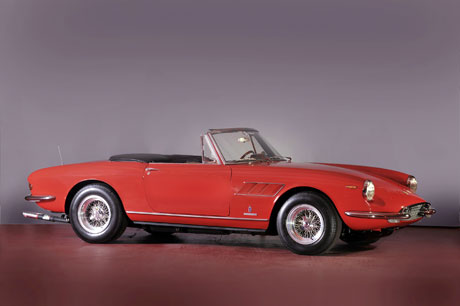
1968 Ferrari 330 GTS Spyder
The 330 GTC debuted at the Geneva Motor Show in 1966 and was intended to fill a gap in Ferrari’s line-up between the four-seat 330 GT 2+2 and the racer-on-the-road 275 GTB. Later that year, the open-top 330 GTS was introduced at the Paris Salon. The 330 GTS features a 4-liter, 300-hp version of Ferrari’s…
-
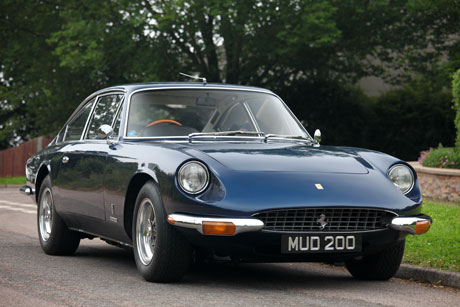
1968 Ferrari 365 GT 2+2 Coupe
Surprisingly, 50% of all Ferraris produced by the mid-1960s were built with four seats. The 365 GT 2+2 was launched at the Paris Salon in October 1967. Sleekly styled in the manner of the limited-edition 500 Superfast, the 365 GT 2+2 was the most refined Ferrari to date. Based on the contemporary 330 GTC, the…
-
1968 Ferrari 365 GT 2+2 Coupe
Surprisingly, 50% of all Ferraris produced by the mid-1960s were built with four seats. The 365 GT 2+2 was launched at the Paris Salon in October 1967. Sleekly styled in the manner of the limited-edition 500 Superfast, the 365 GT 2+2 was the most refined Ferrari to date. Based on the contemporary 330 GTC, the…
-
1954 Ferrari 500 Mondial Series I
The Mondial evokes the larger and more powerful 375 MM. Those who can live without the extra eight cylinders will find their reward in the bank This Ferrari 1954 500 Mondial was the sixth of 22 Series I motorcars constructed. Scuderia Ferrari prepared a group of Mondials to compete at the 21st Mille Miglia and…
-
1990 Ferrari 348 tb
The 348 has good performance, is fun to drive, comfortable, and has eye-catching styling. The service issues have proven to be more myth than reality The Ferrari 348 had the unenviable task of following up Maranello’s best-selling 308/328 duo. A truly innovative design, it was the first Ferrari to be based on a robot-welded monocoque.…
-
2008 Maserati MC12 Corsa
Built as an edition of only twelve examples, this was to be an exclusive model for use at Maserati-supported track days, similar to Ferrari’s FXX program {vsig}2009-9_2363{/vsig} The MC12 marked Maserati’s re-entry into the ultra-exclusive supercar market and international racing scene. A tangible symbol of Maserati engineering and a worthy descendant of the company’s greatest…
-
1957 Ferrari 250 Testa Rossa
These cars brought Maranello four World Constructors Championships and four victories at Le Mans. Few, if any, cars have a more impressive resume In 1957, the Commission Sportive Internationale contemplated new rules to make sports car racing safer after the 1955 disaster at Le Mans. Anticipating a reduction in capacity for sports cars, Ferrari began…
-
1999 Ferrari 355 F1 Spider
A 3.5-liter V8 with titanium rods, five-valve cylinder heads, and a 180-degree crankshaft gave 380 hp at 8,500 rpm In the 1970s, Ferrari changed the Berlinetta formula from two-passenger front-engine V12s to a mid-engine V8, with the introduction of the 308 GT. This basic formula evolved over the years as technology advanced, but it took…
-
1972 Ferrari 365 GTB/4 Daytona Coupe
This is an incredible drop from early 2008 prices but not terribly surprising. For Ferraris, 1,301 is a huge production number {vsig}2009-6_2332{/vsig} The ultimate expression of Ferrari’s fabulous line of V12 front-engined sports cars, the 365 GTB/4 gained the unofficial name “Daytona” in honor of the 1-2-3 finish by the Ferrari 330 P4 at that…
-
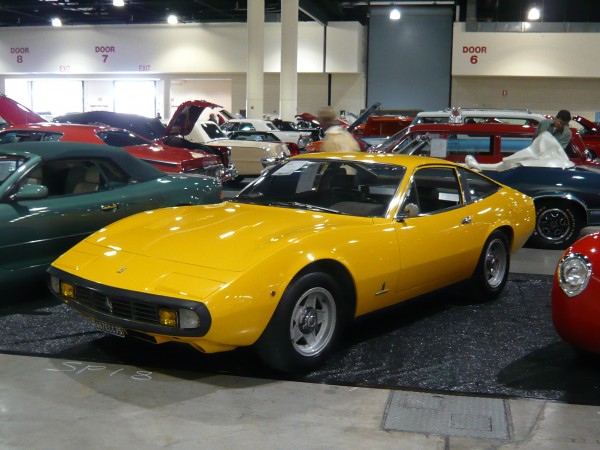
1972 Ferrari 365 GTC/4 Coupe
Launched at the 1971 Geneva Motor Show, the Ferrari 365 GTC/4 ostensibly replaced the 365 GT 2+2. Technically a four-passenger car, its eight-inch-shorter wheelbase and lower, sloping roofline made the tiny rear seats token at best. Ferrari compensated by having the rear seatbacks flip down to make a storage tray. Pininfarina’s coachwork featured a swooping…