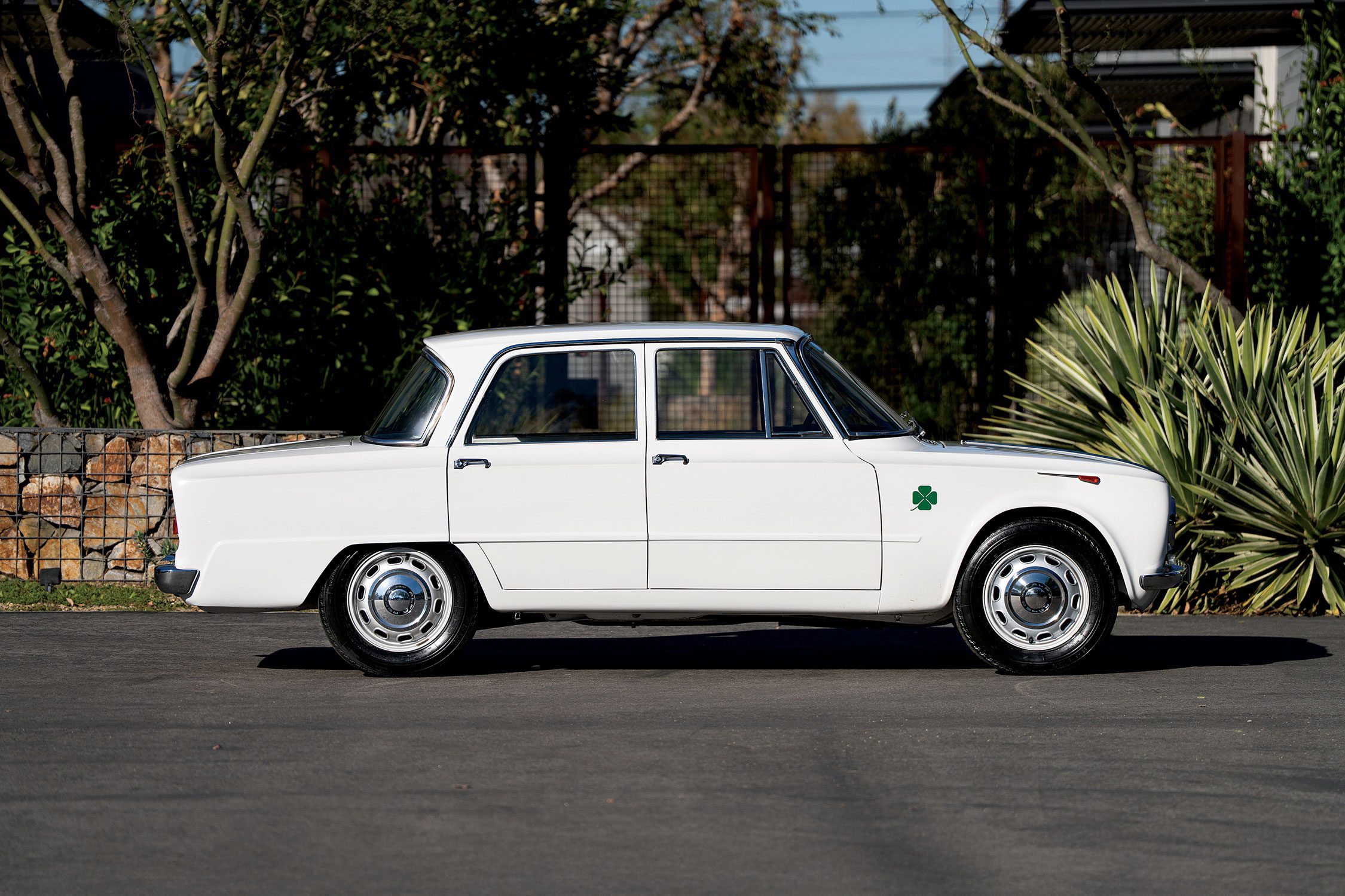
This car, Lot 156, sold for $92,400, including buyer’s premium, at Gooding Christie’s Amelia Island, FL, auction, on March 6, 2026.
Alfa Romeo’s Giulia TI Super was a key contributor to the company’s renewed competition aspirations in the 1960s. Evolved from the new Giulia TI sedan, the boxy racer won its way into the record books alongside the Giulietta SZ, the Giulia TZ, and later, the GTA. This purpose-built machine owes its existence to the technical advancements of its older siblings as well as the intersection of several developments rooted in the 1950s.
Back to the track
First off, privateer brothers Carlo and Dore Leto di Priolo crashed their Giulietta Sprint Veloce into a riverbed at the 1956 Mille Miglia, causing them to send the whole mess off to Elio Zagato for repairs. The rebody — an aerodynamic aluminum coupe — was christened the Sprint Zagato, or SZ. After a few years’ wrangling between Alfa, Bertone — its established coachbuilder — and Zagato, the little SZ entered production, debuting at the 1960 Geneva Motor Show. It proved successful in hillclimbs, rallies and circuit racing.
Just a few years later, Carlo Chiti left Ferrari to establish a tiny performance shop in Udine, called Auto-Delta. By now, Alfa was considering a return to racing, so it purchased Chiti’s shop and incorporated it as Autodelta SpA in 1964. For Chiti, his new stint at Alfa — where he had started his career — was a way to focus on his first love: engineering fast cars.
Meanwhile, the FIA founded the European Touring Car Championship series in 1963. The formation of a sedan class was the final jolt Alfa needed to propel it back to the track, and the pieces began to come together. The success of the SZ and Chiti’s talents inspired the new TZ racer. The 4-door Giulia TI sedan, on sale starting in 1962, provided a platform to create a European Touring Car Championship contender for the 1963 season, after homologation rules were met. Alfa now had its bases covered, with viable entries in endurance, rally, road and GT events. Later, the fabulously successful GTA would seal the company’s reputation for winning almost at will.
A winning formula
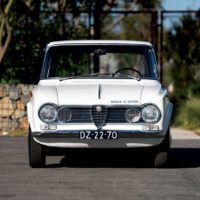
Before the Giulia sedan could hit the track, it needed work — namely a weight-loss plan. While for years it’s been said that certain body panels were reskinned in aluminum, the reality is that steel body panels were acid-dipped to reduce their weight. Also, the inner headlamps were eliminated for both weight savings and increased airflow to the engine, while front and rear bumpers shed their overriders. A thin polycarbonate rear window replaced the TI’s glass, and fixed vent windows avoided use of extra hardware.
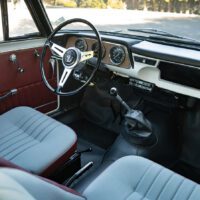
Inside, the busy rectangular TI instrument panel was replaced by simpler round gauges from the Sprint Speciale, while Zagato-designed bucket seats with larger bolsters mimicked those on the TZ. The interior lost niceties such as the ashtray, armrests, sound deadening and carpets, with the door cards and rear bench seat getting the lightweight treatment. The car rode on sand-cast TZ-style Campagnolo magnesium-alloy wheels. It was a good start. All in all, the new model tipped the scales at about 200 pounds less than the stock sedan.
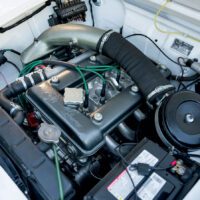
Next up was the running gear. The Giulia TI employed Alfa’s 1,570-cc twin-cam alloy 4-cylinder, good for 92 hp. Output needed a boost for the track, though, so Chiti drafted the Sprint Speciale’s Veloce-spec engine into service. Upsized dual twin-choke 45 DCOE Webers boosted output to 112 hp and top speed to at least 115 mph. To make use of that power, the TI Super received a floor-shift 5-speed manual derived from the TZ’s gearbox. Dunlop disc brakes at all four corners replaced the roadgoing car’s drums.
In the end, while the TI Super notched strong showings at Monza and Spa, plus wins at the Monte Carlo Rally, Tour de France and 24 Hours of Interlagos, it was often outclassed by other marques, notably the Ford-derived Lotus Cortina. Interestingly, the TI Super marked the first time Alfa installed quadrifoglio four-leaf-clover badges on a production car. Ever after, Alfa used these emblems to anoint its high-performance variants.
One obscure Alfa
Only the slightest of flaws affects chassis 595376 — a bit of misfit trim around the gauge binnacle, a cracked horn button, pedal wear and the occasional paint blemish in the engine bay. The spare is present, and extensive documentation accompanied the sale, including from its full restoration in the Netherlands approximately 15 years ago. Known provenance is a significant merit. Rarity plays into the value equation as well. With 501 examples made, the TI Super population is even less numerous than total production of Alfa’s vaunted GTA. And since most were raced from the get-go, there are undoubtedly far fewer survivors.
That’s reflected in the low number of TI Supers that wind up at auction. A scan through SCM’s Platinum Auction Database reveals that most Giulias calling themselves TI Supers are tributes, not original factory-built models. At one end of the spectrum, a 1964 TI Super failed to sell at $87k at a Bonhams auction in Belgium in 2017 (SCM# 6835949). Another went unsold at RM Sotheby’s Online Only: Open Roads sale in 2021, with a high bid of $189k (SCM# 6943777). On the day, bidding for our subject car fell far short of the lower end of this Alfa’s $120k–$150k estimate, and without reserve, a savvy bidder snapped it up for just $92k. We’ll call that fairly bought at around a third to half of current GTA values.