
Profiles
-
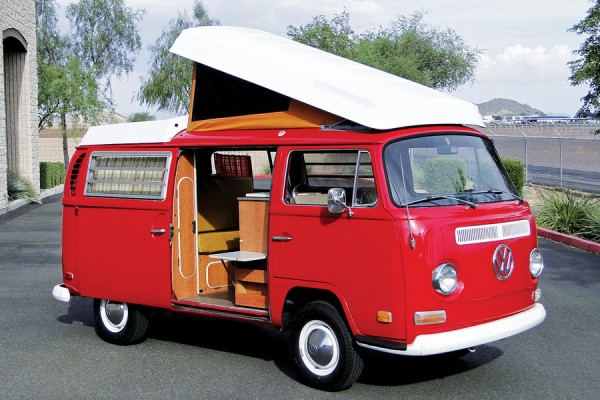
The Virtue of Patience
Of all the variations made of VW’s venerable Type 2 van from the first model in 1950 through the end of the air-cooled engine in 1984, the Westfalia camper is probably the most recognizable and the most popular among American buyers. Further, if there was a vehicle that could capture the hippie spirit of the…
-
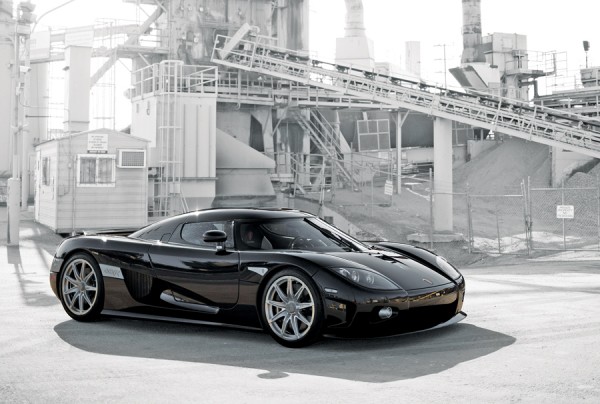
2008 Koenigsegg CCXR
1,018-bhp, 4,700-cc, DOHC aluminum V8 with twin Rotex centrifugal superchargers, 6-speed manual transmission, four-wheel independent suspension with double wishbones and two-way adjustable VPS gas-hydraulic shock absorbers, and four-wheel ventilated carbon-ceramic disc brakes. Wheelbase: 104.7 in. Capable of producing 1,018 horsepower on E85 ethanol and 0–100 km/h (62 mph) in 3.1 seconds Presented at the opening…
-
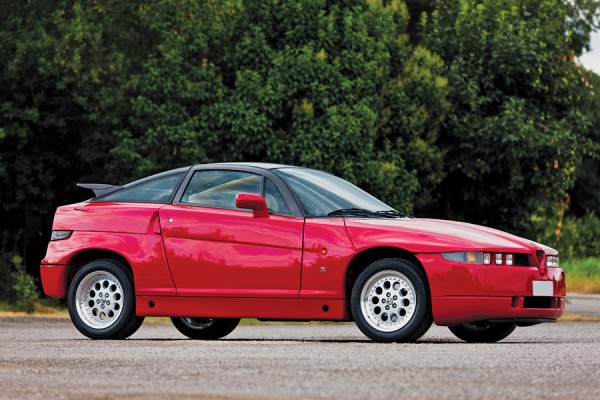
1990 Alfa Romeo SZ
This modern interpretation of the Sprint Zagato was also known internally as the ES-30, or Experimental Sports Three-Liter. This low-production, high-performance automobile was designed by Robert Opron and Antonio Castellana, who had based it on the floorpan of the Group A/IMSA Alfa 75. The front-engine/rear-drive design also borrowed that model’s 5-speed manual rear transaxle and…
-

1914 Mercedes 28/95 Phaeton
Readied in 1914 to replace the 4-cylinder 37/90, for all intents and purposes, the Mercedes 28/95 did not reach production until after World War I. By the time it did reach its customers, the big 7,280-cc, 90-bhp overhead-camshaft 6-cylinder engine had been fitted with a cover to enclose the previously exposed shaft-and-bevel gear-driven valve-gear. Two…
-
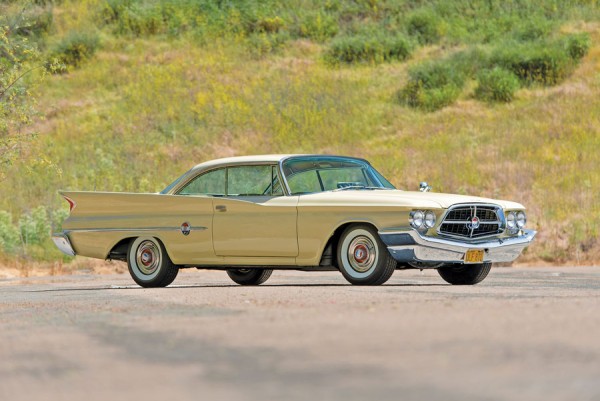
1960 Chrysler 300F Hard Top
Road & Track magazine called out the Chrysler “letter cars” as being a very significant automobile. They stressed to their European-favoring readers that it was not a sports car, but it was the best that Detroit had to offer in its luxury “sedan class.” They succinctly summed up an evaluation as “an athletic, but lovable…
-
1963 Lotus Super Seven Series 2 1500 Cosworth
The Lotus Seven is a small, simple, lightweight two-seater open-top sports car produced by Lotus Cars (initially called Lotus Engineering) between 1957 and 1972. It was designed by Lotus founder Colin Chapman, and has been considered the embodiment of the Lotus philosophy of performance through low weight and simplicity. The original model was highly successful,…
-
1959 Mercedes-Benz 220SE Sedan
Under the bonnet of this German-engineered car is an inline 6-cylinder engine that is extremely detailed. Connected to the engine is a smooth- shifting 4-speed manual transmission. The burgundy exterior shows really well, along with the brightwork, whitewall tires, color-keyed wheel covers and the factory road lights. The interior is tailored with tan leather upholstery,…
-

1962 Ferrari 250 GTE Series II 2+2 Coupe
Although several special-order 2+2s had been produced in the 1950s, the 250 GTE was Ferrari’s first true production 2+2, and it enabled them to widen their potential market and compete directly with Aston Martin, Maserati and Facel Vega. The new 2+2 would bring for the first time wide-scale production, with 953 examples in total, across…
-
1972 Maserati Boomerang Coupe
First seen as a concept car at the Turin Motor Show in 1971, the Maserati Boomerang was a typically adventurous work by Giorgetto Giugiaro. The Boomerang borrowed its mechanical underpinnings and 4.7-liter V8 engine from the recently introduced Maserati Bora coupé, the Italian firm’s first mid-engined production car. With 310 hp on tap, the Boomerang…