
Buy What You Love, Pay What You Should
Corvette
-
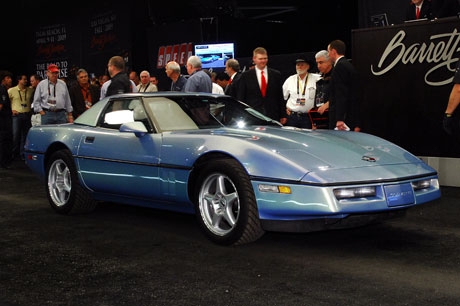
GM Heritage Fleet: C4 Dreams and C5 Mules
General Motors captured the spotlight at the Barrett-Jackson Scottsdale Auction from January 11–18, 2009, when it released 252 cars from its Heritage Fleet for no-reserve sale. (The Heritage Fleet must be differentiated from GM’s Heritage Collection; the former are surplus or less important cars, the latter are the milestone cars that represent GM’s 100 years…
-
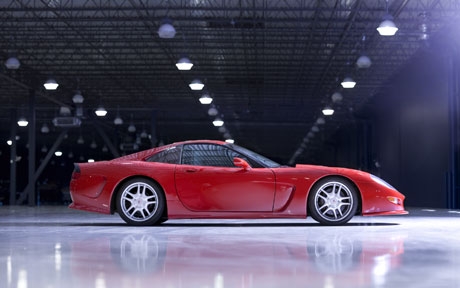
1998 Callaway C12 Coupe
Callaway has built a firm reputation for producing some of the most sophisticated and advanced Corvette-based automobiles ever to hit the road. Callaway’s C12, introduced in 1998, continued this legacy. Designed, developed, and constructed with the assistance of German engineering and development company IVM, the C12 was created from the outset to be a bespoke,…
-
1962 Gulf Oil 327/360 FI Race Car
Grady Davis’s Gulf Oil Racing Team purchased this Corvette in 1962 from Yenko Chevrolet, and the car was campaigned by the “Flying Dentist,” Dr. Dick Thompson, in the 1962 SCCA A-Production Class. The Corvette was sold at the end of the 1962 season to Tony Denman, who successfully raced the car through 1963, finishing second…
-
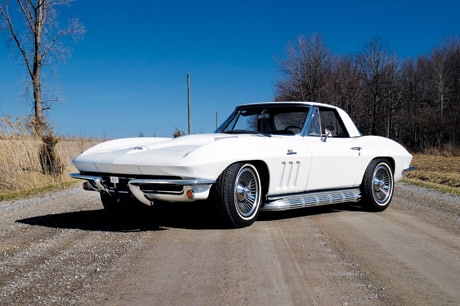
1965 396/425 Convertible
When the new-for-1963 Sting Ray was introduced, it is unlikely that its creators understood the impact it would make on the automotive world. Long considered a modern classic, the Sting Ray was an unqualified success, outselling the 1962 models by 48%. Meanwhile, a second shift was added at the St. Louis assembly plant to meet…
-
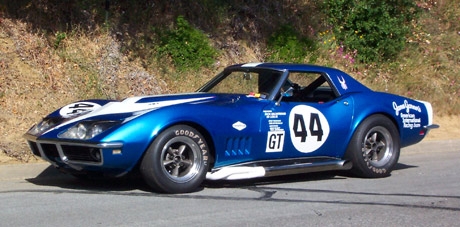
James Garner’s 1968 L88 AIR Race Car
Three factory-built Corvette L88s left the St. Louis plant for delivery to James Garner’s Los Angeles-based American International Racing (AIR) team in November 1967. These Le Mans Blue convertibles were the first production models featuring the new L88 engine with first-generation closed-chamber aluminum heads. The cars were actually picked up at Gene Jantzen Chevrolet in…
-
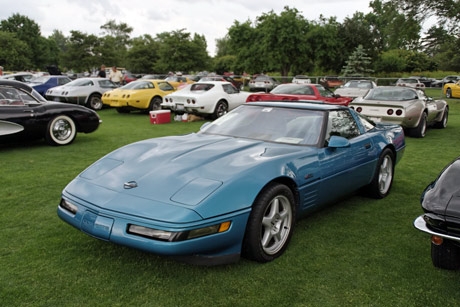
1992 Lingenfelter ZR-1
The catalog notes on the 1992 turquoise ZR-1 that sold at Mecum’s Bloomington Gold auction in June were brief to the point of terse, but they said everything that needed to be said: “Lingenfelter 475 hp package, 3.92 performance gears, Borla SS exhaust, Wilwood 6-piston brakes, FX3 suspension, dual removable roofs, complete maintenance records, well-maintained…
-
1998 Indianapolis Pace Car Convertibles
The 1997 model year remains the single most radically changed Corvette in history. Even with the transition from the C1 to the C2 in 1963 and the C3 to the C4 in 1984, the same engines were carried over from previous years. But with the introduction of the C5, everything was new—frame, body, engine, and…
-
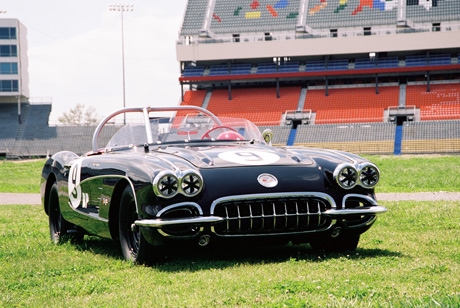
1959 283/290 FI Race Car
Corvettes dominated SCCA racing in 1959, and Jim Jeffords took the SCCA B Production points championship with his 1959 Corvette, dubbed the Purple People Eater Mk III. Plans were laid to contest the 24 Hours of Le Mans and the FIA championship the following year. Against this frenetic backdrop, the 1959 Corvette offered here was…
-
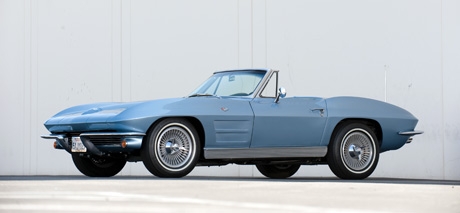
1963 327/340 Convertible
After a decade of production of the classic “solid-axle” Corvette, Chevrolet pulled out all the stops to present a brand new Corvette for 1963. Although the various engine and transmission choices were carried over, every aspect was otherwise redesigned, and a beautiful new fiberglass body was offered for the first time in either coupe or…
-
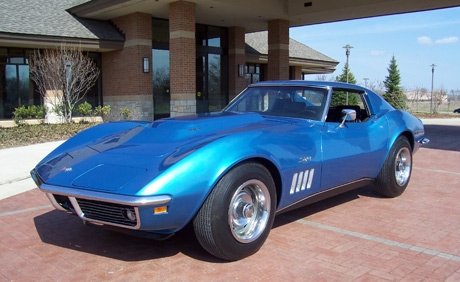
1969 L88 Coupe & Convertible
The L88 Corvette entered its third year of production in 1969, having established itself as all-conquering in both SCCA and FIA competition. Rated at a measly 430 horsepower, the L88 pumped out an all-too-real 560 hp at its redline, and, with special heavy-duty brakes, F41 suspension, and a bullet-proof Positraction rear end, it was as…