
Profiles
-

1969 Dodge Hemi Charger Daytona
The lowest-mile, original-engine 4-speed Hemi Daytona documented 6,435 original miles Documented with two broadcast sheets 1970s ISCA show car that wore custom paint Formerly part of the Otis Chandler Collection Formerly owned by NFL linebacker Kevin Greene Professional restoration by Roger Gibson The first Mopar restored with correct factory markings on the undercarriage Original 426/425-hp…
-
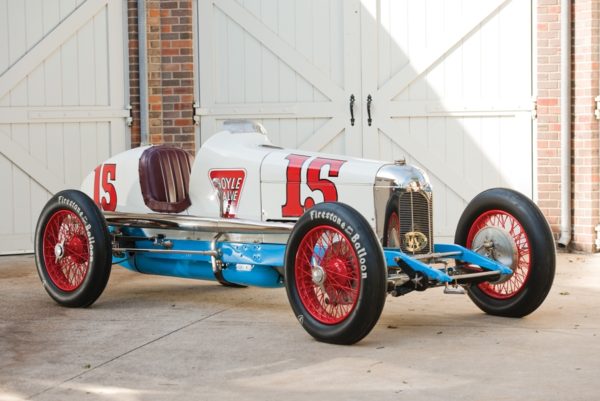
1927 Miller 91
The Miller 91 was a true tour de force of rear-wheel-drive racing technology. It was so successful and its domination on speedways of the 1920s was so complete that it was effectively responsible for its own demise. The AAA’s rule change for 1930 to the “Junk Formula” was, in fact, adopted to stop the Miller…
-
1976 Ford Bronco Sport
• Later-production, iconic first-series example • Recently restored with great color combination • New interior and sportier floor-shift conversion • 302 V8 engine and 3-speed manual transmission • Upgraded with lift and CD player
-

1953 Siata 300BC Barchetta by Bertone
The Siata 300BC barchetta (often referred to as the 750 Spider in period American advertising) entered production in 1951 and was nearly exclusively distributed to the United States, as it offered an ideal take on the road/racing spider that was soon to dominate SCCA racing. The model featured barchetta coachwork, which was penned by Mario…
-

1965 Jaguar XKE Series I 4.2 convertible
From its electrifying March 1961 Geneva launch, Jaguar’s E-type redefined the term “sports car” at one stroke. Careful development brought improved comfort, and during 1964, the DOHC “XK” engine was enlarged to 4.2 liters and matched to a full-synchromesh gearbox for heightened drivability. Iconic styling cues including beautifully covered headlamps were retained, making these late-Series…
-
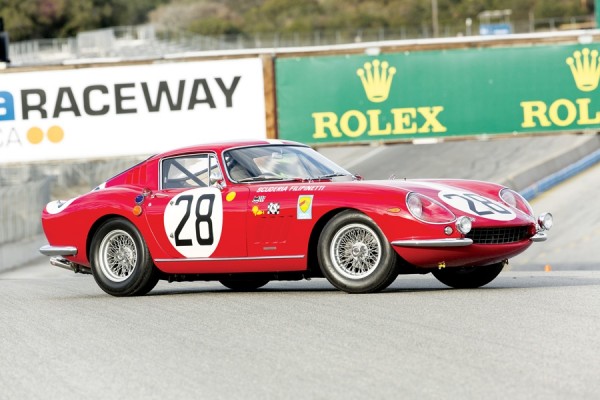
1966 Ferrari 275 GTB Competizione
In July 1966, the Ferrari factory received an order from SAVAF for a 275 GTB Competizione, later specified to be chassis 09079. Late in the specialty model’s limited run, the car was the penultimate example of the thinly aluminum-skinned competition GTB, making it the second-to-last GT car ever produced by Maranello’s factory competition department. Factory…
-
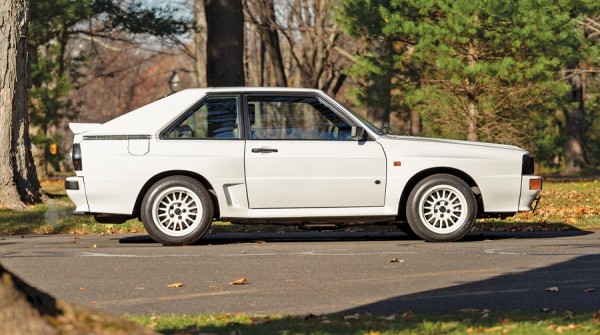
1984 Audi Quattro Sport SWB Coupe
The introduction of Group B into the World Rally Championship in 1982 was an evolution that was dictated by a general industry move from rear- to front-wheel-drive cars, and it proved revolutionary. Contenders now had three classes to choose: Group N (standard production cars), Group A (modified production cars), and the almost immediately notorious and…
-
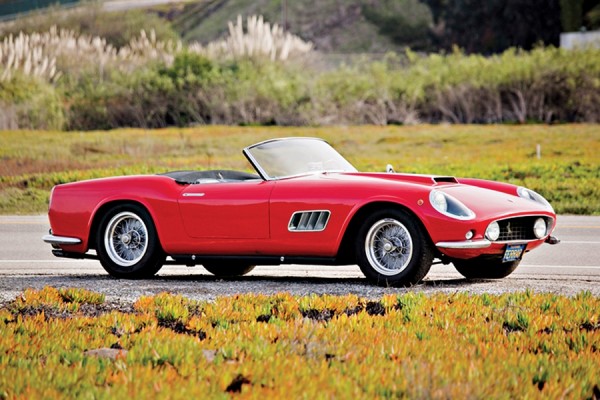
1959 Ferrari 250 GT LWB California Spyder
The extraordinary Ferrari presented here, 1425GT, is the 27th of 50 California Spyders built on the long-wheelbase 250 GT chassis. Consistent with its May 1959 build date, this California Spyder benefits from a number of significant evolutionary improvements introduced throughout the model’s two-year production run. Although more than 55 years have passed since it left…
-

1971 Lamborghini Miura SVJ
Prior to its conversion to Jota specifications, chassis 4892 was constructed at the factory in July 1971 as a Miura SV that was finished in white with a blue interior. The car remained in Italy and was sold new to a Dr. Alcide of Rome, Italy. It is not known when the conversion was done,…
-
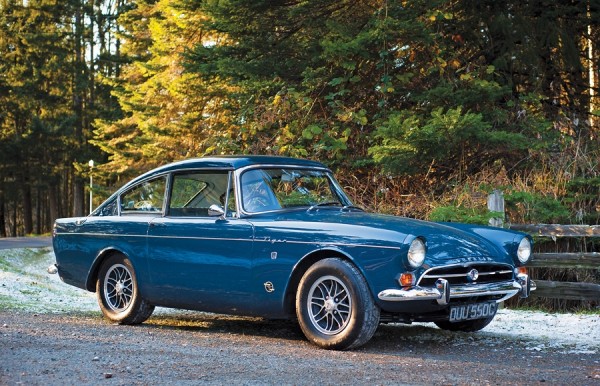
1965 Sunbeam Tiger Mk I Coupe
This car is equipped with a 164-hp, 260-ci, OHV V8 engine with a 4-barrel carburetor, 4-speed manual transmission, independent front suspension with coil springs, live axle rear suspension with semi-elliptic leaf springs, and front-disc and rear-drum hydraulic brakes. British coachbuilders Thomas Harrington Ltd. built only a handful of beautifully crafted fastback Le Mans coupe bodies…