
Profiles
-

1968 Meyers Manx “Remastered”
Even after 60 years, the Meyers Manx remains a one-of-a-kind American icon. The company supplies parts, traditional Manx kits, and has been recently reborn, adding additional models such as the all-electric Manx 2.0 and 4-seat Resorter NEV. Our subject car is a “Remastered” Classic Manx, utilizing a brand-new fiberglass monocoque body and VW-based mechanicals hand-assembled…
-
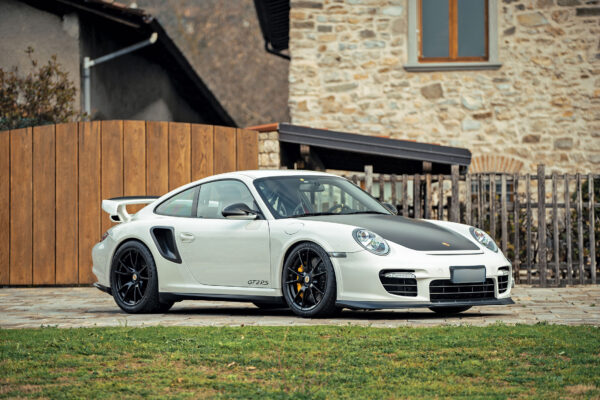
2011 Porsche 911 GT2 RS
This Italian-delivered, one-owner example GT2 RS was built to 2011-model-year specification and finished in Carrara White over a black leather and Alcantara-trimmed interior with Guards Red seat belts. The Porsche was attractively configured with the exterior carbon-fiber package, Porsche Ceramic Composite Brakes (PCCB), black instrument dials, carbon-fiber door-entry guards, aluminum doors, an Alcantara gear lever…
-
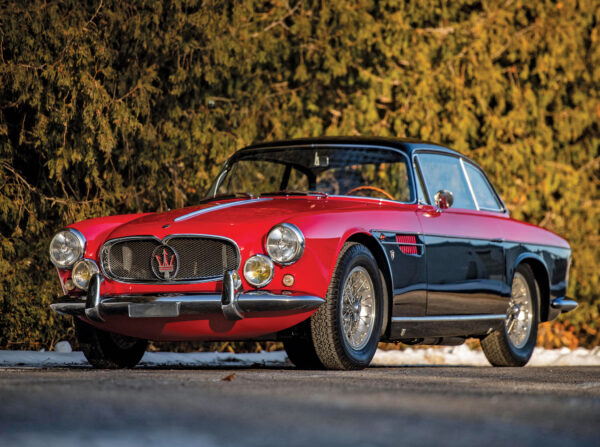
1956 Maserati A6G/2000
The A6GCS sports cars and A6GCM monopostos were consistently successful, and competitive buyers took notice until in 1954 Maserati responded with the A6G/54 (later named A6G/2000) Gran Turismo, a barely disguised competition car with wider and more-comfortable bodywork from a variety of coachbuilders. One of the competitive-minded individuals attracted to Maserati was an American living…
-
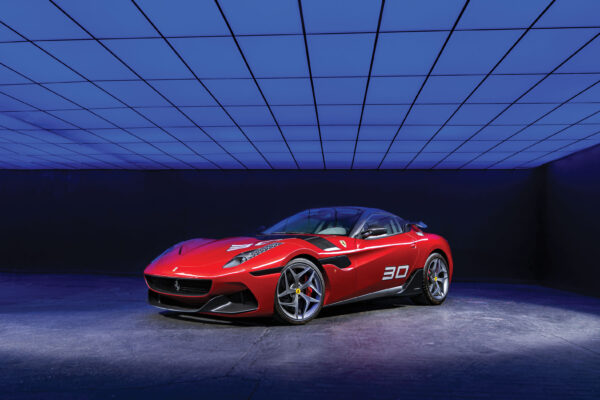
2011 Ferrari SP30 Berlinetta
From the earliest days of Ferrari, the Modenese firm openly catered to the individual wishes of its buyers. Ferrari was all too happy to tweak the mechanical specification for its more-influential customers, but the task of building a bespoke Ferrari was primarily left to coachbuilders — Pininfarina, Ghia, Bertone, Zagato, Boano and many others creating…
-
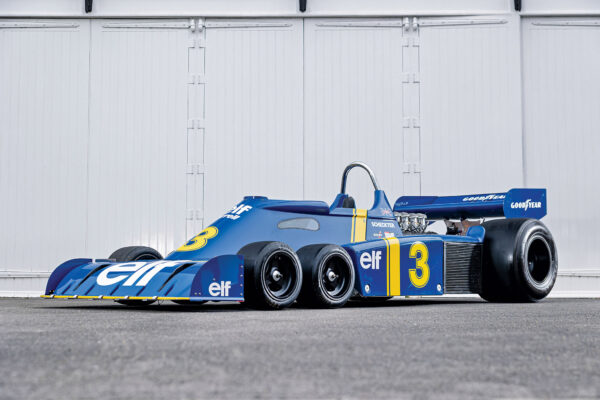
1977 Tyrrell P34
The six-wheeled Tyrrell P34 was a pet project of designer Derek Gardner, who had come up with the idea while he was working on four-wheel-drive systems for Indianapolis cars during the late 1960s. A few years later, and with the majority of the Formula 1 grid using the same Ford-Cosworth DFV engine, he revisited the…
-
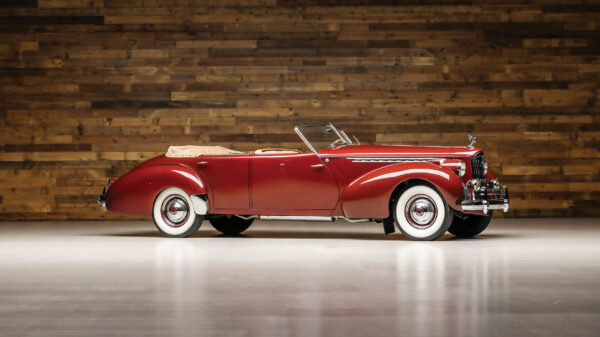
1940 Packard Custom Super Eight 180 Darrin Convertible Sedan
According to a report filed by some of the top Packard historians in the country, such as Richard Langworth, Bob Turnquist and Don Figone, fewer than 150 Packard Darrins were produced between 1937 and 1942. Of those, just 11 Convertible Sedans were constructed and 10 are known to survive today, making this 1940 Packard Custom…
-
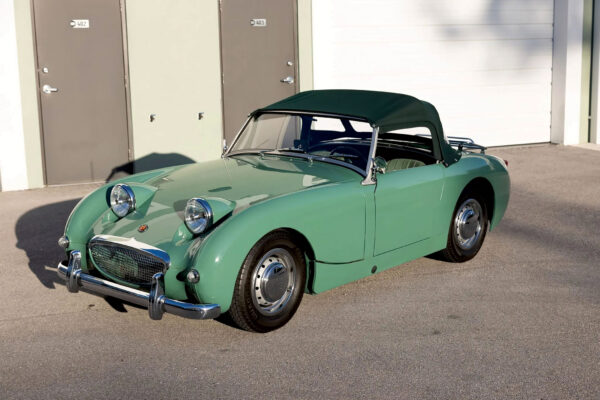
1959 Austin-Healey “Bugeye” Sprite Mk I
This 1959 Austin-Healey Bugeye Sprite was purchased by the seller on Bring a Trailer in March 2019 following a six-year refurbishment process completed by the prior owner. The car had previously been stored disassembled in a barn, and the overhaul included rebuilding the 948-cc inline-4 and the 4-speed manual transmission. Finished from the factory in…
-
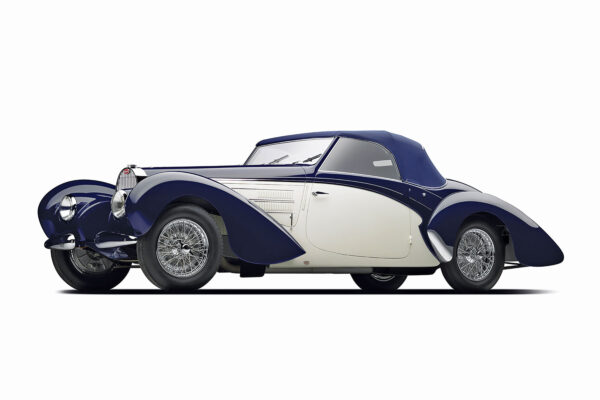
1938 Bugatti Type 57C Aravis Special Cabriolet
Introduced in 1934, the Type 57 is widely regarded as a masterpiece by the hand of Jean Bugatti. Like all Bugattis that preceded it, the Type 57 handled with finesse and possessed a delicate feel characteristic of these magnificent automobiles. Graceful, exquisitely made and incredibly exclusive, the Type 57 was instantly recognizable as a conveyance…
-
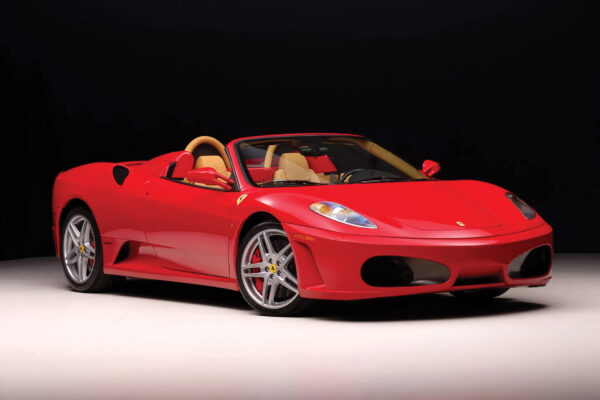
2007 Ferrari F430 Spider
This 2007 Ferrari F430 Spider has been registered in New York and Oklahoma from new. Finished in Rosso Corsa over beige leather, the car is powered by a 4.3-liter DOHC V8 paired with a 6-speed F1 automated transaxle. The car is equipped with a black convertible soft top, 19-inch split-spoke alloy wheels, an electronically controlled…
