

It was bound to happen someday. I have been interested in Japanese cars since I was 7 years old, but up until now, I have only owned models that were sold here in the U.S. I have driven right-hand-drive JDM cars, and friends have imported cars from Japan. I even had the opportunity to visit the private collection of Gary Duncan, one of the top JDM collectors. So earlier this year I decided it was time to import a car of my own from Japan. “Love specification” The model I wanted was a Honda S-MX, introduced in 1996 as part of […]
It was bound to happen someday. I have been interested in Japanese cars since I was 7 years old, but up until now, I have only owned models that were sold here in the U.S. I have driven right-hand-drive JDM cars, and friends have imported cars from Japan. I even had the opportunity to visit the private collection of Gary Duncan, one of the top JDM collectors. So earlier this year I decided it was time to import a car of my own from Japan.
“Love specification”
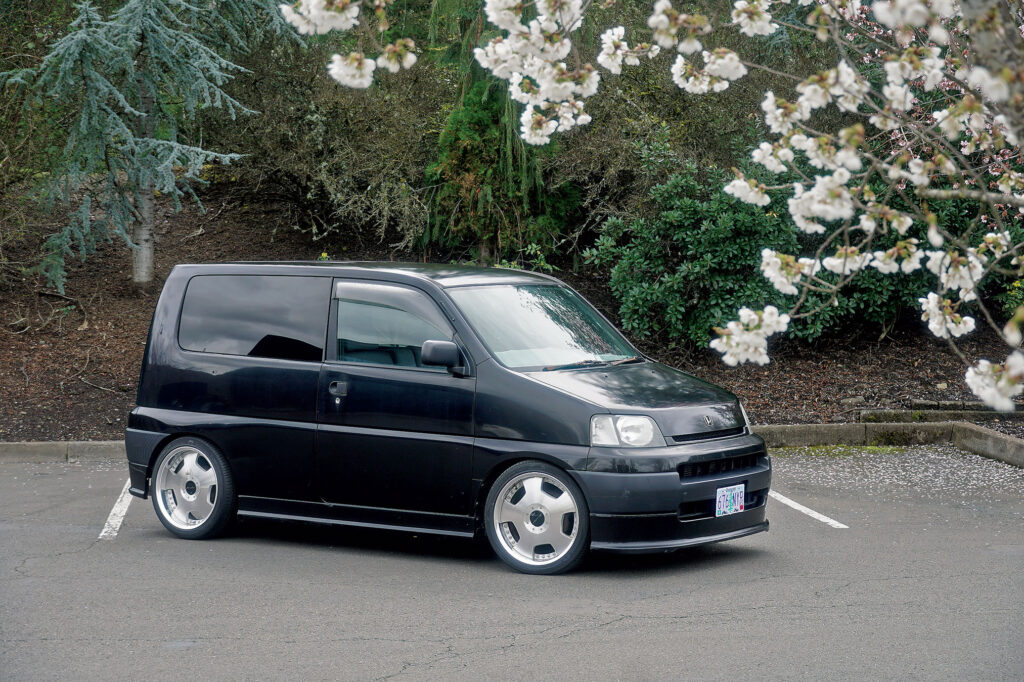
The model I wanted was a Honda S-MX, introduced in 1996 as part of its “Creative Mover” lineup. This included the familiar Odyssey minivan (“premium mover”), the ubiquitous CR-V (“active mover”) and the JDM Stepwgn (“family mover”).
The S-MX was dubbed the “street mover,” similar to the Stepwgn but sportier and without a third row, targeted towards younger people. At the launch event it was described to the press as coming in “love specification” because the seats can be configured to lay perfectly flat, and the rear glass is tinted.
My own intentions were more utilitarian — the S-MX would replace my Honda Element, a thoroughly American SUV that was designed in California and built in Ohio.
Buy now!
A few years ago, I heard about a Tokyo-based company called Be Forward, which runs a popular website listing cheap Japanese cars in decent condition for export. I had been checking the site from time to time, but in January, a black 1997 S-MX popped up, listed for around $5k, landed in Tacoma, WA.
I kept my eye on the car, but it had some rough scratches on the front bumper and a bad respray on the hood. A few weeks later, the price dropped to $4,143 and I decided to hit the “inquire for more details” button. That’s when they had me.
A pop-up window on the website said that if I bought the car within the next hour, they would take another $542 off the price. For $3,601, landed 150 miles away, how could I say no? All I had to do was pay via PayPal, so the transaction was easy.
Language barrier
I sent the money, and got all the details about my purchase in an invoice on the Be Forward website. I wasn’t entirely clear what the next step was, and I tried to ask a few questions of my assigned salesperson, but the language barrier made it difficult. So, I just trusted that everything would be fine on the export end and sat back to wait.
At this point, I did know I would have to get a broker to file all the import paperwork in the U.S. and make sure I didn’t miss a step. I asked some friends with experience importing cars, and Sound Brokerage International in Gig Harbor, WA, was recommended. I fired off an email and got a prompt reply with a rundown of the next steps.
First was filling out a new customer form and giving the company power of attorney for filing the paperwork, similar to what you would do when buying a car from a dealer. I sent Sound Brokerage the information about the car I purchased, including the invoice from Be Forward. I also needed a copy of the Japanese export certificate with a copy translated into English. The brokerage service included fees and taxes and for my car cost around $600.
A month went by before I heard back from Be Forward about which ship my car would be on and the port it would leave from. I got the draft of the Bill of Lading from the exporter, so now it was crunch time for paperwork.
Forms, forms and more forms
I filled out an EPA form, an NHTSA form and an ISF (Importer Security Filing) form as best I could, asking Sound Brokerage to help me so I didn’t mess anything up. This was crucial because the ISF form has to be submitted before the car leaves Japan, otherwise you can incur a fine of up to $10,000.
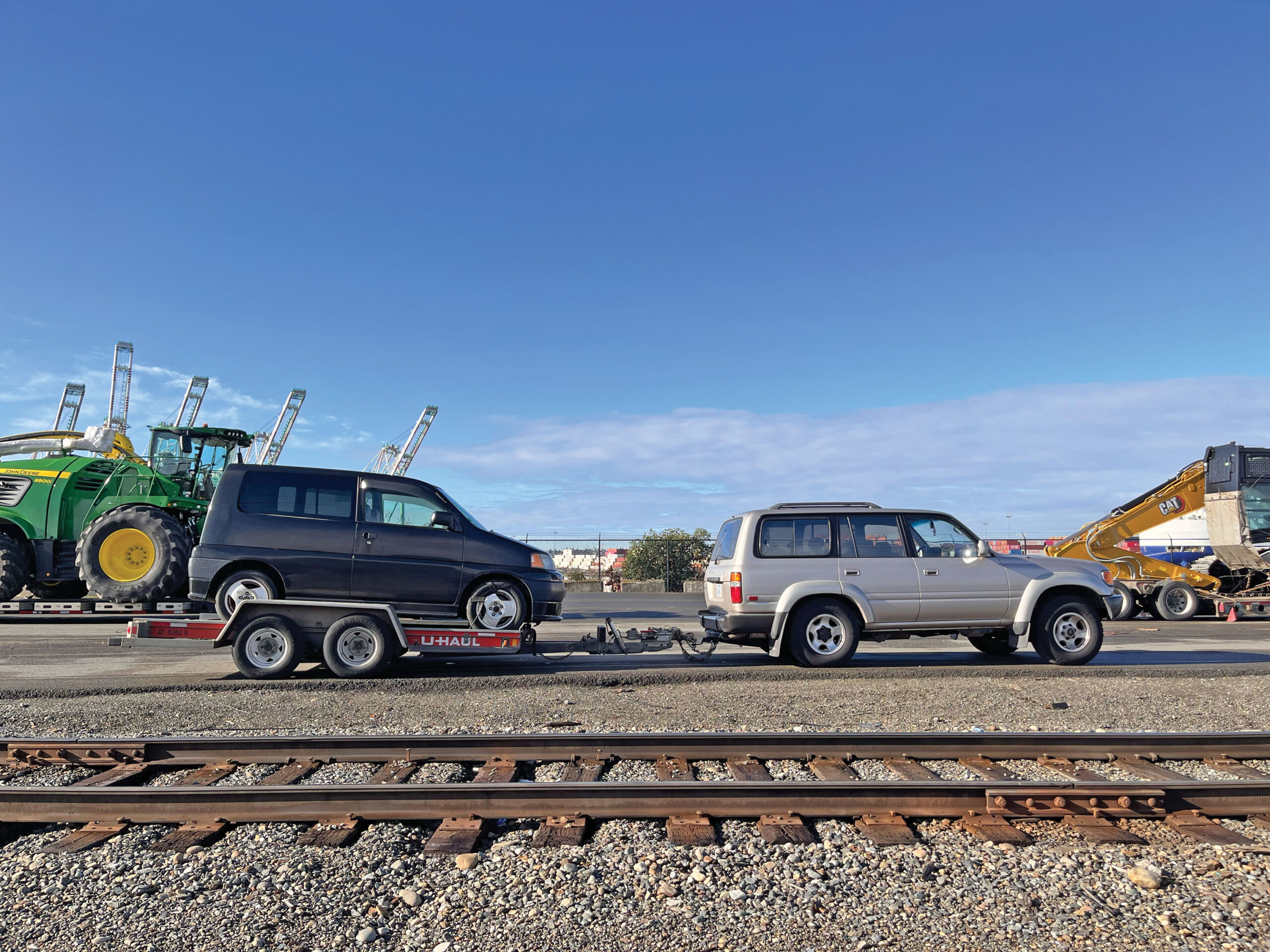
On February 19, the car was loaded up and Be Forward sent me the original Japanese export certificate and the bill of lading via DHL. It took about two weeks before the car arrived at the Port of Tacoma and another few days to unload it and get through customs. Having received notice that the car was released, I headed up I-5 with a U-Haul trailer in tow. I chose to trailer the Honda because I wanted to make sure the car was roadworthy before trying to drive it anywhere.
Once I arrived, I had to call the Port of Tacoma for an ROD (Receipt of Delivery) number. To gain access to the port, you need a Transportation Worker Identification Credential (TWIC), which is issued by the Transportation Security Administration (TSA). Since most of us don’t have such a credential, you can pay for an escort to get your car. Luckily, while I was waiting patiently at the gate for my TWIC escort, a longshoreman asked if I was picking up a car. I told him my ROD number and he drove my car out to me, saving me $60. After loading it up I had to visit the Customs and Border Protection office to finalize my paperwork. I handed over a stack of nearly a dozen documents and after an agent checked the VIN, I was on my way home.
The aftermath
Titling at the Oregon DMV was fairly easy, although I’ll note that Japanese kei cars (a special category of small cars under 660-cc) are now disallowed from receiving a title here, as well as in some other states. My S-MX isn’t a kei car, but lots of popular JDM imports do fall into this category.
Once I arrived home, I drove the car around my neighborhood and immediately realized it had blown struts. Either the overseas voyage was to blame, or they were worn out before the car left Japan. (The cracked, balding tires would indicate the latter.) This is where buying from an exporter who can look over the car beforehand can become worth the extra money.
I like to work on my cars, so I took a risk. Fortunately, I had already purchased new wheels and had planned on getting new tires anyway. The struts were another story. There is no part interchange with any Honda sold in the U.S. so I had to order them from Japan, which meant a few weeks of the car sitting on jack stands in my garage. I used the time to replace the timing belt and water pump. Since this engine was also used on some U.S. models, those new parts showed up at my door in a few days.
Overall, my experience went fairly smoothly. I knew the car I was buying wasn’t the best going in, but it would have been nice having an exporter I could better communicate with. Had I been buying a pricier car, I absolutely would have wanted someone who could examine it before pulling the trigger. I’ve now scratched the itch to import my own JDM car, and more important, I’m happy with my Honda.