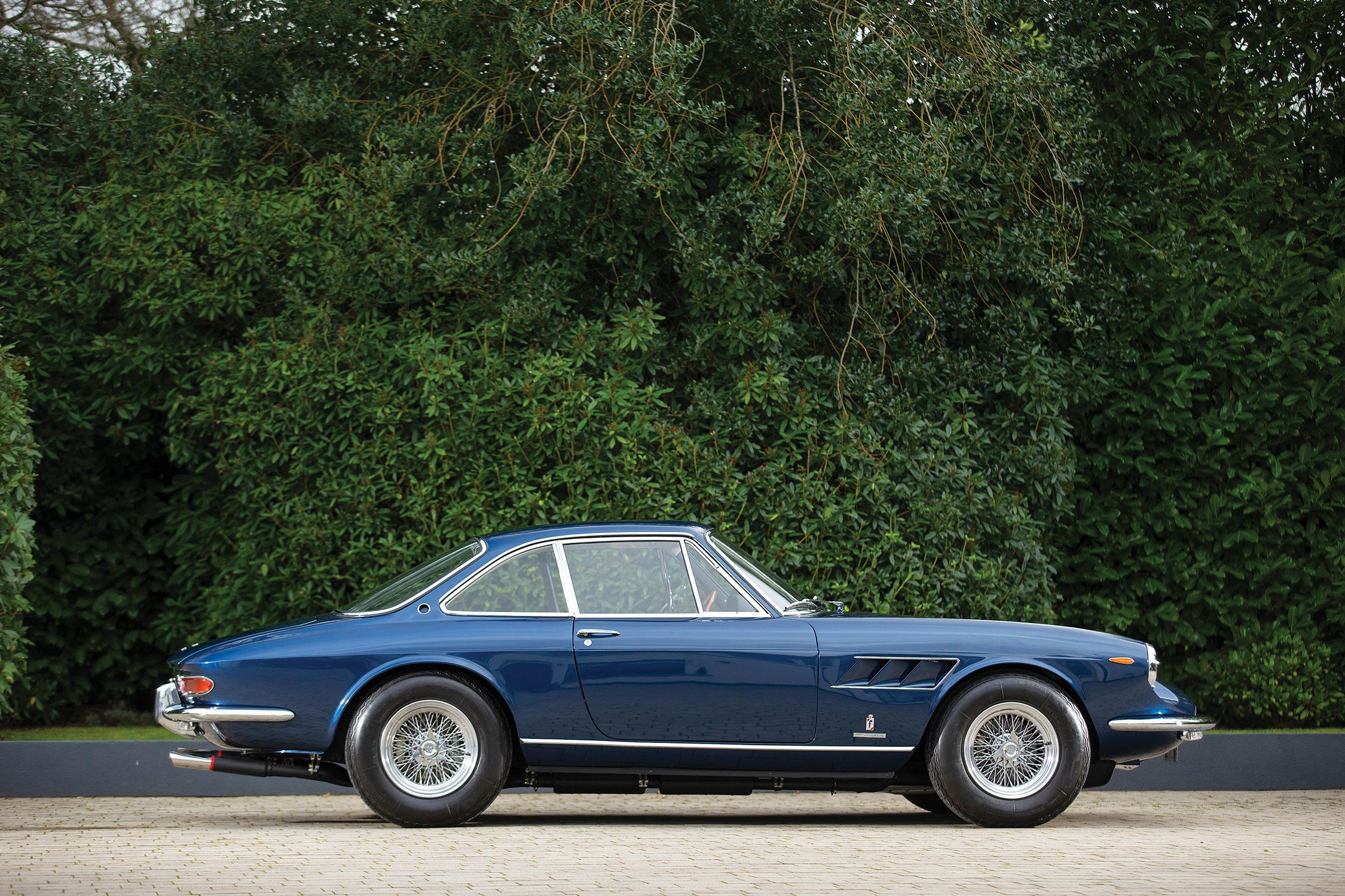
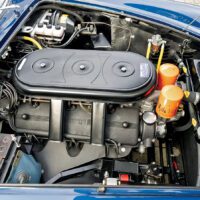
This car, Lot 143, sold for $526,866 (£402,500), including buyer’s premium, at Bonhams Cars’ Chichester, U.K., auction, on April 13, 2025.
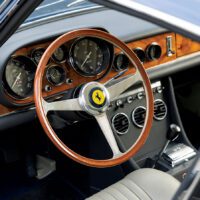
The 330 GTC has a legendary status in the Ferrari world. Ferrari Formula 1 World Champion Phil Hill declared in a Road & Track article that the model was the best-driving Ferrari ever. In a Cavallino magazine article, Dyke Ridgley declared the GTC may be the best-built Ferrari. The GTC’s V12 engine puts out 300 horsepower, moving the car to 60 mph in 6.5 seconds. Its top speed exceeds 150 mph, with long-range high-speed touring capability. This impressive performance is wrapped in an elegant 2-passenger body appointed with air conditioning and electric windows.
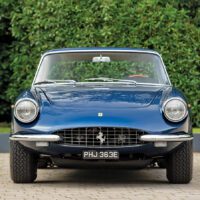
The 330 GTC was not only designed by Pininfarina but also produced in its factory to ensure the highest build quality. Pininfarina essentially blended the front of its exclusive 500 Superfast with the rear of the sporty 275 GTS to create the handsome 330 GTC profile. As the name implies, the model is a Grand Touring Coupe powered by a 330-series motor. Ferrari coupes are hard-top models focused on comfortable transportation over overtly sporty dynamics. They have a roomy interior, comfortable seating and more-luxurious appointments than Ferrari’s more performance-oriented coupes.
Ferrari’s 3-liter 250 and 3.3-liter 275 12-cylinder engines may have put the brand on the map. But size matters, and the extra displacement of the 4-liter 330 engine substantially increased torque. More torque at lower rpm makes urban driving a little less work. The 330’s engine was mated to an excellent rear-mounted transaxle by a vibration-eliminating torque-tube driveshaft assembly.
If the 330 GTC falters in any area, it is the “Neighbor Test.” Arrive at your home with a Viper, and you do not have to explain it to your neighbor. Same with a Countach. With a 330 GTC, if your neighbor even notices it at all, you will have to take them for a ride to explain why it costs five times more than their S-Class Mercedes.
A rocky road
Like many classic Ferrari models, the value of the 330 GTC has languished in the past few years. The high-water mark for the model was 2014–15, when two sold for over a million dollars. Since then, values have slowly retreated to the point where a good example can be bought for half that.
As 2-passenger, front-engine Ferraris go, a 330 GTC is about the bottom rung of the value ladder. That is not because they are bad cars — it is because the compromises made to make the 330 GTC a great all-around Ferrari blunted the edges that make other models exceptional. Despite the accolades fans give 330 GTCs, they are the Honda Accord coupes of the Ferrari world. They look good and drive well but rank low on the excitement factor.
Our subject, 330 GTC chassis 9537, has gone under the gavel a few times. In 2001 it sold at RM Monterey for $73k (SCM# 23204). SCM’s reporter gave it a 4+ condition rating and reported weak paint, split seats and unhappy leather. Two months later it was on the stage again, still a 4+ but boasting a recent $12,000 “tune-up.” The seller took the car home when the bidding stopped at $57,500 (SCM# 23344). Fast forward to 2011, when 9537 crossed the block in the U.K. with new upholstery, abd a rising market helped pull a bid of $229,900 that bought the car (SCM# 191223).
Next came a three-year £150,000 restoration of which Bonhams Cars curiously advised bidders to closely inspect the invoices. Maybe the auction company was hinting that #4 condition plus £150k does not equal a #1 condition Ferrari. A Ferrari Classiche certificate followed, and then a stint at DK Engineering that ended with a sale to the current Bonhams consignor. In between, an RM Sotheby’s “Private Treaty” offering at £550k also ended without a sale.
Over the past eight months, four 330 GTCs offered at auction did not get bid past $400k. The seller of 9537 had to be on the edge of their seat during the bidding here. The hammer price was below the low end of Bonhams’ $522k–$652k estimate. It was also spot-on for the average value of a 330 GTC, just enough to buy the car.
Nothing to celebrate
The average age of a new or used late-model Ferrari buyer is about 40. These owners are fanatical about new models, with little interest in classics. They are fixated on colors and options. Refinement, quality, history and value do not hit their radar. They will drop a half-million dollars on a mass-produced model and not even look at an Enzo-era blue-chip.
Chassis 9537 was an average example of an average Ferrari model and it sold for average money. The car has been driven less than 2,000 km since 1989 and some surprises will inevitably show up when and if it is put back into service. The seller probably netted less than their investment but was tired of writing checks. The buyer got a good car with a recent restoration and Ferrari Classiche certification. If there is a winner here, it is the buyer for getting a wonderful car. But not for getting a great deal.