
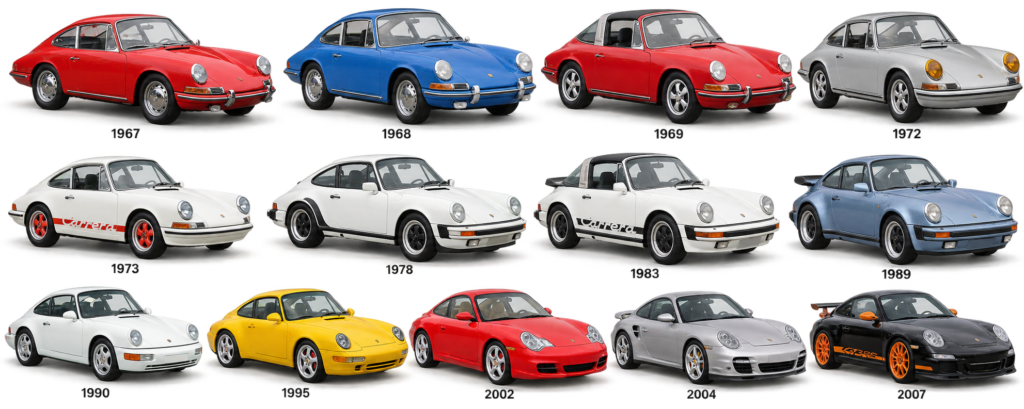
The Porsche 911 is one of the longest-running and most continuously developed sports cars in automotive history. Introduced in 1963 as the successor to the Porsche 356, it retained Porsche’s rear-engine philosophy but added a more powerful six-cylinder engine, a roomier 2+2 body and a chassis capable of evolving for decades.
Originally introduced as the Porsche 901, the model was renamed 911 before full-scale sales after Peugeot objected to Porsche’s use of a three-digit model number with a zero in the middle.
What followed was an extraordinary sequence of continuous development rather than complete reinvention. Early short-wheelbase cars evolved into longer-wheelbase 911s, impact-bumper G-series cars, the 964, the last air-cooled 993, the water-cooled 996 and increasingly sophisticated 997, 991 and 992 generations.
For collectors, the 911 is not one model but an enormous family. Important distinctions include short-wheelbase versus long-wheelbase cars, carbureted versus fuel-injected engines, T, E and S specifications, Carrera RS and RSR models, impact-bumper cars, SC and Carrera 3.2, Turbo variants, air-cooled versus water-cooled generations, and later GT2, GT3 and limited-production models.
1963: The Porsche 901 Is Introduced
Porsche unveiled its new sports car at the Frankfurt Motor Show in 1963. Internally designated 901, the new car was designed largely by Ferdinand Alexander “Butzi” Porsche. Its shape established the basic 911 silhouette that remains recognizable today: round headlights, sloping hood, curved roofline and fastback rear body.
The car used a rear-mounted 1,991-cc air-cooled flat six with a single overhead camshaft for each cylinder bank. Early output was approximately 130 horsepower. A five-speed manual transmission was fitted, and suspension was independent at all four wheels. Compared with the 356, the new Porsche was faster, more refined and considerably more sophisticated.
1964: The 901 Becomes the 911
Before series production expanded, Peugeot objected to Porsche’s 901 name because Peugeot had trademarked three-digit model numbers with a central zero in certain markets. Porsche therefore renamed the production car 911. Only a tiny number of cars were built with 901 badging, making genuine pre-production 901s extraordinarily rare. The 911 entered regular production during 1964 and quickly established itself as Porsche’s flagship road car.

1965 Porsche 911 coupe, from an auction at The Quail on August 13th, 2026
1965: Early 2.0-Liter 911
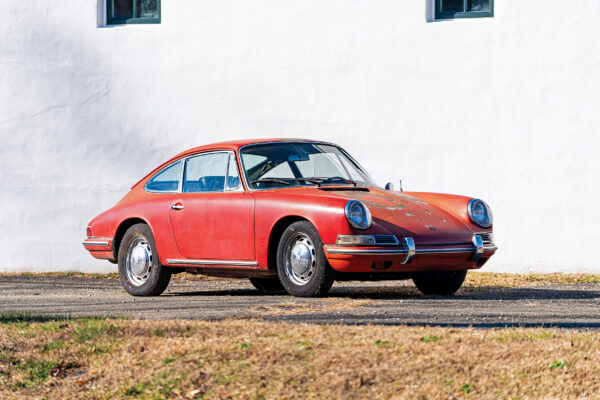
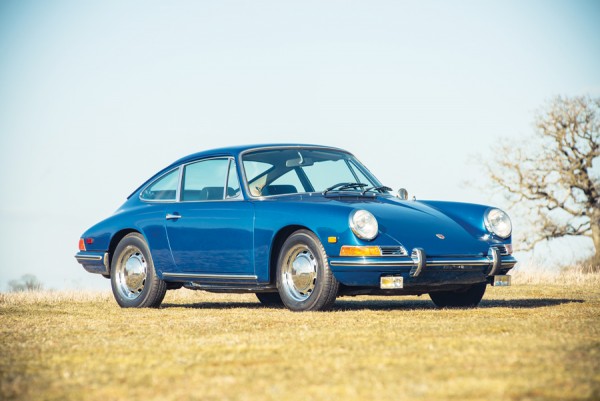
The first production 911s used the 2.0-liter flat six producing roughly 130 horsepower. These early cars are commonly called short-wheelbase, or SWB, 911s. They are visually delicate compared with later cars, with narrow bodywork, simple bumpers and relatively small wheels. Their compact proportions and low weight make them especially appealing to collectors today.
Early 911s also retain numerous detail differences in trim, interior design and mechanical specification that changed rapidly during the first years of production.

1967 Porsche 911S coupe, from an auction in Paris on February 7th, 2025
1966: The 911 S
Porsche introduced the high-performance 911 S. Its 2.0-liter engine received higher compression, revised camshafts and other modifications, increasing output to approximately 160 horsepower. The S also received upgraded brakes, suspension and lightweight Fuchs alloy wheels. Those five-spoke forged-aluminum wheels became one of the most recognizable Porsche design elements ever produced.
The 911 S immediately became the enthusiast-oriented model and established the pattern of offering higher-performance 911 variants alongside standard cars.

1967 Porsche 911S Soft-Window Targa, from an auction in Monaco on May 10th, 2024
1967: The 911 T and Targa
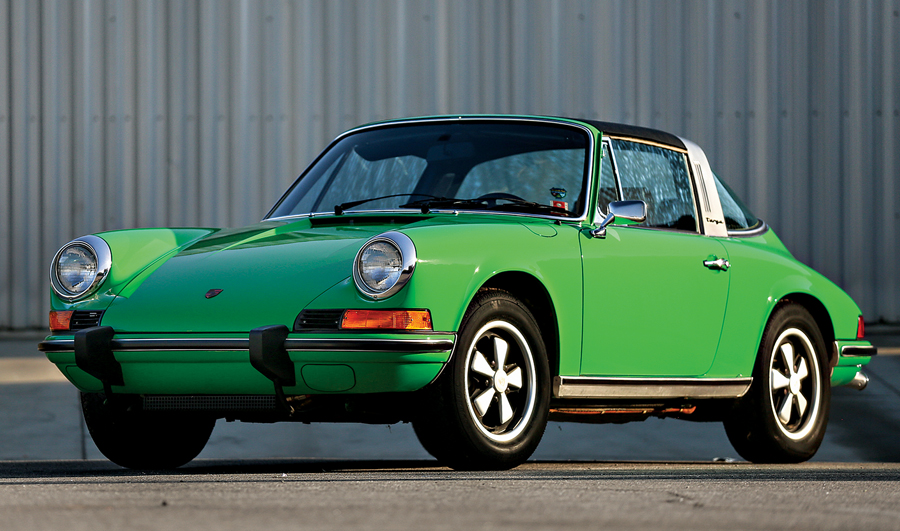
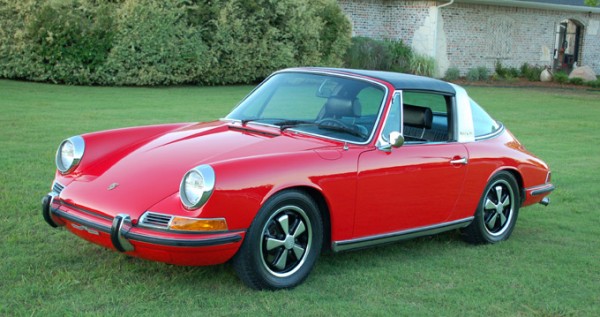
Porsche expanded the range significantly. The new 911 T provided a less expensive entry-level model with a lower-output engine. The 911 S remained at the top of the range. Porsche also introduced the 911 Targa. Concern about future American rollover regulations encouraged Porsche to develop an open car with a fixed structural hoop behind the passenger compartment and a removable roof panel.
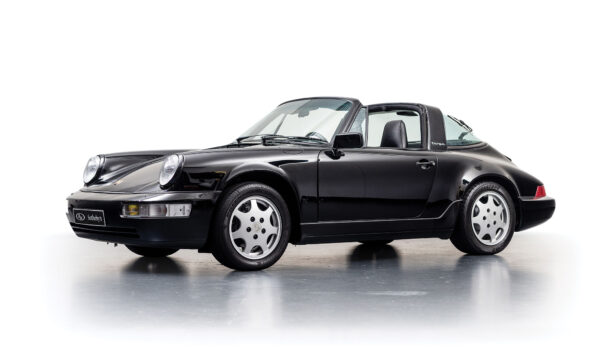
The Targa’s brushed stainless-steel roll hoop became one of the car’s defining visual features. Early Targas used a removable soft rear window before Porsche introduced a fixed glass rear window.

1968 Porsche 911L coupe, from an auction on February 21st, 2025
1968: 911 L and Early Model Expansion
The 911 range continued to diversify. Depending upon market, Porsche offered variants including the 911 L, which combined some higher-level trim and equipment with a less highly tuned engine. The model structure of these early cars can be confusing because specifications differed between Europe and the United States. Emissions regulations were beginning to affect U.S.-market cars, creating differences in carburetion, injection and output.
1969: Longer Wheelbase
One of the most important early changes came for 1969. Porsche lengthened the 911’s wheelbase by approximately 57 mm. The rear wheels were moved rearward, improving stability and reducing some of the abrupt oversteer characteristics associated with early short-wheelbase cars. This created the long-wheelbase, or LWB, 911. The visual difference is subtle but important to collectors.
The model range now centered around the 911 T, 911 E and 911 S.
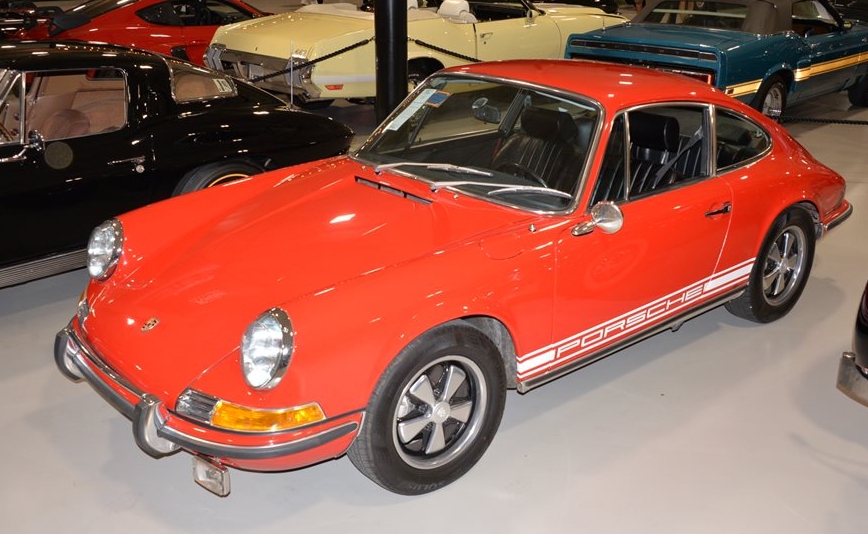
1969 Porsche 911E coupe, from an auction on September 3rd, 2026
1969: T, E and S
The new lineup created a clear performance hierarchy. The 911 T was the entry model. The 911 E occupied the middle of the range and emphasized a balance between performance and drivability. The 911 S remained the highest-performance regular model. Mechanical fuel injection became increasingly important, particularly on the E and S. This T-E-S structure would define the early long-wheelbase era.
1970: Engine Displacement Increases to 2.2 Liters
Porsche enlarged the flat six to approximately 2.2 liters. The T, E and S all benefited from the additional displacement. Output varied according to specification, with the S producing substantially more power than the T. The larger engine improved torque and drivability while retaining the light weight and narrow bodywork of the early 911.

1971 Porsche 911S Targa, from an auction in Paris on February 6th, 2025
1971: Final 2.2-Liter Cars
The 2.2-liter range continued with incremental improvements. By this point, Porsche had established the 911 as both a road car and competition platform. Rallying, endurance racing and club competition helped cement its reputation for durability and versatility. The 911’s ability to evolve through relatively small engineering improvements was becoming central to Porsche’s philosophy.
1972: The 2.4-Liter 911
Engine displacement increased again to approximately 2.4 liters. The T, E and S range continued. European versions generally retained higher output than emissions-controlled U.S. cars.
One distinctive feature of 1972 cars is the external oil-filler door located on the right rear quarter panel. This arrangement lasted only one model year because owners occasionally confused it with the fuel filler. That makes the 1972 oil-door 911 particularly recognizable and collectible.
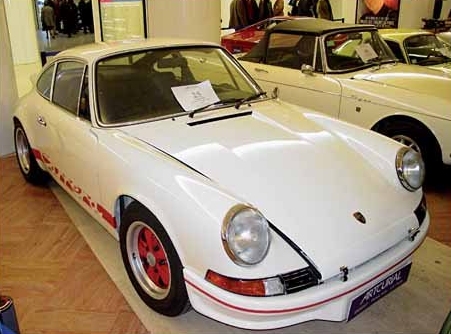
1973 Porsche 911 RS 2, 2.7 lightweight coupe, from an auction on February 15th, 2004
1973: The 2.4 S and Carrera RS 2.7
The final year of the classic narrow-bumper body produced some of the most important early 911s. The 911 S 2.4 represented the most developed regular-production early model.
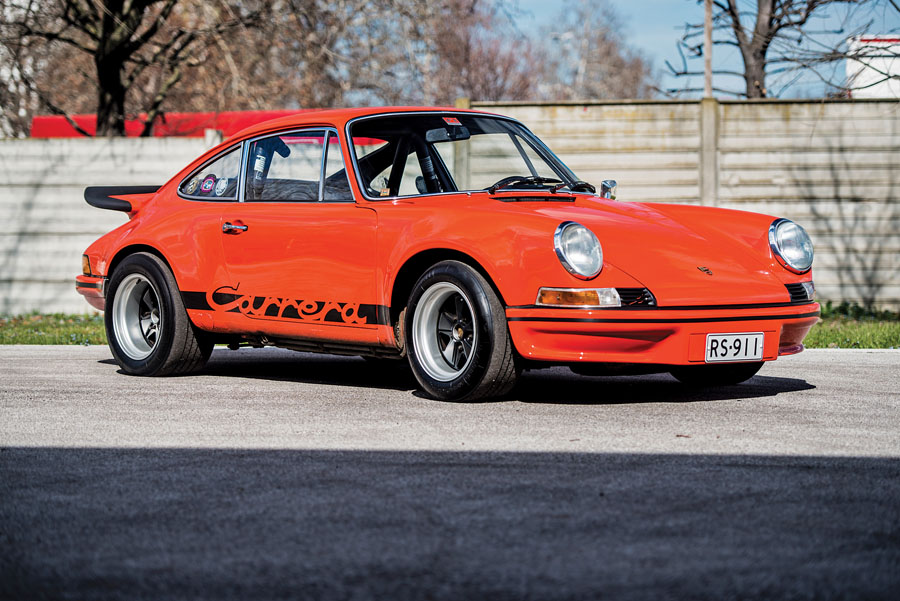
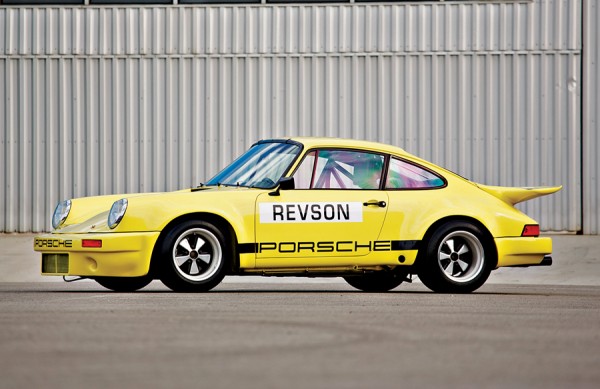
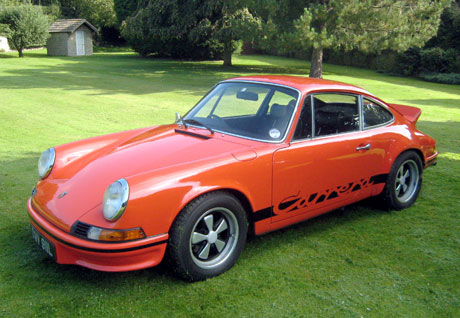
More significant was the introduction of the Carrera RS 2.7. Created primarily for homologation, the RS used a 2.7-liter mechanically fuel-injected engine producing approximately 210 horsepower. It received wider rear fenders, lightweight construction and the famous ducktail rear spoiler. The name “Carrera” honored Porsche’s success in the Carrera Panamericana.
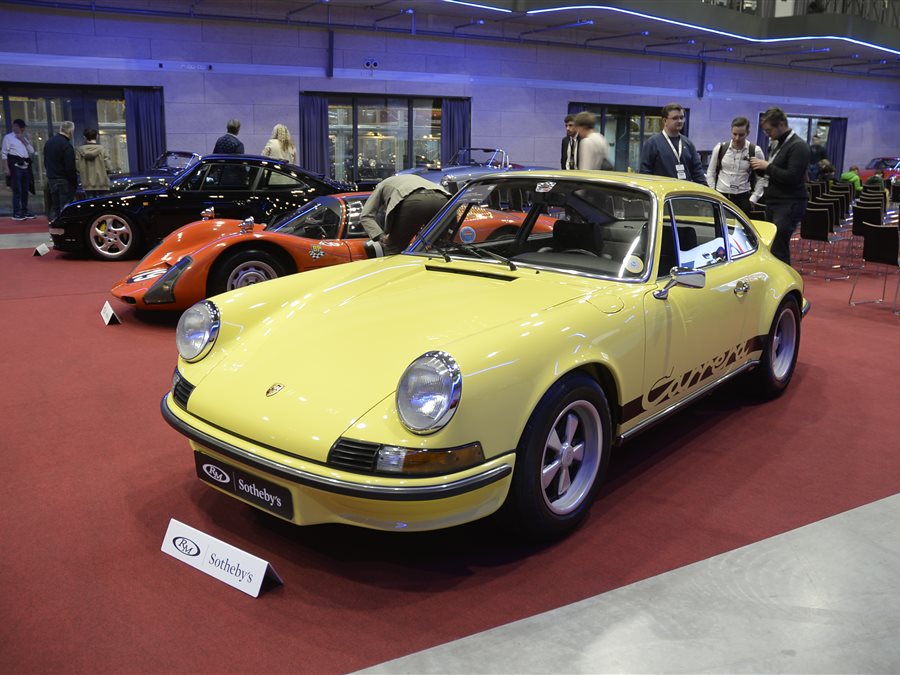
1973 Porsche 911 RS 2.7 Touring coupe, from an auction in Munich on October 18th, 2025
1973: Carrera RS Touring and Lightweight
The Carrera RS was offered in several configurations. The Touring version retained more road equipment and interior trim. The Lightweight, or Sport, version removed sound insulation and other equipment to reduce mass. The Lightweight is substantially rarer and more valuable today.

1974 Porsche 911 Carrera RS 3.0 coupe, from an auction in Milan on May 22nd, 2025
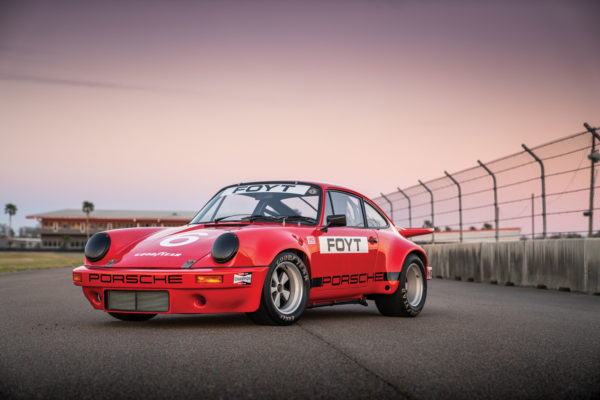
The RS became one of the most important road-going Porsches ever built and the foundation for the even more extreme Carrera RSR competition cars.
1974: The G-Series and Impact Bumpers
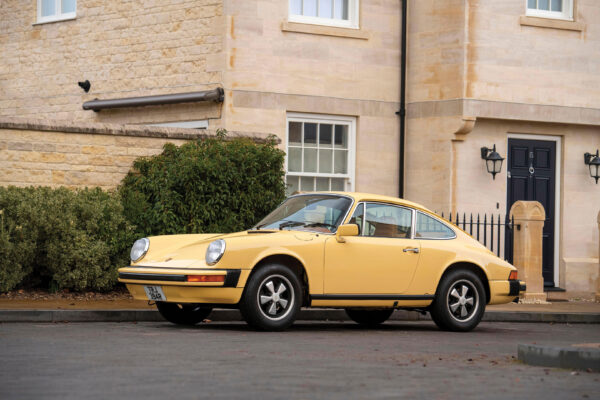
For 1974, Porsche redesigned the 911 to comply with new U.S. bumper regulations. Large impact bumpers replaced the delicate chrome bumpers of earlier cars. Rubber bellows connected the bumpers to the body. This created the body style commonly known as the G-series, although Porsche’s internal letter designations changed over subsequent years. The basic 911 silhouette remained intact, but the car became visually heavier.

1974 Porsche 911 Carrera RS 2.7 coupe, from an auction on August 29th, 2024
1974: Carrera 2.7
The Carrera name continued. European Carrera 2.7 models retained versions of the mechanically fuel-injected engine related to the RS. These cars can provide performance close to the earlier RS while wearing impact-bumper bodywork. U.S.-market Carreras differed significantly because emissions requirements affected engine specification. Market identity is therefore especially important for mid-1970s Carreras.
1975: Emissions and the 2.7-Liter Era
The regular 911 range continued with 2.7-liter engines. U.S. emissions requirements created substantial challenges. Thermal reactors and other emissions equipment increased engine temperatures, contributing to durability problems on some cars. Later owners frequently modified these systems. The condition and rebuild history of a mid-1970s 2.7-liter engine are therefore particularly important when evaluating one today.
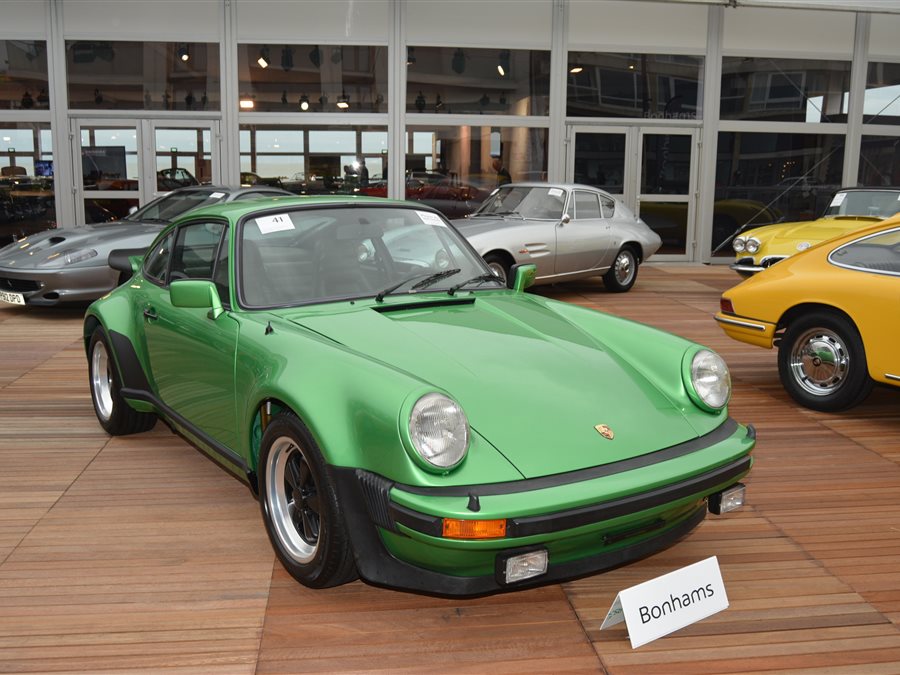
1976 Porsche 930 Turbo 3.0 coupe, from an auction on October 11th, 2019
1975: The 911 Turbo Arrives
Porsche introduced the production 911 Turbo, internally designated 930. The first cars used a 3.0-liter turbocharged flat six producing approximately 260 horsepower in European specification. The Turbo received dramatically widened rear fenders and a large rear wing. This established the wide-body Turbo appearance that would become another permanent branch of the 911 family.
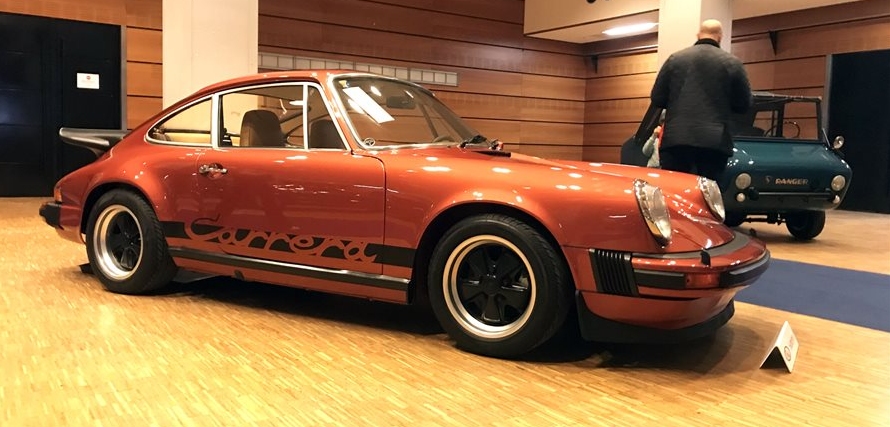
1976 Porsche 911 Carrera 3.0 coupe, from an auction in Paris on February 1st, 2023
1976: Carrera 3.0
The Carrera 3.0 appeared for selected markets. Its engine combined the aluminum crankcase architecture associated with the Turbo with naturally aspirated induction. Output was approximately 200 horsepower in European specification. Produced in relatively small numbers, the Carrera 3.0 is now one of the more desirable transitional impact-bumper 911s.
1977: Final 2.7 and Carrera 3.0 Cars
The late 1970s marked the end of the 2.7-liter regular 911 era. Porsche was preparing a more durable and standardized model for 1978. The solution would become one of the most successful classic 911 variants: the 911 SC.
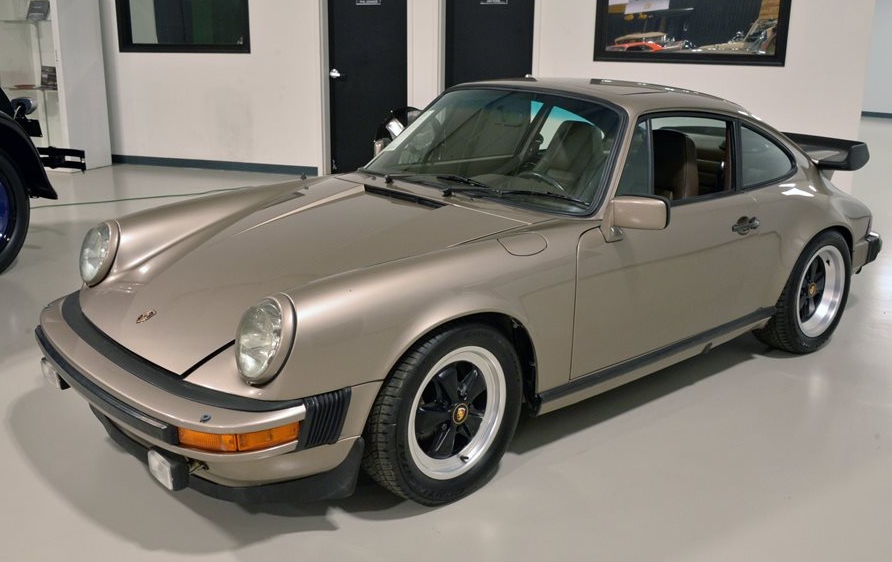
1981 Porsche 911SC coupe, from an auction on April 24th, 2026
1978: The 911 SC
The 911 SC replaced most previous naturally aspirated variants. Its 3.0-liter flat six used a durable aluminum crankcase and Bosch CIS fuel injection. Output varied by market and year, generally ranging from approximately 180 to just over 200 horsepower. The SC was intended to simplify the lineup and provide greater reliability. It succeeded extremely well and developed a reputation as one of the most durable air-cooled 911s.

1979 Porsche 930 Turbo 3.3 coupe, from an auction in Scottsdale on January 17th, 2020
1978: The 3.3-Liter Turbo
The 930 Turbo also received a major update. Displacement increased to 3.3 liters, an intercooler was added and European output rose to approximately 300 horsepower. The larger “tea tray” rear spoiler distinguished these cars visually from earlier 3.0-liter Turbos. The 930 remained technically part of the 911 family but occupied a very different performance category.
1979–80: The SC Matures
The 911 SC continued with relatively few major changes. Power output varied among markets because emissions regulations differed substantially. The body remained available as both Coupe and Targa. The SC’s combination of strong durability, galvanized body construction and relatively straightforward mechanical systems makes it a popular classic 911 today.
1981: More Power for the SC
European-market SCs received increased output. The model continued evolving gradually rather than through major redesign. Interior equipment became more sophisticated, while air conditioning and luxury options became increasingly common. The 911 was shifting from a relatively elemental sports car toward a more refined grand tourer without abandoning its rear-engine character.
1982: Cabriolet Development
Porsche prepared a full convertible version of the 911. Until this point, the Targa had served as the primary open-roof 911. A Cabriolet had not been offered since the 356 era. The new version reflected growing demand for more luxurious open sports cars.

1983 Porsche 911SC cabriolet, from an auction at The Quail on August 24th, 2018
1983: The 911 Cabriolet
The 911 SC Cabriolet entered production. It used a fully folding fabric roof rather than the removable panel of the Targa. The Cabriolet became an immediate success and would remain a permanent part of the 911 range. This was also the final period of SC production.
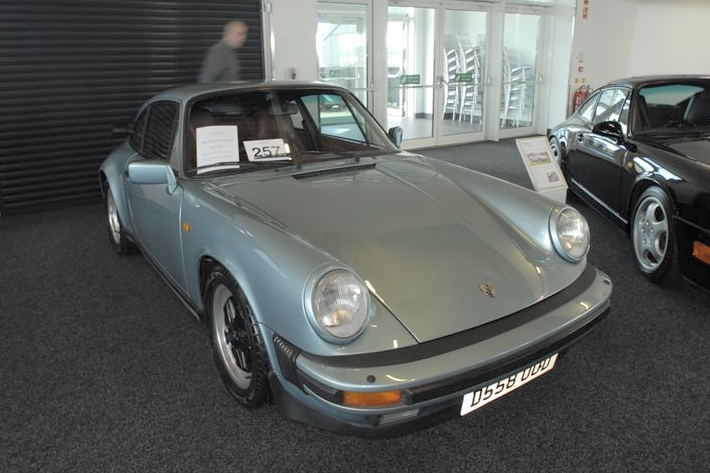
1986 Porsche 911 3.2 Carrera coupe, from an auction at Silverstone on October 20th, 2017
1984: Carrera 3.2
The Carrera 3.2 replaced the SC. Engine displacement increased to approximately 3,164 cc. Bosch Motronic electronic engine management replaced the SC’s CIS system. European cars produced approximately 231 horsepower, while U.S. versions produced less due to emissions requirements.
The Carrera name became the standard designation for the naturally aspirated 911.
1985: Carrera 3.2 Refinement
The Carrera 3.2 continued in Coupe, Targa and Cabriolet forms. The body remained fundamentally similar to the SC. Mechanical reliability and improved fuel injection made the Carrera 3.2 one of the most usable classic air-cooled 911s. These cars also benefited from Porsche’s mature corrosion protection and strong parts support.
1986: Turbo Returns to the U.S.
The 930 Turbo returned officially to the American market after several years of absence. U.S. output was approximately 282 horsepower. The Turbo retained its four-speed gearbox. The wide-body 930 remained Porsche’s flagship road car.
1987: G50 Gearbox for Carrera 3.2
One of the most significant Carrera 3.2 improvements came with the introduction of the G50 five-speed transmission. Earlier Carrera 3.2s used the Porsche 915 gearbox. The G50 offered stronger synchromesh, a hydraulic clutch and generally easier shifting. As a result, 1987–89 Carrera 3.2s often attract a premium among buyers seeking usability.
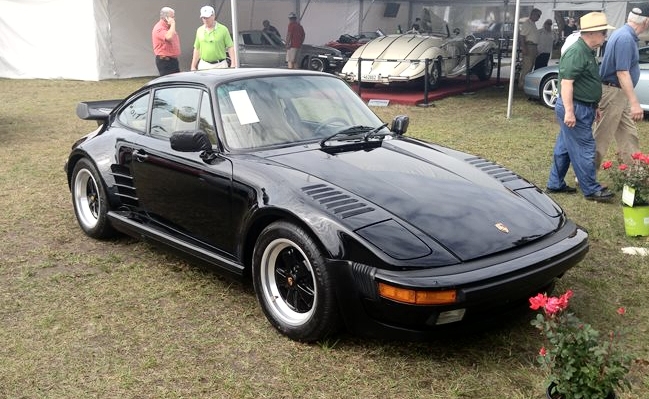
1988 Porsche 930 coupe Flachbau, from an auction on Amelia Island on March 12th, 2016
1987: Turbo Cabriolet and Targa
Porsche expanded the Turbo range to include open versions. Factory Turbo Cabriolets and Targas were produced in relatively small numbers. The factory Flachbau, or slantnose, also became a recognized option in several markets. These rare configurations have strong collector interest today.
1988: Final Traditional G-Series Development
The Carrera 3.2 continued with the G50 gearbox. Porsche was preparing an extensively revised 911 for the following year. Although outwardly similar, the next generation would introduce substantial mechanical and aerodynamic changes.
1989: Final Carrera 3.2 and Five-Speed 930
The 1989 model year is especially desirable among G-series collectors. The Carrera 3.2 combined the mature body with the G50 gearbox. The 930 Turbo finally received a five-speed G50/50 gearbox for its last production year. This makes the 1989 Turbo particularly collectible. At the same time, Porsche began introducing the next-generation 964.
1989: The 964 Carrera 4
The 964-generation 911 represented a major modernization. The first widely available version was the Carrera 4, equipped with all-wheel drive. The body retained the traditional 911 shape but approximately 85 percent of the components were new. The 964 used a 3.6-liter flat six producing approximately 247 horsepower in U.S. specification and 250 PS in European trim.
It also introduced power steering, ABS and more sophisticated climate control.
1990: Carrera 2
The rear-wheel-drive Carrera 2 joined the lineup. It was available as Coupe, Targa and Cabriolet. The Carrera 2 was lighter and more traditional in feel than the all-wheel-drive Carrera 4. A Tiptronic automatic transmission also became available, marking a major departure from earlier 911 automatics and manuals.
1991: 964 Turbo
The Turbo returned using a development of the earlier 3.3-liter 930 engine. Output was approximately 320 horsepower. The car combined the wider Turbo body with the more modern 964 chassis and interior.

1992 Porsche 911 Carrera RS N/GT coupe, from an auction at Woodcote Park on July 8th, 2026
1992: Carrera RS
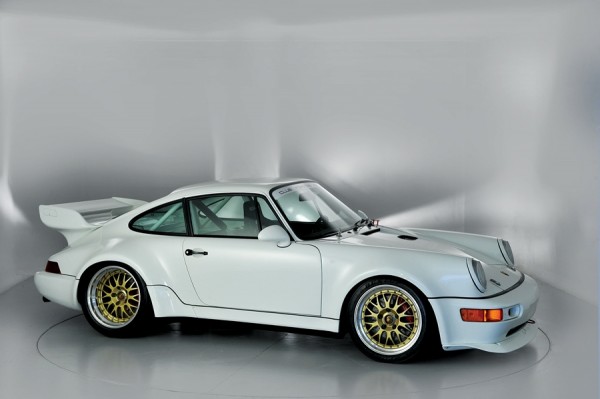
Porsche revived the Carrera RS concept. The 964 Carrera RS was lighter, lower and more focused than the standard Carrera 2. It used a more powerful version of the 3.6-liter engine, producing approximately 260 horsepower. The U.S. did not officially receive the same lightweight RS specification, making genuine European RS cars especially desirable.
1993: Turbo 3.6
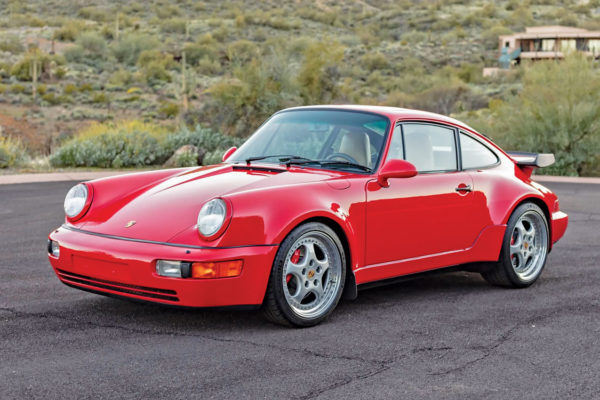
The final and most desirable regular 964 Turbo used a 3.6-liter engine producing approximately 360 horsepower. Production was limited. The 964 Turbo 3.6 is now one of the most collectible air-cooled Turbo models.
1994: The 993 Arrives
The 993-generation 911 replaced the 964. It retained the air-cooled flat six but introduced a substantially redesigned rear suspension using a multi-link layout. Styling became smoother and more integrated.
The 993 is particularly important because it was the last air-cooled 911 generation.
1995: 993 Carrera
The standard 993 Carrera used a 3.6-liter engine producing approximately 270 horsepower in early specification. Six-speed manual transmissions became standard on many versions. The 993 offered much better stability and refinement than earlier 911s while retaining the distinctive sound and response of an air-cooled engine.
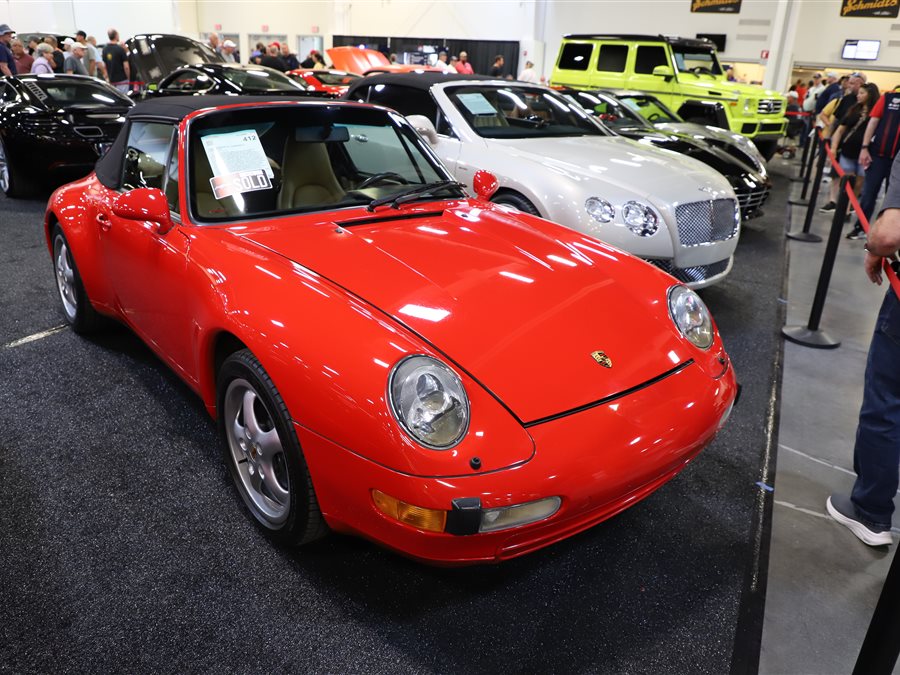
1996 Porsche 911 Carrera 4 convertible, from an auction in Columbus on June 26th, 2026
1996: Varioram and Carrera 4S
The 993 received Porsche’s Varioram variable-length intake system, increasing power. The Carrera 4S combined all-wheel drive with wide Turbo-style bodywork.
It looked much like a Turbo but used a naturally aspirated engine. This combination has made the 993 Carrera 4S especially popular with collectors.
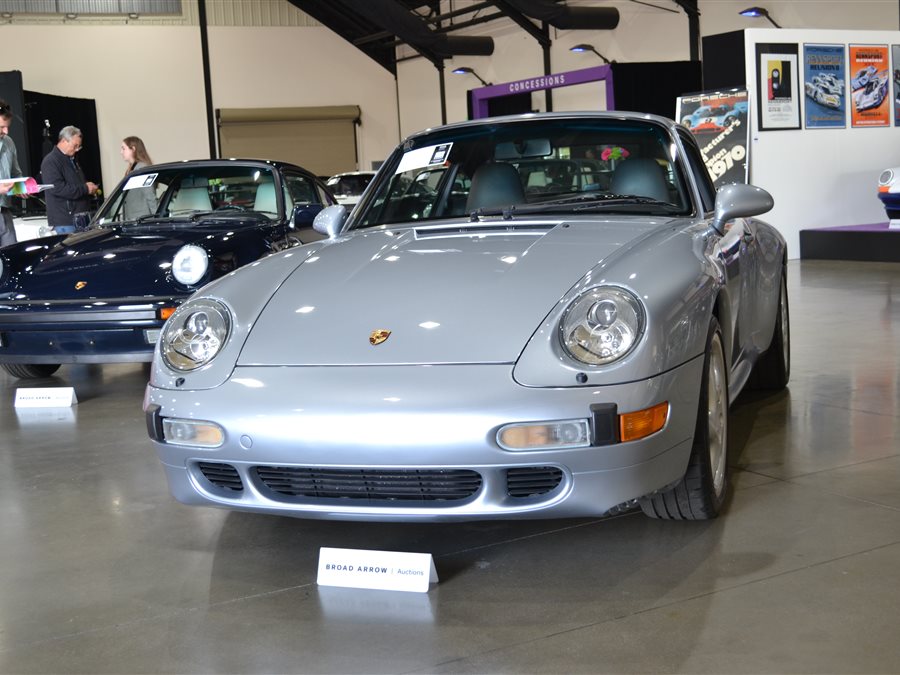
1996 Porsche 911 Turbo coupe, from an auction on April 26th, 2025
1996: 993 Turbo
The 993 Turbo marked a major technical step. It used twin turbochargers and standard all-wheel drive. Output was approximately 400 horsepower. Unlike the earlier single-turbo cars, boost delivery was much smoother and easier to manage.
1997: Carrera S and Turbo S
The rear-wheel-drive Carrera S brought wide-body styling to the naturally aspirated 993. The Turbo S offered greater power and additional equipment in very limited numbers. These late wide-body 993s are among the most desirable regular-production air-cooled cars.

1997 Porsche 911 GT2 coupe, from an auction on December 1st, 2023
1997: 993 Carrera RS and GT2
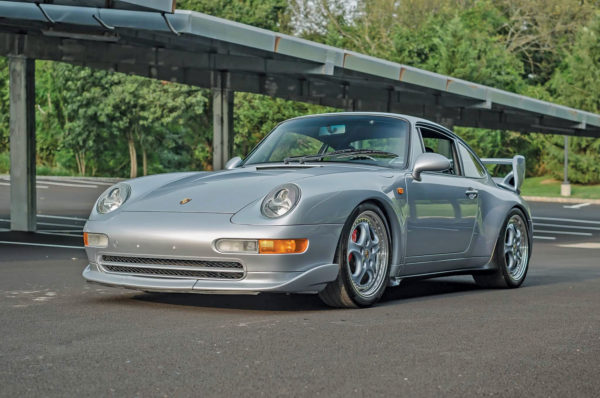
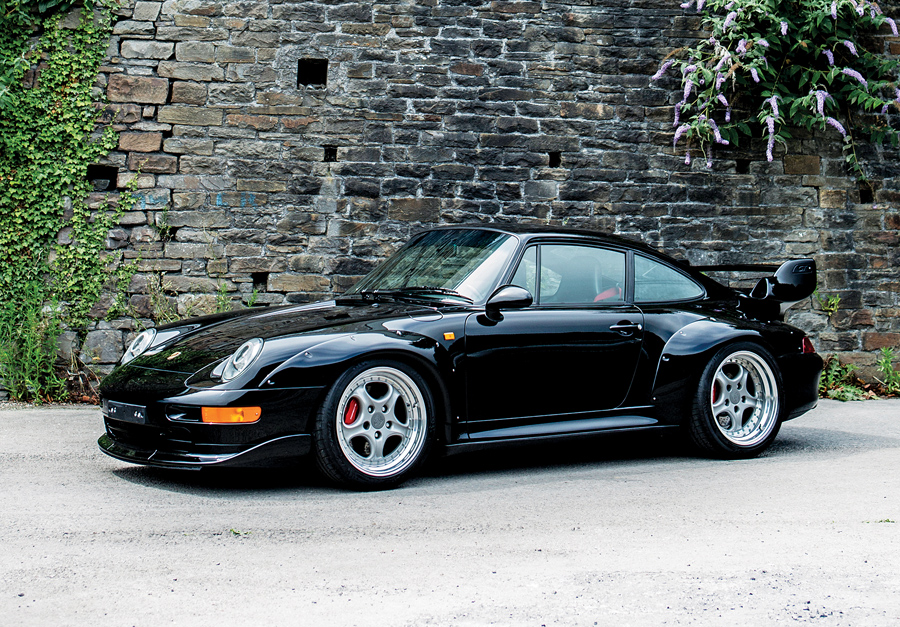
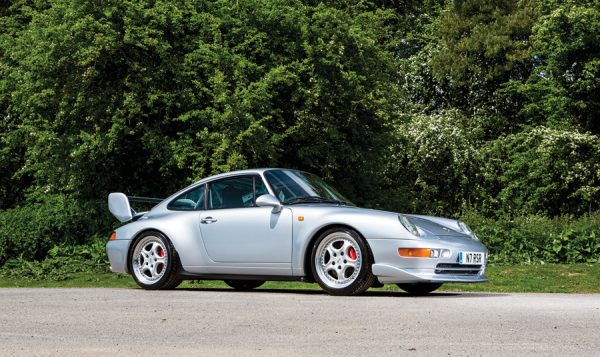
The 993 family also produced extreme performance variants. The Carrera RS used a larger 3.8-liter engine and extensive weight reduction. The GT2 was based on the Turbo but used rear-wheel drive and aggressive bodywork for homologation purposes. The 993 GT2 is one of the rarest and most valuable production 911s of the 1990s.
1998: The End of Air Cooling
Production of the 993 ended as Porsche transitioned to the 996. The change was controversial because the 996 introduced a water-cooled engine. It also replaced much of the traditional 911 architecture with a more modern platform developed alongside the Boxster.
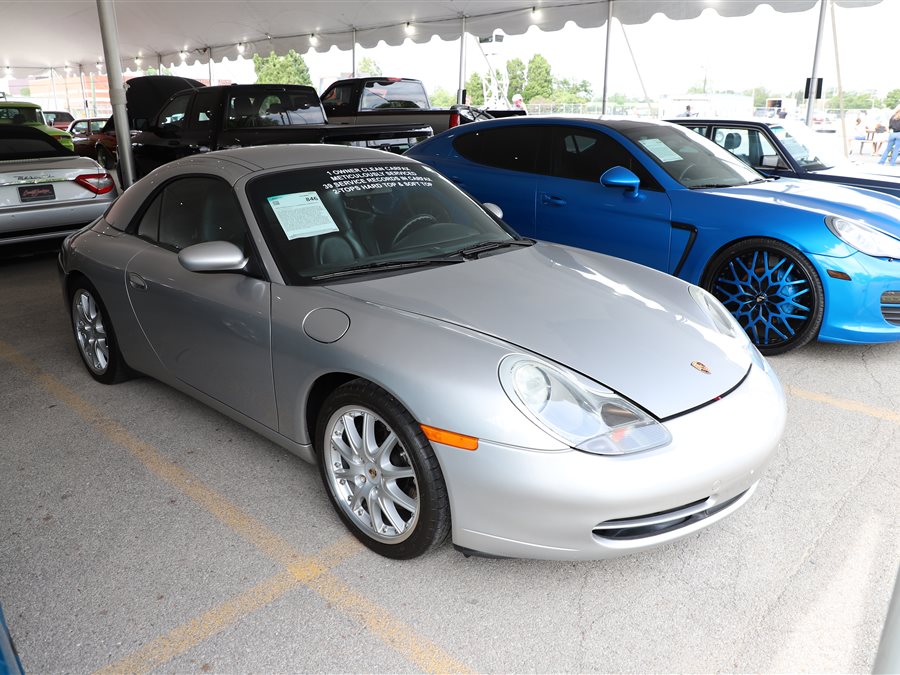
1999 Porsche 996 Carrera cabriolet, from an auction in Columbus on June 26th, 2026
1999: The 996
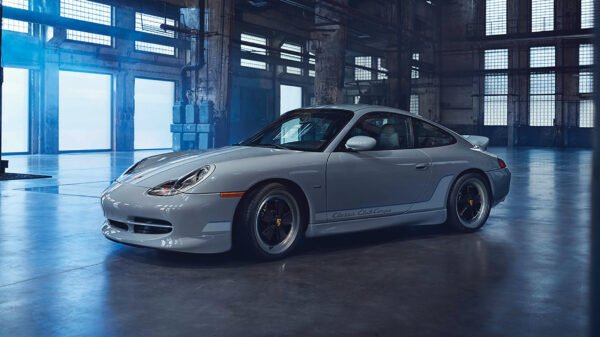
The 996-generation 911 marked the biggest engineering change in the model’s history. The new 3.4-liter flat six was water-cooled. The body was completely redesigned, and the front-end styling shared components with the Boxster. Early cars produced approximately 296 horsepower in U.S. specification.
The 996 was faster, roomier and more refined than the 993, but enthusiasts initially criticized the departure from air cooling and the distinctive “fried-egg” headlights.

2002 Porsche 996 Turbo coupe, from an auction at Indy on May 21st, 2022
2001: 996 Turbo
The 996 Turbo used a different engine architecture from the standard Carrera. Its twin-turbocharged 3.6-liter flat six was derived from the Mezger racing-engine family.
Output was approximately 415 horsepower. All-wheel drive was standard. This engine has developed an especially strong reputation for durability compared with some naturally aspirated 996 engines.
2002: 996.2 Carrera
The standard 996 received a significant update. Engine displacement increased to 3.6 liters, while power rose to approximately 320 horsepower. The headlights were redesigned, reducing the visual similarity to the Boxster. The revised cars are commonly called 996.2 models.
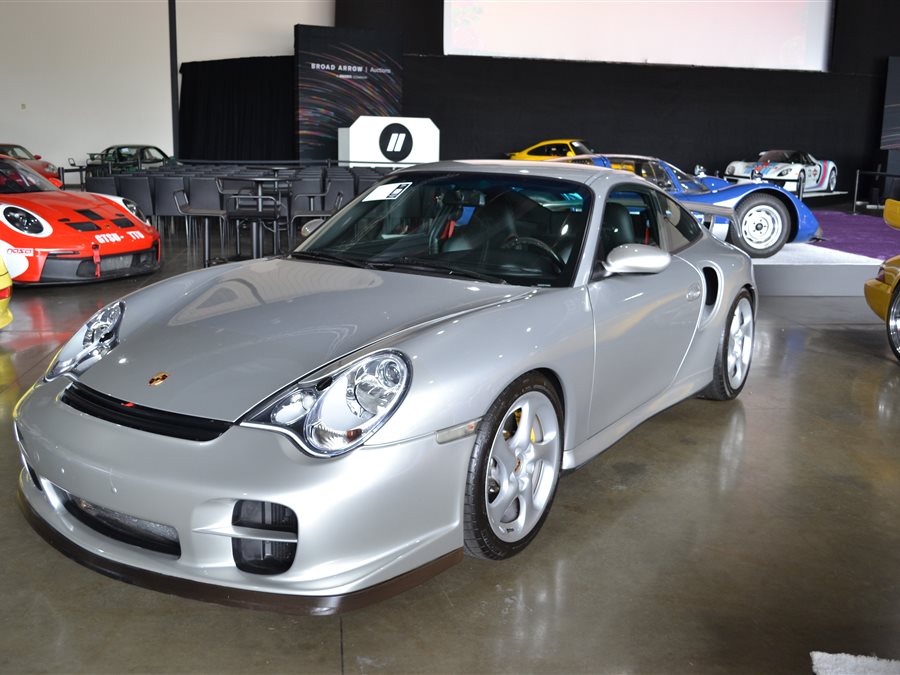
2003 Porsche 911 GT2 coupe, from an auction on April 26th, 2025
2003–04: GT3 and GT2
The 996 GT3 brought Porsche’s track-focused GT philosophy to the road-car range. It used a naturally aspirated Mezger-based engine, rear-wheel drive and extensive chassis upgrades. The 996 GT2 used a more powerful turbocharged engine and rear-wheel drive. Both eliminated much of the luxury emphasis of standard Carreras in favor of performance.
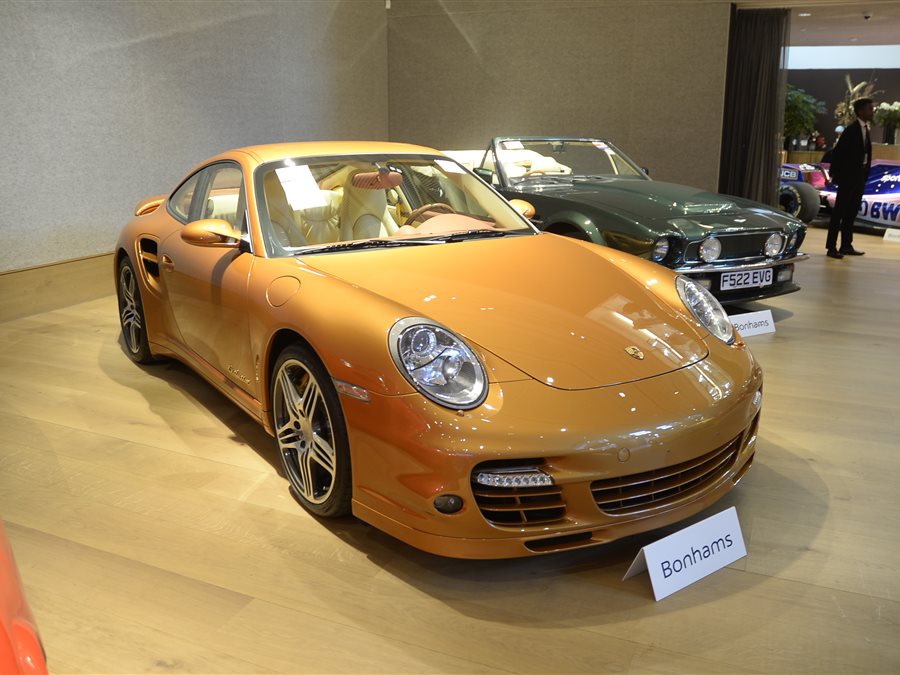
2007 Porsche 911 997 Turbo coupe, from an auction on December 16th, 2022
2005: The 997
The 997 generation returned to more traditional round-headlight styling. The body remained related to the 996 platform but was extensively revised. Carrera models used 3.6-liter engines, while the Carrera S used a larger 3.8-liter engine. The 997 is often seen as combining the compact size of earlier water-cooled cars with more classic 911 styling.
2007: 997 Turbo
The 997 Turbo used a 3.6-liter twin-turbo engine producing approximately 480 horsepower. Variable-geometry turbochargers improved response. All-wheel drive remained standard. The 997 Turbo offered enormous performance while remaining usable as everyday transportation.

2007 Porsche 911 GT3 RS coupe, from an auction in Palm Beach on April 25th, 2025
2007: GT3 and GT3 RS
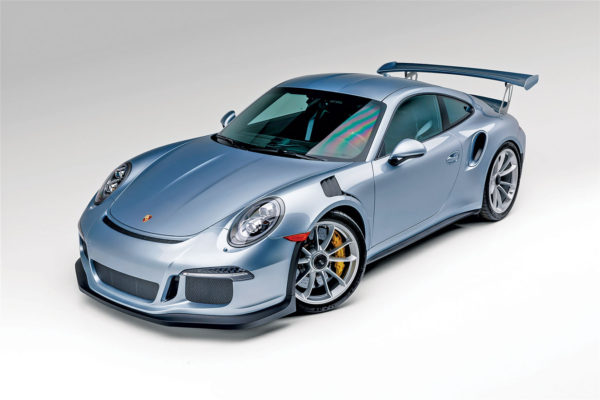
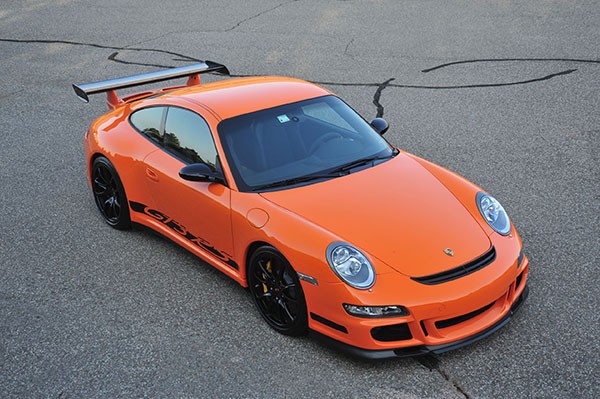
The 997 GT3 continued Porsche’s naturally aspirated track-focused formula. The GT3 RS reduced weight further and introduced more aggressive aerodynamic and chassis tuning. These models became highly influential in establishing the modern collector market for Porsche GT cars.
2009: 997.2 and Direct Injection
The 997 received a significant update. Carrera engines adopted direct fuel injection and revised internal architecture. Porsche also introduced the PDK dual-clutch transmission, replacing Tiptronic on many models. This created the 997.2 generation. The updated engines also eliminated some concerns associated with the intermediate-shaft bearing design of earlier water-cooled naturally aspirated engines.

2011 Porsche 911 GT3 RS 4.0 coupe, from an auction at Woodcote Park on July 8th, 2026
2010–11: GT3 RS 4.0 and Special Models
Late 997 production produced several important limited variants. The GT3 RS 4.0 used a 4.0-liter naturally aspirated flat six producing approximately 500 horsepower. Built in very small numbers, it became one of the most valuable modern 911s. The 997 era also included the Sport Classic and Speedster, both produced in limited quantities.
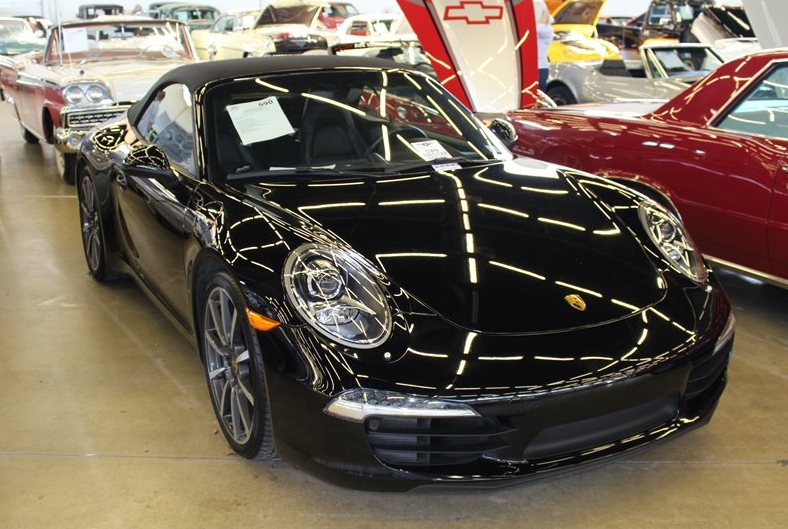
2012 Porsche 911 Carrera convertible, from an auction in Dallas on November 15th, 2018
2012: The 991
The 991 generation introduced a longer wheelbase, wider track and greater use of aluminum. It was substantially larger than the 997 but also lighter in several configurations. Carrera models initially retained naturally aspirated flat-six engines. The electric power-steering system replaced the traditional hydraulic arrangement.
2013: 991 Carrera 4 and GT3
The 991 range expanded rapidly. The GT3 introduced PDK as the only transmission initially offered, a controversial decision among traditionalists. Its naturally aspirated engine remained capable of exceptionally high engine speeds. The Carrera 4 and Carrera 4S continued Porsche’s all-wheel-drive tradition.
2014: 991 Turbo
The 991 Turbo and Turbo S offered extremely high performance with all-wheel drive, rear-wheel steering and sophisticated electronic controls. By this point, the Turbo had evolved far from the unpredictable single-turbo 930. It was now one of the fastest and most usable GT cars in the world.
2016: Carrera Goes Turbocharged
One of the most important modern changes came with the 991.2. Regular Carrera models switched from naturally aspirated engines to twin-turbocharged 3.0-liter flat sixes. The Carrera name no longer indicated a naturally aspirated car.
The Carrera, Carrera S and later GTS differed mainly through turbo boost, tuning and chassis specification.

2016 Porsche 911 R coupe, from an auction on December 1st, 2023
2016: 911 R
The limited-production 911 R combined the GT3 RS-derived naturally aspirated engine with a six-speed manual transmission and understated bodywork. It was produced in only 991 examples.
Strong collector demand helped demonstrate that enthusiasts still valued manual transmissions and naturally aspirated engines.
2018: GT3 Touring
Porsche introduced the GT3 Touring Package, combining GT3 mechanical specification with a more discreet rear body without the large fixed wing. The Touring concept became an important modern 911 variant.
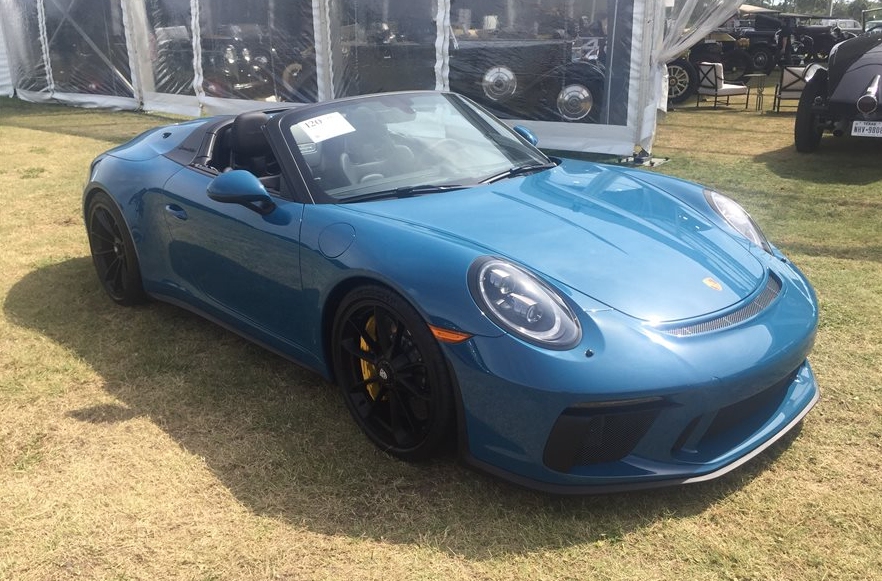
2019 Porsche 911 Speedster, from an auction on Amelia Island on May 20th, 2021
2019: The 992
The 992-generation 911 arrived with a wider body, more digital interior and further-developed turbocharged engines. Most Carrera models now shared the wider rear body that had previously differentiated higher-performance versions. The Carrera S used a twin-turbocharged 3.0-liter flat six producing approximately 443 horsepower in initial U.S. specification.
2020: 992 Carrera Expansion
The 992 range expanded to include Carrera, Carrera S, Carrera 4, Carrera 4S and Cabriolet variants. The eight-speed PDK transmission was standard on many cars, though Porsche retained manual availability on selected models. The 992 combined very high performance with considerably greater technology and refinement than earlier 911s.
2021: 992 Turbo and Turbo S
The 992 Turbo and Turbo S raised performance substantially. The Turbo S produced more than 600 horsepower and could accelerate to 60 mph in under three seconds under favorable conditions. Despite that capability, it retained everyday usability, making the modern Turbo almost the opposite philosophical approach from the early 930.
2022: 992 GT3
The 992 GT3 introduced a sophisticated double-wishbone front suspension derived conceptually from Porsche’s racing programs. Its naturally aspirated 4.0-liter engine retained the ability to rev to approximately 9,000 rpm. Manual and PDK transmissions were offered. The Touring version again provided a more understated alternative.
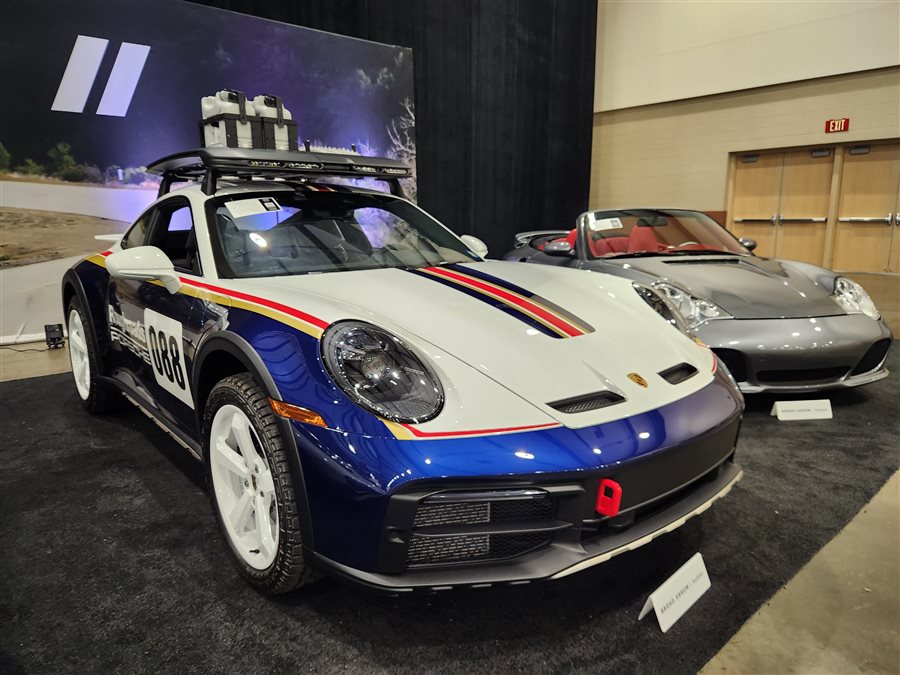
2023 Porsche 911 Dakar coupe, from an auction in Chattanooga on October 12th, 2024
2023: 992 Dakar and S/T
Porsche expanded the 911 concept in unusual directions. The 911 Dakar used raised suspension, all-wheel drive and off-road-oriented equipment. The limited-production 911 S/T combined a naturally aspirated GT3 RS-derived engine with a manual transmission and lightweight construction. The S/T emphasized low weight and road use rather than maximum racetrack downforce.
2024 and Beyond: Hybridization Begins
The 992 generation continued evolving with further powertrain development. Porsche began introducing hybrid assistance into selected 911 variants, marking another major technical transition in the model’s history. As with water cooling and turbocharging before it, the 911 continues to evolve while retaining the fundamental rear-engine silhouette established in the 1960s.
Understanding the Major Porsche 911 Variants
Collectors generally divide the 911 into these principal groups:
1964–68 Short-Wheelbase 911: Earliest production cars with narrow bodies and original 2.0-liter engines.
1969–73 Long-Wheelbase 911: T, E and S models with improved stability and engines ranging from 2.0 to 2.4 liters.
Carrera RS 2.7: Lightweight homologation-oriented 1973 model and one of the most important collectible 911s.
1974–77 Early Impact-Bumper Cars: Includes 2.7-liter 911s and Carrera 3.0 models.
911 SC: Durable 3.0-liter 1978–83 model and one of the most usable classic 911s.
Carrera 3.2: 1984–89 naturally aspirated model, with 1987–89 G50 cars especially desirable.
930 Turbo: Wide-body turbocharged flagship produced from the mid-1970s through 1989.
964: Modernized air-cooled generation with 3.6-liter engines, ABS, power steering and available all-wheel drive.
993: Final air-cooled generation and one of the most collectible modern-classic 911 families.
996: First water-cooled 911 and first major body redesign.
997: Return to traditional styling with increasingly sophisticated GT and Turbo models.
991: Longer-wheelbase generation that transitioned the regular Carrera range from naturally aspirated to turbocharged engines.
992: Current-generation architecture with turbocharged Carreras, sophisticated GT models and emerging hybrid technology.
Targa: Open-roof variant originally distinguished by a fixed roll hoop and removable roof panel.
Cabriolet: Full convertible introduced during the SC era and retained thereafter.
Carrera: Name first associated with high-performance homologation cars, later becoming the standard designation for naturally aspirated and eventually turbocharged mainstream 911s.
Turbo: High-performance wide-body branch beginning with the 930 and continuing through every major modern generation.
GT3: Naturally aspirated, track-focused road model closely tied to Porsche Motorsport.
GT3 RS: More extreme, lighter and more aerodynamically aggressive GT3 derivative.
GT2: Turbocharged, rear-wheel-drive high-performance model.
What Matters to Collectors
With more than six decades of production, the Porsche 911 cannot be evaluated using one simple collector hierarchy.
The first consideration is exact generation and factory specification.
A standard 1973 911 T, a Carrera RS 2.7, a 1989 Carrera 3.2 and a 993 Turbo may all be called Porsche 911s, but they occupy completely different markets.
Originality is especially important on early cars.
Engines and transmissions were frequently replaced during periods when old 911s were relatively inexpensive.
Matching-numbers engines, correct mechanical fuel-injection systems, original Fuchs wheels, period interiors and documented factory colors can all substantially influence value.
Rust is a major issue on the earliest cars.
Floor pans, suspension mounting points, rockers, front trunk structures and torsion-bar areas should be inspected carefully.
Later galvanized cars resist corrosion much better but are not immune, particularly if they have been damaged.
Accident history is one of the most important considerations across virtually every generation.
The 911’s rear-engine layout and performance encouraged enthusiastic driving, and many cars have been crashed or repaired.
A specialist should examine structural alignment, welding, body seams and suspension pick-up points.
Performance-model authenticity is critical.
Carrera RS, RSR, Turbo, Flachbau, GT2 and GT3-style modifications have been popular for decades.
A standard 911 modified with wide fenders, spoilers and engine upgrades does not become an authentic factory high-performance variant.
Factory build records, option codes, chassis numbers and original documentation should establish identity.
Engine-history concerns vary dramatically by generation.
Early magnesium-case engines require different inspection priorities from later aluminum SC engines.
Mid-1970s 2.7-liter cars can suffer from heat-related issues and pulled head studs.
SCs are generally robust but still require proper maintenance.
Carrera 3.2s have their own age-related concerns.
Early water-cooled 996 and 997 Carreras require investigation of issues such as intermediate-shaft bearing design and cylinder condition, while Turbo and GT models may use fundamentally different engine architecture.
Service history is therefore often more useful than mileage alone.
A regularly driven 100,000-mile 911 with detailed maintenance records may be a far better automobile than a 20,000-mile car that has spent decades sitting.
For air-cooled cars, long-term storage can lead to dried seals, fuel-system problems, brake deterioration and oil leaks.
For modern cars, electronics, active suspension systems and complex transmissions add different maintenance considerations.
Color and factory options also matter increasingly.
Porsche has long offered an unusually wide range of standard, special-order and Paint to Sample colors.
A rare documented factory color can add substantial desirability, particularly on limited-production cars.
The same is true of unusual interior combinations and factory performance options.
For drivers rather than pure collectors, several generations stand out.
A 911 SC offers durability and traditional air-cooled character.
A Carrera 3.2 adds better engine management, while a late G50 car provides an improved gearbox.
A 964 Carrera 2 introduces modern amenities while preserving an old-school air-cooled feel.
A 993 Carrera combines air cooling with a more sophisticated chassis.
A 997 offers modern performance while remaining relatively compact and analog compared with newer 911s.
At the extreme end are the homologation and GT cars.
The Carrera RS 2.7, 964 RS, 993 RS and GT2, and later GT3 RS models demonstrate Porsche’s repeated use of the 911 as the foundation for road-legal competition machinery.
That relationship with motorsport is central to the model’s identity.
The 911’s greatest achievement, however, is its continuity.
A modern 992 has little mechanical resemblance to a 130-horsepower 1960s 911. It is larger, dramatically faster, electronically controlled, often turbocharged and available with technologies Porsche engineers of the 1960s could scarcely have imagined.
Yet the fundamental architecture remains recognizable: a flat-six engine positioned behind the rear axle, two small rear seats, a sloping front hood, round-headlight visual themes and a fastback roofline.
Porsche has repeatedly changed almost everything beneath the surface without abandoning the idea that made the original 911 distinctive.
That uninterrupted evolution explains why collectors can argue passionately over whether the ideal 911 is an early 2.0 S, a Carrera RS, an SC, an ’87–89 Carrera 3.2, a 964 RS, a 993 Turbo, a 997 GT3 or a modern S/T — and still be discussing cars that belong unmistakably to the same family.
Few automobiles have remained in continuous production long enough to develop such a broad range of identities. Fewer still have maintained a direct visual and engineering connection to their origins.
That combination of continuity, competition history, evolutionary engineering and extraordinary variety is what makes the Porsche 911 not merely Porsche’s most important model, but one of the most significant sports cars ever produced.
Important Sales Reviewed by SCM Experts
In each month’s issue for the past 38 years, SCM’s analysts have reviewed 5 to 7 significant cars sold at auction, and discuss what options, history, or details made that particular more or less valuable. They give their expert opinion on the market for these cars, and whether this car was well bought or well sold. If you’re thinking of purchasing a Porsche 911, you’ll likely find these profiles critical in helping you make the right decision. Each of the following is an article from our print magazine on a Porsche 911 sold at auction.
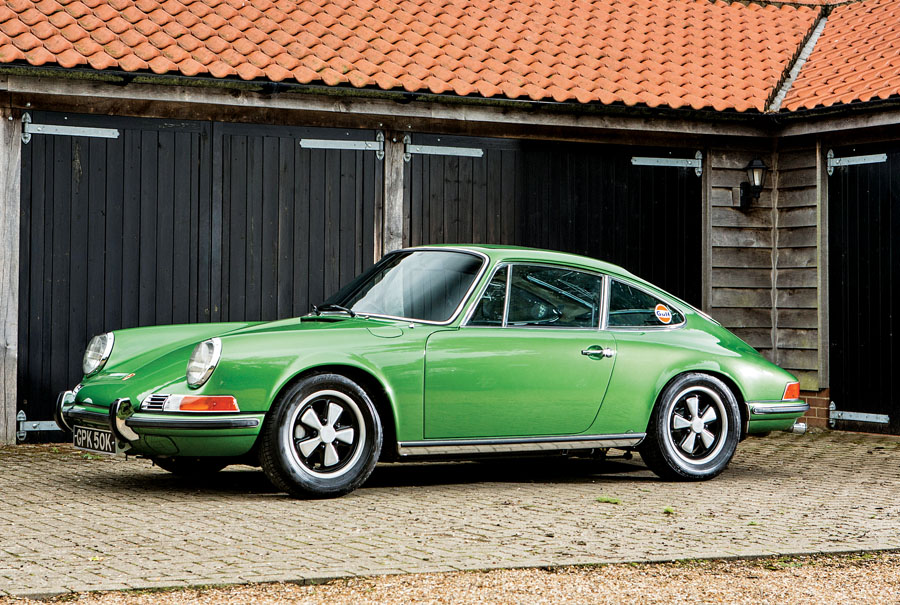
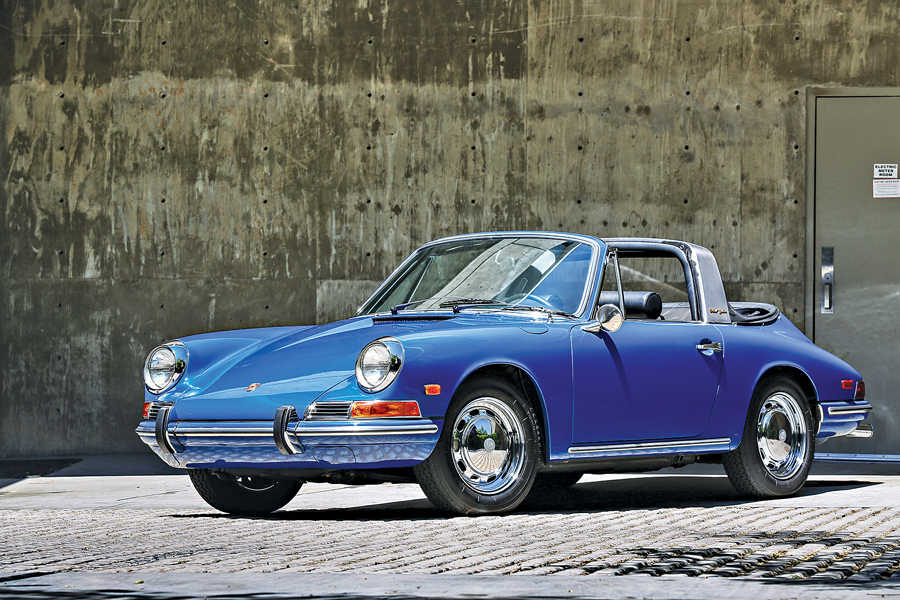
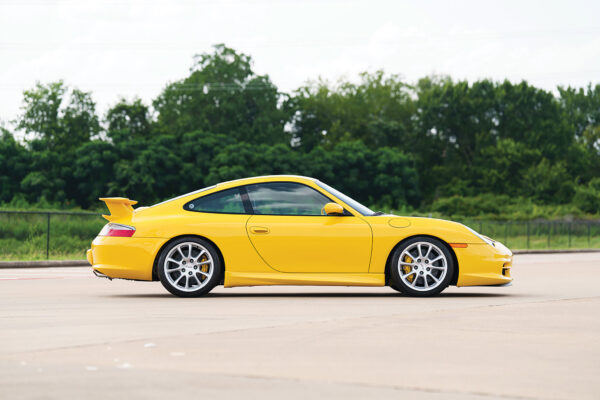 2004 Porsche 911 GT3Photo credit: Josh Hway, copyright and courtesy of Gooding & Company LLC As it turns out, some 996-series 911s are collectible Introduced in 1999, the 996 GT3 was developed as the homologation basis for the GT3 RS and RSR race cars. This 2004 Porsche 996 GT3 was delivered new to its first and only owner […]Read more
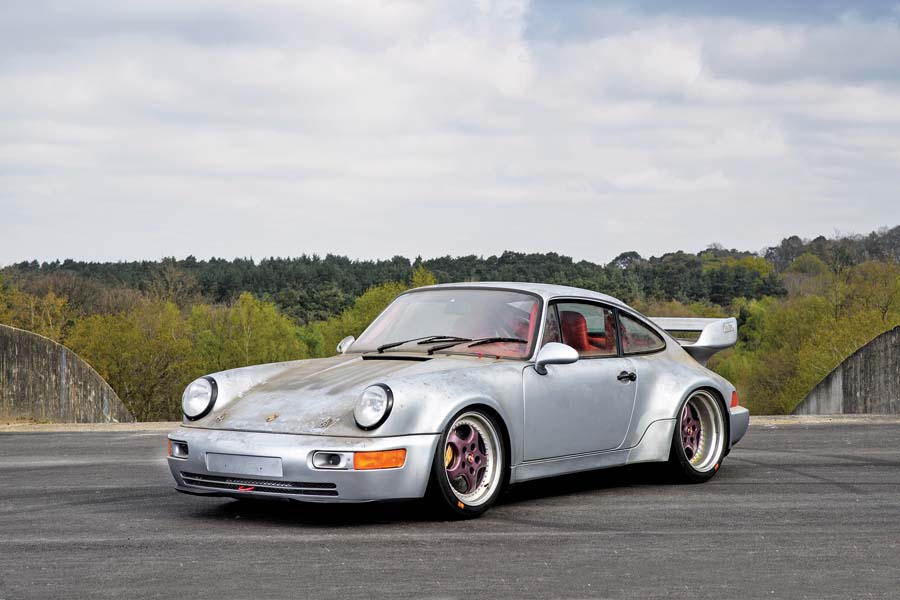
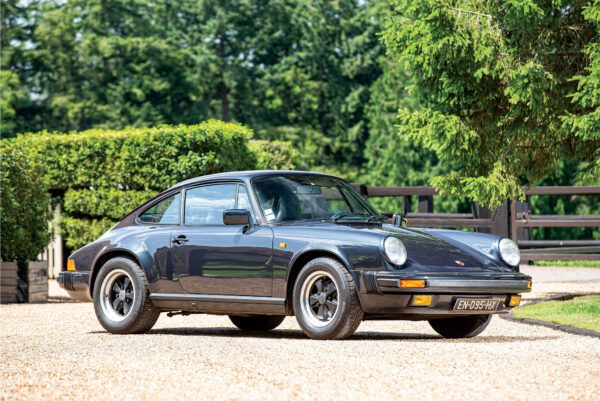 1988 Porsche 911 CarreraThis stunning Carrera 3.2 was ordered new by a Mr. Jacques Boudet, resident in Louveciennes, FRA, on June 18, 1988. Copies of the bill of sale and the original temporary registration document are on file. The Porsche then passed to a Mr. Guy Rocchi before being bought by Mr. Fornas in 2017 from Mr. Rocchi’s […]Read more
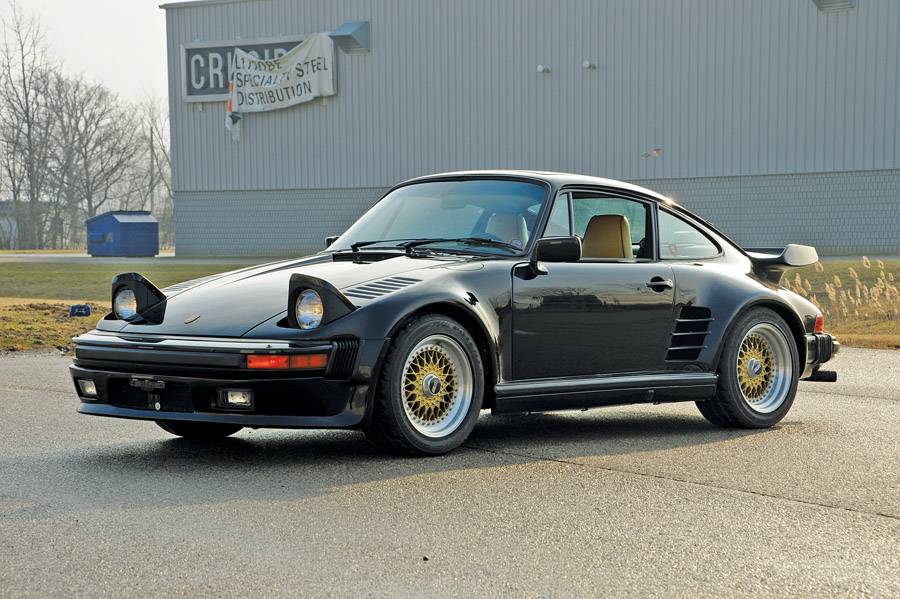
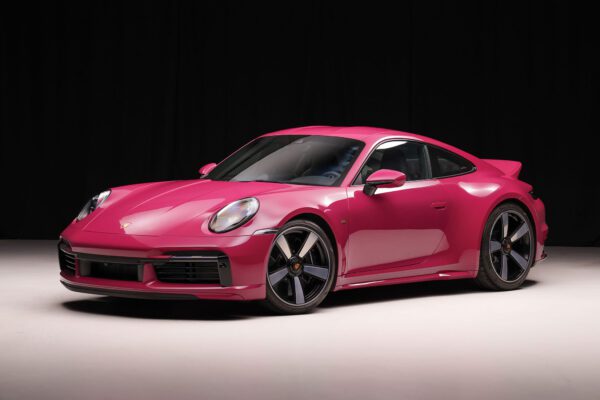 2023 Porsche 911 Sport ClassicThis 2023 Porsche is #692 of 1,250 911 Sport Classic examples produced worldwide, all of which link a Turbo-specification twin-turbocharged 3.7L flat-6 with a 7-speed manual transaxle and rear-wheel drive. This example is finished in paint-to-sample Ruby Star over a Heritage Design Interior, which houses heated power-adjustable front seats trimmed in black leather with Pepita-style […]Read more
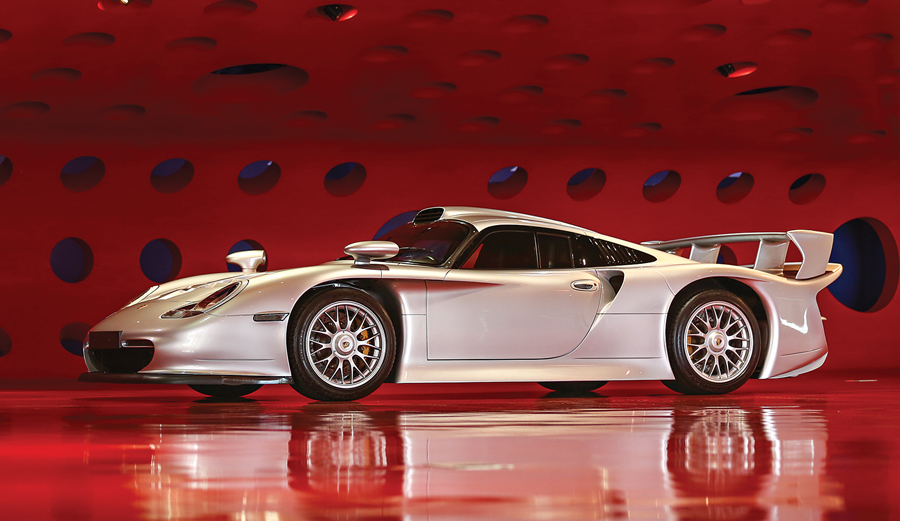
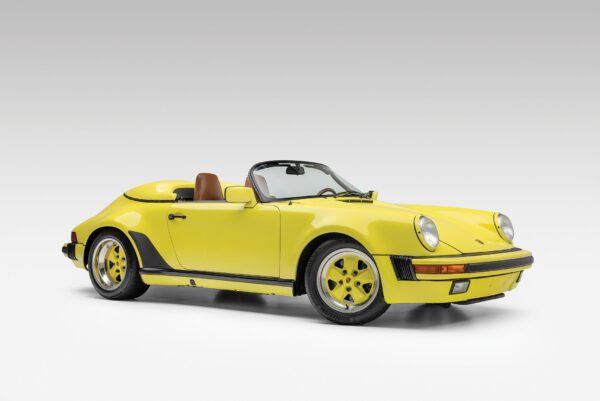 1989 Porsche 911 SpeedsterThis exceptional 1989 Porsche 911 Speedster is one of just 823 examples produced for the U.S. market, finished in Paint-to-Sample non-metallic Light Yellow (L117) — a heritage color introduced in 1970 and famously popular on the Carrera 2.7 RS. The original Warranty & Maintenance booklet records delivery on August 14, 1989. According to the clean […]Read more
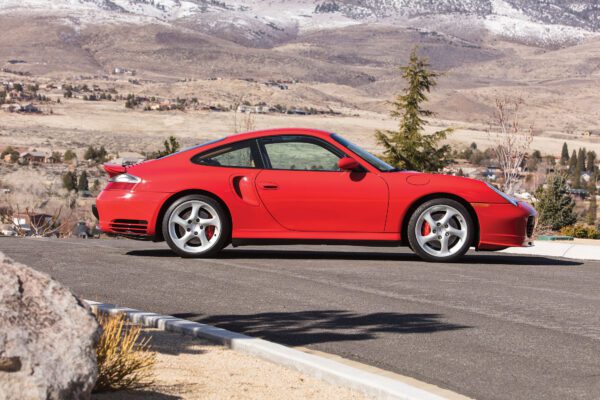 2001 Porsche 911 TurboThe fifth generation of the iconic 911 Turbo arrived as not only the fastest street-legal 911 of its time but also the most refined. The all-wheel-drive sports car heralded the arrival of water cooling in the 911, with its twin-turbocharged 3.6-liter flat-6 engine. Enthusiasts and industry publications alike were enamored with its performance, with Car and […]Read more
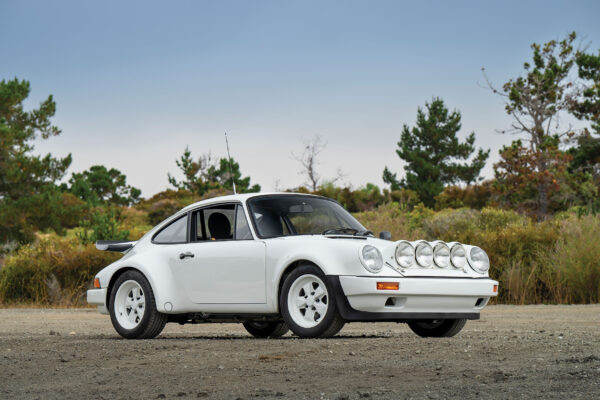
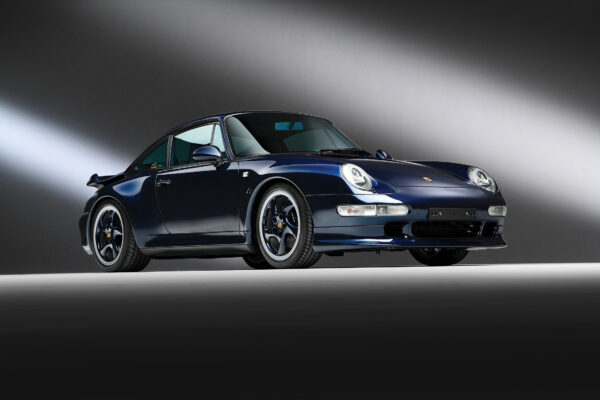
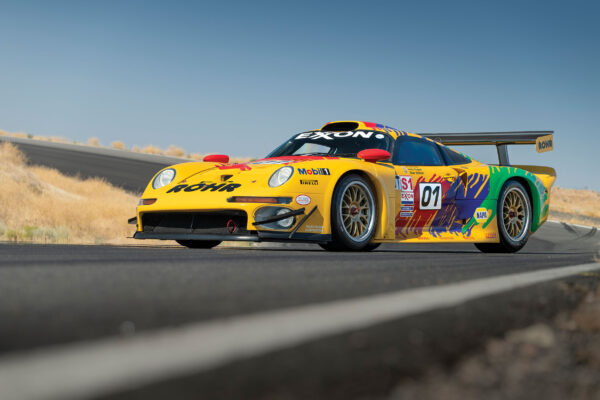
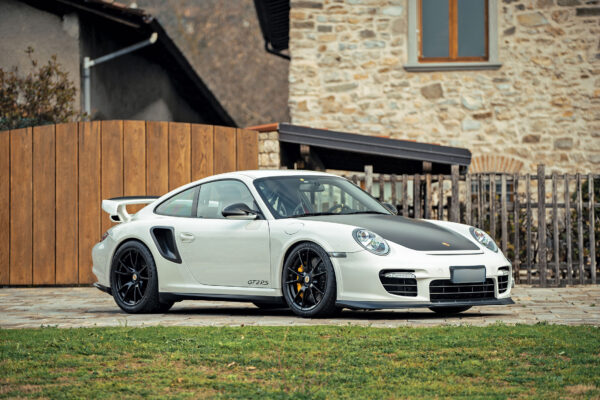










Cars For Sale
Quick links to listings for this make and model online:
Books on the Porsche 911


Note that as an Amazon Associate, we earn from qualifying purchases of the above books.
Past Auction Sales – Porsche 911
Average Porsche 911 Sale Price by Year from SCM’s Platinum Auction Database:
Includes sales listed as Porsche 911S, Porsche 911SC, Porsche 911E, Porsche 911T, Porsche 911R.
Porsche 911 Sales from SCM’s Platinum Auction Database:

RM Sotheby's
Condition: 2-
Sep 26, 2026
$427,084

Saratoga Motorcar Auctions
Condition: 2
Sep 18, 2026
$234,475

Saratoga Motorcar Auctions
Condition: 3+
Sep 18, 2026
$14,575

Sotheby's Motorsport
Condition: 1
Sep 15, 2026
$503,750

Sotheby's Motorsport
Condition: 1
Sep 15, 2026
$280,875

Bring a Trailer
Condition: 2
Sep 15, 2026
$859,500

Gooding Christie's
Condition: 2-
Aug 14, 2026
$390,000

Gooding Christie's
Condition: 1
Aug 14, 2026
$1,902,500

Gooding Christie's
Condition: 2+
Aug 14, 2026
$240,800

Broad Arrow Auctions
Condition: 2-
Aug 13, 2026
$400,000

RM Sotheby's
Condition: 1-
Aug 13, 2026
$357,000

Broad Arrow Auctions
Condition: 1-
Aug 13, 2026
$500,000

RM Sotheby's
Condition: 1-
Aug 13, 2026
$280,000

RM Sotheby's
Condition: 2+
Aug 13, 2026
$709,000

Broad Arrow Auctions
Condition: 2
Aug 13, 2026
$168,000

Bring a Trailer
Condition: 2-
Aug 7, 2026
$307,500

Bring a Trailer
Condition: 2+
Jul 10, 2026
$1,207,500

Bring a Trailer
Condition: 2+
Jul 10, 2026
$322,500

Sotheby's Motorsport
Condition: 2-
Jul 8, 2026
$104,475

RM Sotheby's
Condition: 1-
Jul 8, 2026
$245,606

RM Sotheby's
Condition: 2-
Jul 8, 2026
$4,661,845

RM Sotheby's
Condition: 3+
Jul 8, 2026
$276,307

RM Sotheby's
Condition: 2
Jul 8, 2026
$870,133

Barrett-Jackson
Condition: 3+
Jun 26, 2026
$33,000

Barrett-Jackson
Condition: 3-
Jun 26, 2026
$77,000

Barrett-Jackson
Condition: 3
Jun 26, 2026
$49,500

Barrett-Jackson
Condition: 3-
Jun 26, 2026
$56,100

Bonhams Cars
Condition: 1-
May 31, 2026
$237,440

PCarMarket
Condition: 2-
May 31, 2026
$32,457

Broad Arrow Auctions
Condition: 3+
May 16, 2026
$624,714

Broad Arrow Auctions
Condition: 2
Apr 25, 2026
$263,200

Broad Arrow Auctions
Condition: 2
Apr 25, 2026
$681,500

Broad Arrow Auctions
Condition: 1-
Apr 25, 2026
$995,000

Broad Arrow Auctions
Condition: 2+
Apr 25, 2026
$123,200

Broad Arrow Auctions
Condition: 2+
Apr 25, 2026
$112,000

Broad Arrow Auctions
Condition: 1-
Apr 25, 2026
$293,750

Broad Arrow Auctions
Condition: 2
Apr 25, 2026
$64,960

Broad Arrow Auctions
Condition: 2
Apr 25, 2026
$126,000

Broad Arrow Auctions
Condition: 1
Apr 25, 2026
$1,160,000

Broad Arrow Auctions
Condition: 2-
Apr 25, 2026
$201,600

Broad Arrow Auctions
Condition: 2
Apr 25, 2026
$120,400

RM Sotheby's
Condition: 1
Apr 25, 2026
$546,072

Broad Arrow Auctions
Condition: 3
Apr 25, 2026
$72,800

Broad Arrow Auctions
Condition: 1
Apr 25, 2026
$1,022,500

Broad Arrow Auctions
Condition: 1
Apr 25, 2026
$747,500

Bonhams Cars
Condition: 2+
Apr 24, 2026
$454,572

Bonhams Cars
Condition: 2+
Apr 19, 2026
$171,201

Bonhams Cars
Condition: 3+
Apr 19, 2026
$155,637

Cars & Bids
Condition: 3
Apr 9, 2026
$68,250

PCarMarket
Condition: 2+
Apr 9, 2026
$347,500
See all 680 sales in SCM’s Platinum auction database: Porsche 911 · Porsche 911S · Porsche 911SC · Porsche 911E · Porsche 911T · Porsche 911R
Forums & Communities
Popular Videos about the Porsche 911