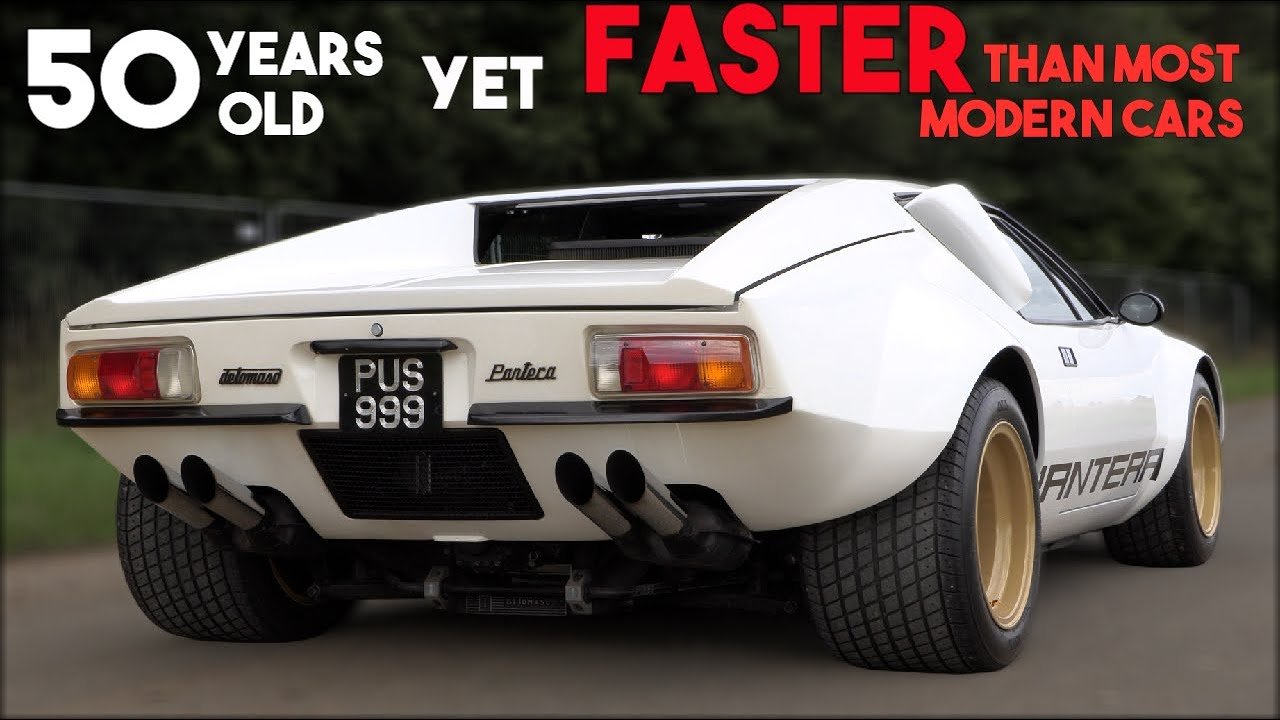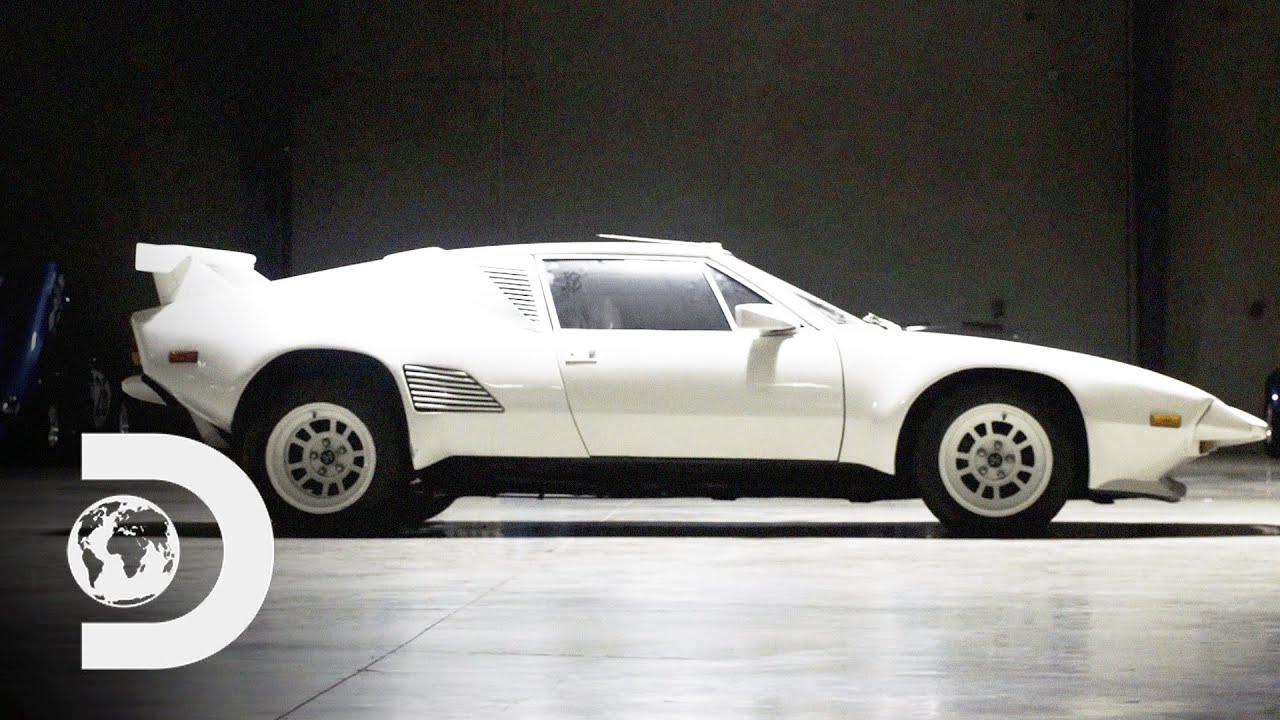
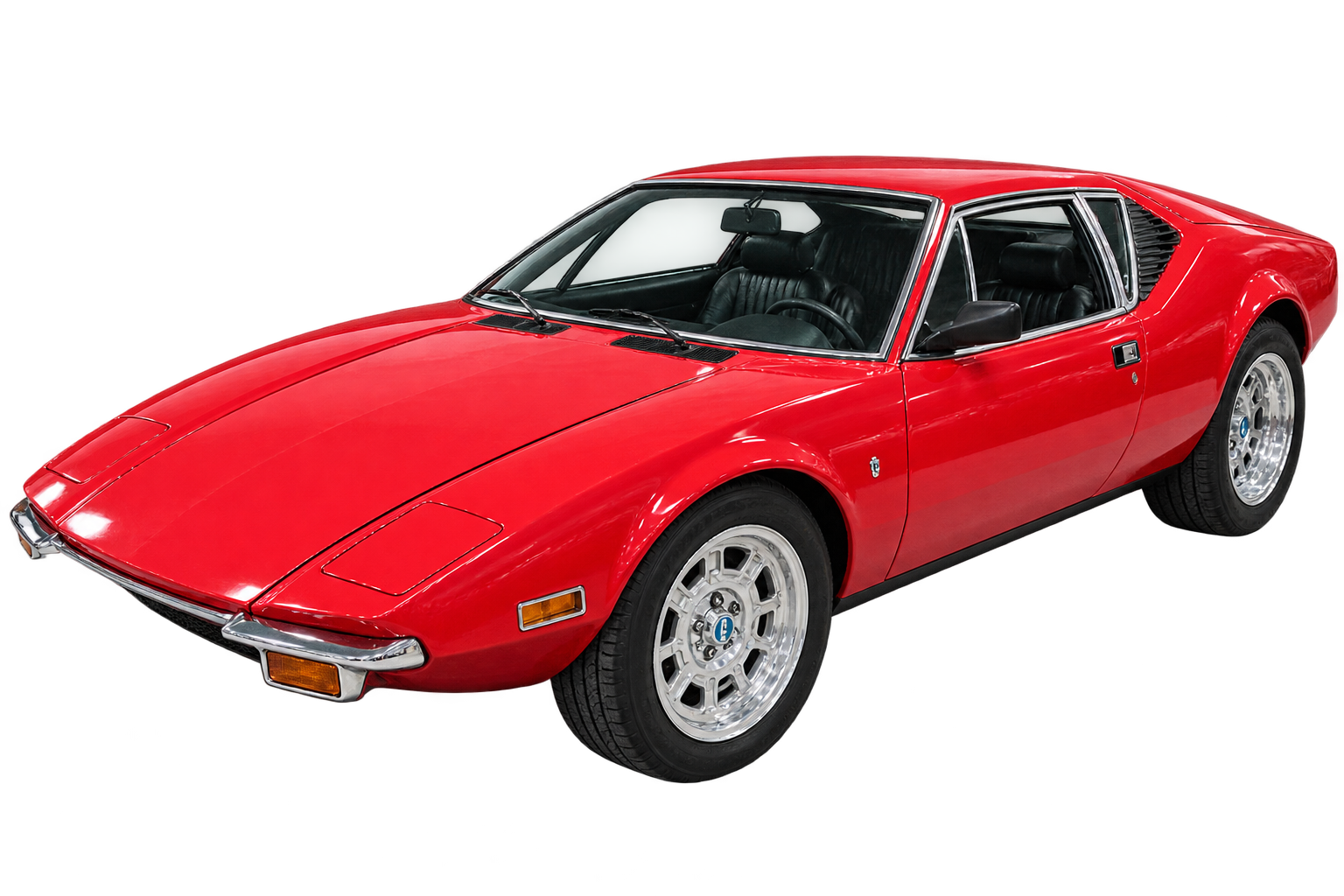
The De Tomaso Pantera was one of the most distinctive exotic cars of the 1970s because it combined Italian mid-engine styling and chassis design with a relatively conventional American Ford V8. Introduced in 1970, it was intended to offer much of the appearance and performance of a Ferrari or Lamborghini with an engine that was easier and less expensive to service.
Designed by Tom Tjaarda at Ghia, the Pantera used a steel monocoque chassis, independent suspension and a mid-mounted Ford Cleveland V8 driving through a ZF five-speed transaxle. That combination distinguished it sharply from earlier De Tomaso models such as the Mangusta, which used a backbone chassis.
The Pantera also had an unusually long production life. The basic car evolved from the relatively clean early 1970s design through increasingly aggressive L, GTS, GT5 and GT5-S versions, eventually receiving substantial chassis, body and engine changes before production ended in the early 1990s.
For collectors, the most important distinctions are between the early push-button cars, the Ford-imported U.S. Panteras, Pantera L, European GTS, GT5 and GT5-S, along with the numerous modifications that owners made over decades of use.
1970: The Pantera Is Introduced
De Tomaso introduced the Pantera at the 1970 New York Auto Show. The car represented a major engineering advance over the Mangusta. Instead of a separate backbone frame, the Pantera used a unitized steel monocoque structure. This improved rigidity and allowed De Tomaso to package the occupants, suspension and drivetrain more efficiently.
The engine was mounted longitudinally behind the passenger compartment. Power came from Ford’s 351-cubic-inch Cleveland V8, or approximately 5.8 liters.
Ford 351 Cleveland Engine
The 351 Cleveland was one of the Pantera’s defining features. Unlike the highly specialized multi-cam engines used in contemporary Ferraris and Lamborghinis, the Pantera’s V8 used a traditional American pushrod layout. It had a cast-iron block and cylinder heads, a single central camshaft and two valves per cylinder. The engine’s strength was torque.
Early European Panteras were generally quoted at around 330 horsepower, though quoted figures vary depending upon market and whether SAE gross or DIN measurements are being used. The engine produced strong power at comparatively low engine speeds. This gave the Pantera a very different personality from a Ferrari V12 or Lamborghini V12.
ZF Five-Speed Transaxle
The engine drove through a ZF five-speed manual transaxle mounted behind the V8. The ZF unit was related to the transaxle used in cars such as the Ford GT40. It was robust enough to handle the Cleveland’s torque and provided a direct mechanical shift. The transaxle became one of the most expensive individual mechanical components of the car. Its condition remains important when evaluating a Pantera today.
Suspension
The Pantera used independent suspension at all four corners. Unequal-length control arms were used rather than the live rear axles common on many American performance cars. Coil springs and telescopic dampers controlled wheel movement. Anti-roll bars reduced body roll.
The rear suspension was designed around the ZF transaxle and half-shafts. This gave the Pantera a genuinely exotic chassis despite its American engine.
Brakes and Steering
Four-wheel disc brakes were standard. The steering was rack-and-pinion and unassisted. At low speeds, steering effort could be substantial because of the wide front tires and lack of power assistance. At speed, however, the direct steering contributed to the Pantera’s mechanical feel.
The combination of mid-engine balance, wide tires and independent suspension gave the car far greater cornering ability than a typical American V8 performance car of the period.
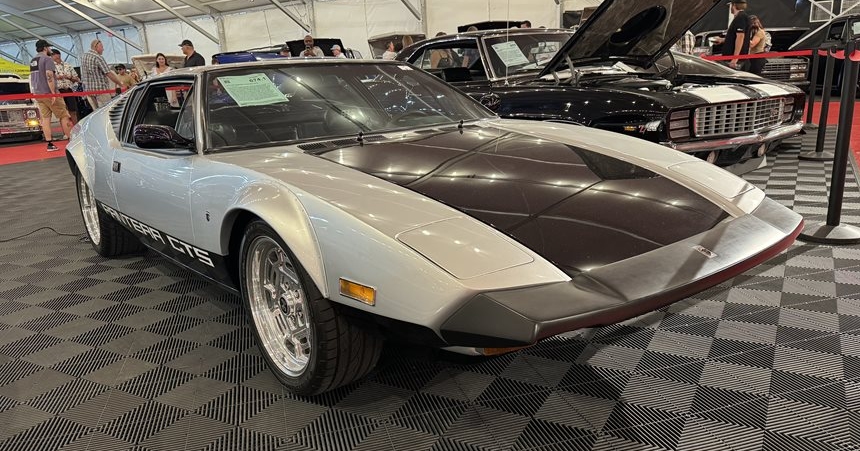
1971 DeTomaso Pantera GTS coupe, from an auction in Scottsdale on October 10th, 2024
Early Body Design
The original Pantera body was relatively clean and restrained. The nose was low and wedge-shaped. Hidden pop-up headlights preserved the smooth front profile. The rear deck incorporated substantial ventilation for the engine compartment. The cabin was pushed forward, creating the classic proportions of a mid-engine exotic.
Early cars had comparatively simple chrome bumpers and minimal exterior decoration.
1971: Ford Begins U.S. Distribution
One of the unusual elements of Pantera history was Ford’s involvement in distribution. Ford had acquired a substantial interest in De Tomaso and arranged to sell the Pantera in the United States through Lincoln-Mercury dealers. This gave the Italian exotic a dealership network that Ferrari and Lamborghini could not match. Ford hoped the Pantera could function as a relatively high-volume exotic performance car.
The arrangement also meant American-market cars had to satisfy increasingly demanding federal safety and emissions regulations.
1971: Early Push-Button Cars
The earliest production cars are frequently called push-button Panteras because of their exterior door-release design. These early cars retain many of the cleanest styling details. They typically have smaller bumpers and less exterior trim than later versions. Collectors often value them for their purity and closeness to Tjaarda’s original design. However, early construction quality could be inconsistent.
Early Build-Quality Issues
The Pantera was ambitious for a relatively small manufacturer. Early cars developed a reputation for uneven build quality. Electrical problems were common. Cooling systems could be marginal in hot weather or traffic. Air conditioning was often inadequate. Water leaks and corrosion could occur. Ford worked with De Tomaso to improve many of these issues as production continued.
As a result, later early-series cars can differ significantly from the first examples.
Cooling-System Development
Cooling was one of the Pantera’s most important mechanical concerns. The radiator was positioned at the front of the car, while the engine sat behind the passenger compartment. Long coolant pipes therefore ran through the chassis. The system required strong airflow and properly functioning fans. Early cars could overheat if airflow was poor or if the cooling system was not maintained carefully.
De Tomaso gradually improved radiator capacity, fan arrangements and colant routing. Owners also developed numerous aftermarket cooling upgrades.
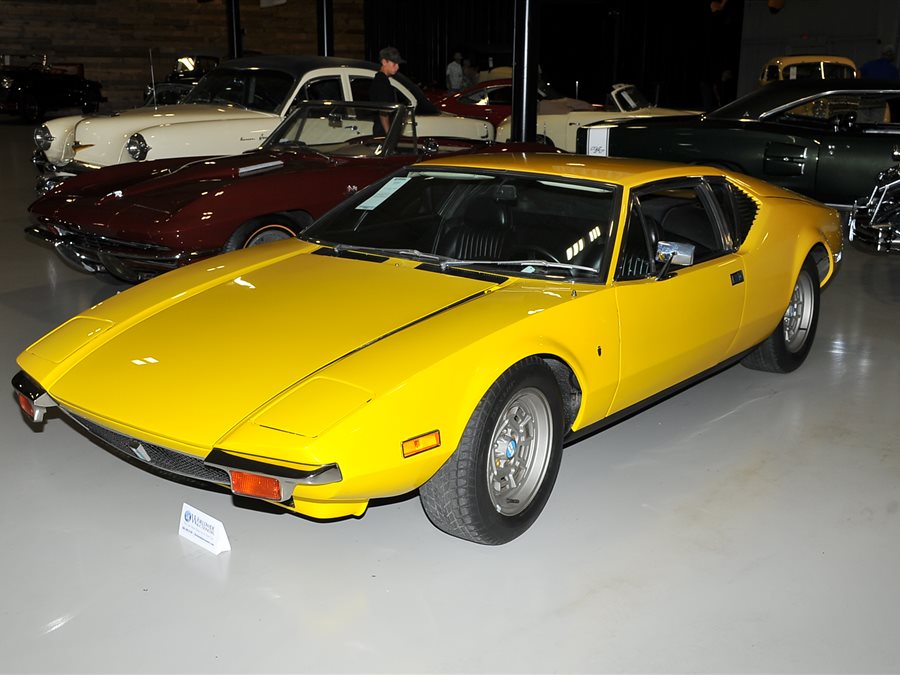
1972 DeTomaso Pantera coupe, from an auction on September 1st, 2022
1972: Detail Improvements
For 1972, the Pantera received numerous running improvements. Ford pressured De Tomaso to improve reliability and assembly quality. Electrical systems were revised. Cooling received attention. Interior materials and sealing improved. Suspension and chassis details were refined.
The basic 351 Cleveland and ZF five-speed remained.
U.S. Emissions Changes
U.S. emissions regulations increasingly affected the Pantera’s engine. Compression ratios were reduced. Camshaft and carburetor specifications changed. Exhaust and ignition settings were altered.
As a result, later American-market Cleveland engines generally produced less power than the earliest unrestricted European specifications. Comparing quoted horsepower figures across Pantera years can therefore be misleading because both engine specification and horsepower measurement standards changed.
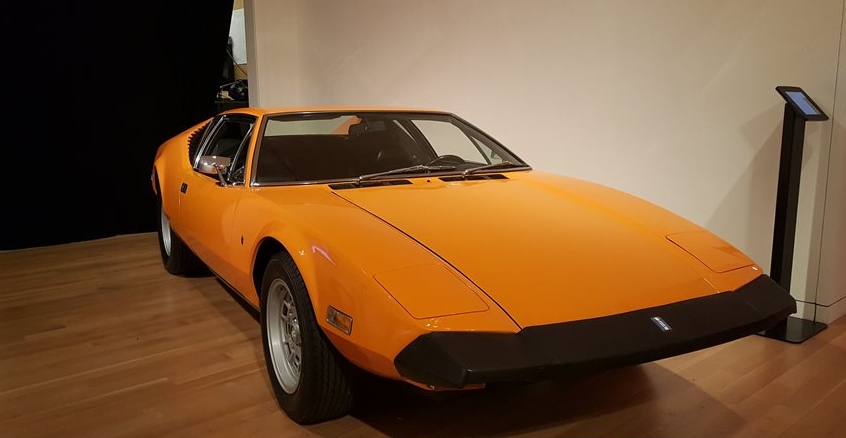
1973 DeTomaso Pantera L coupe, from an auction in New York on December 6th, 2017
1972–73: Pantera L
The Pantera L was introduced as a more refined version. The “L” is generally associated with Lusso, meaning luxury. The Pantera L received improved interior appointments and numerous changes intended to make the car more suitable for everyday road use. It also incorporated important exterior changes.
Pantera L Bumpers
One of the easiest ways to identify a Pantera L is its larger bumper treatment. U.S. safety regulations required more substantial protection. Later L cars therefore received large black impact-resistant bumper components. These visually changed the car substantially compared with the delicate chrome bumpers of early Panteras.
Some owners later removed the large bumpers and converted cars to earlier European-style appearance. For collectors, knowing the original configuration is important.
Pantera L Interior Improvements
The cabin became more refined. Seats and trim were improved. Dashboard details evolved. Air-conditioning systems received attention. Sound insulation increased.
These changes made the Pantera more comfortable but also slightly reduced the raw simplicity of the earliest cars.
1973: American Engine Output Declines
By 1973, U.S. emissions requirements had reduced the performance of many American engines, and the Pantera was affected as well. The 351 Cleveland remained fundamentally strong, but American-market compression and tuning were less aggressive than the original European specification.
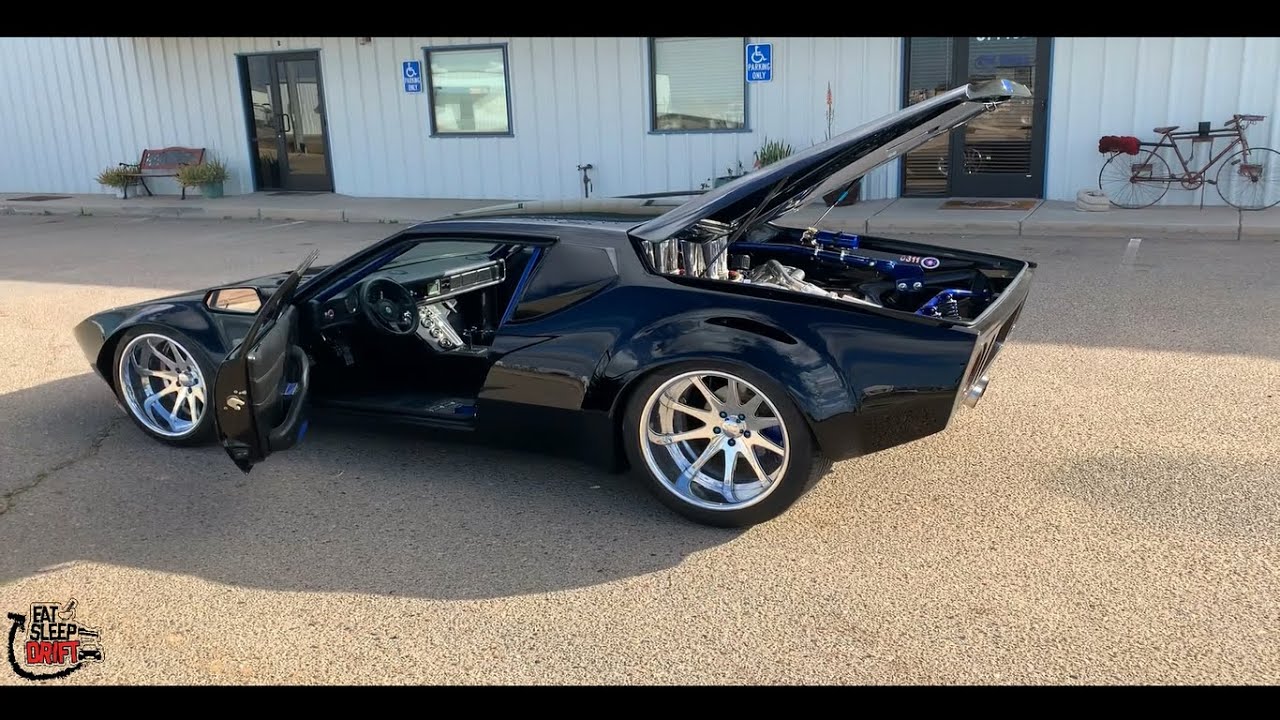
Owners frequently reversed these restrictions later. High-performance camshafts, intake manifolds, carburetors, headers and cylinder-head modifications became extremely common. Consequently, surviving Panteras are often mechanically far from factory specification.
1974: Ford Ends Official U.S. Imports
Ford discontinued official U.S. Pantera imports after the 1974 model year. The relationship between Ford and De Tomaso had deteriorated, and tightening emissions and safety regulations made the program increasingly difficult. This ended the period during which Americans could buy a new Pantera through Lincoln-Mercury dealers.
De Tomaso, however, did not stop building the car. European production continued for many years.
The Importance of the Ford-Era Pantera
The 1971–74 Ford-distributed cars account for a large portion of total Pantera production. They are therefore the versions most frequently encountered in the United States. They also established the model’s unusual identity as an Italian exotic that could be serviced with many conventional Ford engine components.
This ease of mechanical modification became both an advantage and a complication for collectors.
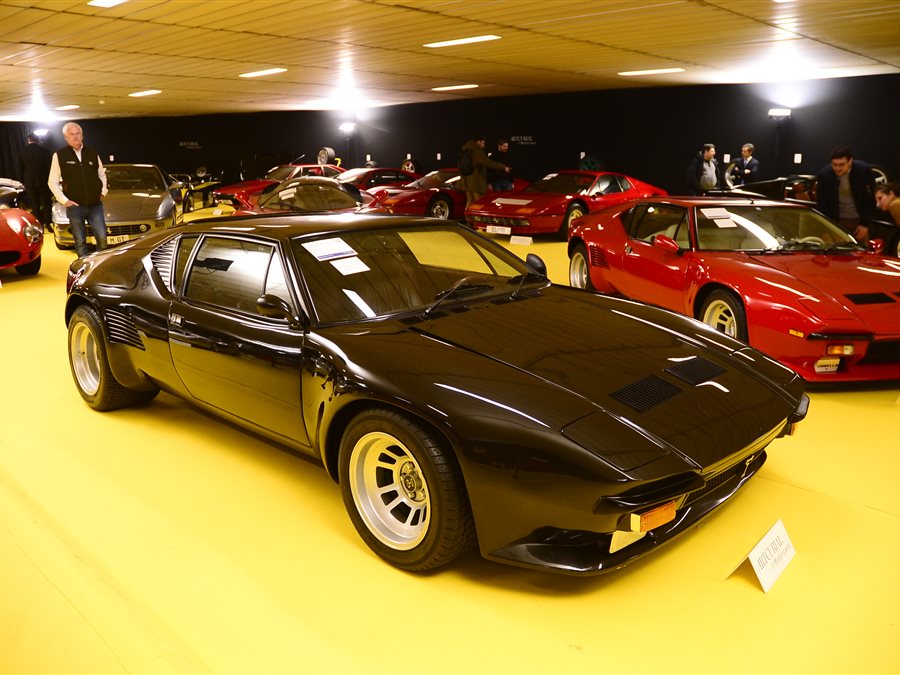
1973 DeTomaso Pantera GTS coupe, from an auction on March 15th, 2026
European Pantera GTS
De Tomaso also developed the more aggressive Pantera GTS. European GTS cars generally received higher-performance engine tuning, wider wheels and tires and distinctive exterior treatment. The GTS often had blacked-out trim and contrasting graphics. Wheel-arch flares accommodated wider tires.
The European GTS was intended as a more sporting version rather than simply a trim package.
GTS Engine
The GTS continued to use the 351 Cleveland. Depending upon market and specification, engines could receive higher-compression pistons, revised camshafts and different carburetion. European cars were generally less restricted by emissions equipment than American examples.
Power figures vary widely because De Tomaso specifications were not always standardized and because surviving engines were frequently modified.
GTS Suspension
The wider tires required corresponding suspension development. Spring and damper tuning became firmer. Larger wheels increased available grip. The basic double-wishbone architecture remained unchanged. The GTS therefore represents an evolutionary development of the original chassis rather than a completely different suspension design.
U.S. GTS Appearance Packages
The term GTS can be confusing in the United States. Some Ford-era American Panteras received GTS-style cosmetic packages without the full mechanical specification of European GTS cars. Graphics, wheels and trim could resemble the European version. Collectors should therefore distinguish genuine European-specification GTS cars from U.S. cars fitted with appearance packages.
1975–79: European Production Continues
After Ford ended U.S. distribution, De Tomaso continued producing Panteras in relatively small numbers. These cars were assembled primarily for European and other international markets. Production became more hand-built and less standardized.
The company also became increasingly willing to tailor cars to individual customer preferences. As a result, specifications during this period can vary significantly.
Continued Cleveland V8 Use
The 351 Cleveland remained the standard powerplant for much of the Pantera’s production life. This was partly because the engine fit the chassis well and offered excellent torque. It was also familiar to owners and tuners.
However, Ford eventually ended regular production of the Cleveland engine. De Tomaso therefore had to rely on stored engines and later alternative Ford-based combinations.
Owner Modifications
By the late 1970s, many Panteras had already been heavily modified.
Common upgrades included:
- larger carburetors and intake manifolds,
- aggressive camshafts,
- tubular exhaust headers,
- higher-capacity radiators,
- improved cooling fans,
- wider wheels,
- adjustable dampers,
- larger brakes,
- revised ignition systems.
The car’s relatively straightforward Ford engine made performance modification much easier than on most Italian exotics. This helped keep Panteras on the road but means factory-original mechanical specification is relatively uncommon today.
1980: The Pantera Becomes More Aggressive
During the early 1980s, De Tomaso substantially changed the Pantera’s appearance. The smooth early wedge evolved toward the exaggerated wide-body styling fashionable during the period. This development culminated in the GT5.
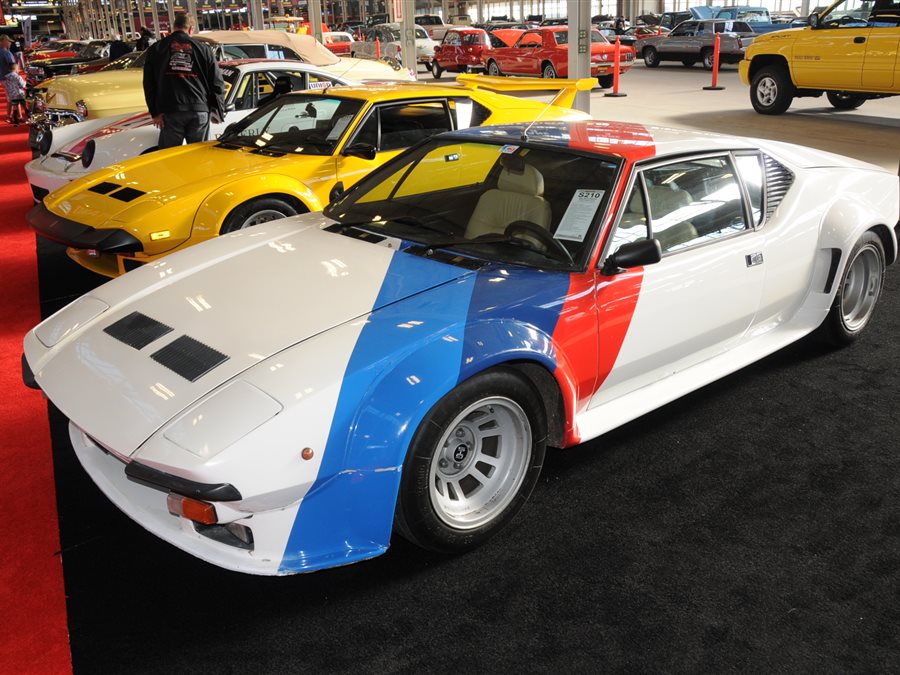
1982 DeTomaso Pantera GT5 coupe, from an auction in Indianapolis on May 14th, 2019
1980–81: Pantera GT5
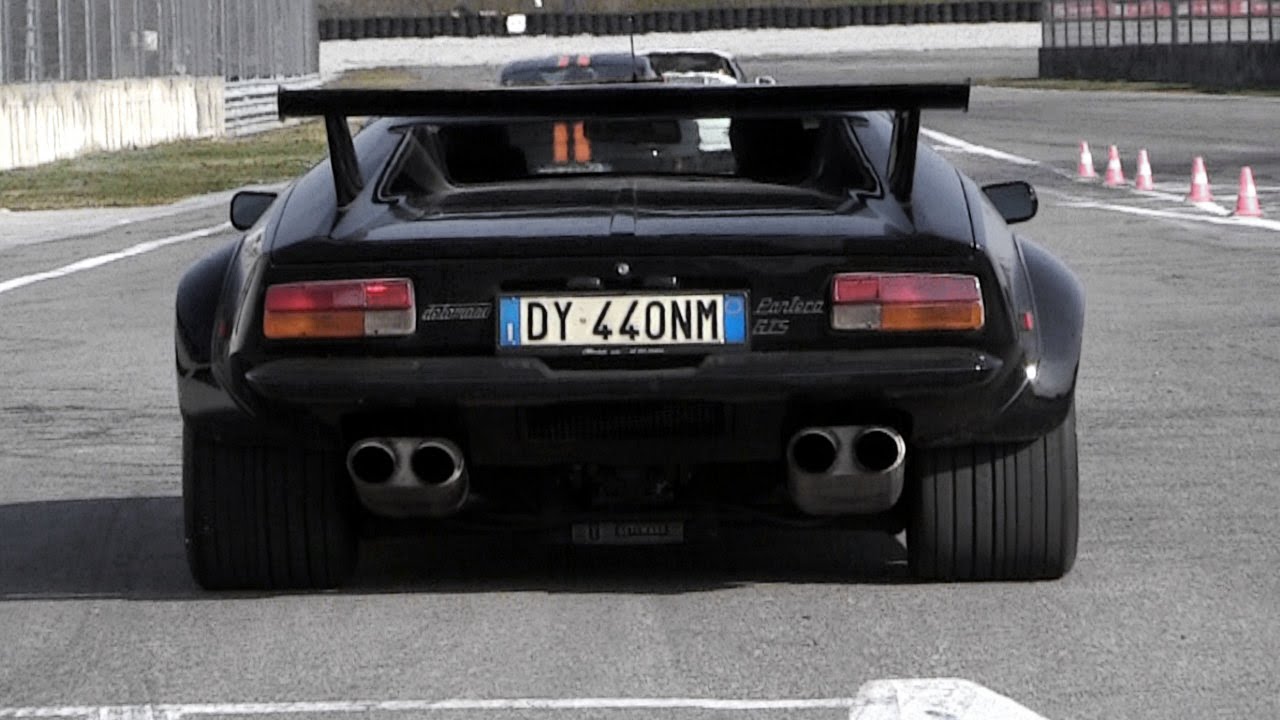
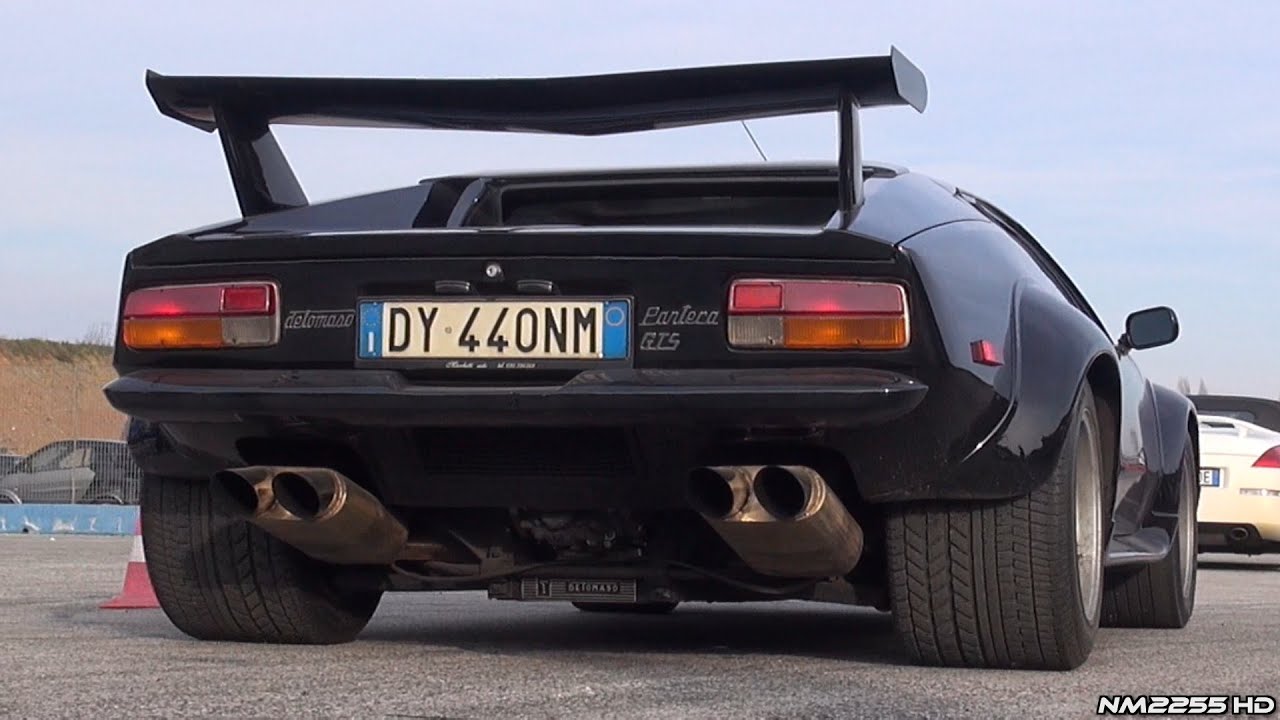
The Pantera GT5 introduced major body modifications. Large fiberglass wheel-arch extensions dramatically widened the car. Very wide wheels and tires filled the new arches. A deep front air dam improved high-speed stability. A large rear wing was commonly fitted.
The overall effect was far more aggressive than the original Tjaarda design.
GT5 Wheels and Tires
The GT5’s defining mechanical feature was its enormous wheel-and-tire package. Rear wheels could be extremely wide by contemporary standards. The broader contact patches increased traction and cornering capability. They also required changes to suspension tuning and steering effort. The GT5 looks substantially more planted and muscular than an early Pantera.
GT5 Suspension
The basic independent double-wishbone suspension remained. However, spring rates, dampers, anti-roll bars and alignment were revised to work with the much wider tires. The later cars also benefited from years of development in chassis reinforcement and component quality. Even so, the Pantera remained fundamentally a 1970-era chassis beneath the increasingly dramatic body.
GT5 Engine Development
The GT5 generally retained a Ford-based V8 around 5.8 liters. Exact specification varies significantly from car to car. Unlike major manufacturers with tightly standardized production, De Tomaso built relatively small numbers and frequently altered equipment.
Power was generally substantially stronger than the emissions-restricted U.S. cars of the early 1970s. Many GT5s also received customer-specified engine upgrades.
GT5 Braking
Brake systems were upgraded to handle wider tires, additional performance and increasing vehicle weight. Larger ventilated discs and stronger calipers appeared on later cars. Many surviving Panteras have since been upgraded again with modern brake systems.
Originality should therefore be checked rather than assumed from appearance.
1984–85: GT5-S
The Pantera GT5-S refined the wide-body concept. The most obvious change was the integration of the wheel arches. Where the GT5 used visibly attached flares, the GT5-S incorporated widened steel bodywork more smoothly into the original shape.
The result looked more cohesive and expensive.
The “S” is usually interpreted as indicating the smoother, more integrated body treatment rather than a completely new mechanical platform.
GT5-S Body Construction
The GT5-S required substantial hand fabrication. The rear quarter panels and front fenders were formed with much greater width. Large wheels and tires remained. Deep front spoilers and rear aerodynamic devices continued. The car’s width and stance made it visually closer to contemporary supercars such as the Lamborghini Countach than to the original 1971 Pantera.
GT5-S Mechanical Specification
Mechanically, the GT5-S continued using Ford V8 power and the ZF transaxle. Engine specifications could vary. Later cars incorporated increasingly powerful Ford-based engines as Cleveland supplies became more difficult. Suspension and brakes continued to evolve incrementally.
Because production volumes were small, exact specification should be verified on the individual chassis.
Later Ford V8 Engines
As the original Cleveland V8 became less readily available, De Tomaso used later Ford-based engines and components. Late Panteras can therefore have mechanical specifications quite different from 1970s cars. Displacements of roughly 5.8 liters remained common, while some later versions used larger or differently configured Ford V8s. Fuel injection also began replacing traditional carburetion on some late cars.
1980s Chassis Development
The Pantera chassis underwent numerous reinforcements during its long production life. Suspension mounting areas were strengthened. Body construction improved. Cooling systems became more effective. Brakes became larger. Interior comfort increased.
However, the basic mid-engine monocoque and independent suspension concept remained remarkably consistent. This continuity is one reason later Panteras still feel mechanically connected to the earliest cars despite their dramatically different appearance.
1990: Pantera 90 Si
The final major factory development was the Pantera 90 Si. This version received a substantial body redesign by Marcello Gandini.
Although the original central structure remained recognizable beneath the skin, nearly every major exterior panel was revised. The body became smoother and more contemporary.
90 Si Body Changes
The 90 Si abandoned much of the original 1970 wedge appearance. The nose, bumpers, side treatment and rear body were revised. Large integrated aerodynamic elements replaced the bolt-on appearance of the GT5 era. The redesigned car attempted to update the Pantera for the 1990s. Production was extremely limited.
90 Si Engine
The 90 Si used a modernized Ford V8 with electronic fuel injection. The engine was still based on the familiar American pushrod concept but represented a significant change from the carbureted Cleveland engines of early cars. Output was roughly in the 300-horsepower range, depending upon quoted specification.
The emphasis was increasingly on drivability and emissions compliance rather than the crude power increases of modified early engines.
90 Si Suspension and Brakes
The final Pantera also received revised suspension tuning and improved brakes. Modern wheel and tire technology allowed greater grip. The chassis had become more refined over two decades of production. Nevertheless, the basic architecture still traced directly back to the 1970 Pantera.
1992: End of Pantera Production
Production ended in the early 1990s, after more than two decades. Total production was approximately 7,000 cars, with most built during the Ford-import era of the early 1970s. Later European GT5, GT5-S and 90 Si cars are dramatically rarer.
The Pantera was eventually succeeded in spirit by the De Tomaso Guarà, although that car used a very different chassis and mechanical package.
The Early Push-Button Pantera
The earliest 1971 push-button cars represent the cleanest version of the original design. They have small bumpers, minimal decoration and relatively simple interiors. Their 351 Cleveland engines retain relatively high-performance early specifications. Because of their early production and distinctive details, they are particularly appealing to collectors who value originality. They can, however, also have the greatest number of early-production quality issues.
The Ford-Era Pantera
The 1971–74 Ford-distributed Panteras are the most common versions in North America. They combine Italian styling and chassis engineering with strong Ford parts availability. Mechanical specification changed during this period because of emissions regulations.
Later cars are generally more refined but can have lower original engine output. For many enthusiasts, these cars offer the most practical entry into classic Pantera ownership.
The Pantera L
The Pantera L is more refined than the earliest cars. Interior trim and overall finish improved. The most visible change is often the larger bumper treatment required by U.S. regulations. Some collectors prefer the cleaner styling of early cars, while others value the L for its improved development and usability.
The European GTS
The European Pantera GTS is a more performance-oriented derivative. It generally combines stronger engine tuning, wider wheels and tires, firmer suspension and distinctive body treatment. Authentic European GTS cars should be distinguished from U.S. appearance-package versions.
The GT5
The GT5 represents the first major visual transformation of the Pantera. Its bolt-on wheel-arch extensions, huge wheels, deeper spoilers and optional large rear wing create an unmistakable 1980s appearance. Mechanically, it retains the Ford V8/ZF transaxle architecture but benefits from later suspension, brake and chassis development.
The GT5-S
The GT5-S integrates the wide body more elegantly. Its steel flared fenders distinguish it from the GT5’s more obvious add-on extensions. The GT5-S is considerably rarer than an early Ford-era Pantera and is one of the most desirable late variants.
The Pantera 90 Si
The 90 Si is the final and rarest major production evolution. Its Gandini-designed body substantially updates the car’s appearance. Fuel-injected Ford V8 power, revised suspension and more modern equipment separate it mechanically from the early carbureted Cleveland cars.
Because production was extremely limited, each surviving example has significant collector interest.
Brief Competition History
Unlike the Audi Quattro, Porsche 911 or BMW M3, the Pantera’s identity was not primarily built around factory motorsport. De Tomaso did develop competition versions, and Panteras appeared in European endurance racing and various national events.
Group 3 and Group 4 Panteras received extensive modifications including lighter bodywork, larger brakes, revised suspension, wider wheels and highly tuned Ford V8 engines. Some Group 4 cars produced well over 400 horsepower.
However, the Pantera never achieved the sustained factory racing success associated with Porsche, Ferrari or later Audi competition programs. Its competition history is therefore interesting but secondary to its road-car significance.
Understanding the Major De Tomaso Pantera Variants
Collectors generally divide the Pantera into these principal categories:
- Early Push-Button Pantera: Earliest production cars with clean bodywork, small bumpers and relatively high-output early Cleveland engines.
- Ford-Era Pantera: 1971–74 cars officially distributed in the United States through Lincoln-Mercury dealers.
- Pantera L: More refined version with improved trim, development changes and larger U.S.-market bumper treatment.
- European GTS: Higher-performance derivative with wider wheels, sporting suspension and more aggressive engine specifications.
- U.S. GTS Appearance Package: Ford-era American cars carrying GTS-style trim but not necessarily the complete European mechanical specification.
- Post-Ford European Pantera: Small-production cars built after official U.S. imports ended.
- GT5: Wide-body 1980s version with bolt-on flares, extremely wide tires and aggressive aerodynamic additions.
- GT5-S: Later wide-body version with smoothly integrated steel fender extensions.
- 90 Si: Final Gandini-restyled, fuel-injected evolution produced in extremely small numbers.
- Group 3/Group 4 Competition Cars: Rare racing Panteras with major engine, chassis, brake and body modifications.
What Matters to Collectors
- The Pantera presents an unusual collector problem because modification has always been part of the culture surrounding the car.
- A large percentage of surviving Panteras have been altered.
- Engines have been rebuilt to higher-output specifications.
- Carburetors have been replaced.
- Cooling systems have been redesigned.
- Wheels and brakes have been upgraded.
- Suspension geometry has been altered.
- Bodies have been converted from one visual style to another.
- That means originality must be evaluated carefully.
- A modified Pantera may be a better car to drive than a completely stock example, but it should not necessarily command the same collector premium as a highly original car.
- Early cars are particularly sensitive to correct body details.
- Push-button door handles, bumpers, wheels, interior trim and engine-bay components should correspond with production date.
- Many early cars were updated during periods when originality had little effect on value.
- The 351 Cleveland engine is relatively straightforward by exotic-car standards, but correct specification still matters.
- A standard Cleveland can be rebuilt easily compared with a Ferrari V12, yet determining whether an engine retains its original block, heads and induction system can be difficult.
- Because performance modifications were so common, documentation is valuable.
- Cooling-system condition is probably the single most important practical mechanical issue.
- A Pantera should maintain stable temperature in traffic and warm weather.
- Radiator condition, fans, coolant pipes and thermostat function should all be examined.
- Many cars have upgraded aluminum radiators and modern electric fans.
- Such modifications can improve reliability significantly even if they reduce strict originality.
- The ZF transaxle deserves equally careful attention.
- Replacement and rebuilding costs can be substantial.
- Gear noise, worn synchros or differential problems should not be dismissed simply because the engine is inexpensive to service.
- Clutch condition also matters because replacing it requires considerable labor.
- Suspension wear can transform the character of the car.
- Control-arm bushings, ball joints, dampers and wheel bearings should be checked carefully.
- Wide-tire later cars place greater loads on suspension components.
- Poor alignment can make the car nervous or unstable.
- Correct ride height is also important.
- Many Panteras have been lowered excessively for appearance.
- Brakes deserve inspection because original systems may feel inadequate compared with modern expectations.
- Updated brakes are common and can be beneficial on a frequently driven car.
- If collector originality is the priority, however, original components should ideally accompany the vehicle.
- Rust is one of the Pantera’s greatest structural concerns.
- The car’s steel monocoque can corrode in areas that are difficult to repair.
- Rockers, floors, wheelhouses, suspension mounting areas and lower body cavities should be inspected carefully.
- A visually beautiful Pantera can conceal significant structural corrosion beneath paint and undercoating.
- Accident history is equally important.
- The Pantera’s mid-engine configuration, high torque and relatively primitive tires made it easy to damage when driven aggressively.
- The front and rear structures should be checked for evidence of collision repair.
- Correct suspension geometry depends upon the monocoque being straight.
- The large clamshell-style rear engine cover also requires proper alignment.
- Later wide-body cars present additional authenticity questions.
- A standard early Pantera can be converted visually to resemble a GT5 or GT5-S.
- Conversely, some genuine later cars have been modified back toward earlier styling.
- Factory chassis documentation should therefore establish the original model.
- A real GT5-S carries far greater rarity than an early Pantera with later-style fenders.
- The same is true of genuine European GTS cars.
- U.S. GTS graphics alone do not establish European mechanical specification.
- Engine, suspension, wheel and chassis details need to be considered together.
- The Pantera’s relative simplicity is one of its greatest advantages as a usable collector exotic.
- The Ford V8 means many engine parts are readily available.
- Specialists have developed effective solutions for cooling, air conditioning, brakes and suspension.
A properly sorted Pantera can therefore be much easier to maintain than many contemporary Italian supercars. At the same time, indiscriminate modification can erase historically important details.
For a collector seeking originality, an unmodified early Pantera with its correct Cleveland engine, ZF gearbox, original bodywork and documented colors can be especially compelling. For a driver, a subtly upgraded car with better cooling, brakes and suspension can provide a much more satisfying ownership experience.
Important Sales Reviewed by SCM Experts
In each month’s issue for the past 38 years, SCM’s analysts have reviewed 5 to 7 significant cars sold at auction, and discuss what options, history, or details made that particular more or less valuable. They give their expert opinion on the market for these cars, and whether this car was well bought or well sold. If you’re thinking of purchasing a DeTomaso Pantera, you’ll likely find these profiles critical in helping you make the right decision. Each of the following is an article from our print magazine on a DeTomaso Pantera sold at auction.
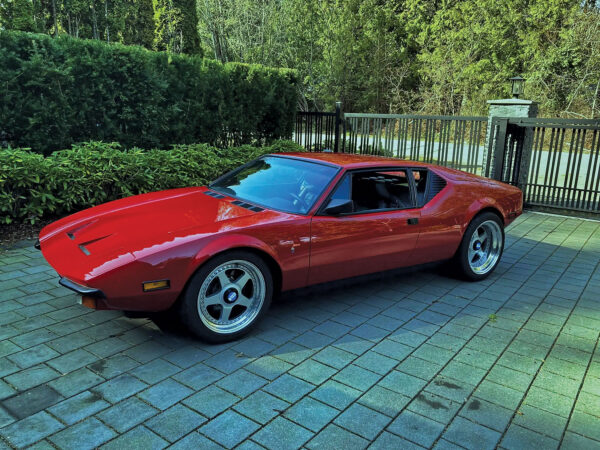 1973 DeTomaso PanteraThis 1973 DeTomaso Pantera was initially sold by Peyton Lincoln-Mercury of Harbor City, CA, and was acquired by the seller in 1983 before undergoing a multi-decade refurbishment. It was completed in the late 2000s and consisted of repainting the body red, building and installing an aluminum 427-ci V8, and replacing the ZF 5-speed manual transaxle. […]Read more
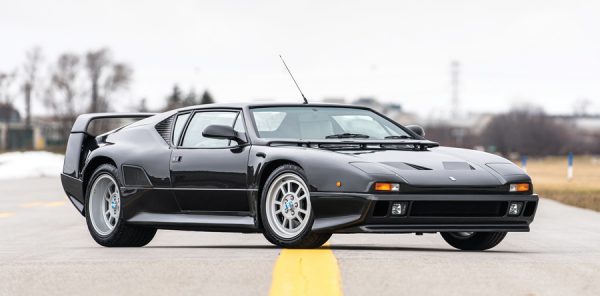 1991 DeTomaso Pantera 90 SiIn 1990, DeTomaso unveiled the completely re-engineered Pantera 90 Si, which featured updated Marcello Gandini styling. Substantially revised in all respects, the 90 Si benefited from a new tube-frame chassis and reworked suspension, creating a lighter, more-rigid platform. The updated Pantera also featured a fuel-injected Ford 302 engine, which gave the car a top speed […]Read more
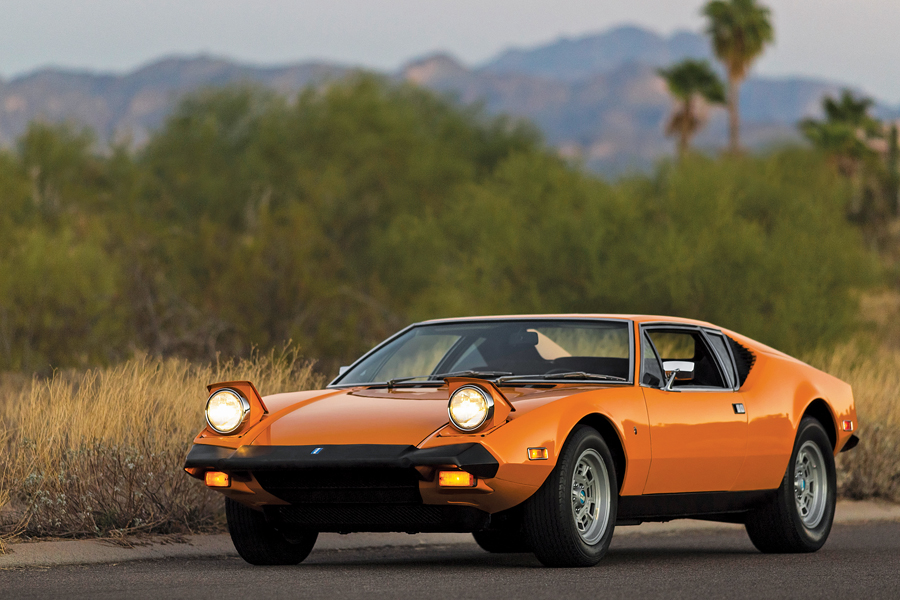 1974 DeTomaso Pantera LFord Motor Company president Lee Iacocca was a man who fostered bold new ideas and had the clout to turn them into reality. Among his wildest notions was that of a mid-engine supercar that could be sold by a Ford dealer, cooked into being with his great friend and former Argentinean racing driver Alejandro DeTomaso, […]Read more
Cars For Sale
Quick links to listings for this make and model online:
Books on the DeTomaso Pantera

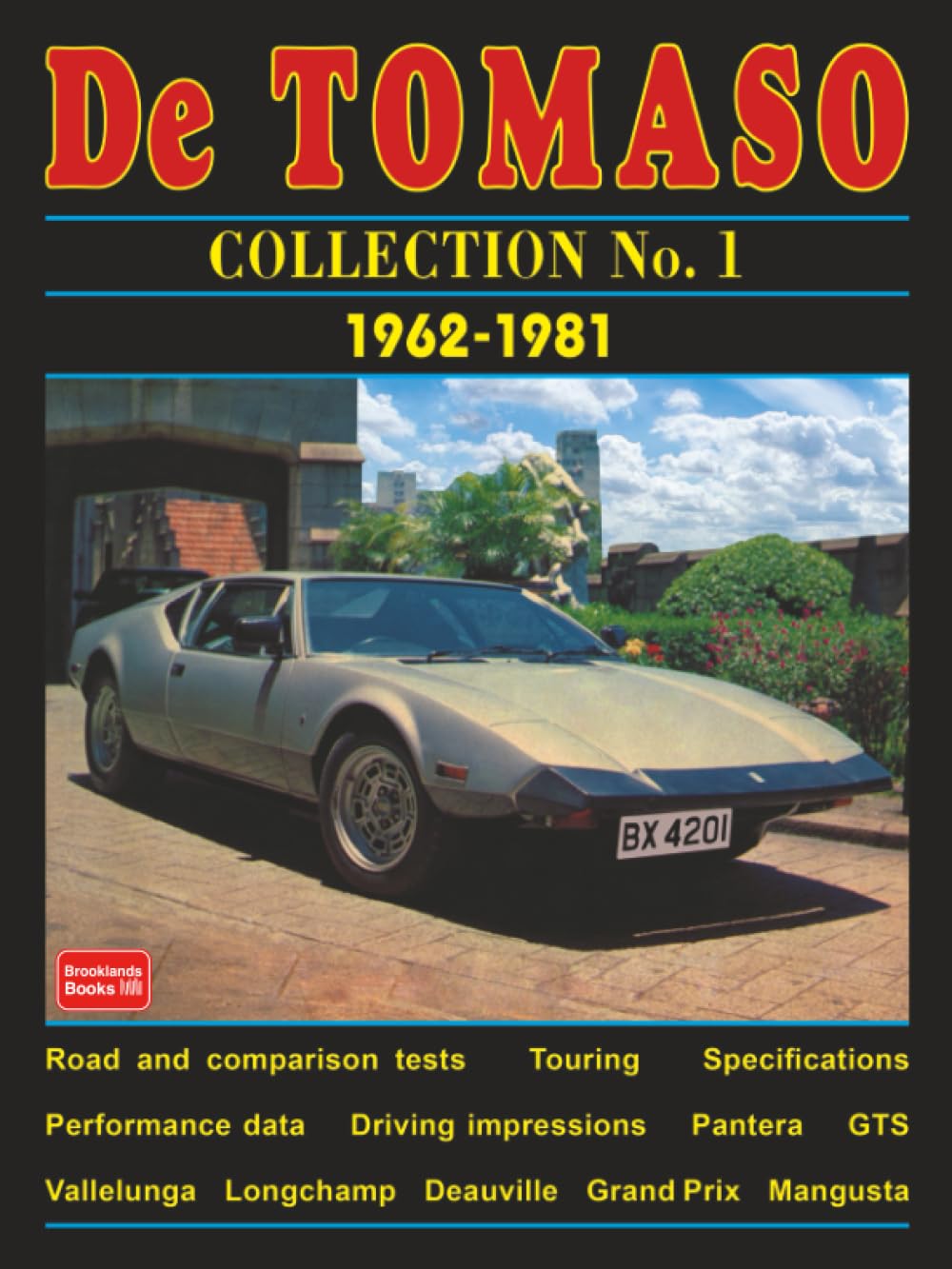
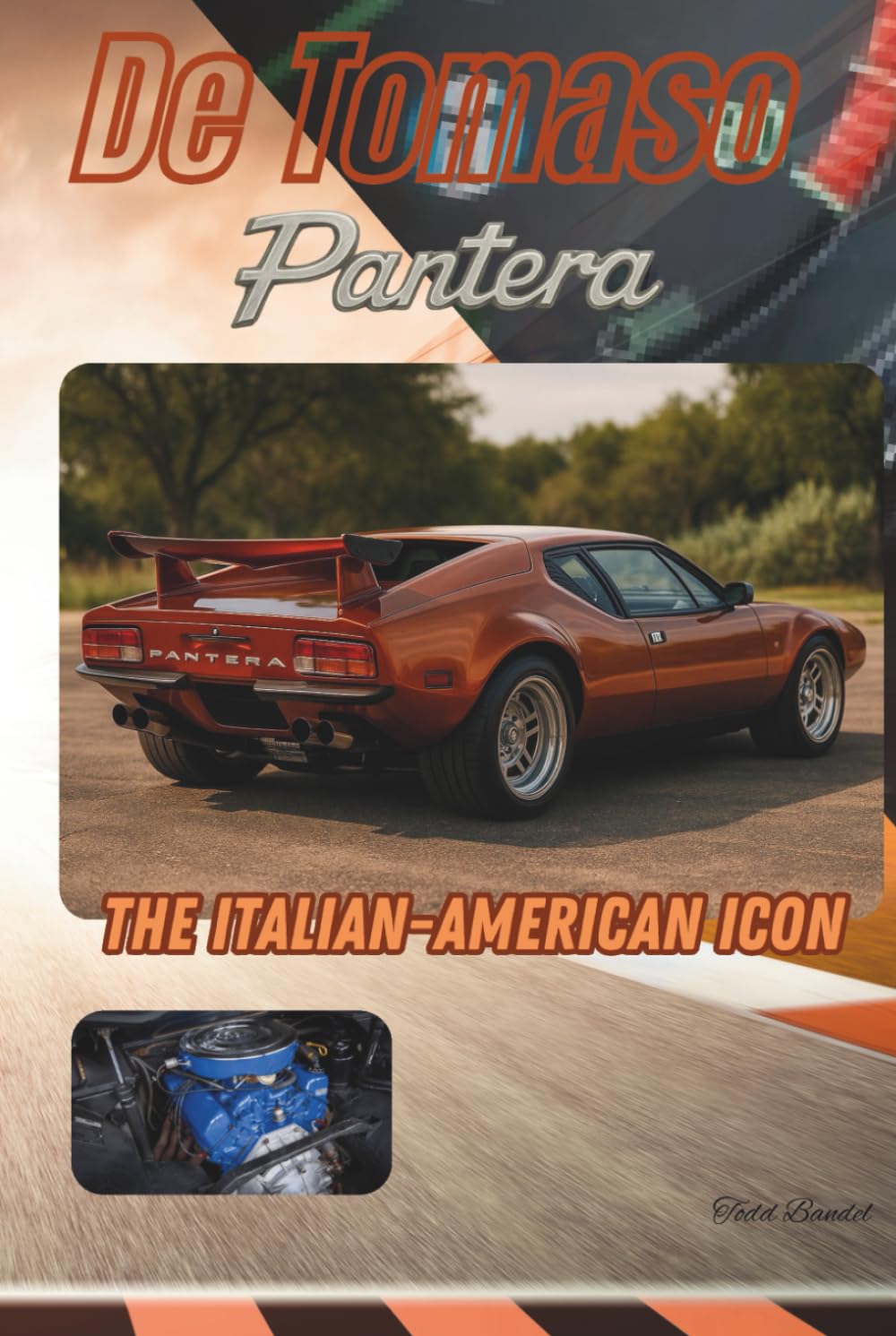
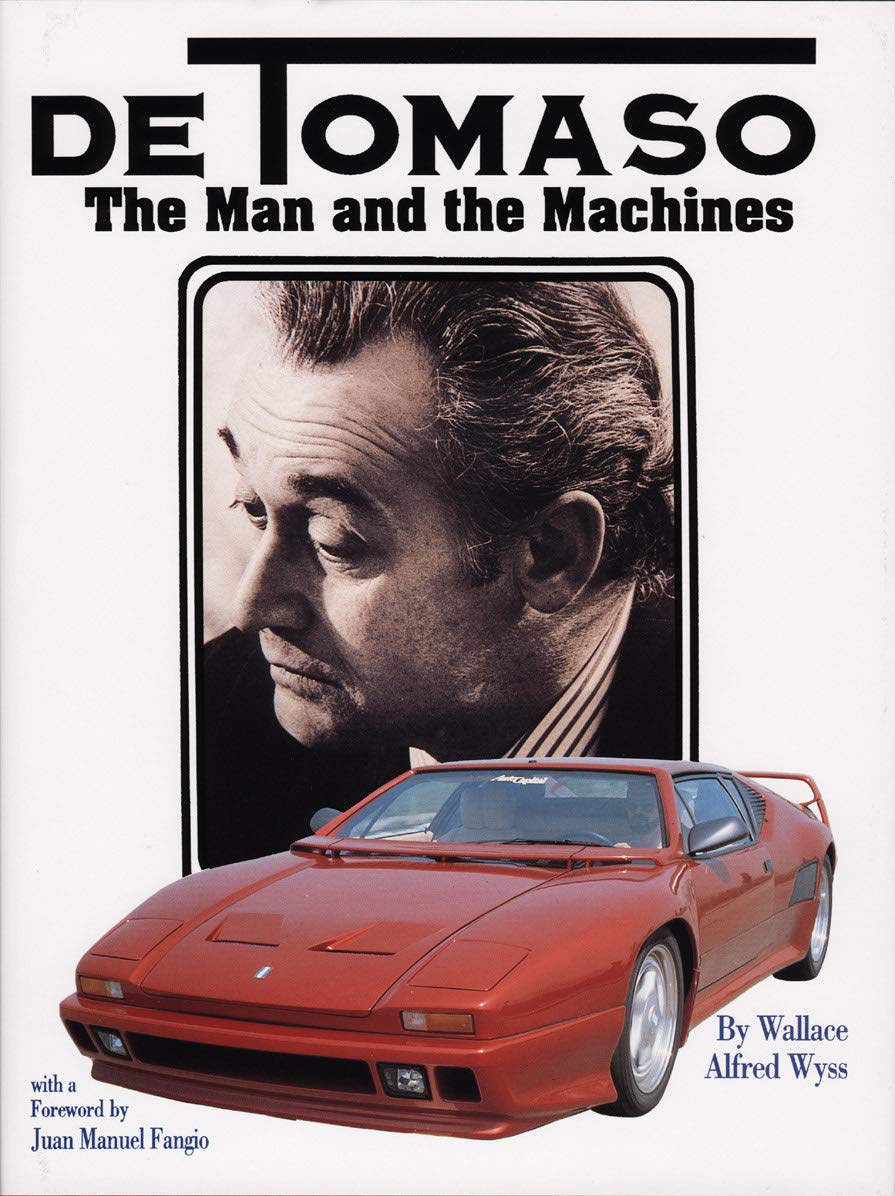
Note that as an Amazon Associate, we earn from qualifying purchases of the above books.
Past Auction Sales – DeTomaso Pantera
Average DeTomaso Pantera Sale Price by Year from SCM’s Platinum Auction Database:
DeTomaso Pantera Sales from SCM’s Platinum Auction Database:

Barrett-Jackson
Condition: 2
Jun 26, 2026
$88,000

Hagerty Marketplace
Condition: 2-
May 5, 2026
$90,950

Artcurial
Condition: 3+
Mar 15, 2026
$140,934

Artcurial
Condition: 2-
Mar 15, 2026
$227,982

Barrett-Jackson
Condition: 2+
Oct 15, 2025
$178,200

Bonhams Cars
Condition: 2-
Oct 12, 2025
$133,032

Worldwide Auctioneers
Condition: 3+
Apr 25, 2025
$75,040

Barrett-Jackson
Condition: 3+
Apr 25, 2025
$143,000

Barrett-Jackson
Condition: 2
Oct 10, 2024
$92,400

Broad Arrow Auctions
Condition: 3-
Aug 14, 2024
$75,040

Worldwide Auctioneers
Condition: 2-
Apr 26, 2024
$218,400

Barrett-Jackson
Condition: 3+
Apr 18, 2024
$220,000

Barrett-Jackson
Condition: 2
Apr 18, 2024
$176,000

Hagerty Marketplace
Condition: 2+
Nov 3, 2023
$96,744

Mecum Auctions
Condition: 2-
Aug 17, 2023
$110,000

Bring a Trailer
Condition: 3
Aug 14, 2023
$125,000

Barrett-Jackson
Condition: 3
Jun 22, 2023
$64,900

Artcurial
Condition: 3+
Feb 3, 2023
$203,014

Worldwide Auctioneers
Condition: 2-
Sep 1, 2022
$123,200

Mecum Auctions
Condition: 4+
Aug 18, 2022
$66,000

GAA Classic Cars
Condition: 1-
Jul 21, 2022
$127,440

Artcurial
Condition: 3+
Jul 2, 2022
$173,972

Barrett-Jackson
Condition: 3-
Jun 30, 2022
$69,300

Mecum Auctions
Condition: 2-
May 21, 2022
$110,000

Gooding & Co.
Condition: 3
Mar 4, 2022
$117,600

Bonhams
Condition: 2-
Feb 3, 2022
$97,342

Barrett-Jackson
Condition: 2
Jan 30, 2022
$176,000

Mecum Auctions
Condition: 3+
Jan 16, 2022
$102,300

Bonhams
Condition: 3+
Oct 25, 2021
$67,200

Gooding & Co.
Condition: 3
Aug 13, 2021
$117,600

Bonhams
Condition: 3
Aug 13, 2021
$140,000

Artcurial
Condition: 2-
Jul 19, 2021
$96,773

Bonhams
Condition: 2-
Jul 9, 2021
$216,259

Bring a Trailer
Condition: 2+
Jun 3, 2021
$130,000

RM Sotheby's
Condition: 2
Jan 22, 2021
$95,200

Barrett-Jackson
Condition: 2-
Oct 22, 2020
$64,900

Barrett-Jackson
Condition: 2-
Oct 22, 2020
$82,500

RM Sotheby's
Condition: 3-
Jun 3, 2020
$67,407

Gooding & Co.
Condition: 1
Mar 6, 2020
$357,000

Bonhams
Condition: 3-
Mar 5, 2020
$56,000

Bonhams
Condition: 2-
Oct 11, 2019
$136,120

Mecum Auctions
Condition: 3-
Sep 4, 2019
$52,800

Russo and Steele
Condition: 2-
Aug 15, 2019
$96,000

Mecum Auctions
Condition: 3-
May 14, 2019
$45,100

RM Sotheby's
Condition: 2
Jan 17, 2019
$84,000

RM Sotheby's
Condition: 2+
Dec 8, 2018
$134,400

Silverstone
Condition: 2-
Jul 19, 2018
$106,572

Barrett-Jackson
Condition: 2+
Jun 20, 2018
$137,500

RM Sotheby's
Condition: 2-
May 12, 2018
$164,689

Russo and Steele
Condition: 2-
Jan 17, 2018
$101,750
See all 111 sales of DeTomaso Pantera cars from SCM’s Platinum auction database.
Forums & Communities
Popular Videos about the DeTomaso Pantera