
The Lamborghini Huracán became one of the most successful and important models in Lamborghini history, combining the naturally aspirated V10 formula established by the Gallardo with a far more sophisticated chassis, dual-clutch transmission and electronic control systems. Introduced for the 2015 model year as the Gallardo’s successor, the Huracán remained in production for roughly a decade and evolved from the original all-wheel-drive LP 610-4 into an unusually broad family that eventually included rear-wheel-drive road cars, the track-focused Performante and STO, the road-oriented Tecnica and even the raised, all-terrain Sterrato.
Throughout that evolution, the heart of the Huracán remained its 5.2-liter naturally aspirated V10. At a time when Ferrari and McLaren were moving increasingly toward turbocharging and later hybridization, Lamborghini retained a large-displacement, high-revving engine without turbochargers or electric assistance. The V10’s immediate throttle response, linear power delivery and distinctive sound became increasingly important parts of the Huracán’s identity as the broader performance-car industry changed around it.
The Huracán also represented a major step forward from the Gallardo in usability and chassis sophistication. A seven-speed dual-clutch transmission replaced the Gallardo’s automated single-clutch E-gear system, while a hybrid aluminum-and-carbon-fiber structure improved stiffness and reduced weight. Electronic dampers, variable-ratio steering, sophisticated stability control, active aerodynamics and eventually rear-wheel steering expanded the car’s capabilities without fundamentally changing its naturally aspirated character.
By the end of production, the Huracán had become much more than a single entry-level Lamborghini. An early LP 610-4, rear-wheel-drive LP 580-2, Nürburgring-record-setting Performante, extreme STO and gravel-capable Sterrato provide dramatically different experiences despite sharing the same basic V10 architecture. Understanding those variants is therefore essential when evaluating the Huracán as either a driver’s car or collectible.
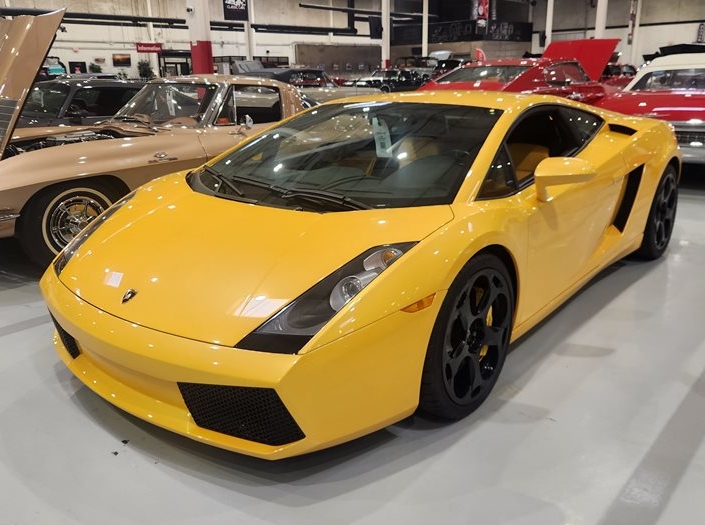
2004 Lamborghini Gallardo coupe, from an auction on July 23rd, 2026
From Gallardo to Huracán
The Gallardo, introduced for 2004, had transformed Lamborghini’s business. Its smaller V10 platform allowed Lamborghini to sell cars in volumes that would have been impossible relying exclusively on V12 flagships such as the Murciélago. More than 14,000 Gallardos were produced, establishing the V10 model as a permanent part of the Lamborghini range.
The Huracán retained that general formula but represented a much more comprehensive redesign than its familiar proportions initially suggested. The chassis incorporated aluminum and carbon-fiber structural elements, the engine was extensively developed, the transmission was completely different and the electronics were considerably more sophisticated. Where early Gallardos could feel like traditional analog supercars with electronic assistance added around them, the Huracán was engineered from the beginning around integrated electronic control.
Its name continued Lamborghini’s tradition of using names associated with fighting bulls. Huracán was a Spanish fighting bull from the 19th century, while the word also evokes the Spanish term for hurricane.
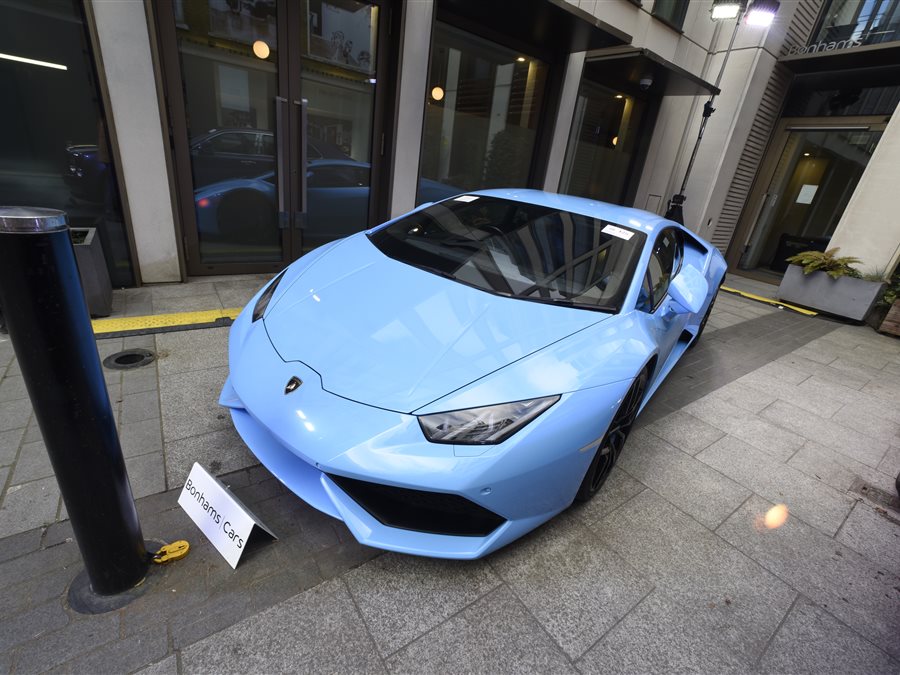
2015 Lamborghini Huracán LP610-4 coupe, from an auction on December 11th, 2025
5.2-Liter Naturally Aspirated V10
Every road-going Huracán uses a version of Lamborghini’s 5,204cc naturally aspirated V10. The 90-degree engine uses an aluminum block and cylinder heads, dual overhead camshafts, four valves per cylinder and variable valve timing. Unlike the earliest Gallardos, later versions of the V10 use both direct and port fuel injection, helping combine high specific output with emissions compliance and improved drivability.
In the original Huracán LP 610-4, the engine produced approximately 610 metric horsepower, or 602 SAE horsepower, at 8,250 rpm, with 413 lb-ft of torque. Those numbers only partially explain its character. Maximum torque arrives relatively high in the rev range, and the engine becomes progressively more urgent as it approaches its redline rather than delivering the large low-rpm torque surge typical of a turbocharged engine.
That character remained fundamental even as Lamborghini increased output in later versions. Performante, EVO, STO and Tecnica variants reached approximately 640 metric horsepower, but Lamborghini never transformed the V10 into a low-revving torque engine. The reward remained at the upper end of the tachometer.
Dual Fuel Injection
The Huracán’s V10 uses a combination of direct and port fuel injection, which Lamborghini calls Iniezione Diretta Stratificata, or IDS, in conjunction with conventional manifold injection. The engine management system can select or combine the two systems depending upon load and operating conditions.
Direct injection helps improve combustion efficiency and precise fuel control, while port injection offers advantages under other operating conditions and can help reduce intake-valve deposit problems associated with engines relying exclusively on direct injection. The system also contributed to Lamborghini’s ability to retain a naturally aspirated engine while meeting increasingly demanding emissions standards.
For owners, the system adds complexity compared with older Lamborghini engines but has generally proved durable when properly maintained.
Seven-Speed Dual-Clutch Transmission
One of the largest improvements over the Gallardo was the adoption of the Lamborghini Doppia Frizione, or LDF, seven-speed dual-clutch transmission. The gearbox uses separate clutches for odd and even gears, allowing the next ratio to be prepared before the shift occurs.
The difference from the Gallardo’s E-gear automated manual is dramatic. Low-speed operation is smoother, shifts are faster and interruption of power during acceleration is greatly reduced. In automatic mode the Huracán can behave much more like a conventional road car, while manual shifts become extremely rapid in the more aggressive driving modes.
No factory manual transmission was offered. By the time the Huracán appeared, Lamborghini had committed its V10 platform entirely to paddle-operated gearboxes.
Hybrid Aluminum and Carbon-Fiber Chassis
The Huracán uses a hybrid chassis combining aluminum with carbon-fiber-reinforced components. The structure was developed within the Volkswagen Group and shares fundamental architecture with the second-generation Audi R8, although Lamborghini’s suspension tuning, powertrain calibration and overall character differ substantially.
Carbon-fiber elements are concentrated where they provide the greatest structural advantage, including portions of the passenger-cell structure, while aluminum is used extensively throughout the remainder of the chassis. The combination provides greater torsional rigidity than the Gallardo structure while controlling weight.
Later high-performance Huracáns expanded the use of lightweight composite materials in bodywork, aerodynamic components and interior pieces rather than completely replacing the underlying architecture.
Suspension
The Huracán uses double-wishbone suspension at all four corners, maintaining a layout long associated with serious mid-engine sports cars. Aluminum suspension components reduce unsprung mass, while coil springs and dampers control wheel movement.
Optional Lamborghini Magneto-rheological Suspension, commonly called MagneRide, uses dampers containing magnetically reactive fluid. The control system can alter damping almost instantaneously by changing the magnetic field inside each damper, allowing the car to combine relatively compliant road behavior with much firmer control during aggressive driving.
Suspension calibration varies substantially among models. An LP 610-4 is designed to provide broad road usability, while a Performante or STO uses considerably more aggressive geometry, springing and damping.
Lamborghini Dynamic Steering
Many Huracáns were available with Lamborghini Dynamic Steering, a variable-ratio steering system intended to change steering response according to speed and driving mode. At lower speeds it can provide a quicker ratio, while at high speed it reduces sensitivity.
The system generated mixed reactions among enthusiasts because the changing relationship between steering-wheel angle and front-wheel movement can feel less predictable than a conventional fixed-ratio rack. Lamborghini continually refined its calibration as the Huracán evolved.
Steering feel and specification therefore deserve consideration when comparing cars. Some drivers prefer the directness of cars without Dynamic Steering, while others appreciate its maneuverability and rapid response.
ANIMA Driving Modes
The Huracán introduced Lamborghini’s ANIMA driving-mode system, controlled through a switch on the steering wheel. The three original modes are Strada, Sport and Corsa.
Strada prioritizes road comfort, stability and smoother transmission behavior. Sport allows greater slip, increases throttle and gearbox response and gives the car a more playful character. Corsa is intended for maximum performance, coordinating the powertrain, transmission, all-wheel-drive system, stability control and optional adaptive suspension for track use.
Later variants expanded or recalibrated these functions. The Sterrato, for example, required control strategies designed for loose surfaces rather than conventional circuit driving.
LP 610-4
The original Huracán LP 610-4 debuted in 2014 as the direct successor to the Gallardo. The designation followed Lamborghini’s traditional nomenclature: approximately 610 metric horsepower, with “4” indicating all-wheel drive.
Its V10 produces 610 PS at 8,250 rpm, and the combination of launch control, dual-clutch transmission and all-wheel-drive traction allows exceptionally quick acceleration. Lamborghini quoted 0–100 km/h in approximately 3.2 seconds, with a top speed above 200 mph.
Compared with the Gallardo, the LP 610-4 is noticeably more refined. Visibility, low-speed transmission behavior and interior ergonomics improved, while the electronic chassis systems make the car remarkably approachable given its performance.
All-Wheel Drive
The LP 610-4 uses an electronically controlled all-wheel-drive system capable of varying torque distribution according to traction and driving conditions. Under normal operation the car retains a rear-biased character, but power can be transferred forward when additional traction is required.
The system contributes heavily to the Huracán’s extraordinary launch performance and stability. It also allows drivers to exploit substantial power in conditions where a rear-wheel-drive supercar requires considerably greater restraint.
For some enthusiasts, however, that competence reduces the sense of adjustability available from a purely rear-drive chassis. Lamborghini eventually addressed that audience directly with the LP 580-2.

2018 Lamborghini Huracán LP580-2 coupe, from an auction in Monaco on May 12th, 2018
LP 580-2
Introduced for 2016, the Huracán LP 580-2 removed the front drive system and sent all power exclusively to the rear wheels. Engine output was reduced slightly to 580 PS, but the car also lost weight and received revised suspension, steering and stability-control calibration.
The result was not simply a cheaper LP 610-4. The rear-drive car had a distinctly different personality, allowing greater chassis movement under throttle and making the relationship between accelerator position and rear-tire behavior more obvious.
Exterior details also changed, including revised front and rear bumper treatments. For drivers who value steering purity and throttle adjustability over maximum all-weather traction, the LP 580-2 represents one of the most interesting early Huracán configurations.
Huracán Spyder
The Huracán Spyder brought open-air driving to both all-wheel-drive and rear-wheel-drive versions. Its electrically operated fabric roof folds behind the passenger compartment, allowing the V10 to become an even more dominant part of the driving experience.
Structural reinforcement adds weight compared with the coupe, and ultimate chassis rigidity is inevitably reduced slightly. Nevertheless, the Huracán’s underlying structure allowed Lamborghini to produce a Spyder without fundamentally changing the car’s handling character.
For road use, the Spyder has a major sensory advantage. With the roof lowered, the induction and exhaust sound of the naturally aspirated V10 becomes considerably more prominent, particularly as the engine approaches 8,000 rpm.
Huracán Performante
The Huracán Performante, introduced in 2017, represented the first major demonstration of how far Lamborghini could push the platform. Engine output increased to approximately 640 PS, weight decreased and the suspension, exhaust, aerodynamics and electronics were extensively revised.
Lamborghini used its lightweight Forged Composites material in components such as the front spoiler, rear wing and other structures. The exhaust system was lighter and more aggressive, while chassis calibration became substantially more track focused.
The Performante’s significance extended beyond increased horsepower. Its most important innovation was Lamborghini’s ALA active aerodynamic system, which allowed the car to alter aerodynamic behavior rapidly according to driving conditions.
Aerodinamica Lamborghini Attiva — ALA
ALA, or Aerodinamica Lamborghini Attiva, uses electronically controlled aerodynamic channels rather than relying solely on mechanically moving large wings. Flaps can alter airflow through the front spoiler and rear wing, switching between low-drag and high-downforce configurations.
One of the system’s most interesting functions is aero vectoring. By controlling airflow through different sides of the rear wing, ALA can vary aerodynamic loading across the car during cornering, helping improve turn-in and stability.
The system gave the Performante a technological identity beyond simply being a lighter, more powerful Huracán. It also demonstrated that active aerodynamics could manipulate airflow with much greater subtlety than a conventional adjustable rear wing.
Nürburgring Record
Before its formal introduction, the Huracán Performante attracted worldwide attention by recording a 6:52.01 lap of the Nürburgring Nordschleife with Lamborghini test driver Marco Mapelli.
At the time, the lap represented a production-car record and generated enormous discussion because it was dramatically quicker than the standard Huracán. Lamborghini released additional data and video to support the result after some observers questioned the magnitude of the improvement.
Regardless of the subsequent evolution of Nürburgring records, the lap established the Performante as a serious track car and substantially changed perceptions of Lamborghini’s V10 model.
Performante Spyder
The Performante Spyder combined the higher-output engine, lightweight materials and ALA aerodynamics with the open-roof body.
Additional structural weight prevented it from matching the coupe’s absolute track focus, but it retained the majority of the Performante’s mechanical character. For road driving, the ability to hear the high-revving V10 without a roof arguably compensated for the modest reduction in ultimate performance.
Because fewer Performante Spyders were produced than standard Huracán Spyders, specification and originality can increasingly influence collector interest.
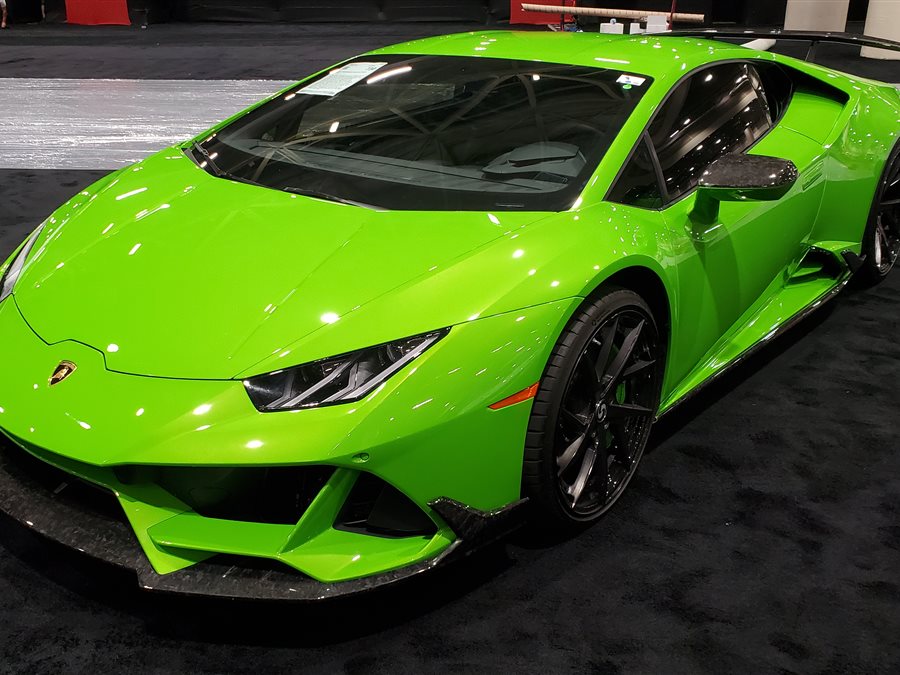
2020 Lamborghini Huracán LP640-4 EVO, from an auction in New Orleans on September 28th, 2023
Huracán EVO
The Huracán EVO, introduced for 2019, incorporated many lessons from the Performante into the mainstream model. Its V10 produced approximately 640 PS, essentially bringing Performante-level engine output to the standard all-wheel-drive Huracán.
More important were the chassis electronics. Lamborghini introduced Lamborghini Dinamica Veicolo Integrata, or LDVI, which coordinates steering, suspension, powertrain, all-wheel drive, traction control and other systems. Rather than simply reacting to instability, the system attempts to predict the driver’s intentions and configure the car accordingly.
The EVO also received rear-wheel steering, revised aerodynamics and updated infotainment. These changes made it significantly more agile than the original LP 610-4 despite retaining the same basic chassis architecture.
Rear-Wheel Steering
The EVO introduced rear-wheel steering to the mainstream Huracán platform.
At lower speeds, the rear wheels steer slightly opposite the fronts, effectively shortening the wheelbase and improving agility. At higher speeds, they steer in the same direction as the fronts, effectively lengthening the wheelbase and increasing stability.
The system allows a car with fixed physical dimensions to behave differently according to speed. In combination with LDVI and variable torque distribution, it contributes substantially to the EVO’s ability to change direction rapidly while remaining stable at very high speed.
EVO RWD
The Huracán EVO RWD returned to the simpler rear-wheel-drive philosophy of the LP 580-2 while incorporating the updated styling and electronics of the EVO generation.
Its engine produces approximately 610 PS, positioned between the original LP 580-2 and the 640-PS all-wheel-drive EVO. More important, the chassis calibration was deliberately designed to allow greater driver involvement rather than attempting to reproduce the maximum traction of the AWD car.
Lamborghini developed a dedicated traction-control system for the RWD model that permits controlled slip while maintaining a safety margin. For many enthusiasts, the EVO RWD provides one of the best balances between modern Huracán refinement and traditional rear-drive behavior.
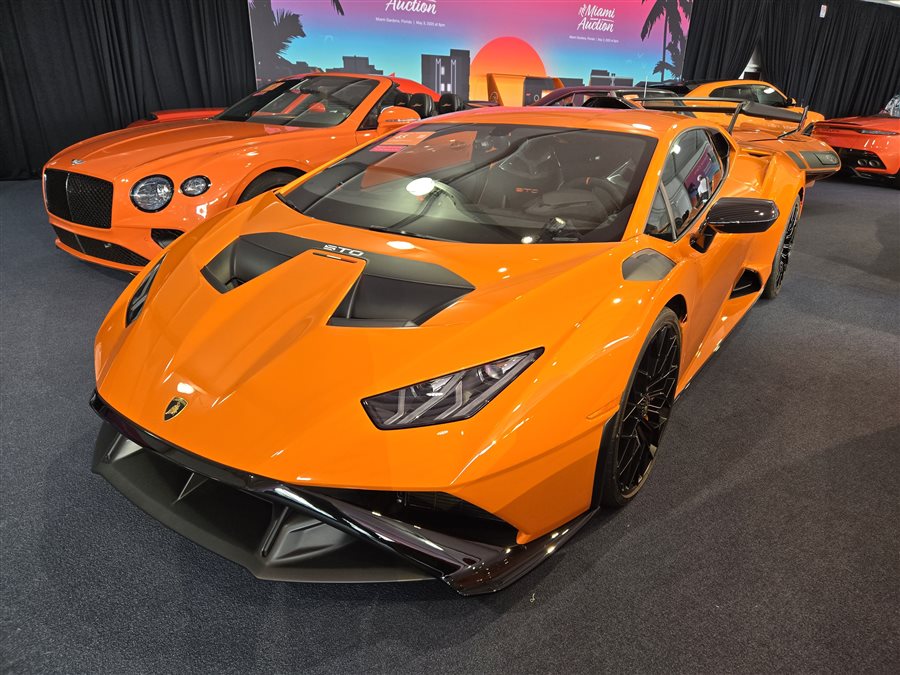
2022 Lamborghini Huracán STO coupe, from an auction in Miami on May 3rd, 2025
Huracán STO
The Huracán STO — Super Trofeo Omologata — moved the platform dramatically toward Lamborghini’s racing cars. Introduced for 2021, it was inspired by the Huracán Super Trofeo one-make racer and GT3 competition program.
The STO is rear-wheel drive and uses the approximately 640-PS version of the V10. Weight reduction, aerodynamic development, suspension changes and extensive use of carbon fiber distinguish it from normal road-going Huracáns.
Its enormous rear wing, roof scoop, fin and complex front bodywork make its purpose visually obvious. Unlike the understated technical sophistication of the Performante, the STO presents its aerodynamic hardware openly.
Cofango Front Bodywork
One of the STO’s most distinctive engineering features is the “cofango,” a term combining the Italian words cofano and parafango — hood and fender.
The hood, front fenders and front bumper are integrated into a large single-piece carbon-fiber assembly that opens forward. The concept is inspired by racing cars, where rapid access and reduced component count can be advantageous.
The cofango also reduces weight and allows Lamborghini to control airflow around the front wheels more effectively. Accident damage, however, can make repair extremely expensive because such large carbon structures require specialized assessment and replacement.
STO Aerodynamics
The STO produces substantially more downforce than conventional Huracáns. Its adjustable rear wing, front splitter, underbody, diffuser, roof scoop and dorsal fin work together as an integrated aerodynamic system.
Unlike the Performante, the STO does not depend primarily on ALA active aerodynamics. Its approach is more closely related to conventional race-car aerodynamic development, accepting additional drag in exchange for greater downforce and stability.
The roof scoop feeds air toward the engine while the central fin helps stabilize airflow during yaw. These features are functional rather than decorative and contribute significantly to the STO’s behavior at circuit speeds.
STO Brakes
The STO uses extremely sophisticated carbon-ceramic braking hardware, including CCM-R technology derived from racing applications. The system is designed to tolerate repeated high-temperature track use more effectively than conventional road-oriented carbon-ceramic brakes.
Brake condition is an important inspection point because replacement costs are substantial. Rotor life cannot be judged reliably from appearance alone, particularly on cars that have spent significant time on track.
A pre-purchase inspection should therefore consider brake wear alongside tire condition, alignment and evidence of circuit use rather than treating low mileage as proof of gentle operation.
Huracán Tecnica
The Huracán Tecnica, introduced in 2022, was designed to occupy the space between the road-oriented EVO RWD and the extreme STO. It uses the approximately 640-PS V10 and rear-wheel drive but combines them with a more restrained aerodynamic package and greater road usability.
The Tecnica received revised styling influenced by other Lamborghini models, improved brake cooling and aerodynamic development intended to increase stability without the STO’s enormous wing. Rear-wheel steering helps provide agility, while the chassis remains sufficiently compliant for regular road use.
For many drivers, the Tecnica represents the most complete expression of the conventional Huracán concept: naturally aspirated V10, rear-wheel drive, dual-clutch transmission and sophisticated chassis electronics without the STO’s extreme track specialization.
Huracán Sterrato
The Huracán Sterrato took the platform in an entirely unexpected direction. Rather than reducing ride height and increasing downforce, Lamborghini raised the suspension, added underbody protection and developed the car for operation on gravel and other loose surfaces.
The Sterrato uses all-wheel drive and a 610-PS version of the V10. Ground clearance increased substantially, wheel and tire specifications were redesigned, suspension travel increased and protective cladding appeared around the wheel arches and lower body.
A roof-mounted intake helps feed cleaner air to the engine when driving in dusty conditions. The resulting appearance is closer to a rally-inspired supercar than a conventional low-slung Lamborghini.
Sterrato Chassis and Tires
The Sterrato uses specially developed Bridgestone all-terrain tires, fitted to smaller-diameter wheels than conventional Huracáns. The taller sidewalls provide additional compliance and protection on rough surfaces.
Its electronic systems were recalibrated for low-grip conditions, including a Rally mode intended to allow controlled sliding on loose terrain. The raised suspension and greater wheel travel fundamentally change how the car moves compared with an EVO or Tecnica.
The Sterrato is not intended to be a rock-crawling off-road vehicle. Instead, it expands the usable environment of a supercar to gravel roads, snow and rough pavement where an ordinary Huracán would require extreme caution.
Super Trofeo Race Cars
Lamborghini developed the Huracán extensively for competition through the Super Trofeo program. These purpose-built race cars compete in Lamborghini’s one-make series and are substantially different from road models despite sharing recognizable styling and V10 architecture.
Successive generations increased aerodynamic efficiency, reduced weight and improved suspension and braking performance. The Super Trofeo program also provided development experience that influenced road cars, most obviously the STO.
A road-registered conversion of a Super Trofeo car should not be confused with a factory STO. The STO is a production road car inspired by the racers rather than a homologated race car with license plates.
Huracán GT3
The Huracán GT3 was developed for international GT racing and became one of Lamborghini’s most successful competition programs.
GT3 versions competed with professional and customer teams around the world, including major endurance events. Continued development produced GT3 Evo and GT3 Evo2 versions with revised aerodynamics, cooling and chassis systems.
This competition history gives the Huracán a stronger direct racing connection than many earlier Lamborghini road cars. The STO in particular was conceived around that identity, bringing some of the visual and engineering philosophy of the race program into a street-legal model.
Carbon-Ceramic Brakes
Many Huracáns use carbon-ceramic brake discs, providing exceptional stopping performance, reduced unsprung mass and resistance to fade.
For road use, the rotors can last a very long time when treated properly. Track use changes that calculation dramatically because repeated high-temperature cycles can consume rotor life without necessarily producing obvious visual wear.
Replacement costs are significant. A pre-purchase inspection on a Performante, STO or other frequently tracked Huracán should therefore include careful evaluation of the complete braking system.
Front-Axle Lift
A front-axle lift system is one of the most useful options on road-going Huracáns. The system raises the front of the car temporarily to clear steep driveways, speed bumps and parking structures. Damage to the lower front bumper or splitter is common on low supercars without adequate clearance, making a functioning lift particularly valuable for regular road use.
Lift-system leaks or actuator problems can occur, and repairs are not inexpensive. Operation should be checked during a pre-purchase inspection.
Exhaust Systems
The naturally aspirated V10 makes the exhaust system central to the Huracán experience. Factory systems use valves to alter sound according to engine speed and driving mode, allowing relatively subdued operation in Strada and a much more aggressive character in Sport or Corsa.
Aftermarket exhaust systems are extremely common. Some provide meaningful weight reduction and enhanced sound, while others can introduce drone, warning lights or emissions problems.
For collectible variants such as the Performante, STO, Tecnica and Sterrato, retaining the original exhaust system is increasingly important even if an aftermarket system is fitted for use.
Engine Reliability
The 5.2-liter V10 has generally developed a reputation for being robust when properly maintained, benefiting from extensive development across both Lamborghini and Audi applications. That does not make maintenance inexpensive, but catastrophic internal engine failures are not a defining characteristic of the model.
Regular oil changes, correct fluids and adherence to service intervals remain essential, particularly on cars used on track. Ignition coils, sensors, fuel-system components and ancillary equipment can fail, but the basic engine architecture is well proven.
A detailed service history is considerably more meaningful than exceptionally low mileage. Huracáns that are driven regularly and serviced correctly can be better prospects than cars that spend years sitting unused.
Dual-Clutch Transmission Maintenance
The LDF transmission is vastly more user-friendly than the Gallardo’s E-gear system and generally avoids the rapid clutch wear associated with single-clutch automated manuals. Nevertheless, fluid changes and correct servicing remain important. Mechatronic components, sensors and electronic controls can be expensive if problems develop.
Shift behavior should be smooth at low speeds and extremely quick under load. Hesitation, warning messages or unusual noises deserve diagnosis rather than being dismissed as normal supercar behavior.
All-Wheel-Drive System
On AWD models, the front drive system adds additional mechanical components that require inspection. Differentials, driveshafts and electronically controlled coupling hardware should operate without noise or warning messages.
Tire matching is particularly important. Large differences in rolling circumference between front and rear tires—or between tires on the same axle—can create unnecessary stress within an AWD system. Owners should therefore use approved tire sizes and replace tires with attention to overall wear rather than treating each corner independently.
MagneRide and Suspension Wear
MagneRide dampers provide excellent adaptability but are considerably more expensive than conventional shock absorbers. Leaks, electronic faults or worn dampers can affect both ride quality and handling. Control-arm bushings, wheel bearings and ball joints also deserve inspection, particularly on high-mileage or track-driven cars.
Because the Huracán can generate enormous cornering loads, small amounts of suspension play that might be tolerable on an ordinary car can noticeably affect alignment and tire wear.
Tires and Alignment
Huracán tire condition can reveal a great deal about how a car has been used. Aggressive alignment settings and track driving can wear the inner shoulders while leaving substantial tread visible elsewhere. Simply checking the outside edge of the tire is therefore insufficient.
Uneven wear can also indicate incorrect alignment, worn suspension components or previous impact damage. On an STO or Performante, documented track use is not inherently undesirable, but maintenance should reflect the intensity of that use.
Accident and Carbon-Fiber Damage
Modern Lamborghini repair is highly specialized because aluminum, carbon fiber and composite components require different procedures from conventional steel bodywork. Minor-looking impacts can damage mounting structures or expensive aerodynamic components. STOs are particularly costly because of their extensive carbon-fiber bodywork and large cofango assembly.
A pre-purchase inspection should therefore include paint-depth measurements where applicable, examination of structural attachment points and review of repair invoices. A properly repaired accident car can be entirely serviceable, but undisclosed structural damage is a serious concern.
Interior and Electronics
The Huracán cabin combines traditional Lamborghini drama with Volkswagen Group electronics. A large digital instrument display replaced conventional gauges, while aircraft-inspired switches and a guarded starter button provide visual theater.
Later EVO models introduced a central touchscreen controlling infotainment and vehicle functions. Electronic complexity increased accordingly, and battery condition became increasingly important because low voltage can trigger numerous warning messages.
Buttons, switches, displays, climate-control functions and drive-mode systems should all be tested. Replacement of apparently minor electronic components can be surprisingly expensive.
Battery Condition
Huracáns that sit unused can discharge their batteries relatively quickly because numerous control modules continue to draw small amounts of power. A battery maintainer is therefore standard practice for cars stored for extended periods. Repeatedly allowing the battery voltage to fall excessively can shorten battery life and produce confusing electronic faults.
Many apparent system failures disappear once correct voltage is restored, but persistent warnings should still be diagnosed properly rather than simply cleared.
Service History
A complete service history is one of the most important considerations when buying a Huracán. Routine maintenance is relatively predictable, but neglected cars can accumulate expensive deferred work involving tires, brakes, fluids, suspension and electronic systems. Cars with documented annual servicing generally provide much greater confidence than ultra-low-mileage examples with long gaps in maintenance.
For track-oriented models, records should ideally include brake, tire and alignment work in addition to ordinary annual services.
Production and Success
The Huracán became an enormous commercial success by historical Lamborghini standards. Production passed the total achieved by the Gallardo well before the end of the model’s life, reflecting both Lamborghini’s growth and the broad appeal of the V10 platform.
That volume means ordinary Huracáns are not inherently rare. Collector interest therefore depends increasingly on variant, drivetrain, specification, color, options, condition and production volume rather than simply the Lamborghini badge.
Special models such as the Performante, STO, Tecnica and limited-production Sterrato occupy a different position from standard LP 610-4 and EVO cars because their mechanical distinctions are much more substantial.
Understanding the Major Lamborghini Huracán Variants
The Huracán family can be divided into several major configurations:
- LP 610-4: Original 610-PS all-wheel-drive Huracán, combining the 5.2-liter V10 with seven-speed LDF transmission.
- LP 610-4 Spyder: Open-roof version of the original AWD car.
- LP 580-2: 580-PS rear-wheel-drive model with revised chassis calibration and a more adjustable handling character.
- LP 580-2 Spyder: Open version of the rear-wheel-drive model.
- Performante: 640-PS lightweight, track-focused AWD model using ALA active aerodynamics and extensive Forged Composites.
- Performante Spyder: Open version retaining the Performante engine and ALA technology.
- EVO: 640-PS evolution of the mainstream AWD Huracán, adding LDVI, rear-wheel steering and extensive chassis-electronics development.
- EVO Spyder: Open version of the AWD EVO.
- EVO RWD: 610-PS rear-wheel-drive EVO designed for greater driver involvement.
- EVO RWD Spyder: Open version of the rear-drive EVO.
- STO: 640-PS rear-wheel-drive track-focused model inspired by Lamborghini’s Super Trofeo and GT3 racing programs, with extensive carbon bodywork and major aerodynamic development.
- Tecnica: 640-PS rear-wheel-drive model combining much of the STO’s performance with greater road usability and subtler aerodynamics.
- Sterrato: 610-PS AWD all-terrain interpretation with increased ride height, protective bodywork, specialized tires and recalibrated electronics for loose surfaces.
Beyond these road cars, Super Trofeo and GT3 derivatives form a separate family of purpose-built racing Huracáns.
What Matters to Collectors
For an ordinary LP 610-4, LP 580-2 or EVO, condition and specification are likely to matter more than simple rarity. Lamborghini produced substantial numbers of Huracáns, so buyers can afford to prioritize excellent service history, desirable factory options, original paint and an attractive color combination rather than accepting a compromised example.
Rear-wheel-drive cars have a distinctive enthusiast appeal because they remove the front drive hardware and provide greater throttle adjustability. The original LP 580-2 and later EVO RWD may therefore develop a following somewhat independent of the more powerful AWD cars.
The Performante is particularly important because it represented the first major high-performance evolution of the platform and introduced ALA. Its Nürburgring achievement gives it historical context beyond production numbers, while its naturally aspirated V10 and relatively restrained appearance distinguish it from the later STO.
The STO occupies an even more specialized category. Carbon-fiber condition, original aerodynamic components, brake wear and track history require careful inspection. Track use should not automatically disqualify an STO—the model was explicitly designed for it—but a heavily used example should have maintenance records consistent with that use.
The Tecnica may appeal strongly to collectors who prefer the final development of the conventional rear-drive Huracán without the visual extremity of the STO. Its combination of 640 PS, rear-wheel drive and road-oriented usability gives it a particularly balanced specification.
The Sterrato is fundamentally different and was produced in limited numbers. Its unusual mission, distinctive appearance and status as one of the final naturally aspirated V10 Huracáns give it a clear identity within the range.
Across all versions, original factory specification matters increasingly. Exterior color, interior trim, carbon packages, wheels, seats and options can substantially affect desirability. Heavily modified cars may be exciting to drive, but original components should ideally remain with the vehicle.
Collector Hierarchy
The Huracán is still young enough that its long-term collector hierarchy continues to develop, but the major variants already possess clearly different historical identities.
The STO represents the most extreme circuit-oriented road-going version. Its Super Trofeo and GT3 inspiration, extensive carbon construction, rear-wheel drive and highly developed aerodynamics distinguish it mechanically as well as visually.
The Performante has an equally important place in the model’s history. It introduced ALA, dramatically increased the Huracán’s track capability and established its reputation with the Nürburgring lap. For enthusiasts who prefer AWD security and a somewhat subtler appearance than the STO, the Performante has a distinctive appeal.
The Sterrato occupies a category of its own. It is neither the quickest nor most track focused, but it represents Lamborghini applying the Huracán architecture to an entirely different environment. Its limited production and position near the end of the naturally aspirated V10 era strengthen its historical identity.
The Tecnica is arguably the most distilled road-oriented rear-drive version, combining STO-level engine output with greater usability and restrained styling. Rear-wheel-drive LP 580-2 and EVO RWD cars also deserve attention because their simpler drivetrain creates a fundamentally different driving experience from the AWD versions.
Standard LP 610-4 and EVO models are much more numerous, making exceptional condition, unusual factory specification and documented history increasingly important when distinguishing collector-quality examples.
Driving the Huracán
The Huracán’s defining feature becomes apparent almost immediately after starting the engine. The naturally aspirated V10 responds instantly to throttle input and changes character dramatically as engine speed rises. At low rpm it is flexible enough for normal traffic, but above the middle of the tachometer the induction and exhaust become increasingly intense until the engine reaches its power peak beyond 8,000 rpm.
The dual-clutch gearbox makes accessing that performance far easier than in the Gallardo. Shifts occur almost instantaneously, and there is no long interruption in acceleration. Around town, the gearbox can behave smoothly enough that the Huracán feels surprisingly ordinary when driven gently.
An LP 610-4 emphasizes traction and confidence. The driver can apply power remarkably early when exiting a corner, and the AWD system distributes torque with little drama. The result is extraordinary speed with relatively little intimidation.
A rear-wheel-drive LP 580-2 or EVO RWD feels different even at moderate speeds. Steering is lighter, the front end is free from drive torque and throttle inputs have a more direct relationship with rear-tire behavior. The car can rotate under power in ways the AWD versions generally discourage, making it slower in some circumstances but more interactive in others.
The Performante tightens everything. Suspension response is more immediate, the engine feels sharper and ALA provides aerodynamic stability as speed increases. It retains enough road usability to function as a regular supercar, but its priorities are clearly more focused.
The STO goes further still. Road noise, suspension response, aerodynamic hardware and braking all communicate its circuit orientation. It can be driven on ordinary roads, but much of what makes it special becomes meaningful only when the car is being pushed hard.
The Tecnica deliberately backs away from that extreme. It retains rear-wheel drive and the 640-PS engine but offers greater compliance and less visual drama, making its performance easier to enjoy outside a racetrack.
The Sterrato changes the experience completely. Taller tires and increased suspension travel introduce movement and compliance absent from conventional Huracáns, while the AWD system and Rally calibration encourage controlled slides on loose surfaces. The V10 remains unmistakably the same engine, but the environment in which it can be exploited expands dramatically.
Across every version, the engine remains the common thread. Electronics, aerodynamics and drivetrain configurations changed enormously over the Huracán’s life, but the naturally aspirated V10 preserved a mechanical identity that became increasingly unusual with every passing year.
Lasting Importance
The Lamborghini Huracán arrived as the successor to the enormously successful Gallardo, but it ultimately became a much broader and more technically significant model. The Gallardo established that Lamborghini could successfully produce a relatively high-volume V10 supercar; the Huracán demonstrated how many different automobiles could be developed from that basic concept.
Its 5.2-liter naturally aspirated V10 is central to that legacy. During the Huracán’s production life, turbocharging became nearly universal among its direct competitors. Ferrari moved its mid-engine V8 line from the naturally aspirated 458 Italia to the turbocharged 488 GTB, while McLaren relied on turbocharged engines throughout the period. Lamborghini instead continued developing the naturally aspirated V10.
That decision gave the Huracán an increasingly distinctive character. Immediate throttle response, a rising power curve and an engine capable of exceeding 8,000 rpm became qualities that could no longer be taken for granted in a modern supercar.
The chassis evolved just as dramatically. The original LP 610-4 demonstrated how approachable a 600-horsepower Lamborghini could be, while the LP 580-2 showed that removing all-wheel drive could create a more interactive automobile without requiring enormous mechanical changes.
The Performante then transformed perceptions of the platform. ALA demonstrated an innovative approach to active aerodynamics, while the Nürburgring lap showed that Lamborghini could compete at the highest level of track performance rather than relying primarily on styling, sound and straight-line speed.
The EVO integrated much of that knowledge into the regular production model, adding predictive chassis control and rear-wheel steering. The STO subsequently connected the road-car program directly with Lamborghini’s successful Super Trofeo and GT3 racing efforts, creating a Huracán whose aerodynamics, braking and weight reduction were explicitly designed around circuit use.
The final years produced two particularly interesting interpretations. The Tecnica distilled the rear-wheel-drive road-car formula, combining the high-output V10 with greater usability than the STO. The Sterrato, meanwhile, rejected decades of supercar convention by increasing ride height and designing the Huracán to operate on surfaces where most exotic cars would never venture.
That extraordinary range is an important part of the model’s legacy. A Sterrato and STO look and behave so differently that it is easy to forget they share the same fundamental architecture, engine and transmission.
For collectors, production volume means not every Huracán will become rare simply through age. The cars most likely to remain historically distinctive are those with meaningful mechanical differences rather than cosmetic packages alone: Performante, STO, Tecnica, Sterrato and the various rear-wheel-drive versions all offer experiences that cannot be replicated simply by adding options to a standard car.
Yet even the original LP 610-4 has historical significance. It introduced the dual-clutch V10 Lamborghini formula and established the architecture that would remain in production for approximately a decade.
Most importantly, the Huracán represents the end of a particular type of Lamborghini. Its combination of a large naturally aspirated engine, no hybrid assistance and the ability to spin beyond 8,000 rpm belongs to an era that was already disappearing while the car was still being built.
That makes the Huracán more than simply Lamborghini’s second-generation V10 model. Across its many versions, it charts the evolution of the modern supercar from mechanical performance toward increasingly sophisticated electronics and aerodynamics while preserving one old-fashioned element at the center of the experience: a naturally aspirated engine whose response, sound and character depend primarily on displacement and engine speed.
From the original LP 610-4 to the Performante, STO, Tecnica and improbable Sterrato, the Huracán demonstrated how far Lamborghini could develop that formula without abandoning it.
Important Sales Reviewed by SCM Experts
In each month’s issue for the past 38 years, SCM’s analysts have reviewed 5 to 7 significant cars sold at auction, and discuss what options, history, or details made that particular more or less valuable. They give their expert opinion on the market for these cars, and whether this car was well bought or well sold. If you’re thinking of purchasing a Lamborghini Huracán, you’ll likely find these profiles critical in helping you make the right decision. Each of the following is an article from our print magazine on a Lamborghini Huracán sold at auction.
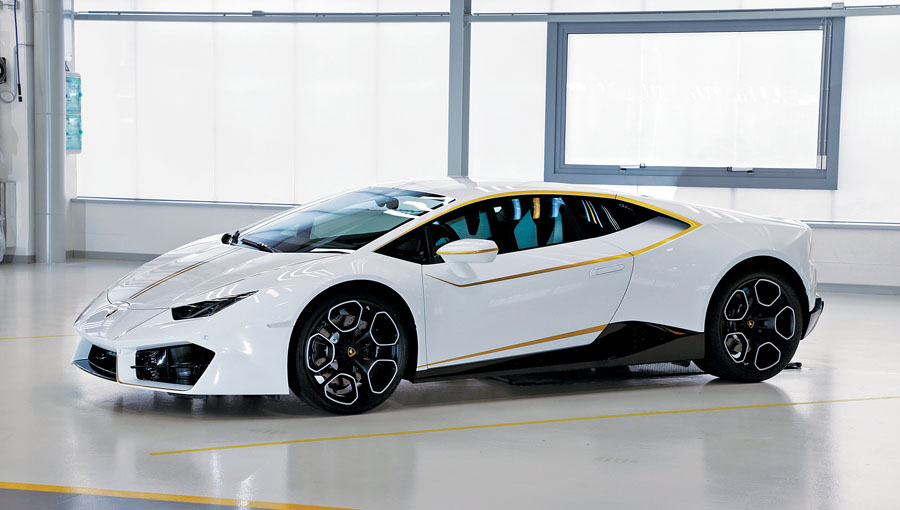 2018 Lamborghini HuracánDonated to Pope Francis by Automobili Lamborghini, the car was realized by Lamborghini’s customization department “Ad Personam” in homage to the Vatican. The special-edition model pays tribute to the colors of the flag of Vatican City, painted in Bianco Monocerus with Giallo Tiberino details. The European-specification Lamborghini will be offered without reserve, selling to the […]Read more
Cars For Sale
Quick links to listings for this make and model online:
Books on the Lamborghini Huracán




Note that as an Amazon Associate, we earn from qualifying purchases of the above books.
Past Auction Sales – Lamborghini Huracán
Average Lamborghini Huracán Sale Price by Year from SCM’s Platinum Auction Database:
Includes sales listed as Lamborghini Huracan.
Lamborghini Huracán Sales from SCM’s Platinum Auction Database:

Bonhams Cars
Condition: 2-
Dec 11, 2025
$153,938

Bonhams Cars
Condition: 1-
May 3, 2025
$347,200

Barrett-Jackson
Condition: 2+
Sep 28, 2023
$286,000

RM Sotheby's
Condition: 1
May 12, 2018
$965,908
Forums & Communities
Popular Videos about the Lamborghini Huracán