
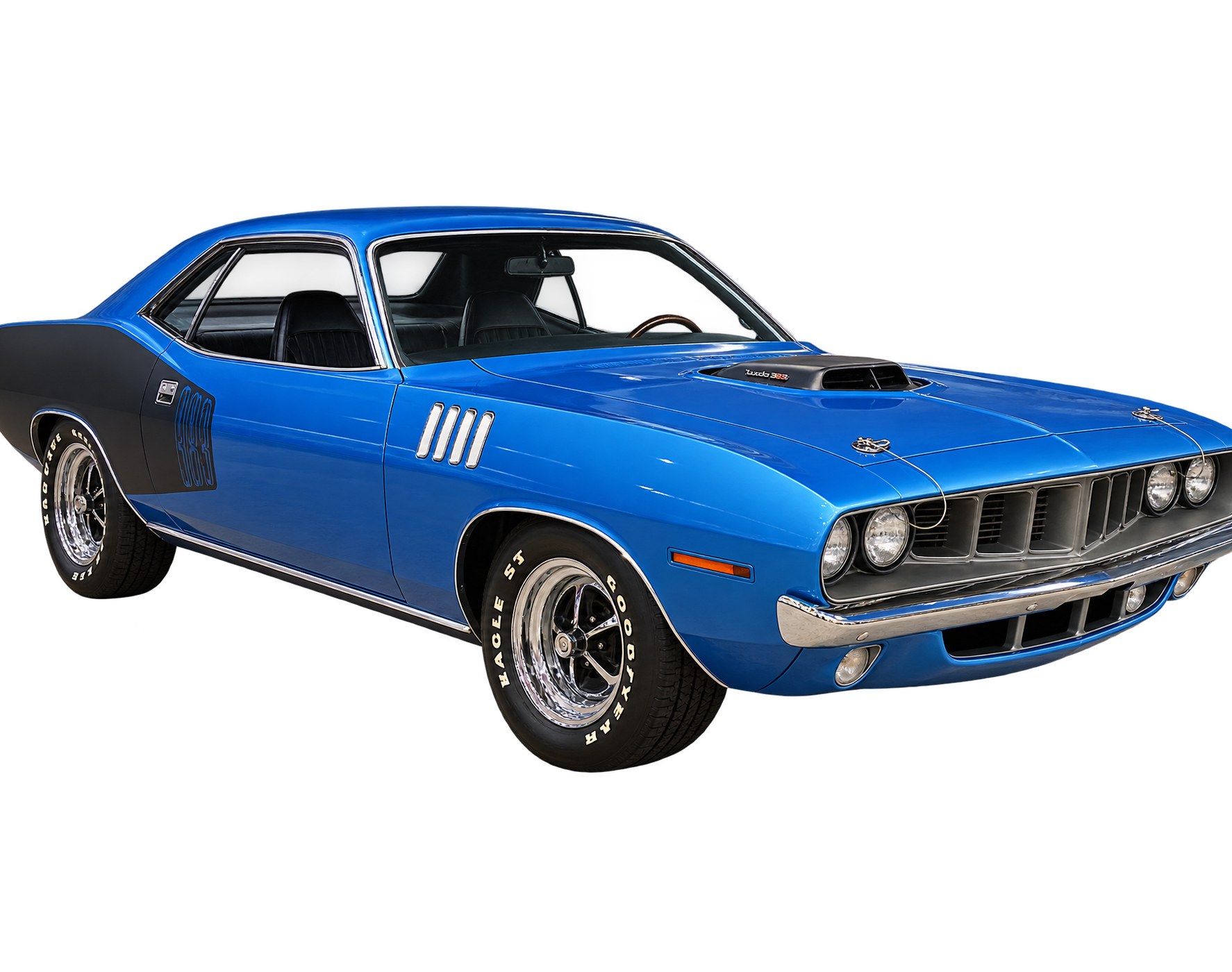
The Plymouth Barracuda, produced from 1964 through 1974, was one of America’s earliest pony cars and evolved into one of the most recognizable muscle cars of the classic era. Introduced shortly before the Ford Mustang, the Barracuda began as a sporty fastback version of Plymouth’s compact Valiant before developing into a distinct model with its own styling, increasingly powerful engines and, ultimately, the legendary Hemi-powered ‘Cuda.
Across three generations, the Barracuda underwent a remarkable transformation. The first generation (1964–66) emphasized affordable sporting style and compact-car practicality. The second generation (1967–69) introduced more distinctive bodywork, additional body styles and increasingly serious performance options. The third generation (1970–74) adopted Chrysler’s new E-body platform, creating a wider, more aggressive car capable of accommodating the company’s largest high-performance V8 engines.
The most celebrated versions are the 1970–71 ‘Cuda 440 and Hemi ‘Cuda, which combined distinctive styling with some of the most powerful engines available in American production cars. Rare factory combinations, particularly Hemi-powered convertibles, rank among the most valuable American muscle cars. Yet the Barracuda’s significance extends well beyond these exceptional models: its ten-year production history illustrates the evolution of the American pony car from an inexpensive compact derivative into a purpose-built high-performance automobile.
Origins: Plymouth’s Answer to the Emerging Pony-Car Market
During the early 1960s, American manufacturers recognized growing demand for sporty, affordable cars aimed at younger buyers. Chevrolet’s Corvair Monza had demonstrated the appeal of compact cars with sporting trim, while Ford was developing the Mustang around the mechanical components of its Falcon.
Plymouth pursued a similar strategy using the Valiant compact as its foundation. Rather than designing an entirely new automobile, Chrysler developed a fastback roofline and distinctive rear glazing that could be incorporated into the existing Valiant body structure.
The resulting Barracuda reached showrooms on April 1, 1964, approximately two weeks before the Ford Mustang’s public introduction. Although the Mustang became the defining commercial success of the pony-car segment, the Barracuda was among the first American compact cars developed specifically around the combination of sporting appearance, affordable pricing and everyday practicality.
The Barracuda’s early association with the Valiant helped keep production costs low but also limited its ability to establish an independent identity. Plymouth would spend the following decade progressively separating the Barracuda from its economy-car origins.
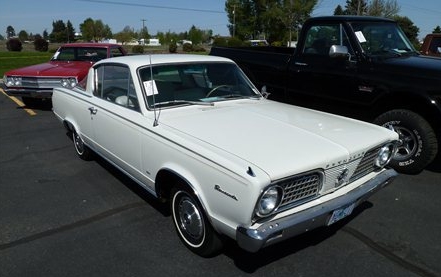
1966 Plymouth Barracuda hard top, from an auction in Spokane on May 9th, 2012
First Generation: 1964–66
The original 1964–66 Plymouth Barracuda was based closely on the Valiant, sharing its A-body platform, front-end styling, chassis components and much of its interior architecture. Its most distinctive feature was the enormous wraparound fastback rear window, which created a dramatic roofline unlike anything else in Plymouth’s lineup.
The rear glass, manufactured by Pittsburgh Plate Glass, covered approximately 14.4 square feet and was one of the largest pieces of automotive rear glazing produced at the time. The fastback design also provided practical cargo space, especially with the rear seat folded.
The first-generation Barracuda was offered only as a two-door fastback. It was intended primarily as a stylish personal car rather than a dedicated high-performance machine, although V8 power was available from the beginning.
Despite its sporting appearance, the early Barracuda retained much of the Valiant’s basic character. Its relatively narrow body, compact dimensions and conventional suspension made it easy to drive, while its modest weight gave even the smaller V8 versions respectable performance.
The 1964 Barracuda
The first Barracuda was introduced during the 1964 model year as a Valiant-based model. Its exterior featured the familiar Valiant front end combined with the new fastback roof and expansive rear window.
Standard power came from Chrysler’s 225-cubic-inch Slant Six, producing approximately 145 gross horsepower. Buyers could also specify the 273-cubic-inch V8, initially rated at approximately 180 gross horsepower with a two-barrel carburetor.
Transmission choices included manual and TorqueFlite automatic units. The V8 gave the lightweight Barracuda useful acceleration, although the car was not yet positioned as a direct competitor to the larger-engine performance machines emerging elsewhere in Detroit.
The 1964 Barracuda is historically important because it preceded the Mustang‘s introduction. Its close resemblance to the Valiant, however, prevented it from achieving the same immediate public recognition.

1966 Plymouth Barracuda Formula S coupe, from an auction on February 23rd, 2024
The 1965–66 Barracuda and Formula S
For 1965, Plymouth strengthened the Barracuda’s sporting credentials with the introduction of the Formula S package. The package included performance-oriented suspension components, upgraded tires, distinctive trim and instrumentation, and the high-performance version of the 273-cubic-inch V8.
The 273 Commando V8, equipped with a four-barrel carburetor and higher compression, produced approximately 235 gross horsepower. In the relatively light Barracuda, it delivered lively performance and made the Formula S a credible compact sports coupe.
The Formula S also offered improved handling through heavier-duty suspension components and front anti-roll-bar equipment. Its combination of manageable dimensions and balanced performance gave it a different character from the increasingly large and powerful American muscle cars of the period.
For 1966, Plymouth revised the front-end styling and interior details, further distinguishing the Barracuda from the Valiant. The basic fastback body and mechanical package remained unchanged, but the car was gradually developing a more independent identity.
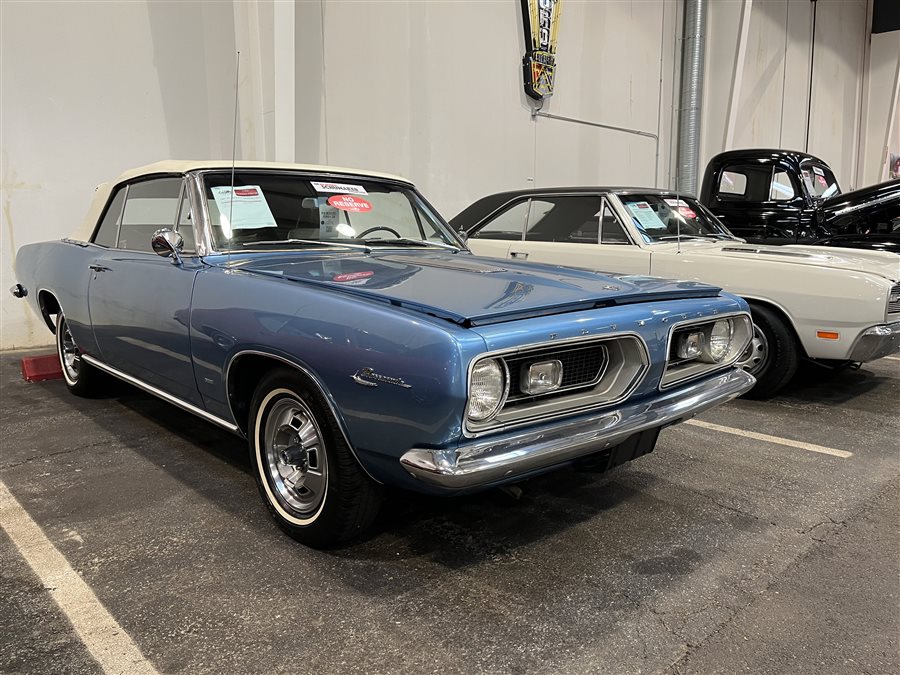
1967 Plymouth Barracuda convertible, from an auction in Greensboro on February 24th, 2022
Second Generation: 1967–69
The 1967 Barracuda introduced a substantially redesigned body that moved the model away from its Valiant origins. Although it continued to use Chrysler’s A-body architecture, the new car featured longer, lower proportions, more distinctive front-end styling and a wider range of body configurations.
For the first time, buyers could choose among fastback, notchback coupe and convertible body styles. This expanded the Barracuda’s appeal and allowed Plymouth to compete more directly with the Mustang and Chevrolet Camaro.
The second-generation car was more substantial than its predecessor, with a longer wheelbase and a more mature appearance. Its styling was less dependent on the dramatic rear window that had defined the original Barracuda, emphasizing instead the long-hood, short-deck proportions associated with American pony cars.
The redesign also created room for larger engines, allowing Plymouth to develop increasingly serious performance versions as the muscle-car competition intensified.
The 1967 Barracuda
The 1967 Barracuda retained the 225-cubic-inch Slant Six as its standard engine, while V8 options included the 273 and the newly available 383-cubic-inch big-block V8.
The 383 transformed the Barracuda into a genuine muscle car. However, installing Chrysler’s big-block engine in the relatively narrow A-body engine compartment required compromises, including limited space for exhaust components and power accessories. The 383-powered Barracuda offered strong straight-line acceleration, but its additional front-end weight affected handling balance. Braking and cooling-system condition also became increasingly important as engine output increased.
The availability of a big-block V8 marked a significant change in the Barracuda’s identity. It was no longer simply a sporty compact; it had become part of Detroit’s escalating horsepower competition.
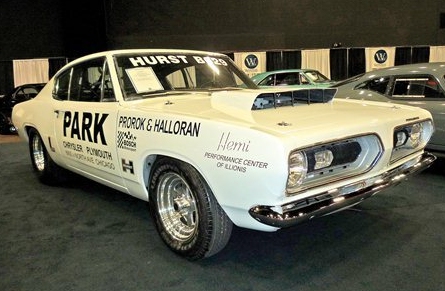
1968 Plymouth Barracuda B029 Hemi Super Stock Lightweight 2-dr hard top, from an auction in Atlantic City on February 24th, 2012
The 1968 Barracuda and Super Stock Hemi
For 1968, Plymouth expanded the Barracuda’s performance options. The 273 was replaced by the 318-cubic-inch V8 as the principal small-block offering, while the 340-cubic-inch high-performance V8 became available.
The 340 was particularly well suited to the A-body Barracuda. Producing approximately 275 gross horsepower, it provided strong acceleration without the substantial additional weight of the 383 big-block.
The most extraordinary 1968 Barracudas, however, were the factory-supported Hemi Super Stock drag-racing cars. Built specifically for competition, these lightweight fastbacks used the legendary 426-cubic-inch Hemi V8 and extensive weight-saving modifications. Approximately 50 Hemi Barracudas were constructed for Super Stock competition. They were not conventional street-legal production cars; they were purpose-built drag racers featuring lightweight body panels, specialized interiors and competition drivetrains.
These cars became some of the most successful and enduring machines in American drag-racing history, with examples continuing to compete in specialized classes decades after their introduction.

1969 Plymouth Barracuda Formula S coupe, from an auction on May 26th, 2005
The 1969 Barracuda
The final year of the second-generation Barracuda brought further performance development. The 340 Formula S remained an attractive combination of power and handling, while the 383 Formula S provided stronger straight-line performance.
Plymouth also introduced the ‘Cuda performance package during 1969. This was the first use of the name that would become closely associated with the third-generation muscle cars. The 1969 ‘Cuda was offered with performance-oriented equipment and several engine choices, including the 340 and 383 V8s. Distinctive exterior identification and suspension upgrades reinforced its sporting identity.
The second-generation Barracuda ended production after 1969, but it had established the mechanical and marketing foundations for the dramatically redesigned E-body cars that followed.
Third Generation: 1970–74
The 1970 Barracuda was an entirely different proposition from its predecessors. Built on Chrysler’s new E-body platform, it was wider, more aggressive and no longer closely related to the compact Valiant.
The E-body architecture was shared with the Dodge Challenger, although the Barracuda used a shorter wheelbase. The new platform was designed to accommodate Chrysler’s largest engines, including the 440-cubic-inch big-block and 426 Hemi, without the packaging compromises associated with the earlier A-body.
The third-generation Barracuda was offered as a two-door hardtop coupe and convertible. The earlier fastback body style was discontinued, replaced by a more conventional roofline with broad rear pillars and a short rear deck.
The new car’s muscular proportions, wide stance and dramatic styling made it one of the most recognizable American performance cars of the era.
The 1970 Barracuda Styling
The 1970 Barracuda featured a long, sculpted hood, deeply recessed grille, pronounced rear fenders and a relatively short passenger compartment. Its styling was more aggressive than that of the second-generation car and clearly reflected the influence of the late-1960s muscle-car boom.
The body was designed under the direction of Chrysler styling executive John Herlitz, whose work helped establish the distinctive appearance of the E-body Barracuda.
Unlike the larger Dodge Challenger, the Barracuda used a 108-inch wheelbase, contributing to its compact, purposeful proportions. The wide engine compartment allowed the installation of large V8 engines without the severe packaging constraints of the earlier cars.
Performance versions received distinctive hood treatments, stripes, wheels and other equipment. The optional Shaker hood, with its engine-mounted air scoop protruding through the hood, became one of the most recognizable features of the high-performance ‘Cuda.
Barracuda, Gran Coupe and ‘Cuda
For 1970, Plymouth divided the range into distinct models intended for different buyers.
The standard Barracuda emphasized affordability and offered six-cylinder and V8 engines. The Barracuda Gran Coupe added more luxurious interior trim, upgraded equipment and a greater emphasis on comfort.
The ‘Cuda was the dedicated high-performance model, available with engines ranging from the 340 small-block to the 440 and 426 Hemi. It featured performance-oriented suspension, distinctive trim and additional equipment suited to its more powerful engines.
This separation was important because not every E-body Barracuda was a ‘Cuda. The distinction remains critical to collectors, particularly because many standard Barracudas have subsequently been modified to resemble factory high-performance models.
The 1970 ‘Cuda 340
The 1970 ‘Cuda 340 was one of the most balanced versions of the third-generation car. Its 340-cubic-inch V8 produced approximately 275 gross horsepower, providing strong acceleration without the substantial front-end weight of the big-block engines.
The 340 used a four-barrel carburetor, high-performance camshaft and other performance-oriented components. It was paired with heavy-duty suspension and braking equipment appropriate to the ‘Cuda’s sporting role.
Although the 340 lacked the headline horsepower of the 440 and Hemi, it offered a more manageable driving experience. Its lighter engine improved steering response and handling balance, making it particularly enjoyable on winding roads.
The 340 ‘Cuda remains attractive to enthusiasts who value drivability as well as muscle-car styling.

1970 Plymouth Barracuda 2-dr hard top, with a 383 ci V8, from an auction on April 12th, 2008
The 1970 ‘Cuda 383
The 1970 ‘Cuda 383 used Chrysler’s 383-cubic-inch big-block V8, producing approximately 335 gross horsepower in high-performance specification.
The 383 provided strong torque and acceleration while remaining less expensive than the larger 440 and Hemi engines. It was a popular choice for buyers seeking serious muscle-car performance without the cost of the flagship powerplants.
The additional weight of the big-block affected handling compared with the 340, but the E-body chassis was designed to accommodate the larger engine. Proper suspension tuning and heavy-duty components helped maintain acceptable road manners.
The 383 ‘Cuda occupies an interesting position in the collector market because it provides authentic big-block performance while generally remaining more accessible than the rare 440 and Hemi cars.
The 1970–71 ‘Cuda 440
The 440-cubic-inch V8 was one of Chrysler’s most powerful and respected performance engines. In the 1970–71 ‘Cuda, it was available in several configurations, including the 440 Magnum four-barrel and the more exotic 440 Six Barrel.
The four-barrel 440 produced approximately 375 gross horsepower in 1970 high-performance specification, while the Six Barrel version used three two-barrel Holley carburetors and was rated at approximately 390 gross horsepower.
The Six Barrel system provided strong airflow at high engine speeds while retaining reasonable drivability when correctly adjusted. Its distinctive induction system became one of the defining features of Chrysler’s high-performance muscle cars.
The 440 ‘Cuda delivered enormous torque and formidable straight-line acceleration. Although it was heavier and less agile than the 340, its combination of power, styling and relatively limited production makes it highly desirable today.

1970 Plymouth Barracuda Hemi ‘Cuda coupe, from an auction on October 14th, 2016
The 1970–71 Hemi ‘Cuda
The most celebrated production Barracuda was the 1970–71 Hemi ‘Cuda, powered by Chrysler’s legendary 426-cubic-inch Hemi V8. The engine used hemispherical combustion chambers, large valves and dual four-barrel carburetors to produce an officially rated 425 gross horsepower.
The Hemi was developed from Chrysler’s competition-engine program and had already achieved considerable success in NASCAR and drag racing. In the ‘Cuda, it represented the ultimate expression of the company’s street-performance philosophy.
The Hemi ‘Cuda offered extraordinary acceleration for its era, particularly when equipped with the appropriate gearing and transmission. Its substantial engine weight and aggressive power delivery made it less balanced than the small-block cars, but straight-line performance was exceptional.
Hemi ‘Cudas were expensive when new, and relatively few buyers selected the option. Their rarity, historical significance and association with Chrysler’s racing heritage have made them among the most valuable American muscle cars.
The 1970–71 Hemi ‘Cuda Convertible
The Hemi ‘Cuda convertible is among the rarest and most valuable American production muscle cars. Only 14 Hemi ‘Cuda convertibles were built for 1970, followed by seven for 1971, according to commonly cited production records.
The combination of the expensive Hemi engine and convertible body was rarely ordered, partly because buyers seeking maximum performance often preferred the lighter, more rigid hardtop. Today, surviving original Hemi convertibles occupy an exceptional position in the collector market. Their values reflect extreme rarity, iconic styling and the significance of the 426 Hemi engine.
Authentication is essential because the enormous difference in value between a genuine factory Hemi convertible and a converted car has encouraged the creation of replicas and tribute vehicles.
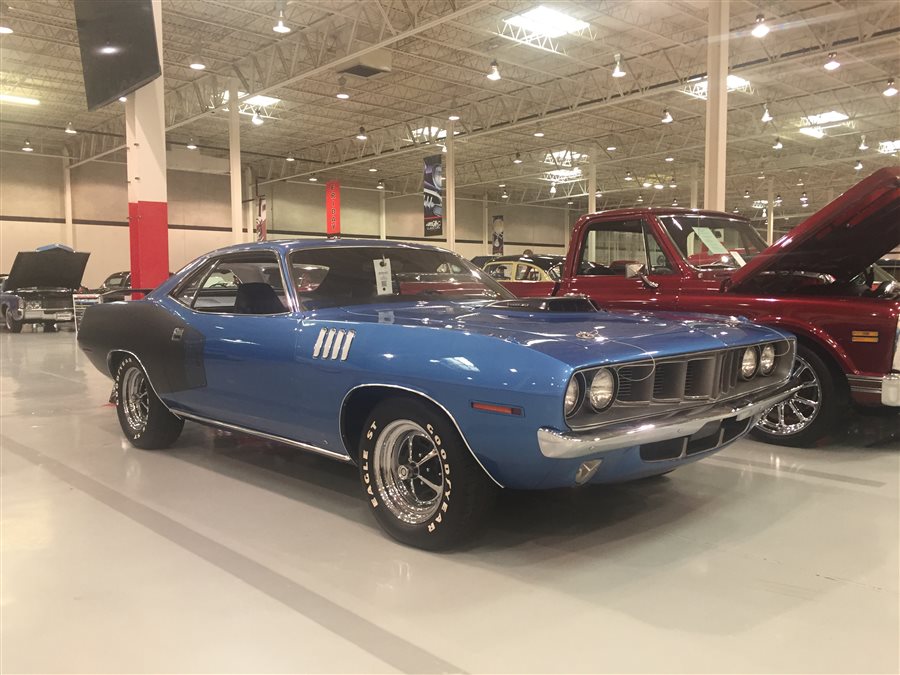
1971 Plymouth Barracuda 383 coupe, from an auction on July 22nd, 2021
The 1971 Barracuda and ‘Cuda
The 1971 model year brought the most distinctive front-end styling of the E-body Barracuda. The ‘Cuda received a revised grille with four headlights, replacing the two-headlight arrangement used in 1970. The 1971 cars also featured revised taillights, trim and graphics. The optional billboard-style rear-quarter-panel graphics became one of the most recognizable features of the model.
The high-performance engine lineup continued to include the 340, 383, 440 and 426 Hemi, although tightening emissions requirements and rising insurance costs were beginning to affect demand.
The 1971 model year was the final year for the 426 Hemi, 440 Six Barrel and Barracuda convertible. These changes make 1971 especially significant in the model’s history.
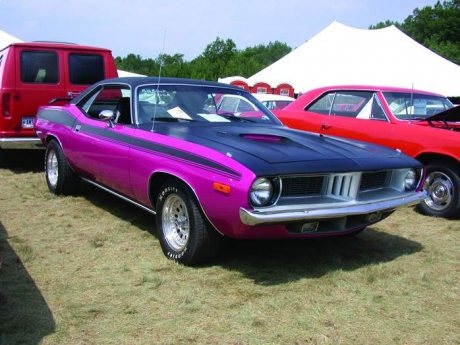
1973 Plymouth Barracuda 2-Door Hardtop, from an auction on July 9th, 2005
The 1972–74 Barracuda
For 1972, the Barracuda range was substantially simplified. The convertible was discontinued, and the high-performance 383, 440 and Hemi engines were no longer available. The 340-cubic-inch V8 remained the principal performance engine through 1973, while the 360-cubic-inch V8 replaced it for 1974. Lower-compression engines, revised emissions equipment and increasingly restrictive regulations reduced performance compared with the 1970–71 cars.
The 1972–74 Barracudas retained much of the E-body’s dramatic styling, but they were no longer intended to compete at the highest levels of the muscle-car horsepower race.
Production ended after the 1974 model year, as changing consumer preferences, insurance costs, fuel prices and emissions requirements reduced demand for traditional high-performance pony cars.
Engines and Performance Across the Generations
The Barracuda’s engine range expanded dramatically during its production history. Early cars used economical six-cylinder engines and relatively small V8s, while later models offered some of Chrysler’s most powerful big-block engines.
The 225 Slant Six provided durability and economy, making it suitable for buyers primarily interested in styling and everyday transportation. The 273 and 318 V8s offered improved performance without excessive operating costs.
The 340 small-block became one of the most respected engines in the Barracuda lineup because of its strong power-to-weight ratio and responsive character. The 383 and 440 big-blocks emphasized torque and straight-line acceleration.
The 426 Hemi occupied a category of its own. Its competition-derived design, dual four-barrel induction and exceptional performance made it the ultimate factory Barracuda engine, although it was expensive to purchase and maintain.
Transmissions and Drivetrains
Barracudas were available with manual and automatic transmissions throughout production. Early cars offered three- and four-speed manual gearboxes, while Chrysler’s TorqueFlite automatic became a popular option.
High-performance E-body ‘Cudas could be equipped with the A833 four-speed manual transmission, often paired with the distinctive Pistol Grip shifter. The shifter’s sculpted handle became one of the most recognizable interior features of Chrysler muscle cars.
The heavy-duty 727 TorqueFlite automatic was also available with many high-performance V8 engines. Its durability and ability to handle substantial torque made it popular with both street drivers and drag racers.
Rear axle choices varied according to engine and transmission specification. Performance models could be equipped with limited-slip differentials, heavy-duty axles and a range of final-drive ratios suited to acceleration or highway use.
Chassis, Suspension and Handling
The first- and second-generation Barracudas used Chrysler’s A-body unibody platform, while the 1970–74 cars adopted the wider E-body architecture. Both designs relied on unitized construction rather than a separate frame.
Front suspension used Chrysler’s torsion-bar system, with unequal-length control arms and telescopic shock absorbers. The rear suspension employed a live axle located by semi-elliptic leaf springs.
The arrangement was relatively simple and durable, well suited to the powerful engines available in later Barracudas. However, handling varied considerably depending upon engine weight, suspension specification and tire choice.
Small-block cars generally offered better balance and more responsive steering, while big-block and Hemi models emphasized acceleration. Heavy-duty suspension packages, anti-roll bars and upgraded brakes improved control but did not transform the Barracuda into a European-style sports car.
Brakes, Wheels and Tires
Early Barracudas were equipped with drum brakes as standard, with front disc brakes becoming available as an option. High-performance versions increasingly relied on improved braking systems to manage their greater speed and weight.
The third-generation ‘Cuda offered heavy-duty brake equipment, including front disc brakes on many configurations. Nevertheless, braking performance remains modest compared with modern sports cars, particularly during repeated hard use.
Wheel and tire choices were important elements of the Barracuda’s performance identity. High-performance models could be equipped with wider wheels, raised-white-letter tires and distinctive Rallye wheel designs.
Correct factory wheels and tire sizes are important to originality. Modern radial tires can improve handling and braking, but oversized wheels and excessively wide tires may alter steering geometry and suspension behavior.
Interior and Equipment
The Barracuda’s interior evolved from the relatively simple Valiant-derived cabin of the first generation into the more distinctive and driver-oriented cockpit of the E-body cars.
Early Barracudas offered practical seating and cargo space, particularly in fastback form. The second generation introduced more distinctive dashboards, improved trim and additional comfort options.
The 1970–74 E-body featured a broad dashboard, deeply recessed instruments and available high-back bucket seats. Performance models could be equipped with a Rallye instrument cluster, center console and the distinctive Pistol Grip four-speed shifter.
Interior colors, seat materials and trim combinations varied widely. Correct original components are increasingly important because reproduction parts differ in quality and some factory-specific details are difficult to replace accurately.
Exterior Colors and Graphics
One of the defining features of the third-generation Barracuda was Chrysler’s range of High Impact paint colors. These included vivid shades such as In-Violet, Vitamin C, Limelight, Lemon Twist and Moulin Rouge, depending upon model year.
The bright colors complemented the E-body’s aggressive styling and helped distinguish Plymouth’s performance cars from more conventional automobiles.
Optional stripes, hood treatments and graphics further expanded the range of available appearances. The 1971 billboard graphics, in particular, became closely associated with the ‘Cuda’s most collectible versions.
For collectors, factory-correct paint and graphics can significantly affect desirability. Cars repainted in popular High Impact colors may look attractive, but their original paint codes remain important to authenticity and valuation.
The Barracuda in Motorsport
The Barracuda participated in several forms of American motorsport, most notably drag racing and Trans-Am competition.
The 1968 Hemi Super Stock Barracudas became legendary in drag racing. Their lightweight construction and powerful 426 Hemi engines made them exceptionally competitive, and surviving examples remain historically significant.
Plymouth also participated in the SCCA Trans-Am series with the third-generation Barracuda. The 1970 AAR ‘Cuda was developed in connection with this program, which featured cars prepared by Dan Gurney’s All American Racers organization.
Although the Barracuda did not achieve the same level of Trans-Am success as some competitors, its racing involvement contributed to the development of distinctive performance packages and strengthened its reputation among enthusiasts.
The 1970 AAR ‘Cuda
The 1970 AAR ‘Cuda was a special performance model inspired by Plymouth’s Trans-Am racing program. The name referred to All American Racers, Dan Gurney’s racing organization.
The AAR ‘Cuda used a 340-cubic-inch V8 equipped with three two-barrel carburetors, producing an officially rated 290 gross horsepower. The engine was paired with a distinctive fiberglass hood featuring a functional scoop, side-exit exhaust outlets and unique exterior graphics.
The AAR also featured suspension and tire specifications intended to emphasize handling, including staggered tire sizes and performance-oriented chassis tuning.
Approximately 2,724 AAR ‘Cudas were produced, all during the 1970 model year. Their distinctive appearance, limited production and racing connection make them among the most desirable small-block E-body Barracudas.
The Barracuda Versus the Dodge Challenger
The Dodge Challenger, introduced for 1970, shared Chrysler’s E-body platform with the third-generation Barracuda. However, the Challenger used a longer wheelbase and was positioned somewhat differently within Chrysler’s product lineup.
Both cars offered a wide range of engines, including the 340, 383, 440 and 426 Hemi. Their mechanical similarities mean that performance differences were often determined more by engine, transmission and gearing than by the basic platform.
The Barracuda’s shorter wheelbase and distinctive styling give it a somewhat more compact appearance, while the Challenger’s longer proportions create a more conventional pony-car profile.
Collectors generally evaluate the two models according to specific engine and equipment combinations rather than treating one as universally superior.
Rust and Structural Weaknesses
Like most American cars of the 1960s and 1970s, the Barracuda is vulnerable to corrosion. Common problem areas include floor pans, rocker panels, trunk floors, rear quarter panels, wheel arches, lower fenders and windshield surrounds.
The unibody structure makes corrosion in structural sections particularly important. Frame rails, suspension mounting points and torsion-bar crossmembers should be inspected carefully because deterioration can compromise safety and alignment.
E-body cars are especially vulnerable around the rear window, trunk and lower quarter panels, where moisture can accumulate. Convertible models require additional inspection of structural reinforcements and body alignment.
Replacement panels are widely available for many Barracuda models, particularly the 1970–74 E-body. However, correct installation and alignment can require substantial labor, and poorly executed repairs may reduce both safety and collector value.
Engine and Drivetrain Reliability
Chrysler’s Slant Six and small-block V8 engines are generally durable when properly maintained. The 273, 318 and 340 V8s are relatively straightforward to rebuild, with strong parts support and extensive specialist knowledge.
The 383 and 440 big-blocks are also robust, but their greater torque places additional demands on cooling systems, transmissions, rear axles and suspension components.
The 426 Hemi is more specialized. Its cylinder heads, valvetrain and dual-carburetor induction system require knowledgeable maintenance, and correct original components can be extremely expensive.
Transmission and differential condition should also be evaluated carefully. Hard launches, drag-racing use and decades of modifications can produce worn synchronizers, damaged gears, axle problems and excessive drivetrain backlash.
Modifications and Restorations
The Barracuda has long been popular with enthusiasts who modify their cars for greater performance or more modern drivability. Common upgrades include larger engines, electronic ignition, improved brakes, modern suspension components and aftermarket wheels.
The availability of reproduction E-body panels and trim has made extensive restorations possible, but it has also encouraged the creation of ‘Cuda clones and Hemi tribute cars from originally lower-powered Barracudas.
Such cars can provide an enjoyable driving experience, but they should not be valued as genuine factory high-performance models. Correct identification requires examination of the VIN, fender tag, body stampings and available factory documentation.
For high-value cars, particularly Hemi ‘Cudas, 440 Six Barrel models and rare convertibles, professional authentication is essential.
Understanding the Major Plymouth Barracuda Variants
- Barracuda Fastback (1964–66): Original Valiant-based A-body fastback, available with Slant Six and 273 V8 engines.
- Barracuda Formula S (1965–66): Performance-oriented first-generation model with 235-horsepower 273 Commando V8 and upgraded suspension.
- Barracuda Fastback, Coupe and Convertible (1967–69): Redesigned second-generation A-body offered in three body styles.
- Barracuda Formula S 340 (1968–69): High-performance small-block version with 275-horsepower 340 V8.
- Barracuda Formula S 383 (1967–69): Big-block A-body performance model with 383 V8.
- Hemi Super Stock Barracuda (1968): Factory-supported lightweight drag-racing car with 426 Hemi engine. Approximately 50 built.
- Barracuda ‘Cuda Package (1969): Performance-oriented final-year A-body model available with several V8 engines.
- Barracuda and Gran Coupe (1970–71): Standard and luxury-oriented E-body models with six-cylinder and V8 engine choices.
- ‘Cuda 340 (1970–73): Performance-oriented E-body with high-output 340 small-block V8.
- ‘Cuda 383 (1970–71): Big-block performance model, including the 335-horsepower 1970 specification.
- ‘Cuda 440 (1970–71): High-performance big-block model available with four-barrel or Six Barrel induction.
- Hemi ‘Cuda (1970–71): Flagship performance model with 425-horsepower 426 Hemi V8.
- AAR ‘Cuda (1970): Limited-production Trans-Am-inspired model with 340 Six Barrel engine. Approximately 2,724 built.
- Barracuda and ‘Cuda (1972–74): Final E-body models with reduced engine choices and emissions-related changes, including the 360 V8 for 1974.
What Matters to Collectors
For any Barracuda, authenticity, structural condition and factory specification are among the most important considerations. The enormous difference in value between ordinary models and rare high-performance versions makes accurate identification essential.
The 1970–71 Hemi ‘Cuda occupies a special position because of its legendary engine and limited production. Genuine factory Hemi cars are substantially more valuable than replicas or cars converted from lower-powered models.
The 440 Six Barrel ‘Cuda is also highly desirable, particularly when equipped with a four-speed transmission, desirable factory colors or rare options. The 1970 AAR ‘Cuda has a distinct collector following because of its Trans-Am connection and unique appearance.
Among earlier cars, the 1968 Hemi Super Stock Barracuda is exceptionally significant because of its drag-racing history. The 1965–66 Formula S and 1968–69 340 Formula S models are attractive to enthusiasts seeking lighter, more balanced performance cars.
Original drivetrain components, correct paint codes, factory documentation and known ownership history all contribute to value. A well-preserved, documented example is generally more desirable than a heavily modified car with uncertain origins.
Collector Hierarchy
The 1971 Hemi ‘Cuda convertible generally occupies the highest position in the Barracuda collector hierarchy because of its extreme rarity and iconic specification. The 1970 Hemi ‘Cuda convertible is similarly significant, with only 14 examples built.
Original Hemi ‘Cuda hardtops are also highly collectible, particularly when equipped with four-speed transmissions, desirable colors and documented factory options.
The 1970–71 440 Six Barrel ‘Cudas rank among the most desirable non-Hemi versions, while the 1970 AAR ‘Cuda occupies a special position because of its limited production and motorsport association.
The 1968 Hemi Super Stock Barracudas are historically important competition cars and are best considered separately from conventional street-production models.
The 340-powered A-body and E-body Barracudas offer a more accessible combination of performance and collectibility. Their lighter engines and more balanced handling make them attractive to owners who intend to drive their cars regularly.
The 1972–74 Barracudas are generally less valuable than the most desirable 1970–71 performance models, but well-preserved original examples can still be attractive collector cars, particularly in unusual factory colors or specifications.
Important Sales Reviewed by SCM Experts
In each month’s issue for the past 38 years, SCM’s analysts have reviewed 5 to 7 significant cars sold at auction, and discuss what options, history, or details made that particular more or less valuable. They give their expert opinion on the market for these cars, and whether this car was well bought or well sold. If you’re thinking of purchasing a Plymouth Barracuda, you’ll likely find these profiles critical in helping you make the right decision. Each of the following is an article from our print magazine on a Plymouth Barracuda sold at auction.
 1969 Plymouth Barracuda Mod TopSold new at Goddard Motors Inc. in Jennings, MO Rare Mod Top vinyl roof covering and interior, one of 937 produced Previously used as a dealer demonstrator, Y13 on fender tag 340/275-hp V8 engine 4-barrel carburetor Dual exhaust with chrome tips TorqueFlite automatic transmission A53 Formula S Package Floral bucket seats with center console Factory […]Read more
 1972 Plymouth Barracuda “Snake II” Funny CarThis original restored Funny Car was made famous during the popular “Snake vs. Mongoose” match racing promotion, which occurred from 1970 through 1972. Owned and driven by International Motorsports Hall of Famer and legendary drag racer Don “The Snake” Prudhomme, the “Snake II” ’Cuda was built by “Lil’” John Buttera and was the second generation […]Read more
 1967 Plymouth Barracuda Hurst Hemi Under Glass• The original 1967 Hurst Hemi Under Glass exhibition wheelstander piloted by Bob Riggle • Riggle restored the car for collector Bill Sefton, and they campaigned it at exhibitions with Riggle at the wheel • Regularly on public display at the NHRA Motorsports Museum in Pomona, CA • Rear-mounted 426 Hemi engine • Cragar wheels […]Read more
 1969 Plymouth Barracuda Formula S Fastback• Rare, matching-numbers 1969 Barracuda Formula S • 340-ci engine with rare 4-speed manual transmission • Fresh restoration with 500 test miles • In storage for 30 years before show-winning restoration • Built with high-quality original and reproduction parts. Only deviations from stock are the addition of an Edelbrock carburetor with electric choke and Mopar […]Read more


Cars For Sale
Quick links to listings for this make and model online:
Books on the Plymouth Barracuda


Note that as an Amazon Associate, we earn from qualifying purchases of the above books.
Past Auction Sales – Plymouth Barracuda
Average Plymouth Barracuda Sale Price by Year from SCM’s Platinum Auction Database:
Includes sales listed as Plymouth Hemi 'Cuda, Plymouth Hemi Cuda.
Plymouth Barracuda Sales from SCM’s Platinum Auction Database:

ACC Auctions
Condition: 3
Jul 30, 2024
$22,600

GAA Classic Cars
Condition: 2-
Nov 2, 2023
$43,200

Bring a Trailer
Condition: 3
Jul 10, 2023
$24,675

GAA Classic Cars
Condition: 2-
Feb 24, 2022
$39,960

Remlinger Collector Car Auctions
Condition: 2-
Oct 15, 2021
$79,920

GAA Classic Cars
Condition: 2+
Jul 22, 2021
$97,200

VanDerBrink Auctions
Condition: 5
Jun 9, 2018
$2,365

Mecum Auctions
Condition: 1-
Jun 8, 2018
$181,500

Leake
Condition: 3+
Nov 17, 2017
$25,025

James G. Murphy Co.
Condition: 4-
Aug 1, 2017
$12,100

James G. Murphy Co.
Condition: 3-
Aug 1, 2017
$7,150

GAA Classic Cars
Condition: 2-
Jul 28, 2017
$20,330

The Branson Auction
Condition: 2-
Oct 14, 2016
$69,500

Worldwide Auctioneers
Condition: 2
Apr 23, 2016
$42,900

Vicari
Condition: 3-
May 9, 2015
$10,800

Barrett-Jackson
Condition: 3-
Jan 10, 2015
$137,500

Russo and Steele
Condition: 3
Jun 20, 2014
$18,700

James G. Murphy Co.
Condition: 4-
May 9, 2014
$2,090

James G. Murphy Co.
Condition: 4-
May 9, 2014
$2,200

Barrett-Jackson
Condition: 2
Jan 12, 2014
$990,000

Leake
Condition: 2
Nov 24, 2013
$115,500

Dan Kruse Classics
Condition: 3
Sep 28, 2013
$12,375

Auctions America
Condition: 3
Sep 1, 2013
$13,750

Mecum Auctions
Condition: 1-
Apr 6, 2013
$96,300

Mecum Auctions
Condition: 3
May 15, 2012
$73,140

Silver Auctions
Condition:
May 9, 2012
$6,100

Silver Auctions
Condition: 4+
Apr 30, 2012
$8,100

Mecum Auctions
Condition: 3-
Sep 15, 2011
$7,000

VanDerBrink Auctions
Condition: 6
Jun 11, 2011
$200

Bonhams
Condition: 3-
Jun 5, 2011
$15,210

Mecum Auctions
Condition: 3-
May 17, 2011
$132,500

McCormick's
Condition: 2-
Feb 25, 2011
$10,500

Mecum Auctions
Condition: 1-
Jan 26, 2011
$106,000

Barrett-Jackson
Condition: 2
Jan 18, 2011
$23,100

Mecum Auctions
Condition: 3
Dec 2, 2010
$26,400

Mecum Auctions
Condition: 2+
Dec 2, 2010
$44,000

Barrett-Jackson
Condition: 2
Sep 23, 2010
$19,800

Barrett-Jackson
Condition: 2+
Apr 18, 2024
$159,500

Barrett-Jackson
Condition: 2
Jan 20, 2024
$605,000

Mecum Auctions
Condition: 2-
Aug 18, 2022
$261,250

Mecum Auctions
Condition: 2-
May 21, 2022
$225,500

Mecum Auctions
Condition: 2
Jan 7, 2021
$192,500

Barrett-Jackson
Condition: 2+
Jan 13, 2020
$170,500

Russo and Steele
Condition: 1-
Jan 16, 2019
$231,000

The Branson Auction
Condition: 2+
Oct 19, 2018
$93,500

Worldwide Auctioneers
Condition: 1-
Jan 17, 2018
$418,000

Mecum Auctions
Condition: 1
Mar 24, 2017
$154,000

Leake
Condition: 2-
Feb 24, 2017
$148,500

Mecum Auctions
Condition: 2
Jun 17, 2016
$209,000

Barrett-Jackson
Condition: 1-
Jan 25, 2016
$247,500
See all 66 sales in SCM’s Platinum auction database: Plymouth Barracuda · Plymouth Hemi 'Cuda · Plymouth Hemi Cuda
Forums & Communities
Popular Videos about the Plymouth Barracuda


