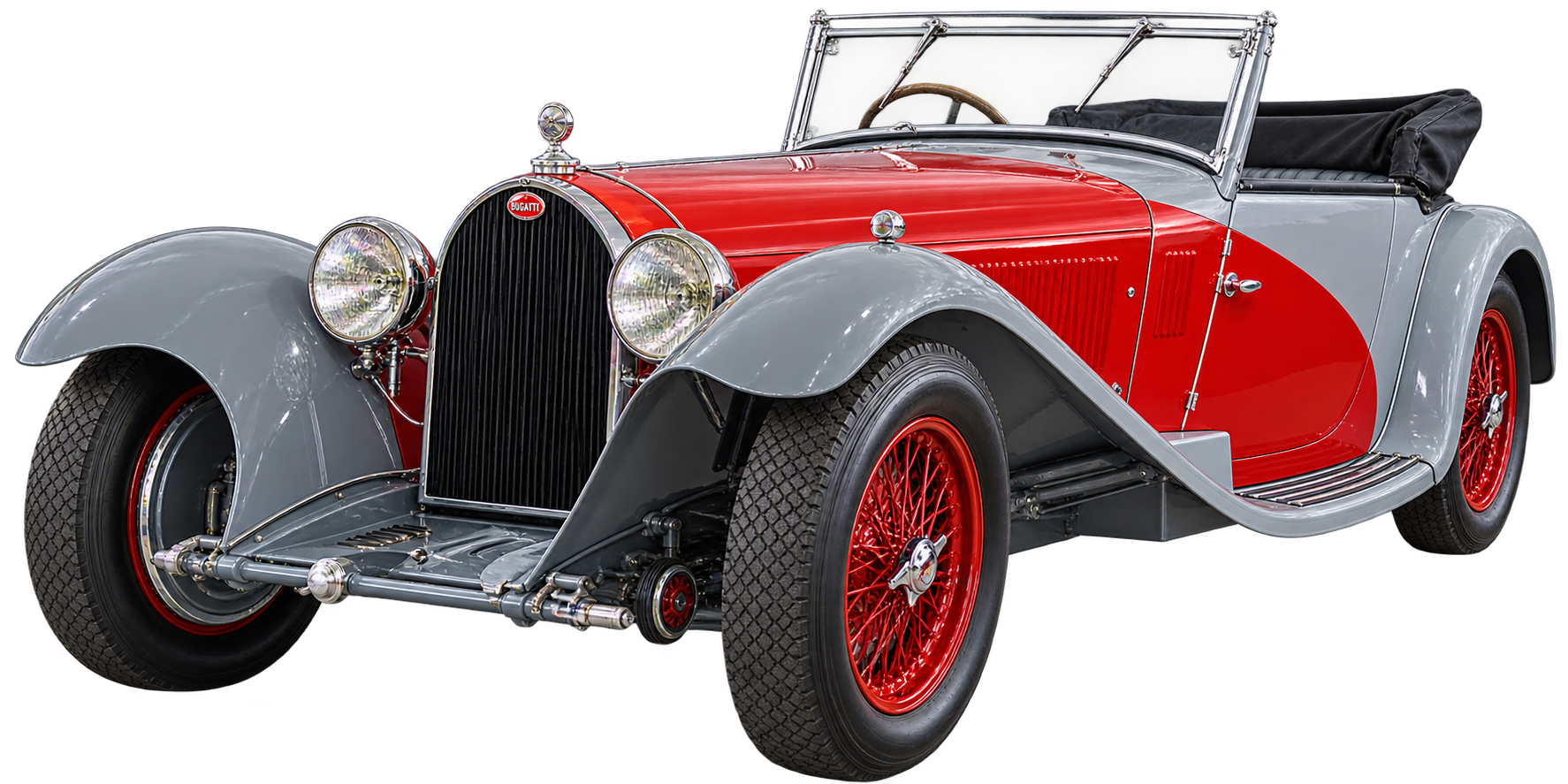
The Alfa Romeo 8C is best understood as a family of extraordinary straight-eight sports and racing cars built during the 1930s, rather than a single model. The most important versions are the 8C 2300 (1931–34), 8C 2600 racing derivatives, 8C 2900A (1935–36) and 8C 2900B (1937–39), including the celebrated Mille Miglia and Touring-bodied Berlinetta and Spider models.
The overview below concentrates on those original Vittorio Jano-designed cars, their mechanical differences, racing successes, coachwork and collector significance. The much later 8C Competizione receives only a brief section at the end.
Alfa Romeo 8C — Model Overview
The Alfa Romeo 8C family represents one of the greatest achievements of prewar Italian automotive engineering. Developed under the direction of Vittorio Jano, the original 8C combined a sophisticated supercharged straight-eight engine with lightweight chassis construction, exceptional racing performance and some of the most beautiful coachwork of the 1930s. From the early 8C 2300 of 1931 to the extraordinarily advanced 8C 2900B of 1937–39, these cars helped establish Alfa Romeo as one of the world’s leading manufacturers of high-performance automobiles.
The 8C designation originally referred to the engine’s eight cylinders rather than a single body style or chassis specification. Early 8C 2300s were successful sports and competition cars, while the subsequent 8C 2600 and 2900 developments became increasingly specialized. The ultimate 8C 2900B combined twin-supercharged power with independent suspension and exquisite coachbuilt bodies, creating what many consider one of the first true supercars.
The original 8C’s significance is inseparable from competition. Alfa Romeo won the 24 Hours of Le Mans four consecutive times from 1931 through 1934 with the 8C 2300, while later 8C 2900 derivatives dominated the Mille Miglia in the second half of the decade. The same engineering that produced these victories also appeared in road cars commissioned by some of Europe’s wealthiest motorists.
Vittorio Jano and the Origins of the 8C
Vittorio Jano joined Alfa Romeo from Fiat in the 1920s and became one of the most influential racing-car engineers of his generation. His earlier work included the P2 Grand Prix car and the six-cylinder 6C family, both of which established Alfa Romeo’s reputation for sophisticated engines and outstanding handling.
The 8C project emerged as Alfa Romeo sought greater displacement and power without abandoning the precision and efficiency of Jano’s smaller engines. Rather than simply enlarging the 6C, he developed a new straight-eight architecture that could be adapted for both road racing and expensive sporting road cars.
The resulting engine first appeared in the 8C 2300 in 1931. Its combination of dual overhead camshafts, supercharging and relatively light construction was extraordinarily advanced for the period, particularly when compared with the large-displacement pushrod engines used by many competing manufacturers.
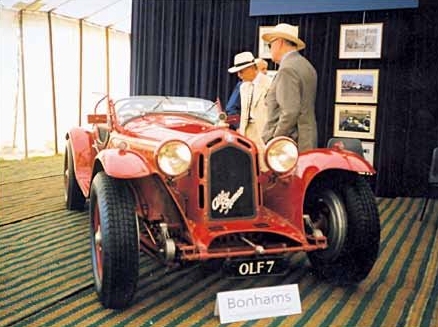
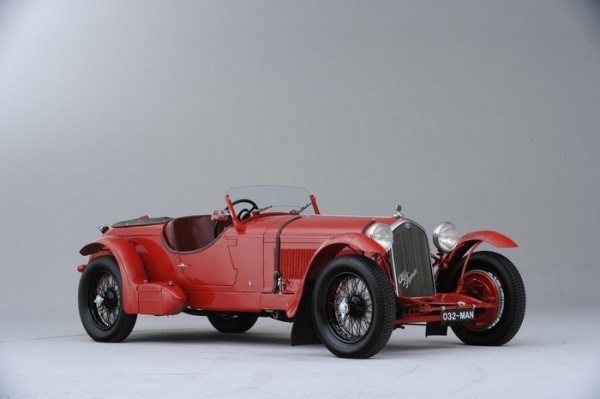
1931 Alfa Romeo 8C 2300 Corto roadster, from an auction at Goodwood on September 5th, 2003
The 8C Straight-Eight Engine
The original 8C engine was a supercharged inline eight-cylinder unit with dual overhead camshafts and two valves per cylinder. It used two four-cylinder blocks and cylinder-head assemblies arranged around a central camshaft-drive system, an unusual architecture that helped manage the considerable length and mechanical demands of a straight-eight engine.
The 1931 8C 2300 displaced 2,336cc, with a 65-mm bore and 88-mm stroke. A Roots-type supercharger supplied pressurized intake air, allowing the relatively small engine to produce output comparable with much larger naturally aspirated engines. Depending upon version and tuning, power ranged from roughly 140 horsepower in touring configurations to approximately 165 horsepower in the 8C 2300 Monza.
The engine’s character was unlike that of a large American straight-eight. It was designed to operate at relatively high engine speeds, with a distinctive combination of mechanical gear noise, supercharger sound and an exceptionally smooth power delivery.
Supercharging
Supercharging was central to the 8C’s identity from the beginning. The mechanically driven Roots-type blower forced additional air into the engine, increasing power without requiring a large increase in displacement.
In the 1931–34 8C 2300, a single supercharger was generally used, while the later 8C 2900 family of 1935–39 employed twin superchargers in its most famous configurations. The larger engines produced substantially more power and torque, enabling remarkable performance even when fitted with relatively substantial luxury bodies.
Supercharger condition is one of the most important mechanical considerations today. Rotor clearances, bearings, lubrication and drive components require specialist knowledge, and incorrect rebuilding can damage parts that are extremely difficult to replace.
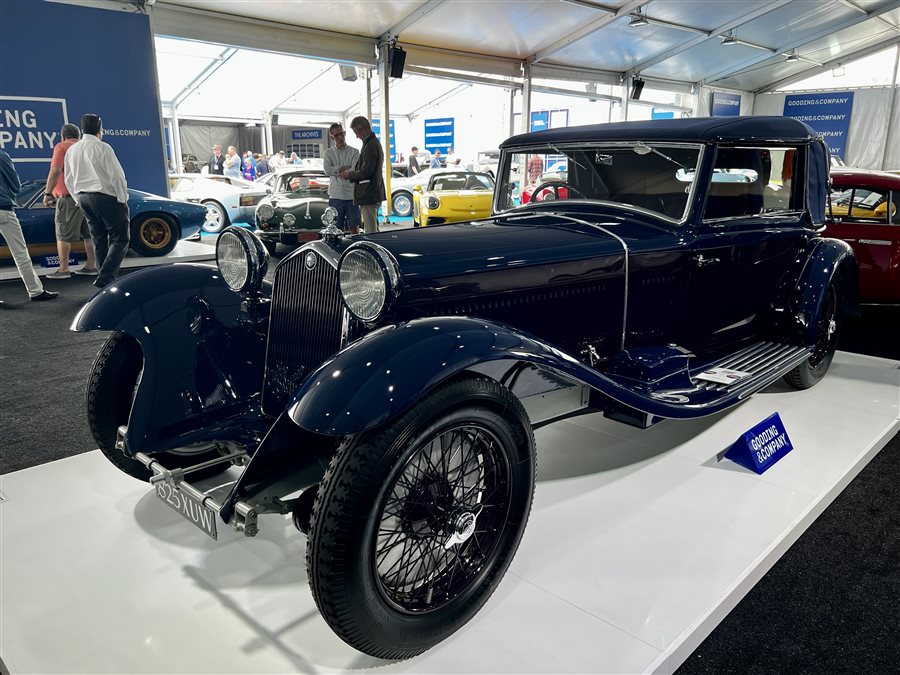
1933 Alfa Romeo 8C 2300 cabriolet, from an auction at Pebble Beach on August 18th, 2023
The 1931–34 8C 2300
The 8C 2300, introduced in 1931 and produced through approximately 1934, was the first major member of the 8C family. It was available in several chassis lengths and body configurations, ranging from relatively comfortable road-going sports cars to dedicated competition machines.
Its 2.3-liter straight-eight delivered extraordinary performance for its displacement. The lightweight chassis and responsive engine made it highly competitive in both endurance racing and Grand Prix events, while wealthy customers could commission sophisticated touring bodies from Italy’s leading coachbuilders.
Unlike later mass-produced sports cars, an 8C 2300 was often delivered as a chassis to be fitted with individually constructed coachwork. Consequently, surviving examples vary enormously in appearance, weight and intended purpose.
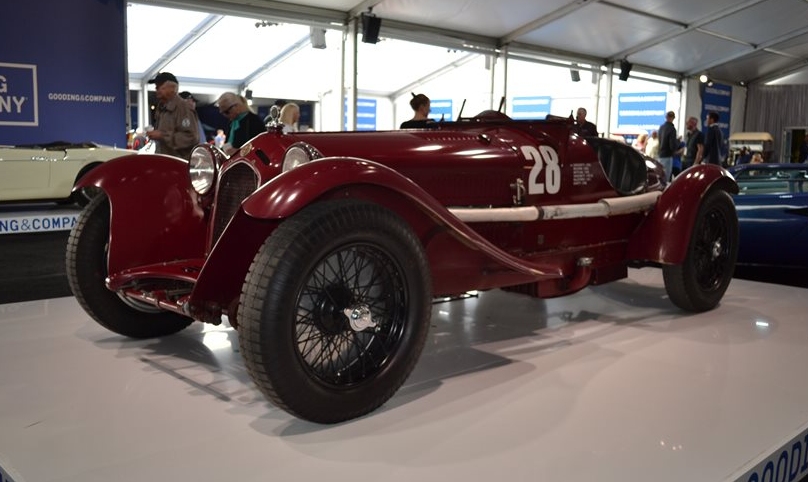
1933 Alfa Romeo 8C 2300 Monza roadster, from an auction at Pebble Beach on August 20th, 2016
The 8C 2300 Monza
The 8C 2300 Monza became one of the most celebrated competition versions of the original 8C. Its name came from Alfa Romeo’s success at the Italian Grand Prix at Monza in 1931, and the designation became associated with short-wheelbase competition cars equipped with lightweight open bodywork.
The Monza used the supercharged 2,336cc engine in a high-output configuration producing approximately 165 horsepower at 5,400 rpm. The Alfa Romeo museum lists a 2,650-mm wheelbase, four-speed transmission, rigid front and rear axles, mechanically operated drum brakes and a weight of approximately 920 kg. These specifications illustrate how much performance Alfa Romeo extracted from comparatively conventional chassis architecture.
The Monza’s appeal lies in its mechanical directness. The driver sits close to the rear axle, surrounded by minimal bodywork, while the long straight-eight and supercharger dominate the experience. Compared with the more refined 8C 2900B, the Monza is much closer to a pure prewar racing car.
The 8C 2300 Le Mans
The 8C 2300 Le Mans versions used longer chassis and more substantial bodies suited to endurance racing. The additional wheelbase provided stability at high speeds and space for equipment required in long-distance events.
Alfa Romeo’s achievement at Le Mans was extraordinary: the 8C 2300 won the race in 1931, 1932, 1933 and 1934, establishing one of the most impressive winning streaks of the prewar period. These victories involved celebrated drivers including Henry Birkin, Earl Howe, Raymond Sommer and Tazio Nuvolari.
The Le Mans cars demonstrated that the 8C was more than a short-distance racing machine. Its engine, chassis and braking systems could withstand prolonged high-speed operation over some of Europe’s most demanding roads and circuits.
The 8C 2300 as a Road Car
Although the Monza and Le Mans racers dominate the model’s reputation, many 1931–34 8C 2300s were built for private customers. Bodies ranged from lightweight two-seat spiders to elaborate cabriolets and closed coupes.
Coachbuilders such as Touring, Zagato, Castagna and Pinin Farina produced individual interpretations of the chassis. The same basic engine could therefore power a relatively stripped competition car or an elegant automobile intended for high-speed touring across Europe.
These road-going 2300s are important because they established the combination of racing-derived engineering and coachbuilt luxury that would reach its ultimate expression in the 8C 2900B.
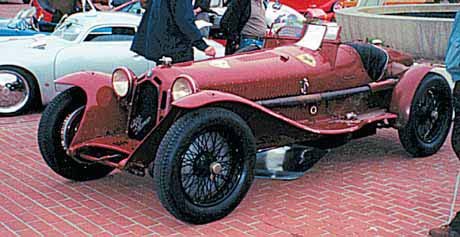
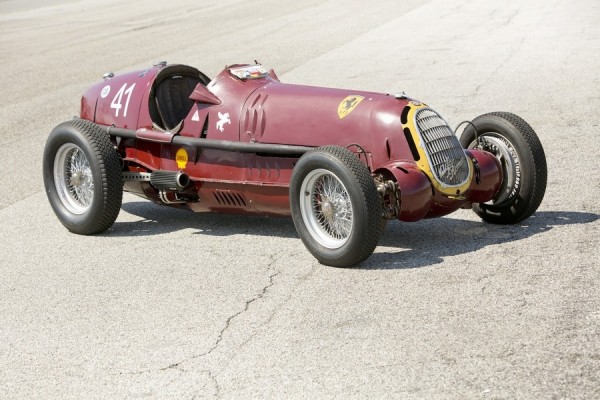
1932 Alfa Romeo 8C 2600 Corsa Monza Spider, from an RM auction
The 8C 2600 and Grand Prix Developments
The 8C 2600, developed during the early-to-mid 1930s, represented an intermediate stage between the 2.3-liter sports cars and the later 2.9-liter machines. Enlarged straight-eight engines appeared in specialized Grand Prix and competition applications, including developments of the Monza and related racing cars.
Displacement increases provided additional torque and horsepower, but the competition landscape was changing rapidly. Alfa Romeo increasingly faced technically sophisticated rivals from Germany, particularly Mercedes-Benz and Auto Union, whose state-supported racing programs were becoming extraordinarily powerful.
The 8C 2600 is therefore best understood as part of the racing engine’s evolution rather than a widely produced independent road-car model. Its historical importance lies in the development path leading toward the 2.9-liter engines.
Scuderia Ferrari and the 8C
The original Alfa Romeo 8C is closely connected with Enzo Ferrari, whose Scuderia Ferrari operated Alfa Romeo racing cars before becoming an independent manufacturer.
During the early 1930s, Scuderia Ferrari entered and maintained 8C competition cars for some of the era’s greatest drivers. Tazio Nuvolari, Achille Varzi and other leading competitors helped build the reputation of the Alfa Romeo straight-eight through major victories across Europe.
This relationship is an important part of both companies’ histories. Ferrari’s later sports-car philosophy developed partly from his experience managing Alfa Romeo’s sophisticated racing machinery, and the 8C belongs to the period when Alfa Romeo occupied the position in international motorsport that Ferrari would later inherit.
The 1935–36 8C 2900A
The 8C 2900A, introduced in 1935 and raced primarily during 1936–37, represented a major engineering departure from the earlier 8C 2300. Its engine displaced 2,905cc and was closely related to Alfa Romeo’s contemporary Grand Prix straight-eight architecture.
The 2900A used twin Roots-type superchargers and produced approximately 220 horsepower in competition specification. Equally important, it adopted independent suspension at both ends, replacing the rigid-axle arrangement of the earlier Monza.
The chassis was developed specifically for demanding long-distance road races such as the Mille Miglia. Compared with the 8C 2300, the 2900A offered substantially greater speed, improved road holding and a much more sophisticated suspension system.
Independent Suspension on the 2900
The 8C 2900A and 2900B used independent front suspension and an independent swing-axle arrangement at the rear. This was a major departure from the rigid front and rear axles of the 8C 2300.
The front suspension employed control arms and coil springs, while the rear used swing axles with transverse springing and locating members. The arrangement allowed the wheels to respond more independently to rough road surfaces, a particularly important advantage in races conducted over ordinary public roads.
The rear swing-axle design introduced significant camber changes during suspension travel, a characteristic that requires understanding when driving these cars aggressively. Nevertheless, the improvement in ride and road holding over earlier rigid-axle racing cars was substantial.
The 1936 and 1937 Mille Miglia
The 8C 2900A immediately demonstrated its capabilities in the Mille Miglia. In 1936, Alfa Romeo 2900As finished first, second and third, with Antonio Brivio winning the event. The cars repeated their dominance in 1937, when Carlo Maria Pintacuda took victory.
The Mille Miglia was particularly demanding because it combined extremely high speeds with narrow roads, changing surfaces and long periods of continuous driving. Success required not only engine power but also suspension compliance, braking endurance and exceptional reliability.
These victories established the 2900A as one of the most effective road-racing machines of its era and provided the engineering foundation for the later 2900B.
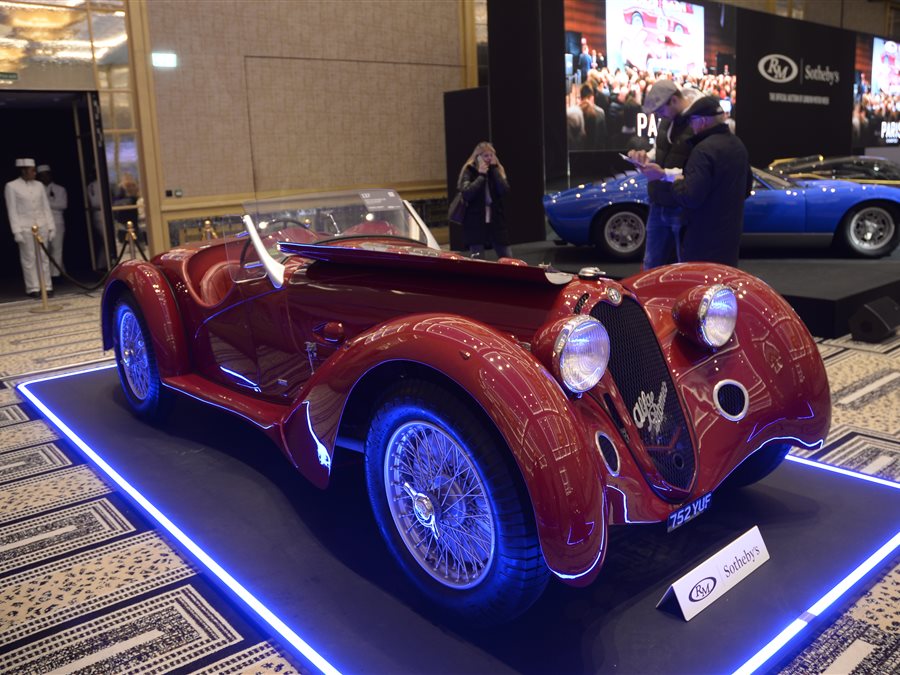
1937 Alfa Romeo 8C 2900 B Spider, from an auction in London on November 1st, 2025
The 1937–39 8C 2900B
The 8C 2900B, introduced in 1937 and produced in extremely small numbers through the late 1930s, was the road-going development of the successful 2900A racing chassis. It retained the 2,905cc twin-supercharged straight-eight and sophisticated independent suspension but incorporated changes intended to improve refinement, durability and everyday usability.
In normal road specification, output was approximately 180 horsepower, lower than the competition-oriented 2900A. This reduction reflected a more conservative state of tune rather than a fundamentally different engine architecture.
The 2900B was offered in two principal wheelbases: Corto, or short, at approximately 2,800 mm, and Lungo, or long, at approximately 3,000 mm. Only a few dozen were constructed, with exact totals depending upon how competition chassis and special-bodied cars are counted.
The 8C 2900B Corto
The 1937–39 8C 2900B Corto used the shorter wheelbase and was generally associated with more sporting bodywork. Its compact proportions suited lightweight spiders and two-seat coupes, allowing the advanced chassis to deliver exceptional handling for a prewar road car.
The Corto’s combination of twin-supercharged power and independent suspension made it one of the fastest and most technically sophisticated automobiles available to private customers. Even in the less highly tuned road specification, it offered performance comparable with many contemporary competition cars.
Surviving Corto examples are especially prized when they retain original coachwork and documented histories. Their rarity has also encouraged later reconstruction and reboding, making careful authentication essential.
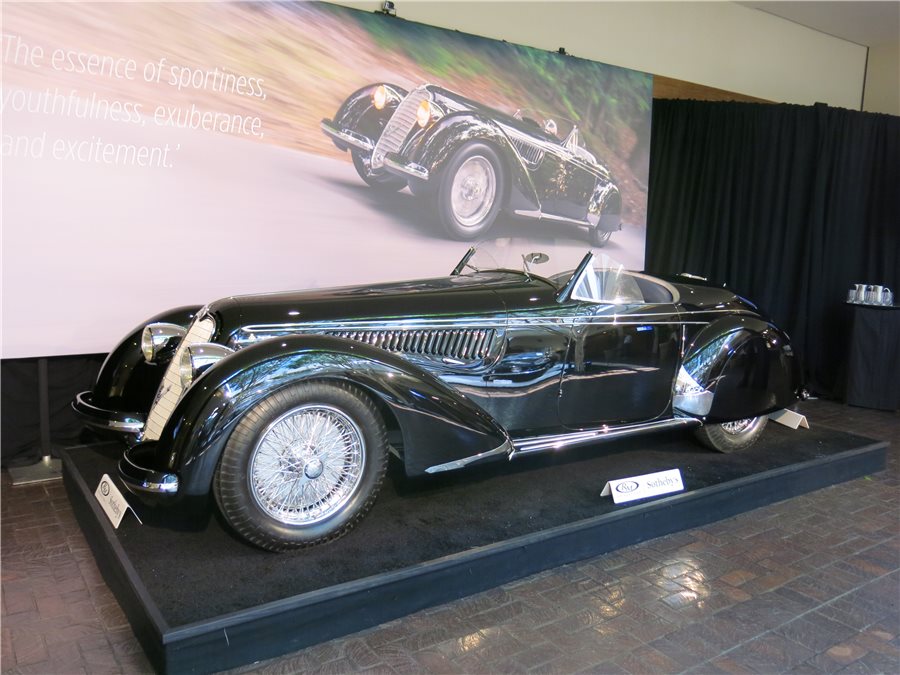
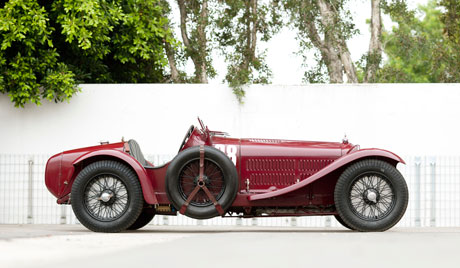
1939 Alfa Romeo 8C 2900 Lungo Spider, from an auction in Monterey on August 19th, 2016
The 8C 2900B Lungo
The 1937–39 8C 2900B Lungo used a longer wheelbase intended to accommodate more elegant and comfortable bodies. The additional length gave coachbuilders greater freedom to create flowing fenders, long passenger compartments and elaborate grand-touring designs.
Despite its increased dimensions, the Lungo remained an exceptionally fast automobile. The 2.9-liter supercharged engine provided substantial performance, while the independent suspension made it considerably more refined than many large luxury cars of the period.
Some of the most celebrated 8C bodies were constructed on Lungo chassis, particularly the Touring Berlinettas. Their combination of dramatic styling and genuine racing-derived engineering places them among the most important prewar grand tourers.
Touring Superleggera Coachwork
Carrozzeria Touring of Milan was closely associated with the 8C 2900B and produced many of its most admired bodies. Touring’s Superleggera construction method used a lightweight framework of small-diameter steel tubes supporting thin aluminum exterior panels.
This allowed complex aerodynamic shapes to be created without the weight of conventional wooden body framing. The technique was particularly suited to the 2900B because it complemented the lightweight chassis and high-speed capabilities of the car.
Touring bodies were not simply decorative shells. Their shape and construction contributed directly to performance, and the firm developed some of the most aerodynamically sophisticated automotive designs of the late 1930s.
The Touring Berlinetta
The 1938–39 8C 2900B Touring Berlinetta is among the most celebrated closed cars of the prewar period. Its long hood, flowing fenders, low roof and integrated rear bodywork created an appearance that anticipated the streamlined grand tourers of the postwar era.
The Berlinetta combined exceptional performance with weather protection and greater comfort than an open racing spider. Its proportions were unusually refined because the long straight-eight sat behind an elegant radiator and the body tapered gradually toward the rear.
Only a handful of these closed Touring-bodied cars were built. Each has an individual history, and differences in body details, wheelbase and subsequent restoration make chassis-specific documentation especially important.
The Touring Spider
The 8C 2900B Touring Spider represented the open counterpart to the Berlinetta and was available in both sporting and more luxurious configurations. Its long hood, sweeping fenders and low seating position created one of the most recognizable Italian sports-car shapes of the 1930s.
Corto-bodied spiders generally emphasized compact proportions and sporting performance, while Lungo examples could be considerably more elegant and luxurious. The exact appearance varied because these were individually constructed coachbuilt automobiles rather than standardized production bodies.
Today the finest original Touring Spiders are among the most valuable prewar Italian cars. Their appeal reflects not merely rarity but the combination of beautiful design, advanced engineering and direct connection to Alfa Romeo’s racing successes.
The 1938 Mille Miglia Cars
For the 1938 Mille Miglia, Alfa Romeo prepared specially developed 8C 2900B competition spiders with lightweight Touring bodywork and more powerful engines. These cars retained the fundamental 2900 architecture but were optimized for the extraordinary demands of the Italian road race.
Clemente Biondetti and Aldo Stefani won the event, with another Alfa Romeo 2900B finishing second. The winning car completed the race at an average speed of approximately 135 km/h, or 84 mph, an astonishing figure given the roads and conditions involved.
The victory confirmed that the 2900B was not merely a luxury derivative of a racing car. Its fundamental design remained competitive at the highest level of international road racing.
The 1938 Le Mans Berlinetta
One of the most extraordinary 8C derivatives was the 1938 8C 2900B Le Mans Berlinetta, constructed by Touring specifically for endurance competition. Rather than using a conventional open sports-racing body, the car employed an exceptionally streamlined closed design intended to reduce aerodynamic drag.
The 2,905cc twin-supercharged engine produced approximately 220 horsepower, while the lightweight body and advanced suspension gave the car extraordinary high-speed capability. Contemporary estimates placed its maximum speed near 150 mph, remarkable for a closed automobile in 1938.
The car demonstrated the potential of aerodynamic bodywork to improve performance without simply increasing engine displacement or boost. It remains one of the most technically and visually significant competition Alfas ever built.
The 1947 Mille Miglia Victory
Although the original 8C production era ended before World War II, the cars remained competitive afterward. In 1947, Clemente Biondetti and Emilio Romano won the first postwar Mille Miglia in an 8C 2900B Touring Berlinetta.
The achievement was remarkable because the car belonged to a prewar design family competing in a dramatically changed world. Its victory demonstrated the fundamental excellence of the 2900 chassis and engine, even years after their original development.
This postwar success further strengthened the 8C 2900’s reputation as one of the most capable road-racing designs ever produced.
Brakes and Chassis Development
The earliest 8C 2300s of 1931–34 used mechanically operated drum brakes, which were substantial for their time but required careful adjustment and considerable driver anticipation. The later 2900 family incorporated more advanced braking and chassis equipment appropriate to its higher performance.
Brake condition is particularly important because these cars are capable of speeds that greatly exceed the expectations associated with most prewar automobiles. Correct drum geometry, friction materials, hydraulic or mechanical operation according to specification, and proper adjustment are all essential.
The chassis also evolved significantly from the rigid-axle 2300 to the independently suspended 2900. A buyer evaluating an 8C should therefore avoid treating all prewar straight-eight Alfas as mechanically interchangeable.
Gearboxes and Driving Technique
The early 8C models used four-speed manual transmissions, but the design and installation varied among racing and road-going versions. The 8C 2300 used a more conventional front-mounted gearbox arrangement, while the later 2900 employed a rear-mounted transmission arrangement that helped improve weight distribution.
These transmissions require familiarity with prewar driving techniques. Gear changes demand careful timing, and double-declutching may be necessary depending upon the specific gearbox and its condition.
A properly restored transmission should feel mechanically precise rather than vague or excessively noisy. Because original components are rare, gearbox condition and the quality of previous rebuilding work are major considerations.
Engine Restoration
Restoring an original 8C straight-eight requires exceptional specialist expertise. The unusual block and head construction, centrally driven camshafts, supercharging equipment and specialized lubrication systems are far removed from ordinary vintage-engine practice.
Correct assembly depends upon understanding original clearances, metallurgy and manufacturing techniques. Modern machining can improve precision, but careless substitution of materials or changes to original design can create reliability problems.
A documented rebuild by a recognized Alfa Romeo prewar specialist is therefore enormously valuable. Equally important is the preservation of original major components, particularly where the engine’s identity is tied to a historically significant chassis.
Chassis and Body Authenticity
The enormous value of original 8C cars makes identity and provenance central to any collector evaluation. Racing cars were frequently modified, damaged, rebuilt or fitted with replacement bodies during their active lives, while some chassis received entirely new coachwork decades later.
A genuine 8C 2300 chassis fitted with a modern Monza-style body is historically different from a car retaining its original competition coachwork. Likewise, a 2900B rebodied as a Touring Spider is not equivalent to an original Touring-bodied example, regardless of the quality of the reconstruction.
Factory records, period photographs, competition documentation, chassis numbers, engine numbers and continuous ownership history should therefore be studied together. On the most important cars, a detailed history of every major component may be necessary to establish authenticity.
Coachwork Preservation
Original 8C coachwork is especially important because these cars were frequently constructed using techniques that are difficult to reproduce accurately today. Touring’s lightweight aluminum panels, for example, were supported by intricate tubular frameworks that require specialized knowledge to restore.
Even when an exterior panel appears simple, its shape may depend upon subtle compound curves and the relationship between the panel and underlying structure. Recreating those details accurately can require hundreds of hours of skilled handwork.
Preserved original material can therefore be more historically significant than a flawless modern restoration. Original upholstery, hardware, body framing and even evidence of period repairs may provide valuable information about a particular car’s history.
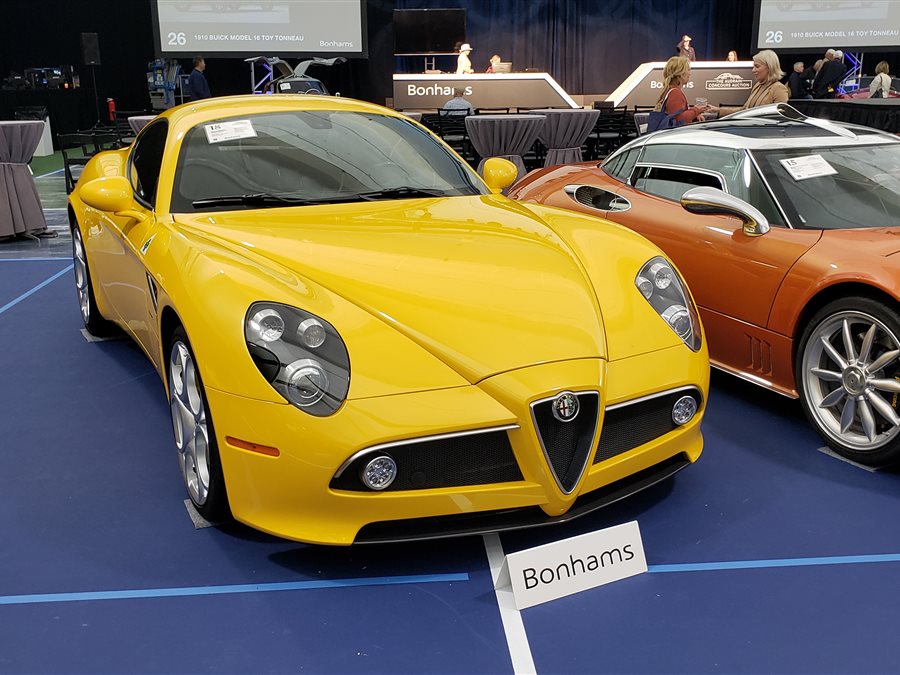
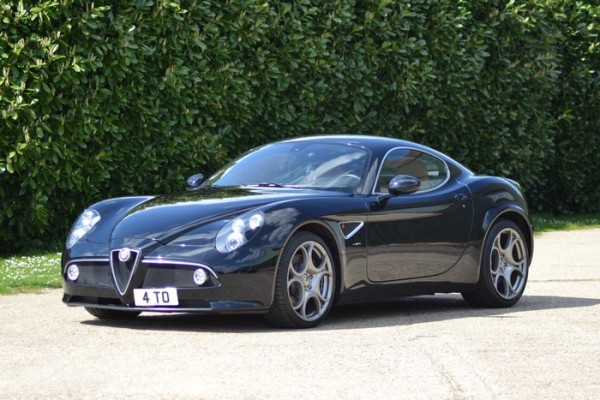
2008 Alfa Romeo 8C competizione coupe, from an auction on October 1st, 2021
The Modern 8C Competizione
Alfa Romeo revived the 8C name in 2007 with the 8C Competizione, a limited-production front-engine grand tourer developed using contemporary Maserati and Ferrari-related engineering. Unlike the original straight-eight cars, the modern 8C used a 4.7-liter naturally aspirated V8 producing approximately 450 horsepower, with a rear-mounted automated manual transaxle.
The modern coupe was followed by the 8C Spider, with production extending into approximately 2010. Alfa Romeo built 500 Competizione coupes and 500 Spiders, making both limited-production models.
The revival borrowed the historic name and emphasized Alfa Romeo’s tradition of beautiful, high-performance grand tourers, but it had no direct mechanical relationship to the original Vittorio Jano-designed 8C family. Its importance lies primarily in restoring Alfa Romeo’s image as a maker of exclusive exotic sports cars.
Understanding the Major Alfa Romeo 8C Variants
- 8C 2300 (1931–34): Original 2,336cc supercharged straight-eight family, produced in road-going and competition configurations.
- 8C 2300 Monza (1931–34): Short-wheelbase competition version, generally associated with lightweight open racing bodywork and approximately 165 horsepower.
- 8C 2300 Le Mans (1931–34): Longer-wheelbase endurance-racing versions associated with four consecutive Le Mans victories.
- 8C 2600 (early-to-mid 1930s): Enlarged straight-eight racing developments that helped bridge the 2300 and 2900 generations.
- 8C 2900A (1935–36 development, raced through 1937): Twin-supercharged 2,905cc competition car with independent suspension and approximately 220 horsepower.
- 8C 2900B Corto (1937–39): Short-wheelbase road-going development of the 2900A, usually with approximately 180 horsepower and sporting coachwork.
- 8C 2900B Lungo (1937–39): Long-wheelbase grand-touring version, frequently fitted with elegant Touring bodies.
- 8C 2900B Mille Miglia (1938): Specialized competition spiders developed for the 1938 Mille Miglia, with higher-output engines and lightweight Touring bodywork.
- 8C 2900B Le Mans Berlinetta (1938): Exceptionally aerodynamic closed competition car with approximately 220 horsepower.
- 8C Competizione (2007–09) and Spider (2008–10): Modern V8-powered limited-production revival of the historic 8C name.
What Matters to Collectors
For the original 1930s Alfa Romeo 8C, provenance is the single most important consideration. These cars were produced in tiny numbers, frequently raced and often modified throughout their lives. A documented competition history or original coachbuilt body can have an enormous effect on historical significance and value.
Engine and chassis identity deserve particularly close attention. Original 8C engines are extraordinarily valuable, and replacements or reconstructions should be documented precisely. A car retaining its original engine, chassis and significant body components occupies a different category from one assembled from period and reproduction parts.
Body history is equally important. Original Touring, Zagato, Pinin Farina and other coachbuilt bodies can be historically significant in their own right, while later recreations should be identified accurately rather than treated as factory-original coachwork.
Mechanical condition matters because the 8C’s performance remains substantial even by modern vintage-car standards. Engines, superchargers, transmissions, brakes and suspension should be inspected by specialists familiar with the exact variant, not merely by mechanics experienced with ordinary prewar cars.
For racing examples, period modifications can be legitimate parts of a car’s history. A car rebuilt or reconfigured during its competition career should not automatically be judged less authentic than one preserved in its original delivery specification, provided the changes are properly documented.
Collector Hierarchy
At the summit of the original 8C family are the 8C 2900B Touring Berlinettas and Spiders, particularly examples retaining original coachwork and exceptional histories. Their combination of rarity, beauty, technical sophistication and competition ancestry places them among the world’s most important prewar automobiles.
The 8C 2900A competition cars are equally significant from a motorsport perspective because they established the engineering formula that made the 2900B possible. Genuine examples with documented Mille Miglia or other major racing histories occupy an exceptional collector category.
Among the earlier cars, the 8C 2300 Monza and Le Mans variants are particularly important. Their racing achievements, relatively direct driving character and association with legendary drivers make them among the most desirable competition Alfas of the period.
Road-going 8C 2300s with original coachwork can also be extraordinarily significant, especially when their bodies are rare or historically important. As with other major prewar automobiles, individual history can override any simple hierarchy based upon engine size or body style.
Important Sales Reviewed by SCM Experts
In each month’s issue for the past 38 years, SCM’s analysts have reviewed 5 to 7 significant cars sold at auction, and discuss what options, history, or details made that particular more or less valuable. They give their expert opinion on the market for these cars, and whether this car was well bought or well sold. If you’re thinking of purchasing a Alfa Romeo 8C, you’ll likely find these profiles critical in helping you make the right decision. Each of the following is an article from our print magazine on a Alfa Romeo 8C sold at auction.
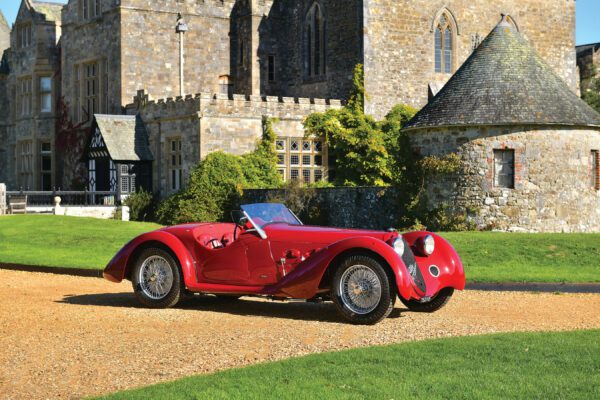 1937 Alfa Romeo 8C 2900 B SpiderOnly 38 examples of the 2900 were produced by Alfa Romeo, with fewer known to exist today. Some of the most desirable of these are the long-chassis Spiders — “long” being a relative term, as the wheelbase was only extended by 20 centimeters but provided the most luxurious platform for a 2-seater body. Built in […]Read more
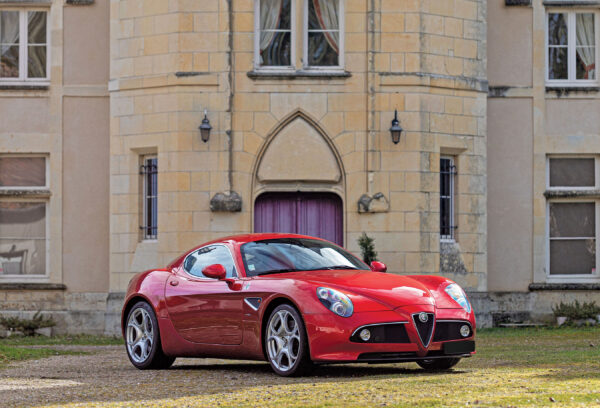 2008 Alfa Romeo 8C Competiziones name alone, “8C Competizione,” brings to mind the greatest episodes in Alfa Romeo’s racing history and the 8C’s victories in the 24 Hours of Le Mans and Mille Miglia, among innumerable other successes. Sold via the Alfa Tenailles Automobiles GTA garage in Nevers, FRA, this car in the color “Rosso 8C Competizione” (code 202/B) […]Read more
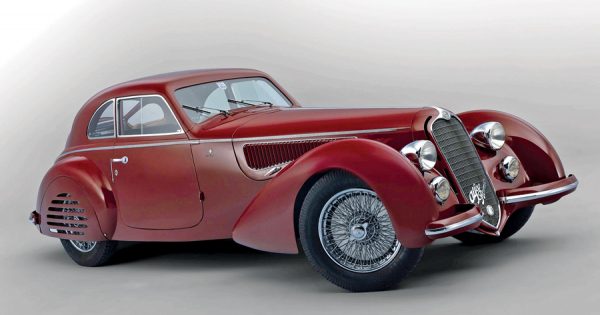 1939 Alfa Romeo 8C 2900B Berlinetta by TouringThe automobile that we present today is just as we found it, belonging to Jan Willem Martens, and is just as we love to discover a car: in used, original condition. The car runs well, with surprising acceleration. You can hear the superchargers whistling, communicating the personality and potential of this beast. You are behind […]Read more
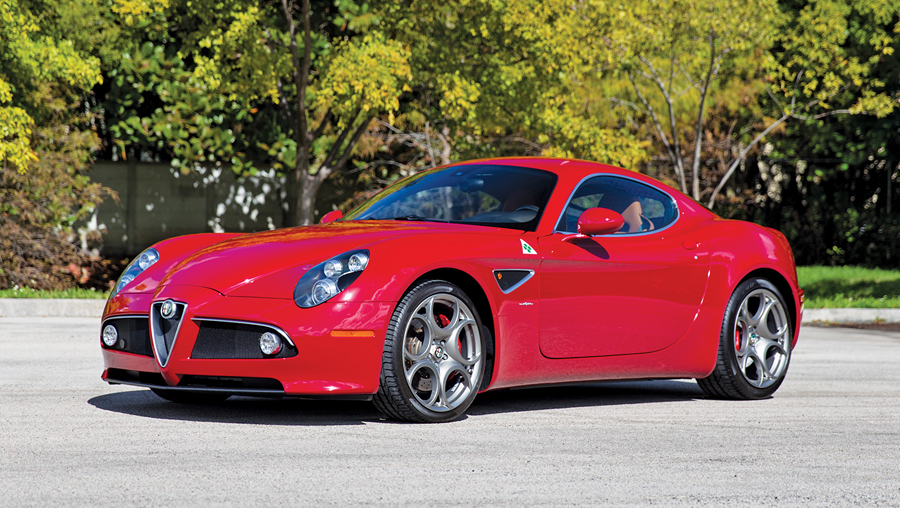 2008 Alfa Romeo 8C CompetizioneIn late 2003, Alfa Romeo was preparing a return to the North American market, and it needed a flagship car to remind buyers of the Italian automaker’s glorious past. That September at the Frankfurt Auto Show, the world was shown the dramatic re-emergence of Alfa Romeo as one of the great automotive sporting marques with […]Read more
 1939 Alfa Romeo 8C 2900B Lungo Spider by TouringThe 8C 2900 was not a mere sports car, but the most advanced, modern and compelling sports car that money could buy. To the gentleman who was accustomed to watching the workings of his Swiss watch or mastering the intricacies of his yacht’s sails, it was a symphony. It is a reality understood by those […]Read more
Cars For Sale
Quick links to listings for this make and model online:
Books on the Alfa Romeo 8C
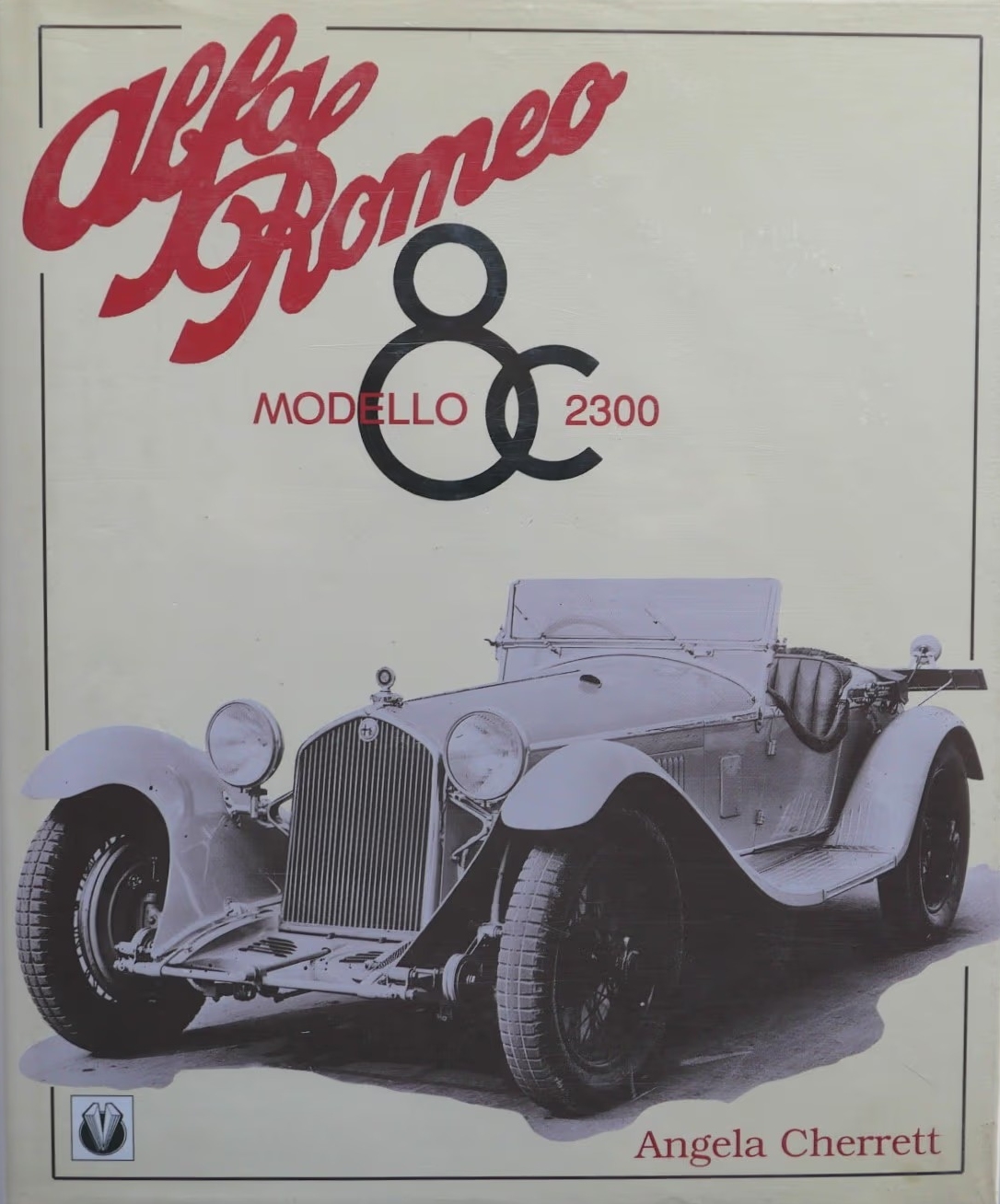
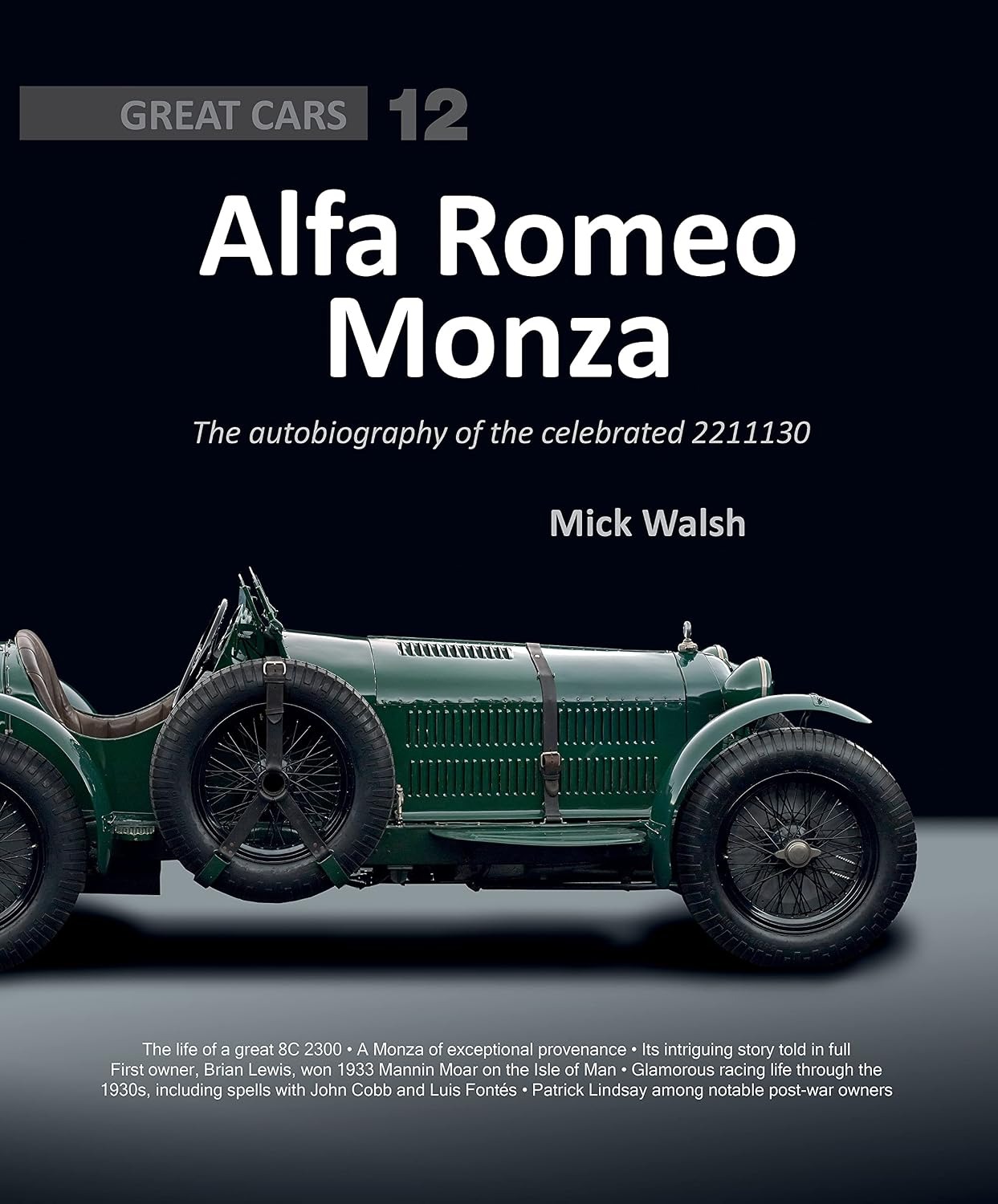
Note that as an Amazon Associate, we earn from qualifying purchases of the above books.
Past Auction Sales – Alfa Romeo 8C
Average Alfa Romeo 8C Sale Price by Year from SCM’s Platinum Auction Database:
Includes sales listed as Alfa Romeo 8C 1750, Alfa Romeo 8C 2300, Alfa Romeo 8C 2600, Alfa Romeo 8C 2900.
Alfa Romeo 8C Sales from SCM’s Platinum Auction Database:

Gooding Christie's
Condition: 2
Aug 15, 2025
$165,200

RM Sotheby's
Condition: 2+
Nov 25, 2023
$268,477

Bonhams Cars
Condition: 3+
Aug 18, 2023
$841,000

Bonhams Cars
Condition: 2
Jul 14, 2023
$247,998

Bonhams
Condition: 2+
Dec 16, 2022
$307,981

RM Sotheby's
Condition: 1-
Nov 26, 2022
$326,164

Bonhams
Condition: 1-
Oct 1, 2021
$346,000

Bonhams
Condition: 2+
Dec 7, 2019
$259,836

Gooding & Co.
Condition: 1
Jan 18, 2019
$335,000

RM Sotheby's
Condition: 2+
Feb 7, 2018
$283,774

Gooding & Co.
Condition: 1
Mar 11, 2017
$390,500

Christie's
Condition: 3
Nov 29, 1998
$764,775

Bonhams Cars
Condition: 3+
Sep 7, 2024
$727,094

RM Sotheby's
Condition: 2-
Aug 15, 2024
$4,075,000

Bonhams Cars
Condition: 3+
Jul 12, 2024
$788,746

Gooding & Co.
Condition: 1-
Aug 18, 2023
$4,515,000

Gooding & Co.
Condition: 3-
Aug 20, 2016
$11,990,000

Bonhams
Condition: 3
Jul 12, 2013
$2,867,394

Bonhams
Condition: 2-
Jun 29, 2012
$4,196,927

Gooding & Co.
Condition: 3
Aug 14, 2010
$6,710,000

Gooding & Co.
Condition: 1
Aug 16, 2009
$4,180,000

eBay
Condition: 1
Mar 23, 2009
$20,550

RM Auctions
Condition: 2
Aug 17, 2007
$907,500

Bonhams
Condition: 1
Jun 22, 2007
$2,819,000

Kruse
Condition: 2
Aug 18, 2006
$426,600

Bonhams
Condition: 2-
Sep 5, 2003
$894,375

RM Auctions
Condition: 2
Mar 9, 2002
$2,530,000

Bonhams & Brooks
Condition: 3-
Aug 25, 2001
$1,530,720

RM Sotheby's
Condition: 2
Nov 1, 2025
$3,692,537

Gooding & Co.
Condition: 3+
Aug 16, 2024
$14,030,000

Artcurial
Condition: 3
Feb 8, 2019
$18,999,558

RM Sotheby's
Condition: 2+
Aug 19, 2016
$19,800,000

Brooks
Condition: 1-
Aug 18, 2000
$3,082,500

Christie's
Condition: 2
Aug 28, 1999
$4,072,500
Forums & Communities
Popular Videos about the Alfa Romeo 8C