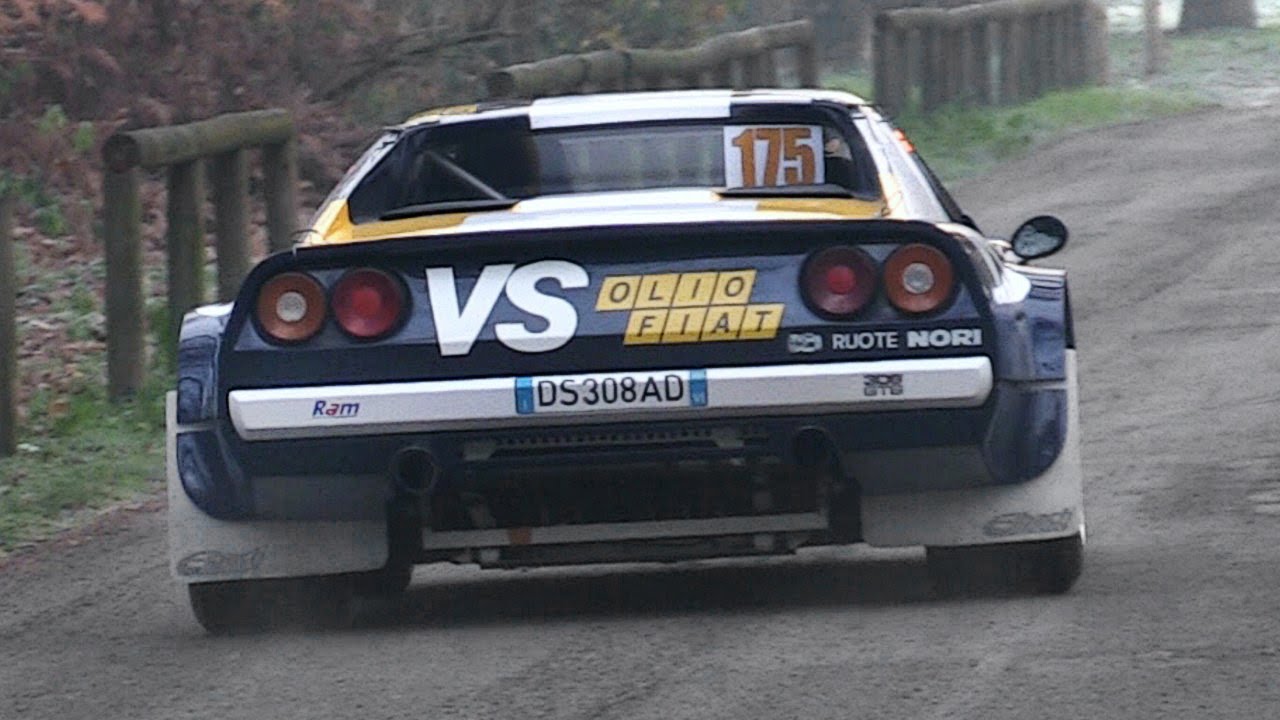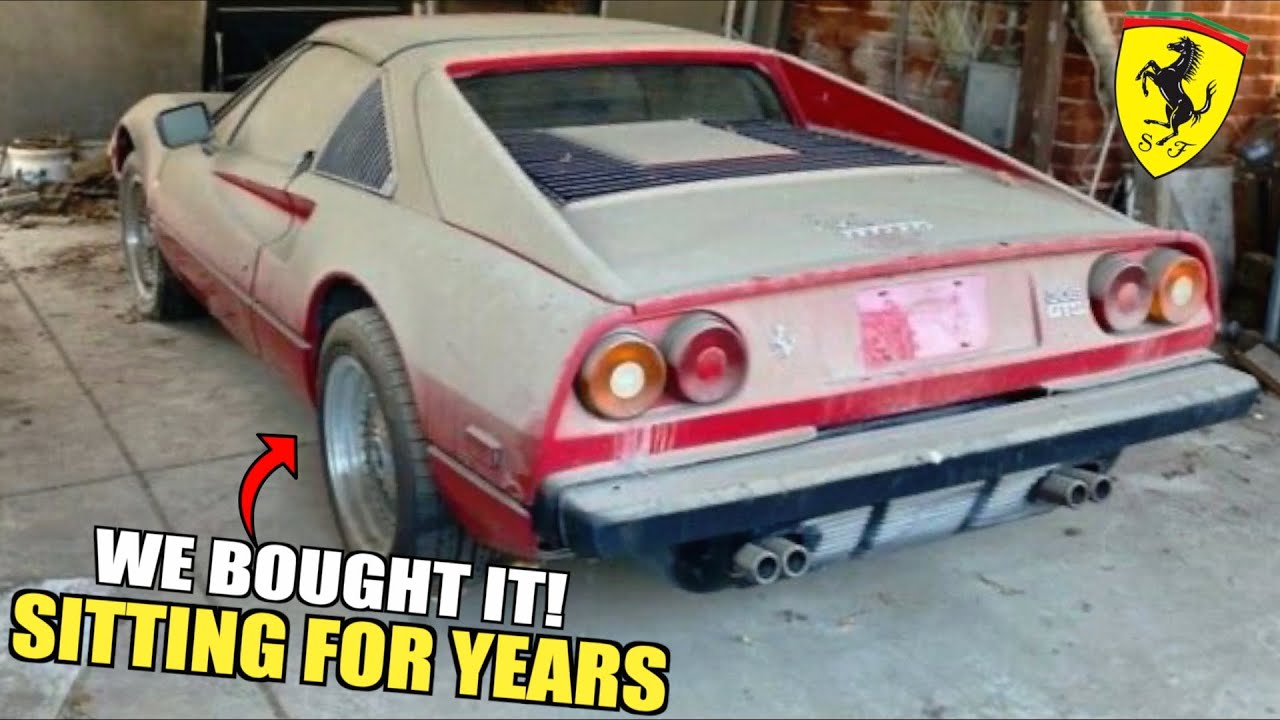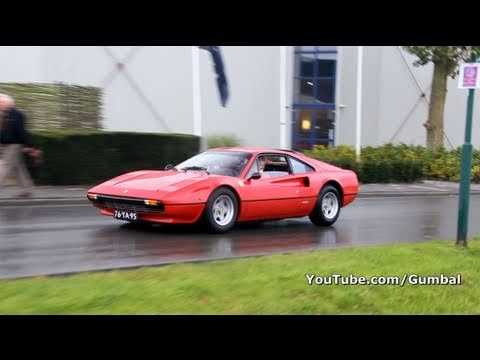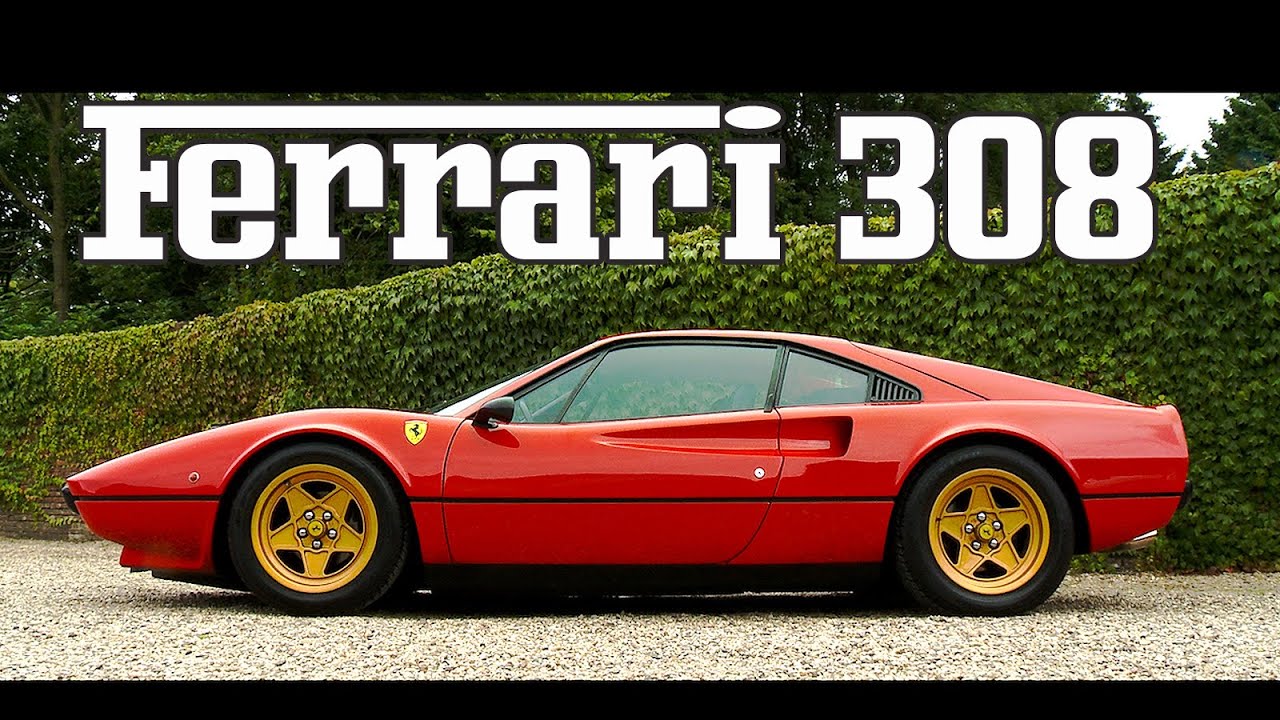
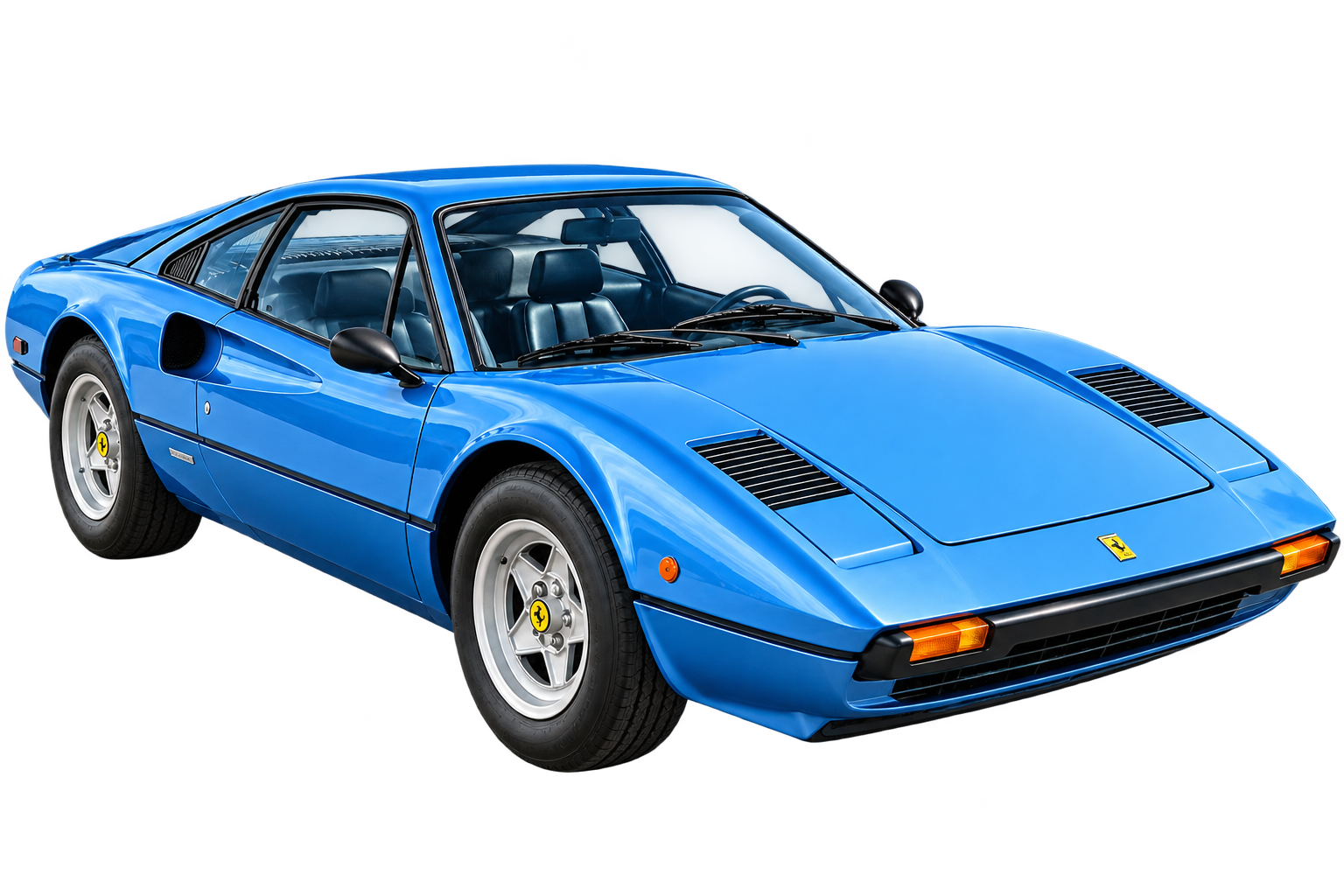
The Ferrari 308 GTB is one of the defining Ferrari sports cars of the 1970s and early 1980s. Introduced in 1975 as the replacement for the Bertone-styled Dino 308 GT4, it combined a transverse mid-mounted V8 with a compact two-seat chassis and one of Pininfarina’s most enduring designs. Its proportions—low nose, deeply recessed side intakes, sweeping roofline and four round taillights—established a visual formula that Ferrari would continue developing through the 328.
Although “308 GTB” is often used loosely to describe the entire family, there are several mechanically and historically important versions. The earliest cars had fiberglass, or vetroresina, bodies and Weber carburetors. Ferrari soon switched to steel bodywork while retaining carburetion. For 1980, Bosch fuel injection created the 308 GTBi, and in 1982 the four-valve-per-cylinder 308 GTB Quattrovalvole restored much of the performance lost to emissions controls. European and U.S. cars also differ substantially in engine specification, lubrication, emissions equipment, bumpers, weight and performance.
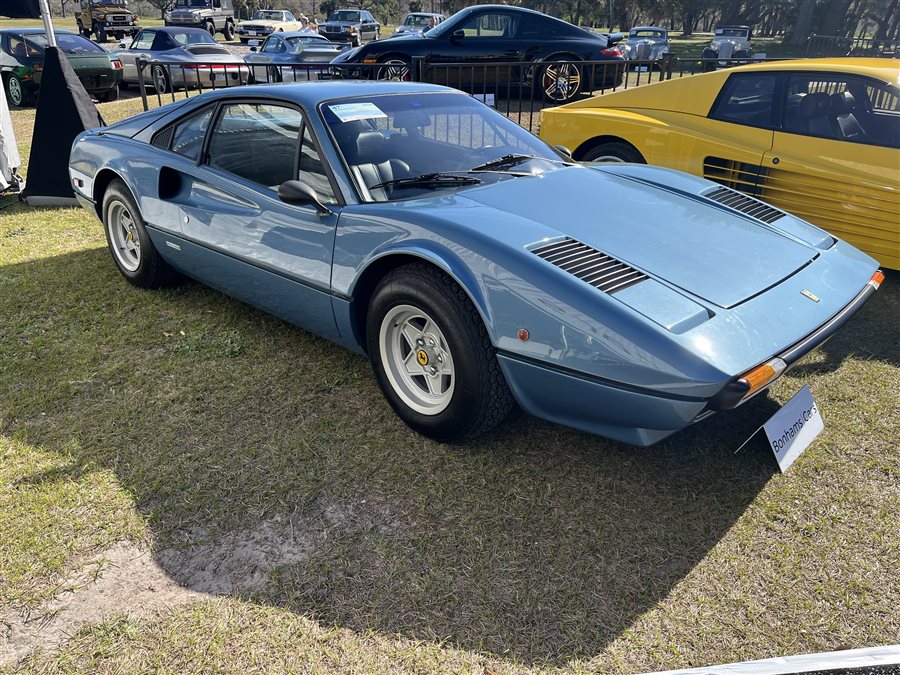
1976 Ferrari 308 GTB Vetroresina coupe, from an auction at Amelia Island on February 29th, 2024
1975: The Ferrari 308 GTB Is Introduced
Ferrari unveiled the 308 GTB at the 1975 Paris Motor Show. The new two-seat berlinetta returned Ferrari’s smaller V8 line to Pininfarina styling after the Bertone-designed 308 GT4. Leonardo Fioravanti at Pininfarina was responsible for the design, and the connection to other Fioravanti Ferraris is readily apparent in its low nose, crisp beltline and muscular rear quarters.
The underlying architecture was closely related to that of the Dino 308 GT4. The 5-speed transmission was mounted directly beneath the engine sump in a single assembly (often called a “drop-gear transaxle” setup, similar to the original Mini). This created a high center of gravity compared to modern sports cars, but kept the entire powertrain exceptionally compact longitudinally. The wheelbase was shortened relative to the four-seat GT4, helping create the compact proportions of the GTB.
The result was a distinctly different type of Ferrari from the company’s twelve-cylinder GT cars. The 308 was relatively small, light and agile, with an engine that rewarded rpm rather than relying on large-displacement torque.
2.9-Liter V8
The 308 GTB used Ferrari’s Tipo F106 90-degree V8, displacing 2,927 cc. The engine had an aluminum block and cylinder heads, with dual overhead camshafts on each bank and two valves per cylinder in the original versions.
The designation “308” followed Ferrari’s familiar naming convention: approximately 3.0 liters and eight cylinders.
Early European carbureted engines produced approximately 252 SAE horsepower, although output figures vary according to specification and rating method. U.S. versions (Tipo F106 AE) dropped significantly to 237 hp (1976–1977) and 230 hp (1978–1979) due to air pumps and thermal reactors.
The engine’s relatively small displacement meant that performance came from engine speed. It lacked the huge low-rpm torque of contemporary American V8s, but above the middle of the rev range it became increasingly responsive and energetic.
Four Weber Carburetors
Early 308 GTBs used four Weber 40 DCNF twin-choke carburetors. The eight individual intake barrels gave the engine excellent throttle response and contributed greatly to its distinctive induction sound.
Correct carburetor synchronization is essential. A properly tuned carbureted 308 responds sharply and pulls cleanly toward its redline, while an incorrectly adjusted car may hesitate, foul plugs or idle poorly. The system also requires careful attention to fuel hoses and fittings because multiple carburetors sit directly above a hot mid-engine drivetrain.
For many collectors, the combination of Weber carburetors and the early two-valve V8 provides the most charismatic version of the 308 driving experience.
Dry-Sump Lubrication
European dry-sump lubrication was only fitted to the early 2-valve carbureted GTBs (1975–1980). Once fuel injection was introduced on the 308 GTBi (1980) and Quattrovalvole (1982), all 308s globally (GTB, GTS, Euro, and US) shifted to a wet-sump system.
Dry-sump lubrication improves oil control during hard cornering and helps prevent oil starvation. It also reflects Ferrari’s competition-derived engineering philosophy.
U.S.-specification 308 GTBs generally used wet-sump lubrication, and the closely related GTS also generally used a wet sump.
This difference makes engine specification and original market important when evaluating a car.
Five-Speed Manual Transaxle
All 308 GTBs use a five-speed manual gearbox operated through Ferrari’s traditional exposed metal shift gate. The gearbox is incorporated into the transverse drivetrain assembly and shares the compact packaging necessary for the mid-engine layout.
The shift pattern includes the characteristic Ferrari dogleg arrangement, with first gear positioned separately from the main second-through-fifth pattern. This puts the most frequently used ratios in a convenient plane once the car is moving.
As with many Ferraris of the period, second gear can be reluctant when the transmission oil is cold. Once warmed, a healthy gearbox should shift cleanly and precisely.
Clutch and Final Drive
The clutch is mechanically straightforward but requires more effort than a modern sports car. A healthy clutch should engage progressively without slipping or excessive chatter. The differential is integrated into the transaxle assembly, and power is delivered only to the rear wheels. There is no traction control or electronic differential management. The drivetrain’s compactness is one of the reasons the 308 feels so responsive. The engine, gearbox and differential are concentrated immediately behind the occupants and largely between the axles.
Independent Suspension
The 308 uses independent unequal-length wishbone suspension at all four corners, with coil springs, telescopic dampers and anti-roll bars. This was a sophisticated layout for the period and contributed greatly to the car’s reputation for balanced handling. The relatively low weight and compact dimensions allowed Ferrari to use compliant spring rates without excessive body movement.
The chassis communicates progressively as grip builds and fades. There are no adaptive dampers or electronic systems attempting to control the car’s behavior.
Steering
The steering is unassisted rack-and-pinion. At parking speeds, it can be heavy, particularly with modern high-grip tires. Once the car is moving, however, steering effort decreases dramatically. The combination of a relatively light front end, narrow nose and manual rack produces excellent feedback. Steering feel is one of the strongest aspects of the 308 driving experience.
Brakes
Four-wheel ventilated disc brakes were fitted. The braking system is conventional compared with some contemporary exotics and is generally straightforward to maintain. There is no ABS. Pedal feel is therefore direct, and the driver is responsible for managing lockup. Caliper condition, flexible hoses and fluid quality become particularly important on cars that have spent long periods in storage.
Tubular Chassis
Underneath the body, the 308 GTB uses a tubular steel chassis. This construction was traditional Ferrari practice. Tubular members formed the primary structure, with additional body supports and panels attached around them. Chassis corrosion and accident damage therefore require careful inspection. Exterior bodywork can look excellent while structural tubing underneath has suffered deterioration or poor repairs.
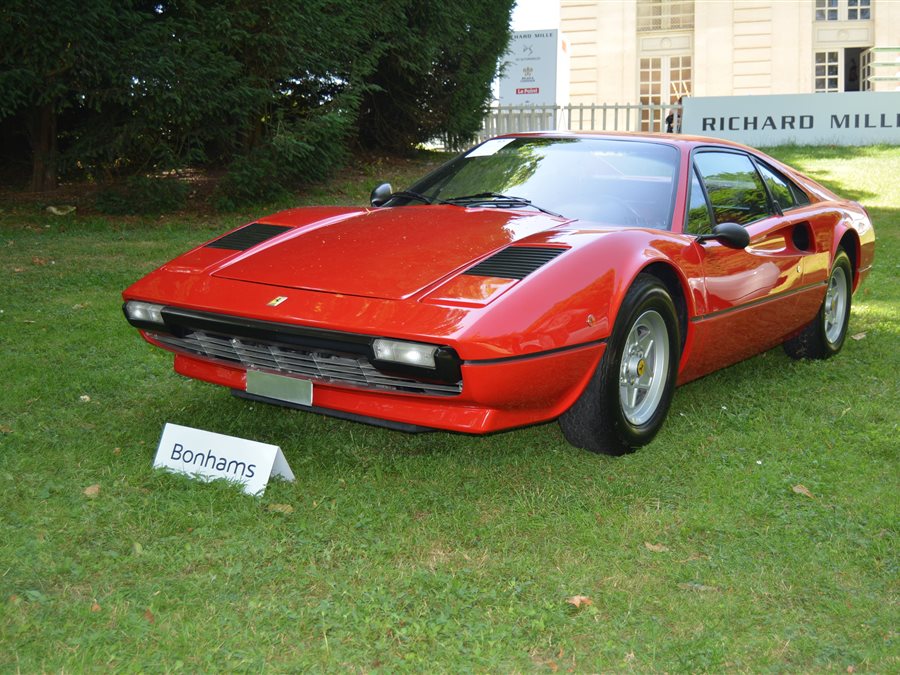
1976 Ferrari 308 GTB Vetroresina coupe, from an auction on June 30th, 2019
Vetroresina: The Fiberglass 308 GTB
The earliest 308 GTBs are commonly called vetroresina, the Italian word for fiberglass. Instead of conventional steel body panels, these cars used fiberglass bodywork over the tubular chassis. Scaglietti manufactured the bodies using fiberglass panels bonded and attached to supporting structures. The decision allowed Ferrari to bring the new model into production relatively quickly and kept weight down substantially. These early cars are now the most collectible standard-production 308 GTBs.
Why Fiberglass Matters
The vetroresina cars are considerably lighter than later steel-bodied versions. Depending on the specification and measurement method, the difference can approach several hundred pounds. That weight reduction is noticeable from behind the wheel. Early fiberglass cars feel particularly responsive, and the combination of low mass, European-specification engine tuning, dry-sump lubrication and Weber carburetors makes them among the most performance-oriented road-going 308s.
Their rarity adds substantially to their collector appeal.
Identifying a Vetroresina Car
Fiberglass cars have numerous construction details that distinguish them from later steel GTBs. Panel seams, inner body surfaces and mounting arrangements differ, and specialists familiar with the cars can identify genuine fiberglass construction quickly.
Because values have risen significantly, buyers should not rely solely on exterior appearance or an owner’s description. Chassis number and factory documentation should confirm the car’s original construction.
Some damaged cars have also received replacement panels of different materials over their lives, so individual inspection remains important.
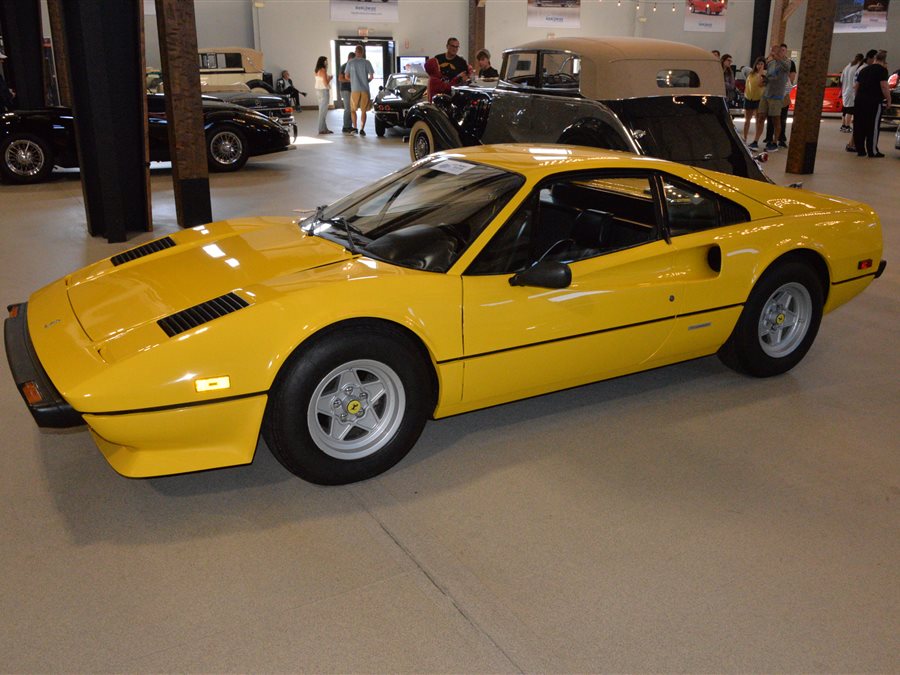
1977 Ferrari 308 GTB coupe, steel bodied, from an auction on August 28th, 2025
1976–77: Transition to Steel Bodywork
Ferrari soon changed the 308 GTB from fiberglass to steel body panels. The transition occurred during production rather than as a dramatic model-year redesign, and exact timing can vary by market. The steel cars look nearly identical externally but are heavier.
Ferrari’s reason for changing materials included production efficiency, finish quality and the ability to manufacture larger quantities using more conventional methods. The steel-bodied carbureted GTB became the primary version for the remainder of the 1970s.
Steel-Bodied Carbureted GTB
Although heavier than a vetroresina car, the steel carbureted GTB retains much of the early model’s character. It still uses the two-valve V8 and four Weber carburetors. European GTBs retain particularly strong performance because they generally have less restrictive emissions equipment and the higher-output engine specification.
These cars can represent an appealing compromise for enthusiasts who want the carbureted experience without the substantial premium attached to a genuine fiberglass example.
U.S.-Specification Cars
American-market 308s differ meaningfully from European cars. U.S. safety regulations required heavier bumper structures and other changes. Emissions regulations resulted in different carburetor tuning, ignition settings, catalytic equipment on later cars and reduced engine output.
Major U.S.-market differences can include:
- heavier bumper assemblies,
- additional emissions equipment,
- different exhaust systems,
- reduced engine output,
- wet-sump lubrication rather than the European GTB’s dry sump,
- different lighting and side-marker equipment,
- and market-specific engine calibration.
Consequently, an early European GTB and a contemporary U.S. GTB can feel surprisingly different despite appearing almost identical.
Emissions and Performance Changes
As emissions standards tightened during the late 1970s, Ferrari had to modify carburetion, ignition timing and exhaust equipment. U.S.-market cars were particularly affected. Catalytic converters and emissions-control hardware increased heat around the engine compartment while reducing output. These changes partly explain why collectors often place a premium on early European carbureted cars.
Exhaust System
The 308’s exhaust note is central to its character. The small-displacement V8 produces a sharper, higher-frequency sound than a large American V8. Exhaust configuration varies substantially by market and year. European cars generally have less restrictive systems, while U.S. cars may incorporate catalytic converters and additional emissions hardware. Aftermarket exhausts are extremely common. Systems from companies such as Ansa and later specialist manufacturers can dramatically alter sound and weight.
For collector-quality cars, retaining the original exhaust or including it with the sale is increasingly valuable.
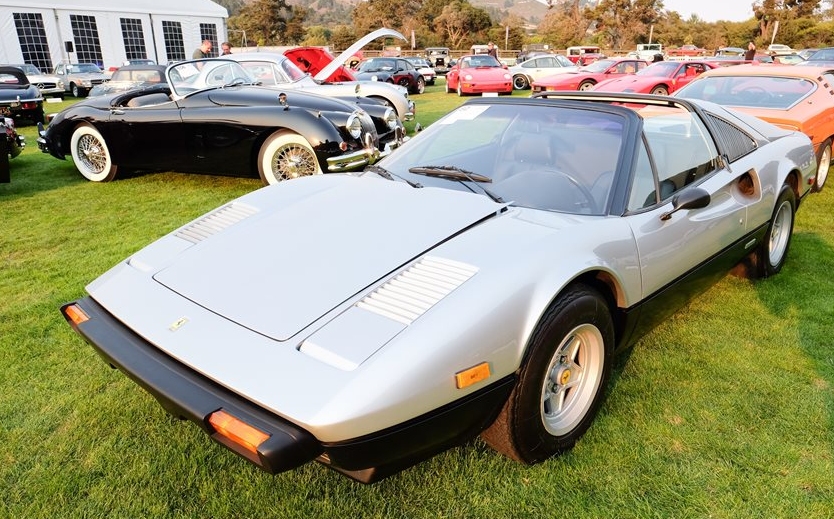
1977 Ferrari 308 GTS Spider, from an auction at Quail Lodge on August 19th, 2016
1977: The 308 GTS
The removable-roof 308 GTS appeared in 1977 and quickly became extremely popular, particularly in the United States. Although mechanically related, the GTS uses a removable roof panel and additional body reinforcement. The open-roof model ultimately became more numerous and more culturally recognizable, particularly after its later television exposure.
For collectors specifically interested in the GTB, however, the fixed roof provides greater structural rigidity, cleaner Fioravanti lines and generally lower production numbers.
GTB Versus GTS Chassis Character
The fixed-roof GTB has a stiffer structure because it does not require a removable roof opening. That gives the coupe a slight advantage in chassis rigidity. The difference is not enormous in ordinary road use, but enthusiastic drivers may notice less body movement over rough roads. The uninterrupted roofline is also closer to Fioravanti’s original design concept.
Late-1970s Carbureted Cars
By 1978–79, the carbureted 308 had become a mature product. Ferrari made numerous small changes to interior details, emissions systems, ignition components and equipment. U.S. cars became increasingly constrained by emissions requirements, while European cars retained stronger performance. This growing emissions challenge eventually pushed Ferrari toward fuel injection.
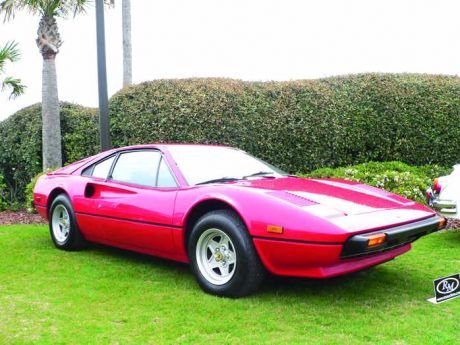
1980 Ferrari 308 GTBi coupe, from an auction at Amelia Island on March 11th, 2006
1980: The 308 GTBi
In 1980 Ferrari replaced the carbureted GTB with the 308 GTBi. The “i” indicated fuel injection. Four Weber carburetors gave way to Bosch K-Jetronic mechanical continuous fuel injection. The system improved cold starting, emissions compliance and mixture consistency. It also required less periodic adjustment than four carburetors.
Bosch K-Jetronic
K-Jetronic meters fuel mechanically according to airflow rather than using modern electronically pulsed injectors. A mechanical airflow sensor controls a fuel distributor, which continuously supplies pressurized fuel to the individual injectors. When healthy, the system is reliable and provides excellent everyday drivability. Problems generally arise after long periods of storage, when old fuel can contaminate the fuel distributor, injectors and pressure-control components.
GTBi Performance
The original two-valve GTBi suffered a noticeable reduction in peak power. European output was approximately 214 horsepower, while U.S. versions were generally rated around 205 horsepower. The difference compared with an early carbureted European GTB is significant.
The injected engine starts more easily and behaves more consistently, but it lacks some of the top-end performance and induction character of the Weber-equipped cars. This has historically made the two-valve GTBi less desirable to performance-oriented collectors.
GTBi Driving Character
Despite the lower output, the GTBi retains the excellent chassis fundamentals of the earlier 308. Steering remains manual. The five-speed gated gearbox remains. The suspension remains independent at all four corners. The car’s relatively modest power can actually make it enjoyable on normal roads because the driver can use more of the engine’s rev range without reaching extreme speeds immediately.
Interior Evolution
The 308 interior evolved gradually rather than through dramatic redesigns. Early cars have a particularly simple dashboard and switch layout. Later versions received changes to instruments, ventilation controls, upholstery and switchgear. The gated shifter remains the centerpiece. The seating position is low, and the steering wheel is relatively close to the driver. Pedals are somewhat offset, reflecting the packaging compromises of the wheel wells and mid-engine layout.
Air Conditioning
Air conditioning was available and is particularly useful because the cabin receives heat from the engine immediately behind it. Original systems are often weak by modern standards. A properly restored system can perform reasonably well, while modern compressors and improved condensers can substantially improve usability.
On a collector-quality car, sympathetic upgrades are generally preferable to major visible alterations.
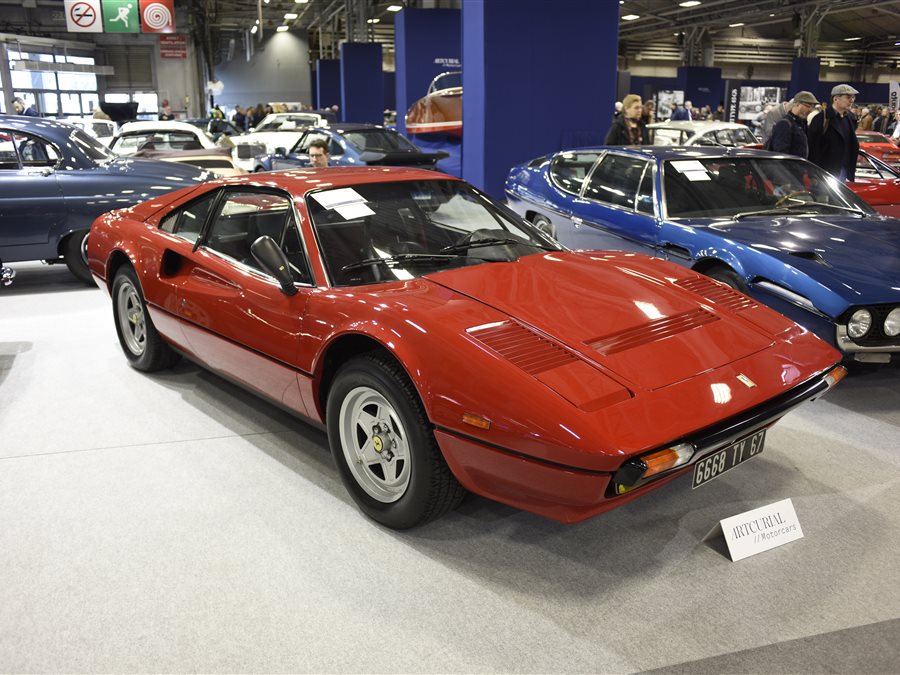
1985 Ferrari 308 GTBi QV coupe, from an auction on February 3rd, 2023
1982: 308 GTB Quattrovalvole
Ferrari addressed the injected 308’s performance deficit with the 308 GTB Quattrovalvole, introduced for 1982. “Quattrovalvole” means four valves, referring to the adoption of four valves per cylinder. The engine now had 32 valves rather than 16. Displacement remained 2,927 cc. Bosch K-Jetronic fuel injection was retained.
Four-Valve Cylinder Heads
The new cylinder heads dramatically improved airflow. Each cylinder received two intake and two exhaust valves, increasing total valve area and improving breathing at higher rpm. Ferrari also revised combustion-chamber design and other engine details. The result was a significant recovery in performance without abandoning fuel injection.
European Quattrovalvole engines produced approximately 240 horsepower, while U.S. versions were generally rated around 230 horsepower.
Quattrovalvole Engine Character
The QV combines much of the convenience of fuel injection with stronger high-rpm performance. It still lacks the induction sound of the Weber-equipped cars, but it feels considerably more energetic than the two-valve GTBi. Power builds progressively, and the engine becomes particularly lively in the upper half of the rev range.
For drivers who want a 308 that is relatively easy to use while still delivering strong performance, the Quattrovalvole is often considered the most attractive later version.
Quattrovalvole Exterior Changes
Exterior changes were relatively subtle. The basic Fioravanti body remained intact, but revised front and rear details, ventilation and trim distinguish the later cars. Additional louvers on the front deck are among the useful identifying features. Badging also identifies the Quattrovalvole. Because many earlier cars have acquired later wheels or cosmetic parts, chassis and engine identification remain more reliable than appearance alone.
Metric Wheels
Later 308s were sometimes fitted with Michelin TRX metric wheels and tires, depending on market and specification. The TRX system was technologically advanced when new but uses a metric bead diameter incompatible with conventional tires. Correct TRX tires remain available but can be expensive.
Some owners have switched to conventional-diameter reproduction wheels that preserve the factory appearance while allowing a wider choice of modern tires.
1983–84: Mature Quattrovalvole Production
By 1983, the 308 had developed into a remarkably usable sports car. The Quattrovalvole engine restored performance, while Bosch injection made starting and low-speed operation more consistent. Ferrari continued making small improvements to electrical systems, interior trim and production quality. The fundamental chassis architecture remained largely unchanged because it had been successful from the beginning.
1985: End of 308 Production
Production of the 308 family ended in 1985, when Ferrari introduced the 328. The 328 retained the basic body and chassis concept but enlarged the V8 to 3.2 liters and incorporated numerous mechanical and cosmetic refinements. The continuity between the cars demonstrates how successful the original 308 design had been. The basic architecture introduced in the mid-1970s remained viable for more than a decade.
Performance Differences Among 308 GTBs
The various GTB versions can feel substantially different despite sharing essentially the same body.
Broadly, their mechanical personalities are:
- Vetroresina carbureted GTB: Lightest and most raw, with Weber induction, strong European output and exceptional collector interest.
- Steel carbureted GTB: Slightly heavier but retains the Weber sound, response and traditional early-308 character.
- 308 GTBi: Bosch injection improves usability and emissions performance but reduces peak power substantially.
- 308 GTB Quattrovalvole: Four-valve heads restore much of the lost performance while retaining the convenience of fuel injection.
- European-specification cars: Generally lighter and more powerful, with fewer emissions restrictions; European GTBs also typically have dry-sump lubrication.
- U.S.-specification cars: Heavier bumpers, emissions equipment and lower output, with wet-sump lubrication.
Understanding the Major Ferrari 308 GTB Variants
Vetroresina 308 GTB: The earliest and most collectible version, using fiberglass bodywork, four Weber carburetors and very low weight. European cars combine this with dry-sump lubrication and approximately 255 horsepower.
Steel Carbureted 308 GTB: Visually similar to the fiberglass car but with conventional steel body panels. Still uses four Weber carburetors and retains much of the early car’s character.
U.S. Carbureted 308 GTB: Federalized factory version with heavier bumpers, emissions equipment, lower output and generally wet-sump lubrication.
308 GTBi: Introduced in 1980 with Bosch K-Jetronic fuel injection and two-valve cylinder heads. Easier starting and cleaner emissions came at the expense of substantial peak power.
308 GTB Quattrovalvole: Introduced in 1982 with four-valve cylinder heads and Bosch injection. Output increased significantly, making it the strongest of the regular injected 308 GTBs.
Production Numbers
Factory records list total 308 GTB coupe production (excluding GTS targas) at roughly 3,600 units:
- GTB Vetroresina (Fiberglass): 712 units (1975–1977)
- GTB Steel Carbureted: 2,185 units (1977–1980)
- 308 GTBi (Fuel Injected): 494 units (1980–1982)
- 308 GTB Quattrovalvole: 748 units (1982–1985)
What Matters to Collectors
The first task when evaluating a 308 GTB is determining exactly what version it is. The visual differences between fiberglass and steel carbureted cars can be subtle, while later cars are frequently modified with earlier or later wheels, spoilers and trim. For a claimed vetroresina car, chassis identification and factory documentation are essential. The value premium is large enough that authenticity matters greatly. Body construction should also be inspected because repairs over the past five decades may have introduced steel or replacement fiberglass panels.
Original market specification is also important. A European dry-sump carbureted GTB is mechanically different from a U.S. wet-sump car. Buyers should not assume that a car converted cosmetically to European bumpers also has European engine specification.
The engine’s timing belts are among the most important maintenance items. The camshafts are belt-driven, and belt failure can allow pistons and valves to collide. Service history should establish when belts, tensioners and related components were last replaced. Valve clearances, ignition condition and oil leaks also deserve attention. A healthy 308 V8 should produce consistent oil pressure, maintain stable coolant temperature and pull cleanly through the rev range.
On carbureted cars, the Webers should be synchronized correctly. Rough idle, hesitation or uneven exhaust temperatures can indicate carburetor or ignition problems. Fuel hoses should be inspected carefully because deterioration around four carburetors positioned above a hot engine creates a serious fire risk.
Injected cars have different concerns. Bosch K-Jetronic is generally reliable when regularly used, but cars stored for long periods can develop problems with fuel distributors, injectors, pumps and warm-up regulators. Cold and hot starting should both be tested.
Cooling-system condition is critical. Radiators, fans, hoses, water pumps and coolant pipes must all work properly. A car should maintain stable temperature both while moving and while sitting in traffic.
The gearbox should be evaluated cold and warm. Some second-gear reluctance when cold is normal, but grinding, jumping out of gear or significant bearing noise is not.
Suspension condition dramatically affects the driving experience. Old bushings, worn dampers, tired ball joints and incorrect alignment can make a fundamentally excellent chassis feel vague. Restoring the suspension to original geometry often transforms the car.
Rust is a major concern, particularly on steel-bodied cars. Sills, lower doors, wheel arches, floor areas, suspension mounting points and chassis tubing should be examined carefully. Fiberglass exterior panels do not make a vetroresina car immune to corrosion because the underlying chassis remains steel.
Accident damage is equally important. These cars were often driven hard when their values were much lower. Poor structural repairs can affect suspension alignment and panel fit even when the exterior looks attractive.
Original body details increasingly matter. Bumpers, mirrors, wheels, spoilers, lights and lower valances were commonly altered. Many U.S. cars have been converted toward European appearance.
Interior components can be surprisingly expensive to restore correctly. Original leather, carpeting, instruments, switches, steering wheels and shift-gate components contribute substantially to the character of the car.
Factory tools, jack, spare wheel, owner’s manuals, service books and documentation add value. These accessories were frequently separated from cars during periods when 308s were simply inexpensive used Ferraris.
Driving Experience
A well-sorted 308 GTB demonstrates why outright horsepower figures tell only part of the story. Even the more powerful versions are modest by modern supercar standards, but the car is compact, responsive and unusually communicative. The manual steering is heavy only at very low speeds and becomes delicate once moving. The gated five-speed requires deliberate shifts. The naturally aspirated V8 responds directly to throttle input, and the chassis communicates changes in grip without electronic intervention.
The carbureted cars provide the most theatrical engine experience. As the throttle plates open, the four Webers produce an induction sound that becomes increasingly prominent with rpm. Early European cars combine that sound with lower weight and stronger engine tuning.
The GTBi is more subdued and less powerful, but its fuel injection makes it easier to start and operate consistently. Because values have historically lagged other versions, it can also provide a relatively accessible route into the 308 GTB.
The Quattrovalvole is arguably the most developed 308 GTB for regular driving. Bosch injection provides consistency while the four-valve heads restore much of the engine’s high-rpm performance.
The fixed-roof GTB also has a distinctive advantage over the more numerous GTS. Its roofline is uninterrupted, the structure is somewhat more rigid, and the original Fioravanti shape is presented in its purest form.
For collectors, the hierarchy is increasingly influenced by specification rather than simply condition. Genuine vetroresina cars occupy a special category because of their rarity, low weight and historical importance. Carbureted steel cars preserve most of the same mechanical character at a lower level of rarity. Quattrovalvole cars provide the most developed combination of performance and usability, while GTBis represent the important transition to fuel injection.
Across every version, however, the qualities that define the Ferrari 308 GTB remain remarkably consistent: a compact tubular chassis, independent wishbone suspension, manual steering, a gated five-speed gearbox and a naturally aspirated V8 mounted immediately behind the driver. Combined with Fioravanti’s exceptionally durable Pininfarina styling, those qualities made the 308 GTB not only one of the most recognizable Ferraris ever built, but also one of the clearest expressions of the analog mid-engine sports car.
Important Sales Reviewed by SCM Experts
In each month’s issue for the past 38 years, SCM’s analysts have reviewed 5 to 7 significant cars sold at auction, and discuss what options, history, or details made that particular more or less valuable. They give their expert opinion on the market for these cars, and whether this car was well bought or well sold. If you’re thinking of purchasing a Ferrari 308 GTB, you’ll likely find these profiles critical in helping you make the right decision. Each of the following is an article from our print magazine on a Ferrari 308 GTB sold at auction.
 1976 Ferrari 308 GTB “Vetroresina”Ferrari historian Marcel Massini notes that as few as 712 fiberglass-bodied 308 GTBs were produced. Just 100 examples were sent to North America. These early fiberglass cars were nearly 330 pounds lighter than the steel-bodied 308s that followed, allowing drivers to take full advantage of the model’s transverse mid-mounted 2.9-liter V8 for optimal handling. This […]Read more
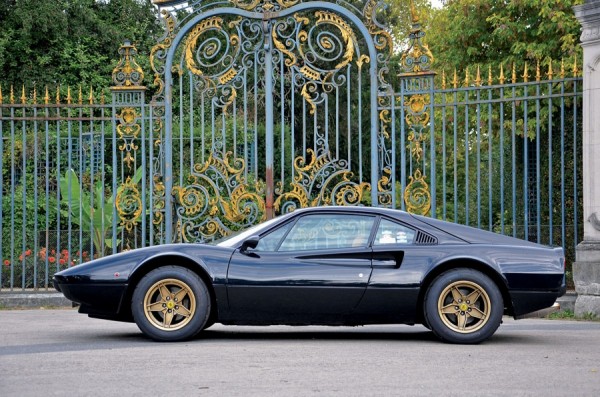 Two 1977 Ferrari 308 GTB Vetroresinas1977 Ferrari 308 GTB Vetroresina Chassis number 20271; engine number 00441 This superb fiberglass Ferrari 308 has always been fastidiously maintained. During its restoration it showed no signs of previous repair. The engine was refurbished in 2000. The car has therefore been completely overhauled and fitted with a high-performance exhaust. The current owner sent the […]Read more
 1976 Ferrari 308 GTB VetroresinaThe 308 GTB offered here has the lighter fiberglass (Vetroresina) bodywork and dry-sump lubrication of the very first 308 GTBs produced. Introduced at the Paris Salon in 1975, the stunningly beautiful 308 GTB marked a welcome return to Pininfarina styling following the Bertone-designed Dino 308 GT4. Produced initially with dry-sump lubrication and fiberglass bodywork — […]Read more
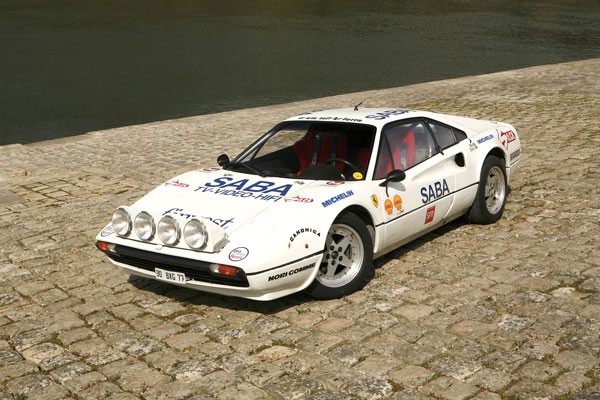 1976/1983 Ferrari 308 GTB Group B MichelottoIntroduced at the Paris Salon in 1975, the stunningly beautiful 308 GTB—Ferrari’s second V8 road car—marked a welcome return to Pininfarina styling following the Bertone-designed Dino 308 GT4. Badged as a proper Ferrari rather than a Dino, the newcomer had changed little mechanically, apart from a reduction in wheelbase. The car retained its predecessor’s underpinnings […]Read more
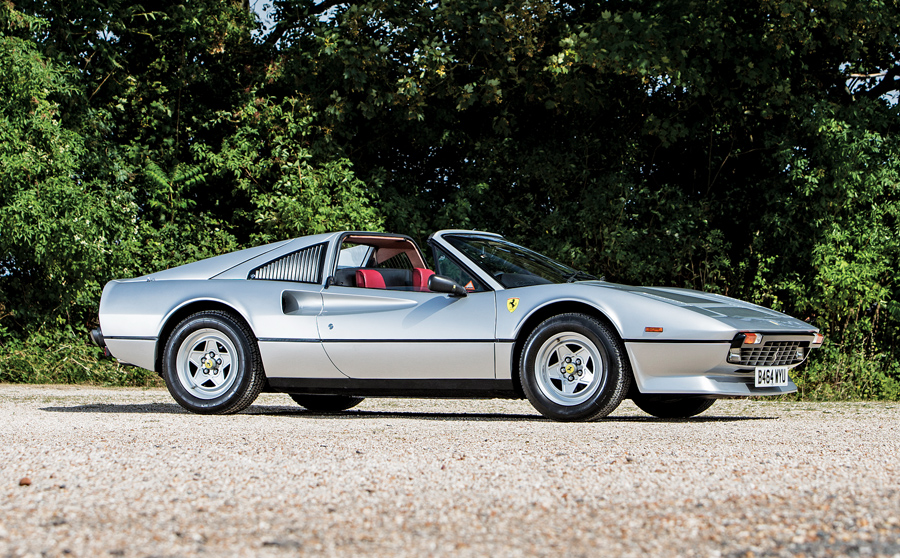 1984 Ferrari 308 GTS QV TargaOne of only about 184 right-hand-drive models manufactured, and representing the 308 in its ultimate, Quattrovalvole form, this example was supplied via the U.K. importer, Maranello Concessionaires, and delivered new to the first owner in Perth, Australia. This Ferrari has been in the present ownership for five years, impeccably maintained. Driven to the sale, it […]Read more
Cars For Sale
Quick links to listings for this make and model online:
Books on the Ferrari 308 GTB
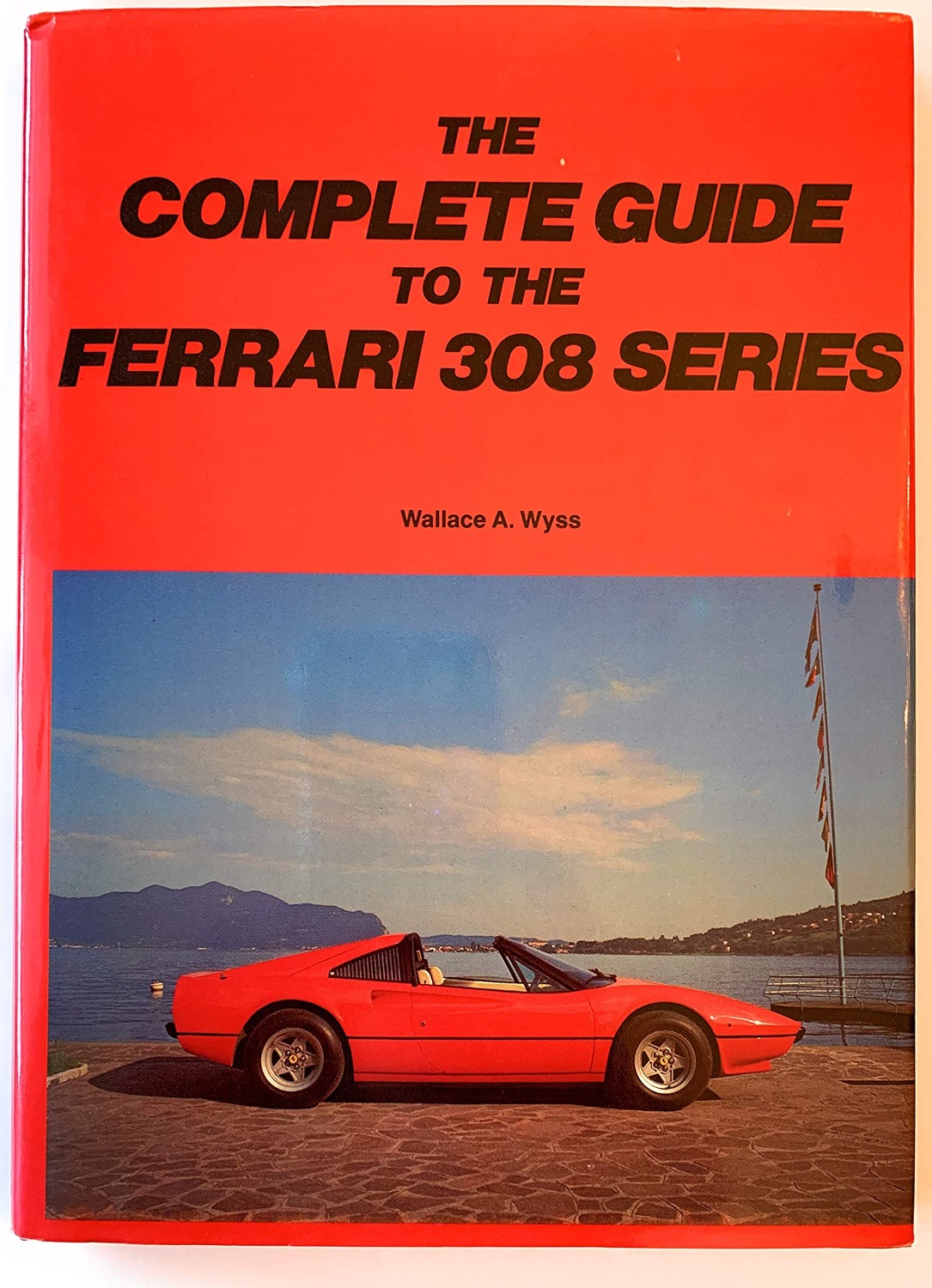
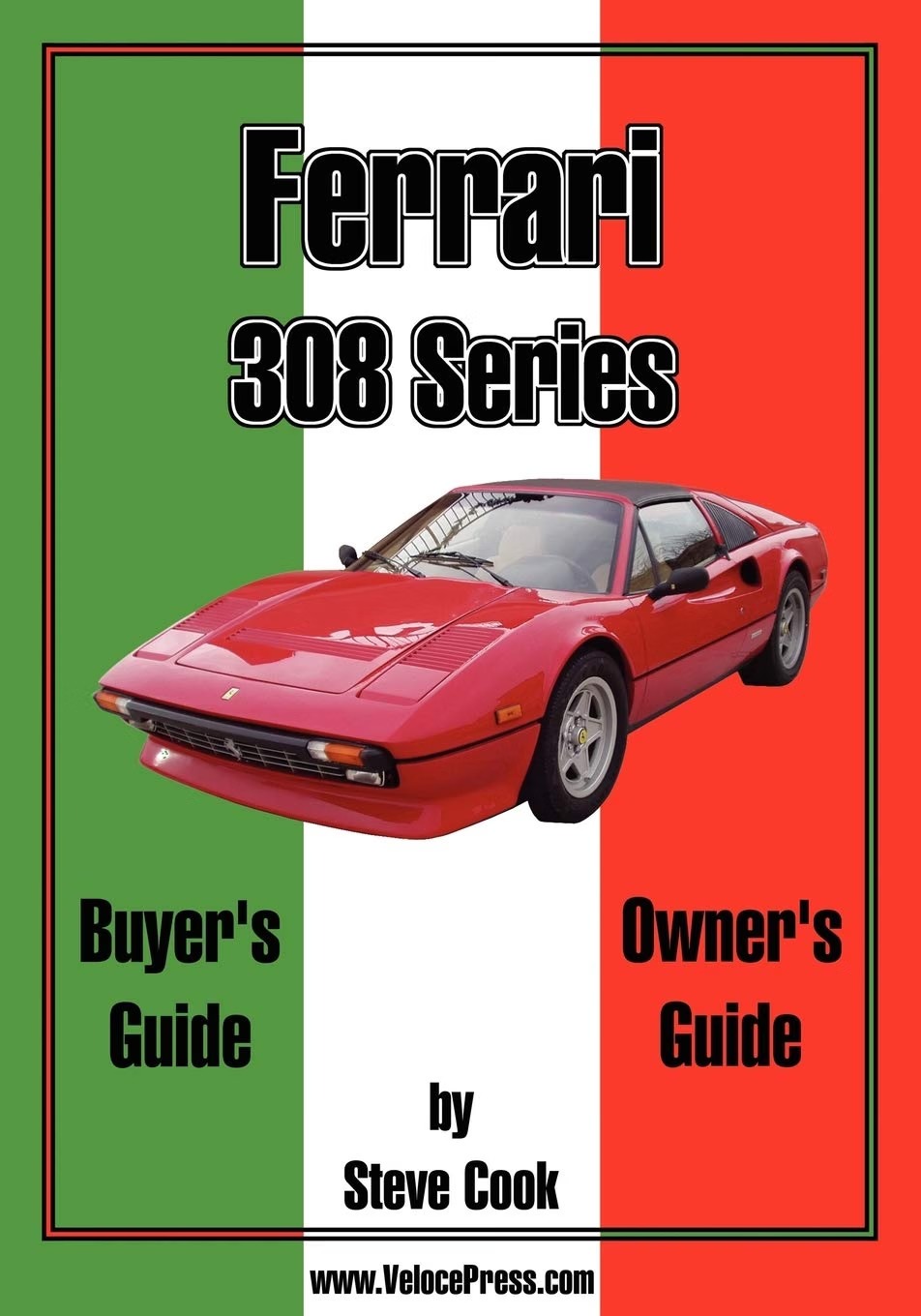
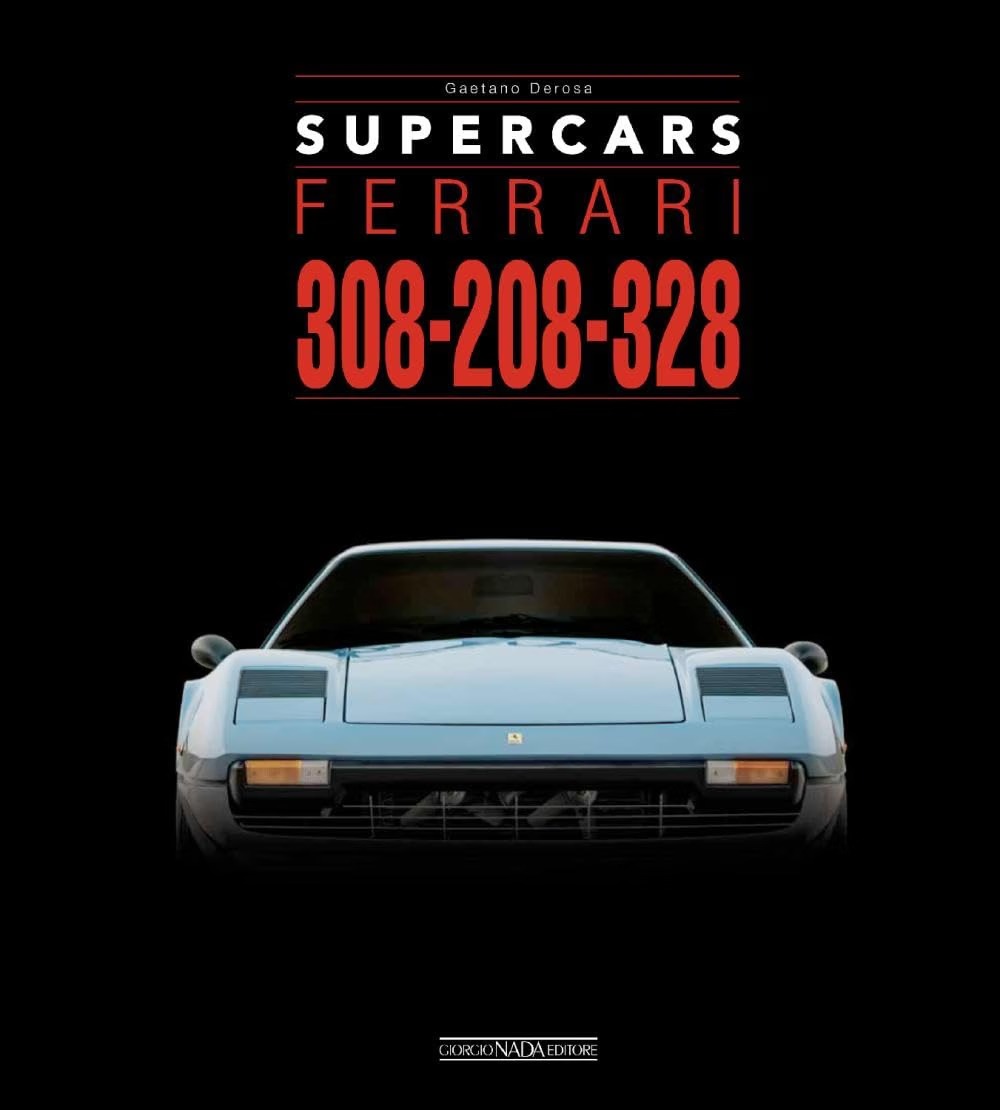
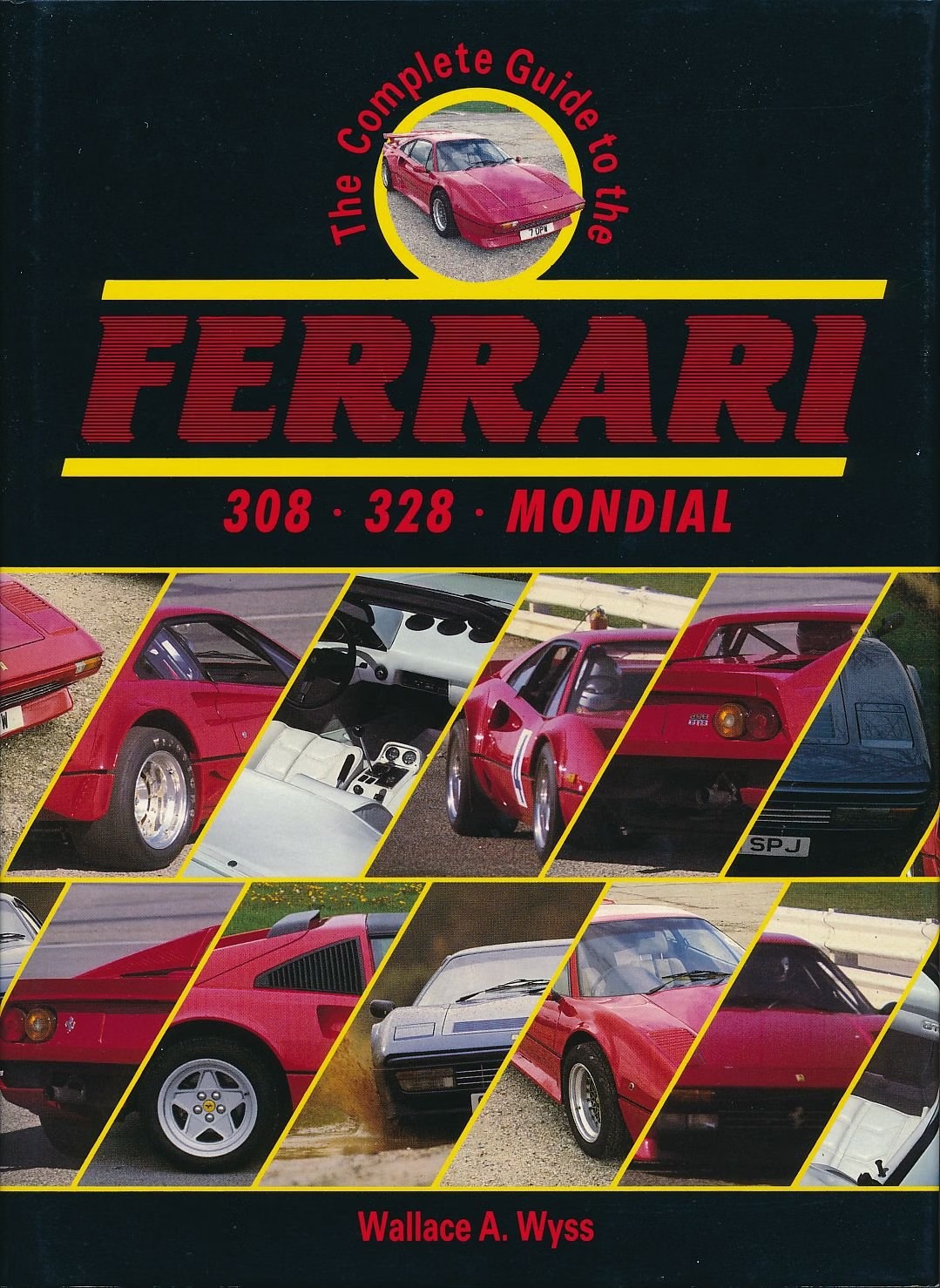
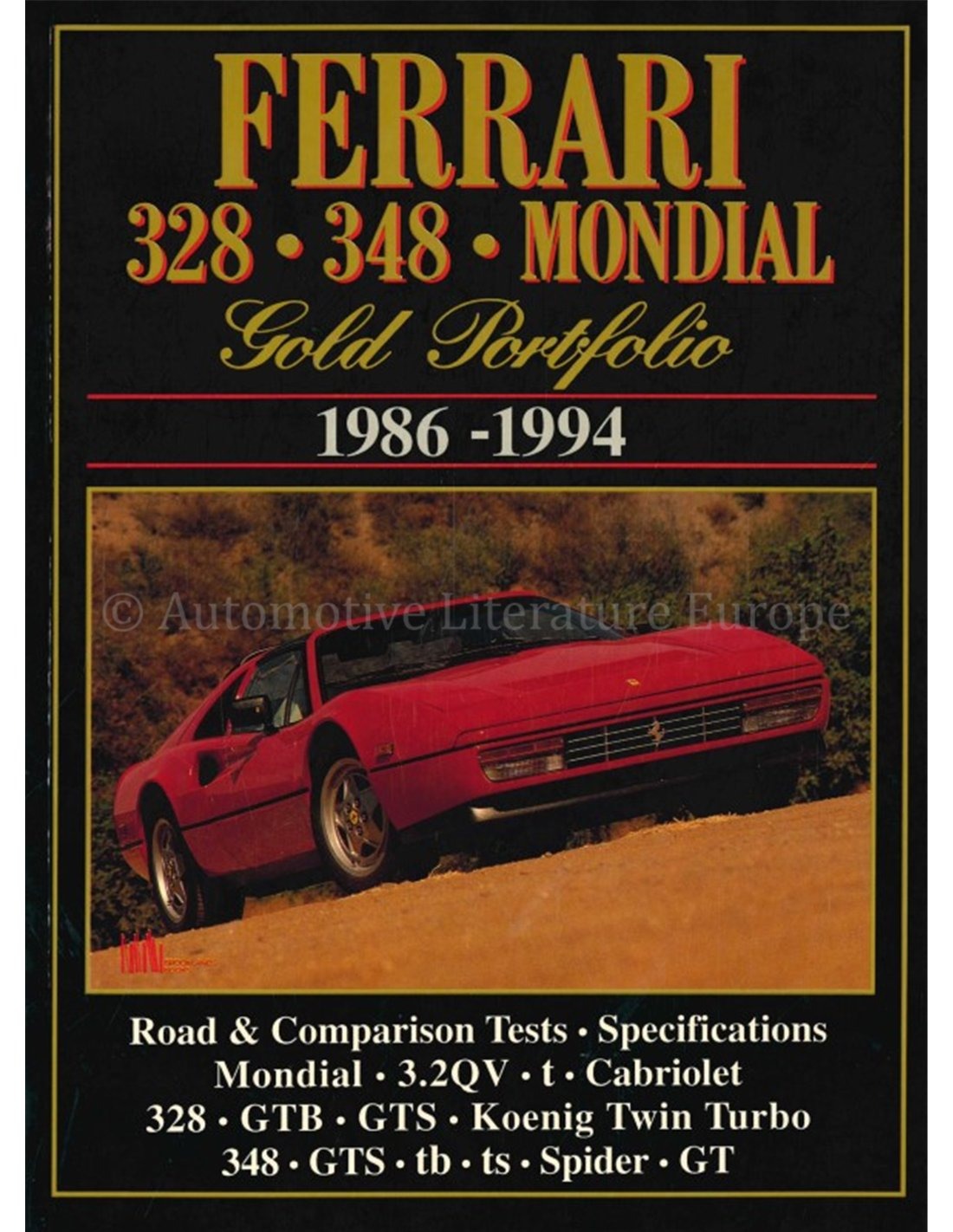

Note that as an Amazon Associate, we earn from qualifying purchases of the above books.
Past Auction Sales – Ferrari 308 GTB
Average Ferrari 308 GTB Sale Price by Year from SCM’s Platinum Auction Database:
Includes sales listed as Ferrari 308 GTS, Ferrari 308 GTSi, Ferrari 308 GTBi.
Ferrari 308 GTB Sales from SCM’s Platinum Auction Database:

Artcurial
Condition: 2
Mar 15, 2026
$203,111

RM Sotheby's
Condition: 2-
Oct 18, 2025
$255,230

Worldwide Auctioneers
Condition: 2-
Aug 28, 2025
$87,780

Bonhams Cars
Condition: 2
Oct 8, 2023
$194,359

Bonhams
Condition: 2
May 13, 2022
$155,256

RM Sotheby's
Condition: 2
Mar 25, 2022
$93,500

RM Sotheby's
Condition: 2
Feb 2, 2022
$179,696

Bring a Trailer
Condition: 2
Dec 7, 2021
$69,825

Silverstone
Condition: 3+
Jun 5, 2021
$93,062

Silverstone
Condition: 2+
Mar 27, 2021
$162,772

Bonhams
Condition: 3+
Mar 3, 2021
$88,893

Bonhams
Condition: 3+
Feb 6, 2020
$141,719

Artcurial
Condition: 2-
Oct 27, 2019
$136,367

Bonhams
Condition: 3+
Sep 29, 2019
$171,375

Silverstone
Condition: 3+
Sep 20, 2019
$59,069

H&H Auctioneers
Condition: 2-
Jun 19, 2019
$77,896

RM Sotheby's
Condition: 2-
Apr 11, 2019
$74,483

Mecum Auctions
Condition: 3+
Jan 3, 2019
$55,000

RM Auctions
Condition: 3-
Aug 30, 2018
$20,900

GAA Classic Cars
Condition: 3
Jul 26, 2018
$42,000

GAA Classic Cars
Condition: 3+
Jul 26, 2018
$80,000

Gooding & Co.
Condition: 2
Mar 9, 2018
$220,000

RM Sotheby's
Condition: 3+
Feb 7, 2018
$163,170

Brightwells
Condition: 2
Oct 25, 2017
$177,936

Worldwide Auctioneers
Condition: 3+
Sep 2, 2017
$82,500

Brightwells
Condition: 3
Jun 24, 2017
$153,970

Gooding & Co.
Condition: 2+
Mar 11, 2017
$126,500

Artcurial
Condition: 2-
Jul 9, 2016
$170,221

Bonhams
Condition: 3+
Mar 20, 2016
$164,430

Bonhams
Condition: 3+
Feb 4, 2016
$156,884

Bonhams
Condition: 2
Aug 14, 2015
$126,500

Artcurial
Condition: 1-
Jun 22, 2015
$229,895

Motostalgia
Condition: 2
Jun 12, 2015
$88,000

Gooding & Co.
Condition: 1-
Mar 13, 2015
$192,500

Bonhams
Condition: 2+
Mar 12, 2015
$115,500

Artcurial
Condition: 2-
Feb 6, 2015
$177,383

Artcurial
Condition: 3+
Nov 2, 2014
$164,215

Silverstone
Condition: 3+
Sep 4, 2014
$105,669

Bonhams
Condition:
May 18, 2014
$834,771

H&H Auctioneers
Condition: 3
Apr 24, 2014
$155,160

Bonhams
Condition: 2-
Jan 16, 2014
$114,400

RM Auctions
Condition:
Sep 8, 2013
$135,220

Mecum Auctions
Condition: 5
Sep 5, 2013
$23,540

Artcurial
Condition: 3+
Nov 11, 2012
$74,104

Bonhams
Condition: 2+
May 11, 2012
$69,962

Bonhams
Condition: 3
May 20, 2011
$656,190

Bonhams
Condition: 3
Apr 11, 2011
$48,843

Artcurial
Condition: 3-
Feb 4, 2011
$48,229

Mecum Auctions
Condition: 3-
May 19, 2010
$13,515

Carlisle Auctions
Condition: 2-
Apr 22, 2010
$28,000
See all 183 sales in SCM’s Platinum auction database: Ferrari 308 GTB · Ferrari 308 GTS · Ferrari 308 GTSi · Ferrari 308 GTBi
Forums & Communities
Popular Videos about the Ferrari 308 GTB