
Buy What You Love, Pay What You Should
Paul Hardiman
-
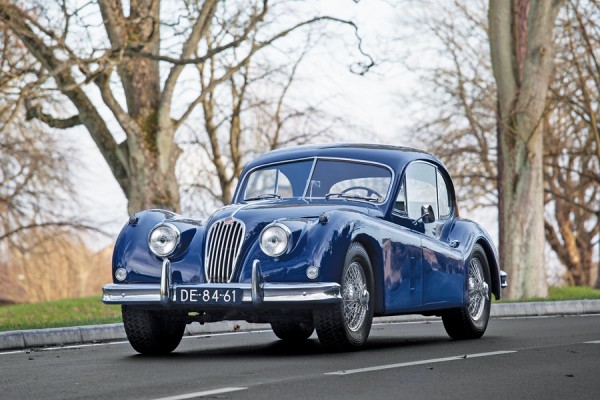
1955 Jaguar XK 140 SE Coupe
In October 1954, the Jaguar XK 120’s replacement was launched and given the name XK 140. The new car offered more interior space — a result of the engine being moved forward three inches — and more precise rack-and-pinion steering was fitted. The fixed-head coupe iteration offered 2+2 seating. The standard engine produced 190 horsepower,…
-
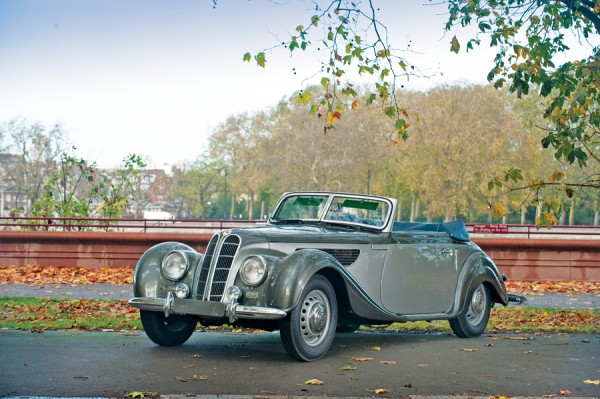
1953 EMW 327 Cabriolet
The acquisition of the Dixi Works at Eisenach in 1928 provided BMW, hitherto a manufacturer of aero engines and motorcycles, with a foothold in motor manufacturing. Dixi’s built-under-license version of the Austin Seven was gradually developed and improved, ending up with swing-axle suspension and overhead valves. Then, in 1933, came the first true BMW —…
-
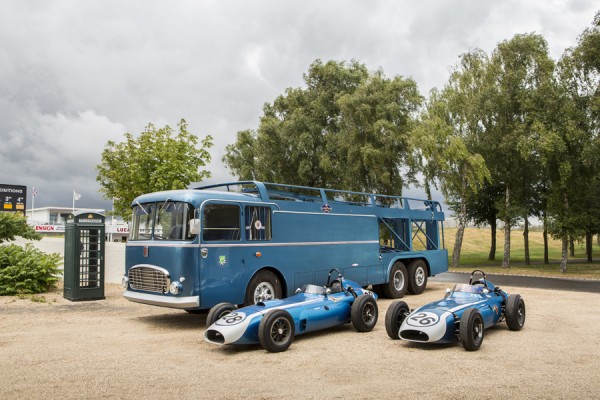
1956 Fiat-Bartoletti Tipo 306 Race Car Transporter
This is the Maserati factory team’s transporter of its World Championship-winning Fangio 250F season of 1957 — and which would also have taken Fangio’s Piccolo 250F (Chassis 2533) to the last race of his glittering career at Reims in 1958. It was subsequently acquired by Lance Reventlow for his Team America Scarab assault upon the…
-
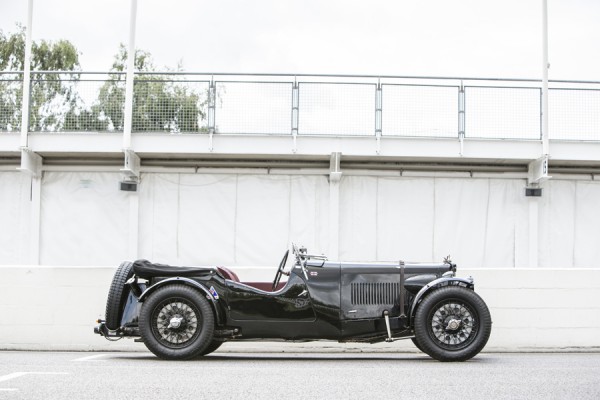
1935 Aston Martin Ulster 2/4 Seater Tourer
Manufactured by Robert Bamford and Lionel Martin, the first Aston-Martins (the hyphen is correct for the period) rapidly established a reputation for high performance and sporting prowess in the years immediately following World War I. The foundations were laid for proper series production with the formation of Aston Martin Motors Ltd. in 1926 under…
-
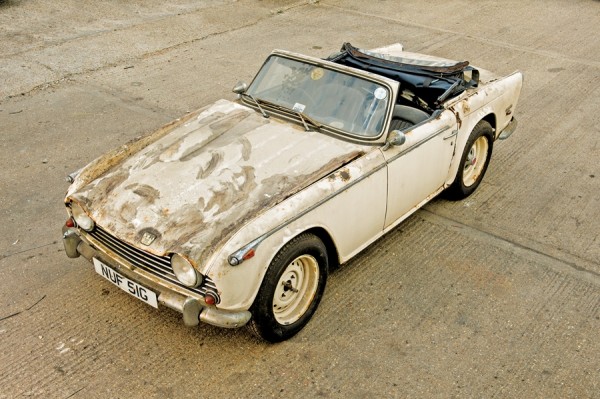
1968 Triumph TR5 Roadster
Similar to the preceding TR4A — the first TR with independent rear suspension — but with Triumph’s 2.5-liter, 6-cylinder engine installed in place of the old 2.1-liter four, the TR5 was produced during the 1968 model year only (October 1967 to November 1968) pending the arrival of the restyled TR6. The bulk of production was…
-

1974 Jensen Interceptor Series III Sports Saloon
With the Interceptor saloon’s introduction in 1967, Jensen had switched from glassfibre to steel for its car bodies. Underneath, the preceding C-V8’s robust chassis, running gear and 6,276-cc Chrysler engine remained substantially unchanged. With around 280 bhp on tap, performance was more than adequate, The Motor recording a top speed of 140 mph with 100…
-

1938 Jaguar SS 100 2½-Liter Roadster
Launched in 1936 alongside the 2½-liter saloon, the SS 100 Jaguar sports car marked the company’s first use of the Jaguar name. Beautifully styled in the manner of its SS 90 predecessor, the newcomer employed a shorter, 102-inch wheelbase chassis and a revised version of the 2,663-cc Standard Six which produced 104 bhp. In 1938,…
-

1969 Aston Martin DB6 Mk I Vantage Sports Saloon
The culmination of Aston Martin’s long-running line of DB 6-cylinder sports saloons and thus considered by many to be the last real Aston, the DB6 had been introduced in 1965, updating the DB5. Although recognizably related to the Touring-styled DB4 of 1958, the DB6 abandoned the Carrozzeria Touring-developed Superleggera body structure of its predecessors in…
-

1959 Jaguar XK 150S 3.4 Roadster
The final glorious incarnation of Jaguar’s fabulous XK series of sports cars arrived in 1957. The XK 150 was a progressive development of the XK 120 and XK 140, retaining the same basic chassis, 3.4-liter engine and 4-speed Moss transmission of its predecessors while benefiting from a new, wider body that provided increased interior space…
-

1992 Jaguar XJ 220
The XJ 220 prototype was unveiled to the world in Birmingham in 1988. The car was greeted with enthusiasm, and the decision was taken to produce a limited series of 350 examples. As Jaguar was not set up to produce such a small series, the build project was given to Jaguar-Sport, a joint venture between…