
Buy What You Like, Pay What You Should
Affordable Classics
-
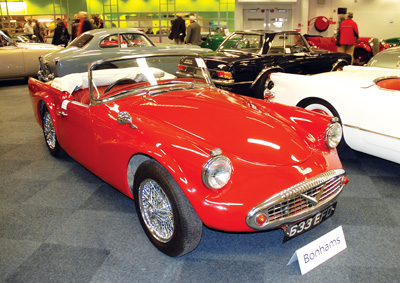
The Angry Catfish May be a Keeper
Daimler of the U.K. (no relation to Daimler-Benz) was mainly a purveyor of ultra-stodgy sedans, hearses and limousines to British nobility and the royal family. They were as unlikely an entrant into the sports car market as Kaiser and Nash had been a few years early with the Kaiser-Darrin and the Nash-Healey. Nevertheless, the moribund…
-

The Safety Car that Didn’t Sell
By 1973, things looked very bad indeed for the types of cars that most of us care about. Fuel shortages, insurance rates, nutty safety and bumper regulations—plus a hearty helping of general gloom and malaise—all but killed performance cars. Subaru importer Malcolm Bricklin thought he could exploit a niche for a sports car that nearly…
-
A Well-Sorted MGB is a Great Start to Collecting
Much like Morgan fans remain to this day, the MG faithful of the 1950s were committed masochists. Fans of the T-Series cars were positively aghast when the envelope-bodied MGA replaced the TF. When the inevitable wheel of progress hit Abingdon-on-Thames once again in 1962, the faithful were horrified to find that the new MGB came…
-
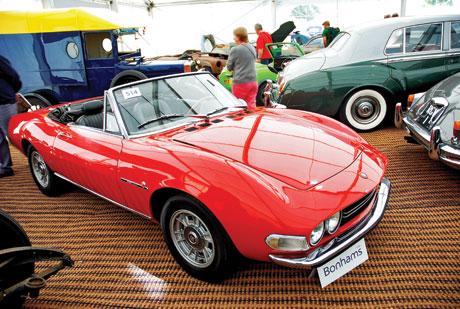
A Fiat or a Ferrari?
The foibles of “production” car racing and homologation rules have given rise to some rather interesting machinery over the years. Nutty Plymouth Superbirds and road-going Ford GT40s are at one end of the spectrum, and Ferrari’s first V6 engine is at the other. Alfredo “Dino” Ferrari envisioned the V6 as an ideal Formula 2 engine…
-
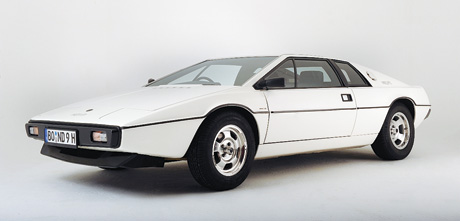
James Bond’s Car of the 1970s
Some companies can lock one label into the consumer’s mind. This is especially true in the auto industry. Volvos are safe, Subarus are sensible, Saabs are odd and Lotuses are lightweights. Lotus mastermind Colin Chapman’s philosophy seemed to consist of omitting, thinning and paring—until the car collapsed on itself—and then put back the last thing…
-
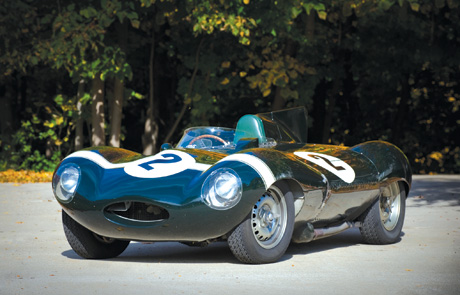
Monterey’s $2.3m Bargain
These cars, which are at home on the road or track, are very affordable in relation to Ferrari racers from the same era Normally my life revolves around cars that “ran when parked.” Volvo 122s with hardly any rust, Fiat 850 Spiders that are mostly complete, and even BMW 2002s that have potential to be…
-
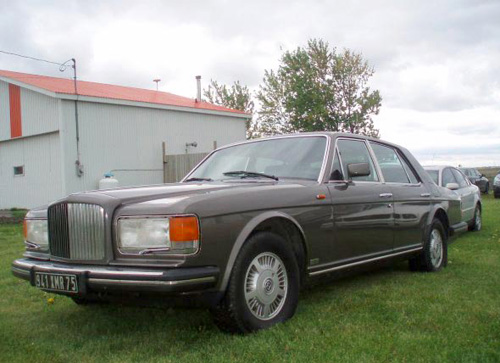
1982-85 Bentley Mulsanne Turbo
After reaching its zenith in the 1920s and 1930s, the Bentley began a long, slow decline in the 1950s. By the 1970s, the once-proud marque was reduced to a badge-engineered Rolls-Royce afterthought. Finally realizing that this was an atrocious squandering of the heritage of a storied brand, managers in Crewe decided that a few pounds…
-
BMW M6: Still Hot After All These Years
{vsig}2010-9_2521{/vsig}For BMW enthusiasts, the E-24 generation 6-series is one of the marque’s most beloved models, introduced in 1976 to replace the outgoing 3.0 CS and CSL. In 1983, BMW unveiled the ultimate specification of the series, the M635CSi. Specially outfitted by the “M” division with the 3.4-liter DOCH six-cylinder engine of the legendary M1, this…
-
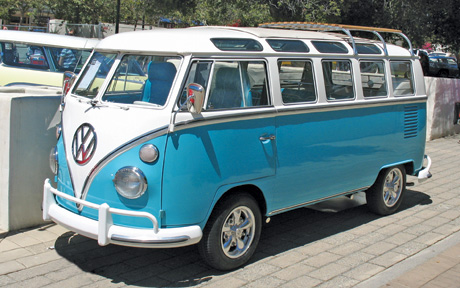
1950-1967 Volkswagen Microbus
During the 1950s, the people charged with the task of selling imported cars were often more in tune with what the market wanted than the manufacturers. Witness the string of successes that U.S.-based BMW and Porsche importer Max Hoffman had with the Porsche Speedster, BMW 2002 and Bavaria. In the case of the VW Microbus,…
-
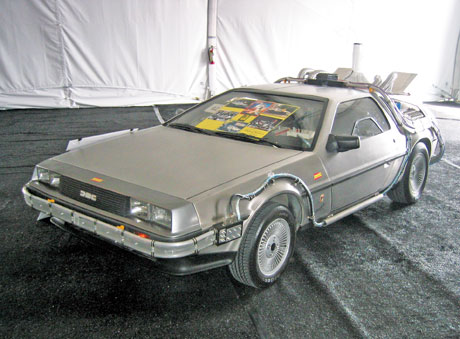
On a Clear Day, You Can See DeLorean
Wealthy Type-A car guys can’t seem to resist starting their own companies (named, of course, after themselves). But for every Porsche, Lamborghini, and Ferrari, there’s a Bricklin, Tucker, and. DeLorean. John Z. DeLorean, at least, seemed to have the automotive chops to make his company a long-term survivor. He was a thoroughly unconventional GM executive,…