
Buy What You Love, Pay What You Should
Ferrari
-

1960 Ferrari 250 GT SWB Berlinetta “Competizione”
In the tradition of Ferrari’s dual-purpose road and racing berlinettas, the new 250 GT SWB was a tractable and well-mannered daily driver about town — and a veritable beast in a race. Competition-specification cars with additionally up-rated engines and lightweight alloy aluminum bodies were immediately made available for racing customers. Competizione-specification examples totaled to 72…
-
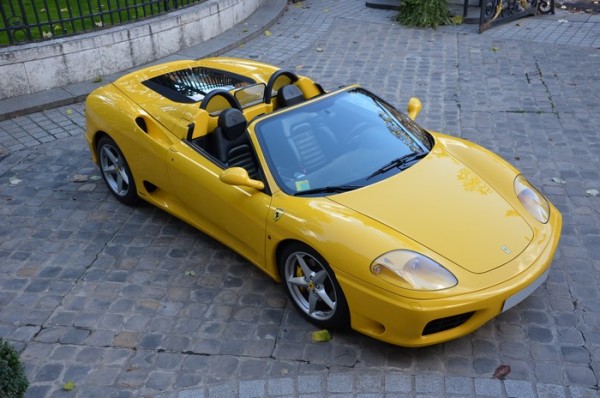
2004 Ferrari 360 Modena Spider F1
Maranello Motors in England delivered this superb cabriolet to its first owner, an emir of Riyadh in Saudi Arabia. It formed part of a large fleet of vehicles and was rarely used. In 2008, a French industrial company specializing in steel production bought the car, which was kept for special occasions as part of an…
-
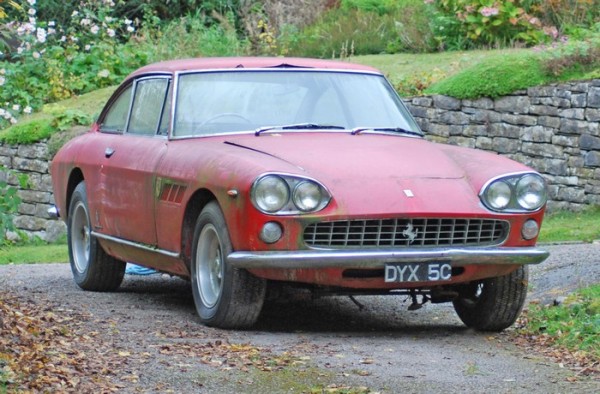
1965 Ferrari 330 GT 2+2 Barn Find
By the end of the 1950s, the market for sports cars with “family accommodation” had grown sufficiently for Ferrari to contemplate the introduction of a four-seater model. Introduced in the summer of 1960, the first such Ferrari — the 250 GTE 2+2 — was based on the highly successful 250 GT. Pininfarina’s brief had been…
-
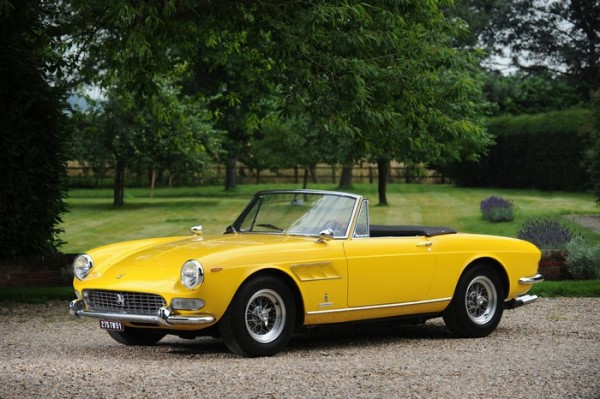
1965 Ferrari 275 GTS Spyder
There had been open-top Ferrari road cars before the advent of the 250 Series, but it was, chiefly, Pininfarina’s offerings on the latter chassis that established the convertible as a fixture of the Ferrari range. After the experimentation and variety that characterized the coachwork of the 250 Series cars, the arrival of the 275 in…
-
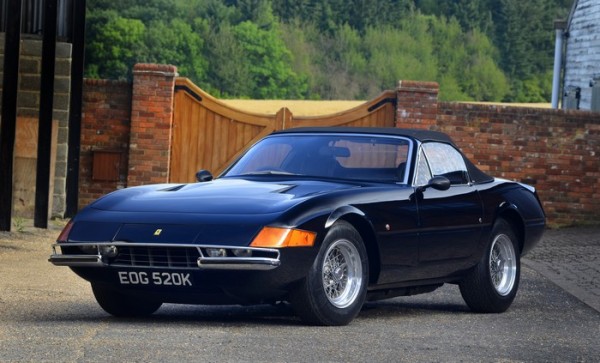
1972 Ferrari 365 GTB/4 Daytona Spyder Conversion
The ultimate expression of Ferrari’s fabulous line of V12 sports cars, the 365 GTB/4 “Daytona” was the world’s fastest production car at the time of its launch. Capable of over 170 mph, it is surely destined to remain a front-ranking supercar for the foreseeable future. Although there had been no official open-top version of its…
-
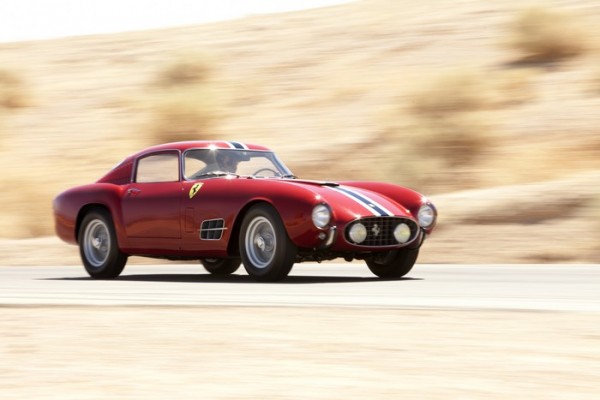
1956 Ferrari 250 GT LWB TdF
The tragic accident at the 1955 24 Hours of Le Mans that claimed 80 lives had a profound effect on racing. The increasingly potent powertrains of the Le Mans sports cars were identified as a contributor to the disaster, and new regulations were drawn to eliminate what were essentially Grand Prix cars packaged with two-seater…
-

1974 Ferrari 365 GT4 BB
In November 1971, Ferrari unveiled at the International Exhibition in Turin a Pininfarina prototype called the Ferrari BB Berlinetta Boxer. The style reflected the design of the Dino 246 GT with fewer curves. The engine was very similar to that of the famous 312B and 312P, with a displacement of 4.4 liters, the same as…
-

1976 Ferrari 308 GTB Vetroresina
The 308 GTB offered here has the lighter fiberglass (Vetroresina) bodywork and dry-sump lubrication of the very first 308 GTBs produced. Introduced at the Paris Salon in 1975, the stunningly beautiful 308 GTB marked a welcome return to Pininfarina styling following the Bertone-designed Dino 308 GT4. Produced initially with dry-sump lubrication and fiberglass bodywork —…
-

1957 Ferrari 625 TRC Spider
To call Ferrari’s TRC for 1957 “one of the prettiest Ferraris built,” as pre-eminent Ferrari historian Richard F. Merritt put it, is surely an understatement. It is a design without fault — a timeless, downright breathtaking execution of Italian motoring passion, married to one of the greatest sports racing chassis of all time. The Ferrari…
-
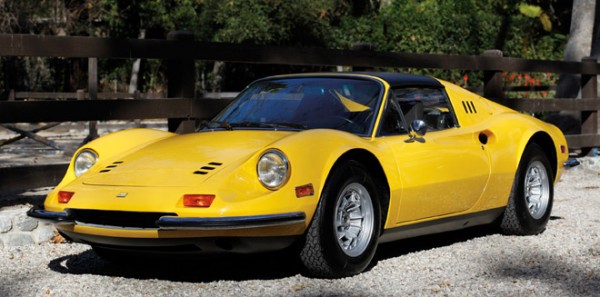
1973 Ferrari 246 GTS Dino Spyder
Enzo Ferrari’s son Alfredo, also known as “Dino,” was a proponent of small-displacement, 6-cylinder technology. After earning his engineering degree, he began development of a V6 racing engine. After Alfredo’s tragic death, Enzo directed the legendary engineer Vittorio Jano to finish Dino’s work to honor his son’s memory. A series of successful engines was developed…