
Buy What You Love, Pay What You Should
German
-
1974 Porsche 914 2.0 Roadster
The 914 changed the rules. For starters, you paid extra for chrome bumpers and vinyl-covered roof sections. Excuse me? Porsche introduced the 914 at the Frankfurt Motor Show in 1969, and it became available in the U.S. in the spring of 1970. Priced at just under $3,500 (for the 4-cylinder car), an extra $200 bought…
-
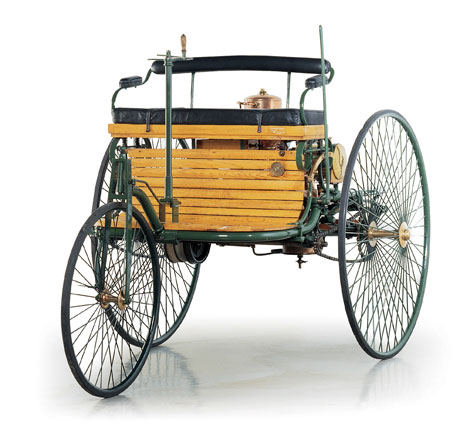
1886 Benz Patent Motorwagen Replica
When Karl Benz applied for a patent on January 29, 1886, for his “vehicle with gas engine operation,” little did he realize that his invention would change the world. Patent DRP 37435 is regarded as the birth certificate of the automobile. The Benz Patent Motor Car, test drives of which were already carried out in…
-
1960 Porsche 356B Super Roadster
When Porsche introduced the improved 356B in 1960, the Speedster was succeeded by the Roadster. This was a change in name, even though both cars, and the interim Convertible D in between, remained at the bottom of the Porsche price schedule. In addition to the new name, the 356B delivered meaningful changes to the chassis,…
-
1961 Mercedes-Benz 300d “Adenauer”
From the onset, the 1951 Mercedes-Benz 300 was aimed at the American market. The car’s outstanding quality was matched only by its breathtaking price-it cost as much as three Cadillacs. But the price ensured exclusivity, and early customers ranged from renowned architect Frank Lloyd Wright to actor Yul Brynner. The 300 was also the choice…
-
1971 Mercedes-Benz 280SE 3.5 Convertible
There comes a time when a desirable old car just jumps in value. That time may be now for the 3.5SE The 111-series of Mercedes-Benz automobiles of the 1960s and early 1970s is much appreciated by collectors who also enjoy driving their cars. There is a solidness to the ride and handling that helped Mercedes…
-
1958 Isetta 600-BMW’s “Eggsecutive” Limo
Germans in the 1950s weren’t concerned with having “the ultimate driving machine,” they were just happy not to be walking or pedaling. With a limited market for cars like the spectacular and expensive 507 roadster, BMW needed a volume model to survive. They understood the needs of the post-war European market and decided the best…
-
1959 Borgward Isabella TS Coupe
The Isabella sought to translate ’50s Detroit flash into a more compact Euro language, but it didn’t work; Americans wanted foreign cars that looked foreign Carl Borgward entered the German auto industry as the charismatic proprietor of the Hansa Company in Bremen, Germany, in 1929, and produced individual and technically advanced vehicles between the wars.…
-
1963 Porsche 904 GTS Prototype
The fiberglass-to-metal body and chassis bonding worked fine for theprojected race life of a 904, then rust began to separate the two elements With the proven 356 Carrera Abarth having served formidably for three seasons, the imminent arrival of the two-liter Simca Abarth meant that Porsche was going to have to raise the stakes for…
-
1957 Mercedes-Benz 300SL Roadster
The Mercedes Benz 300SL roadster was introduced in 1957 as a direct descendant of the famous Gullwing. It’s rare in automotive history that a convertible would bring about the demise of the coupe version on which it was based, however with the 300SL it was a case of succession—the roadster replaced the Gullwing. As the…
-
1972 Porsche 911 Carrera RS Prototype
This unusual 2.7 Carrera RS was created in 1972, based on the 2.4-liter 911S, and with which Porsche assaulted the 3-liter racing classes. Today, the RS is regarded by many as one of the top five sports cars to emerge from the 1970s. Its versatility is hardly surprising; the 911 was designed from the start…