
Buy What You Like, Pay What You Should
German
-
1973 Porsche Carrera RS Touring
This Porsche 2.7-liter Carrera RS, a left-hand “Touring” model delivered in Light Ivory, was supplied new to private owner Bernard Dulcy, who had previously raced Renault Dauphines and Alpines from 1961 to 1966. With his regular co-driver Jean-Francois Bagarry, the French privateers drove their new Porsche in a number of road events, including the 1975…
-
1928 Mercedes-Benz S-type Saoutchik Roadster
The underbidders stopped bidding when they thought the car wasn’t selling-bad luck, as it was {vsig}2008-5_2173{/vsig} The 6.8-liter S-type was produced in four series from 1927 to 1930, with a total output of some 170 cars. This car is from the original 1927-28 series, of which just 26 were built. It was ordered new from…
-
1955 Mercedes-Benz 190SL Convertible
The M121 4-cylinder engine produced a modest 105 hp and it desperately needed another 50-even 30 would have done the trick Available from May 1955, the 190SL convertible shared styling cues with its grander brother, the 300SL. It was a sports tourer, robustly built and designed for customers who preferred refinement over performance. Well-designed and…
-
1959 Mercedes-Benz 220S Convertible
It takes a while for enthusiasts to realize these cars are about craftsmanship and balance, rather than style {vsig}2008-3_2147{/vsig} Mercedes continued its tradition of quality in the mid-1950s with the 220S and 300 model range. The 220S was offered in saloon, coupe, and convertible form. The 220S Convertible (W128) was produced in limited numbers from…
-
1957 BMW 507 Roadster
Removing the issues of performance, reliability and dealer service-significant considerations in 1957-the 507’s charms rise to the surface {vsig}2008-2_2134{/vsig} In the early 1950s, BMW covered opposite ends of the automotive spectrum. On the one hand, R24 motorcycles and Isetta bubble cars provided inexpensive transportation for the average German citizen. On the other hand, the large…
-
1991 BMW Z1
BMW reckoned owners could swap body panels in hours for a color change, though people who have tried it say to allow two days {vsig}2008-1_2120{/vsig} Like its predecessor the 507, which bristled with trick technology but ultimately failed to go as well as it looked, the Z1 is a bit of a novelty. But it…
-
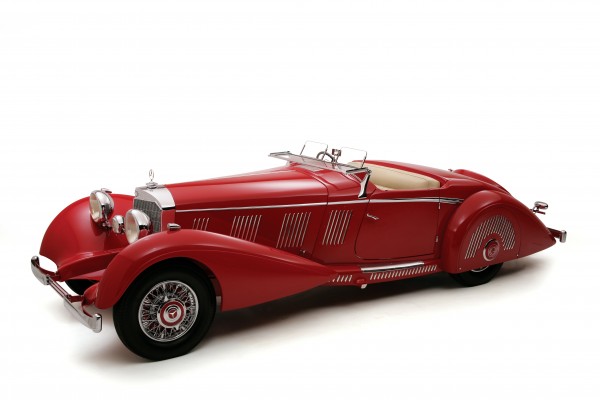
1937 Mercedes-Benz 540K Special Roadster
Upping the ante in the 1930s horsepower race, Mercedes-Benz designers introduced the 8-cylinder 500K (for Kompressor, or supercharger) model in 1934. The supercharger boosted power from 100 hp to 160 hp, and the external exhausts set the style that would carry the company through the rest of the decade. Two years later, the 5.4-liter 540K…
-
1968 Porsche 911S Coupe
Cost-no-object restorations rarely make sense on production cars, even exciting ones in hot markets, like an early 911S {vsig}2007-11_2094{/vsig} Within two years of the original 911’s launch, Porsche introduced a new model that would satisfy even the most demanding drivers. The new S offered the same vault-like body and chassis, well-appointed 2+2 interior, and 2-liter…
-
1965 Porsche 911 Coupe
What’s so special about the original 235 911s? Not much, and most of it is bad. But they are different and that was enough {vsig}2007-10_2080{/vsig} In the late 1950s, Porsche began working on what would be a new model to entirely replace the 356. The styling was based on a set of guidelines prepared by…
-
1965 Porsche 911 Coupe
In the late 1950s, Porsche began working on what would be a new model to entirely replace the 356. The styling was based on a set of guidelines prepared by Ferry Porsche and developed by his son, “Butzi.” The new Porsche was intended to be an evolutionary design and continue in the established Porsche tradition…