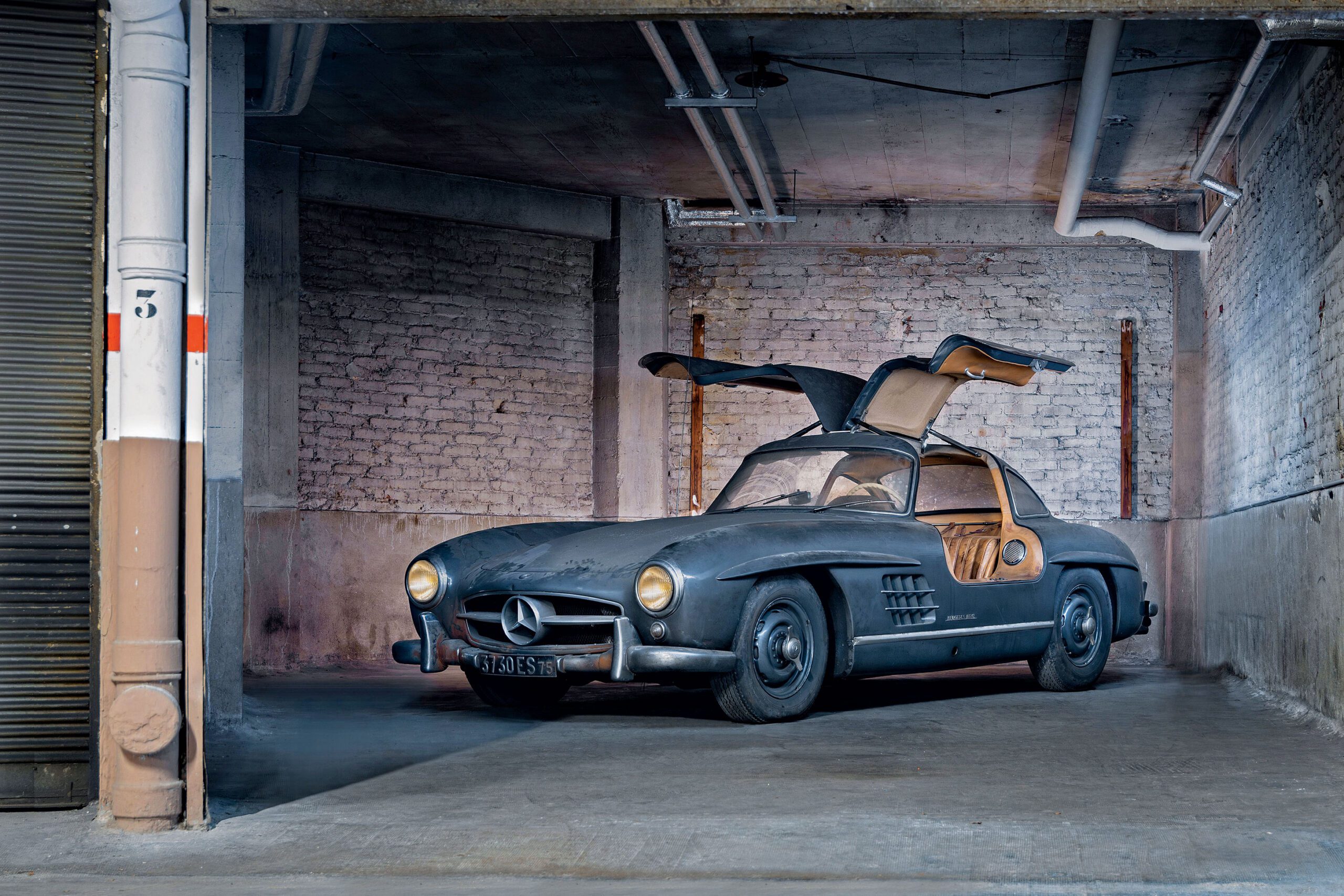
This car, Lot 33, sold for $5,257,110, including buyer’s premium, at Artcurial’s Paris, FRA, sale, on January 27, 2026.
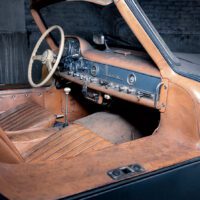
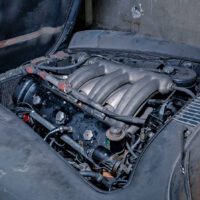
A number of unrestored 300SL Gullwings have been offered in the past few years, but none of them have been as well preserved or well optioned as our subject car. One could make the argument that this 300SL exists in an ideal state. But the price gap between this dusty $5.3m Gullwing and a restored 300SL is significant, the latter often selling for less than half that amount. Indeed, this car sold for a world-record auction price for a non-alloy-body Gullwing.
Restored vs. original
This bizarre gap in the market can be explained with a question: How is our subject car superior to a restored 300SL? Or the inverse: How is a restored car inferior to our subject car? I ask this question not to denigrate restored cars, but to highlight the differences that become obvious when one scrutinizes a restored car and juxtaposes it against an original example.
A well-known restorer of 300SLs in Germany comes to mind. This outfit does a great job with the cosmetics, but heavy scrutiny reveals that all the hardware has been replaced with new generic metric items. This sounds fine, but in all my years of servicing Mercedes classics, 300SLs included, I have never had issues with original hardware. It is higher quality than the modern generic bits they make today and looks much better, too. The better cars retain their original hardware. Going beyond smaller items, one must ask more questions like, why even bother restoring a 300SL? Why can’t they all be preserved?
The question I am posing exemplifies a Mercedes anomaly. The cars were so well-engineered compared to other vehicles that they rarely need a comprehensive restoration. While a car that has been left for dead in a swamp might need every piece of hardware replaced, the average 300SL has usually led a charmed life. Comprehensive restorations are often misrepresented in that they exist to satisfy the cosmetic requirements of wealthy clients. These usually come with some mechanical add-ons to make sure the car runs and drives after all the effort has been expended on the visual details.
Every restored car is, in a way, over-restored. There are unnecessary sins committed against originality in every restoration, whether a 300SL or something more basic, such as a 220S Cabriolet. Our subject car has escaped these indignities.
Gullwing hierarchy
The 300SL will never be an affordable classic, but some are more attainable than others. The absolute zenith of 300SL valuation is an alloy-bodied Gullwing. Next in the pecking order would be a Gullwing with the NSL sport camshaft — assuming the car retains its original engine and was equipped with the special cam as stated on its data card, Mercedes’ build document for each passenger car. Next, any “regular” restored Gullwing could be considered the most-affordable version, but there are many nuances to this bottom tier.
Cars without their original engines can be purchased at a slight discount, but the real bottom of the Gullwing market belongs to Signal Red unrestored or outright neglected specimens. The best example of this could be Jay Leno’s fire-engine-red 300SL that he purchased with the engine removed. Other red 300SL Gullwings have sold for as much as 75% less than our subject car.
This car is unique in that no other unrestored 300SLs with the NSL cam and several exquisite options, such as a 3.42 rear axle and fitted luggage, have been offered for sale in the past decade. If this car had an alloy body, it could have easily sold for three times as much.
A unique opportunity
Comparing the 300SL to its counterparts from other marques, the vast majority of them are aesthetically remarkable. But mechanically, the 300SL bests them all. While the bottom of the 300SL market is not moving very much, the top of the market, where our subject car resides, has room for growth.
While there is no shortage of overpriced regular Gullwings, our unrestored subject car and the handful of alloy-body examples built seem to be highly sought after. Each time an alloy car is offered, the number seems to move further out of reach. Those desiring a unique car who have been priced out of the alloy Gullwing market will drive up prices for unrestored cars with special options.
Our subject car represents a 300SL aficionado’s fantasy. It is an untouched example that has never been subject to the vanity of a cosmetic restoration, but at half the price of an alloy-body car. Despite selling for an unprecedented number, our subject car will continue to appreciate as long as it is carefully preserved and not restored. It occupies its own space in the 300SL market, and is a true anomaly. However, because such a unique 300SL can’t really be driven or enjoyed without serious consideration and extensive effort, it is likely that this car might cross the block again in the next five to seven years. Regardless, it will likely sell for a higher price next time, making it well bought today.