
Profiles
-
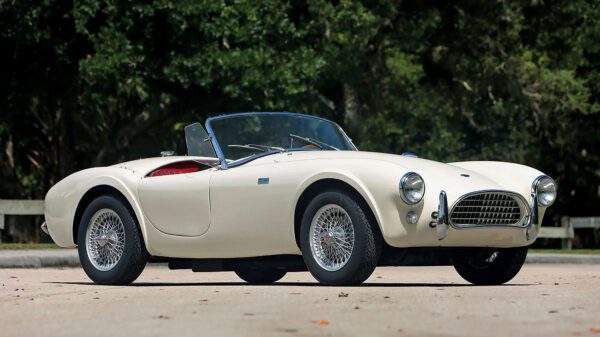
1962 Shelby 260 Cobra
According to the Shelby American Automobile Club Registry, CSX2003 was shipped to New York via boat, finished in Old English White over a red interior. The chassis, drivetrain and assembly kit were subsequently invoiced in the amount of $4,995 to Ed Hugus’s European Cars in Pittsburgh, where it was completed in his workshop as one…
-
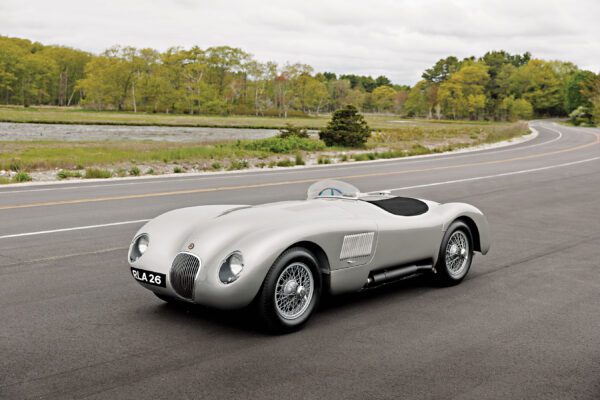
1952 Jaguar C-Type
The C-type presented here, chassis XKC028, is among the finest surviving examples of this legendary Le Mans-winning sports racer. One of the 43 C-types built for customer use, XKC028 was dispatched from Jaguar’s Coventry works on November 24, 1952, handsomely finished in silver and fitted with engine no. E10288, gearbox no. JH13314 and body no.…
-
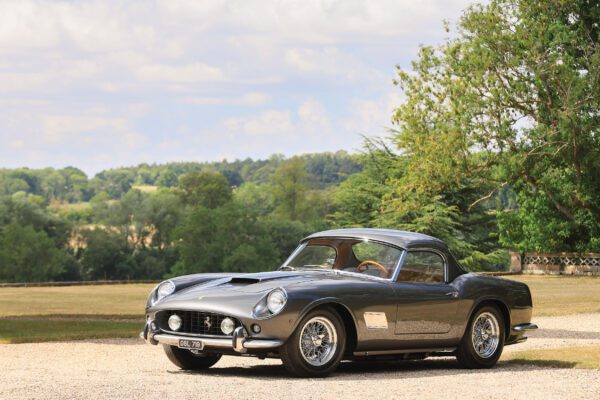
1961 Ferrari 250 GT SWB California Spider Competizione
By 1960, Scuderia Ferrari dominated the highest levels of international motor sports. Its Grand Prix cars had delivered World Drivers’ Championships to Ascari, Fangio and Hawthorn. In sports-car racing, Ferrari was unrivaled, scoring repeat victories at endurance classics including the 24 Hours of Le Mans, 1000 Miglia, Targa Florio, Tour de France Automobile and 12…
-
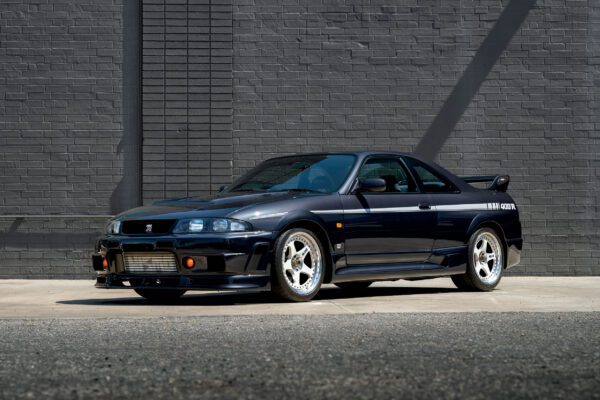
1996 Nissan Skyline GT-R NISMO 400R
The inescapably cool “Godzilla” nickname so closely associated with modern-day Skylines is owed to the sheer dominance of the R32-generation model in Group A competition. For the R33 successor, Nissan opted to take on the grueling 24 Hours of Le Mans. However, the GT-R would find itself comprehensively outgunned in 1995 by the arrival of…
-

2021 Bugatti Chiron Pur Sport
Chassis number: VF9SC3V31MM795008 Only 60 Chiron Pur Sport cars were built, making this example one of the rarest Bugattis of the modern era. Each was bespoke to its original owner, with highly customizable specifications. This Pur Sport presents in white with extensive carbon-fiber accents, a red leather-and-Alcantara interior and matching red Bugatti calipers. Delivered new…
-
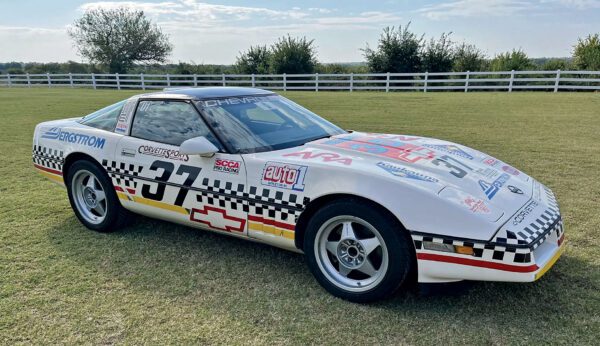
1988 Chevrolet Corvette Challenge
This 1988 Chevrolet Corvette is one of approximately 50 prepared by Protofab for Bergstrom Racing to compete in the SCCA 1988 Corvette Challenge spec series. Each was fitted with race equipment consisting of a full roll cage, an onboard fire-suppression system, racing seats, Bilstein shock absorbers and 17-inch Dymag wheels. This example was reportedly driven…
-
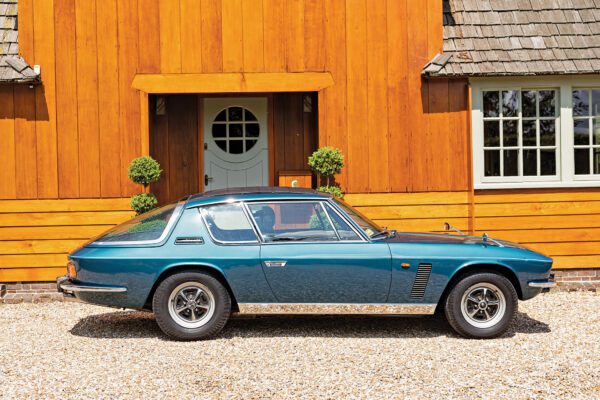
1971 Jensen Interceptor Mk II
Manufactured on August 3, 1971, this Jensen Interceptor was one of just 101 cars painted in Metallic Quartz and trimmed with a black interior, and one of only 478 examples built in right-hand drive for its year of construction. The Jensen left the factory configured with air conditioning, Sundym glass, a Voxson 8-track player with…
-
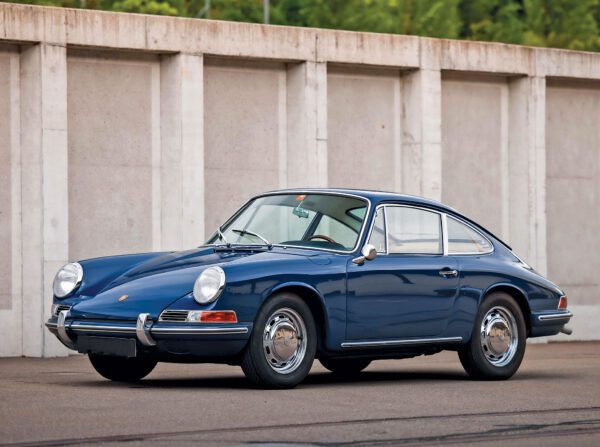
1965 Porsche 912
Although widely acclaimed, the Porsche 911 was necessarily expensive, a shortcoming its maker addressed by offering the 912, which, though outwardly identical, was powered by the outgoing 356’s 1.6-liter 4-cylinder engine. The latter produced 90 horsepower, some 40 hp less than the 911’s six, but this deficit was offset by significantly reduced weight resulting in…
-
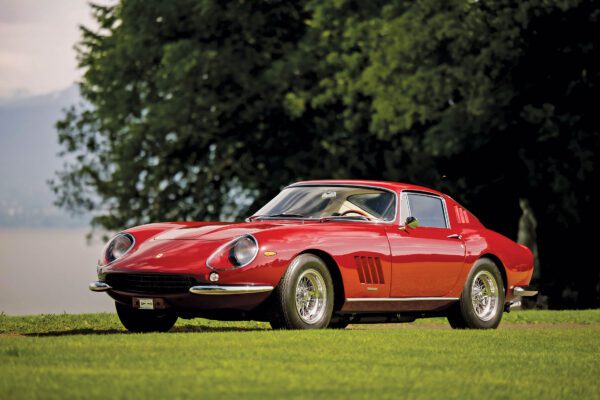
1967 Ferrari 275 GTB/4
Ferrari 275 GTB/4, chassis number 09603, was completed as a berlinetta (fixed-head coupe) in April 1967 and sold new to Motor S.a.s. in Rome, Italy, finished in Amaranto with beige leather interior. Its first owner was the longtime Ferrari customer and gentleman racer Dr. Augusto Caraceni, who competed in the Mille Miglia on two occasions…
-
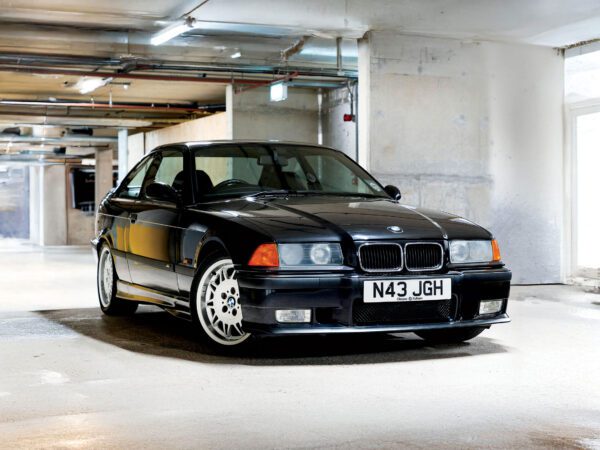
1995 BMW M3
This extraordinary 30-year-old BMW M3 was purchased new in 1995 from Cheyne BMW in London by an Italian professional and is a true collectors’ gem. Shortly after acquiring the car, the owner relocated to Singapore for work. Before departing, he drove the M3 to his hometown of Alassio in Italy, where it was meticulously stored…