
Buy What You Love, Pay What You Should
Massimo Delbò
-
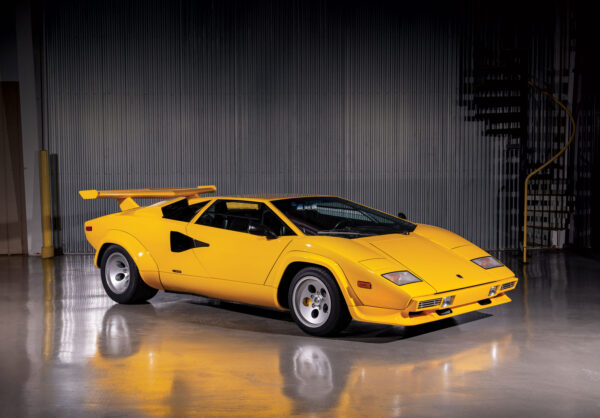
1983 Lamborghini Countach 5000 S
The quintessential dream car of its era, the Lamborghini Countach defined an entire generation of automotive enthusiasm and forever recast what a supercar could and should be. It fully embraced the radical thinking and spirit of revolution that defined its forebearer, the inimitable Miura, but rejected the familiar sculpted and curvaceous styling in favor of…
-
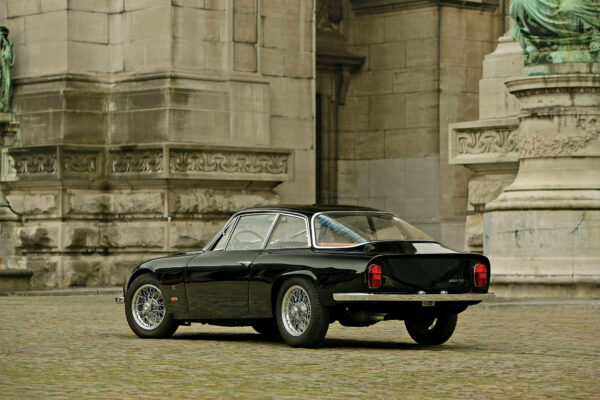
1967 Alfa Romeo 2600 SZ
In the late 1950s, Alfa Romeo topped its range with a luxury sedan, the Berlina 2000, available in coupe and convertible versions. In 1962, to elevate the performance to match the desired prestige, these cars received a 2600 inline 6-cylinder engine, the last one produced by the brand. In addition to the factory body styles,…
-
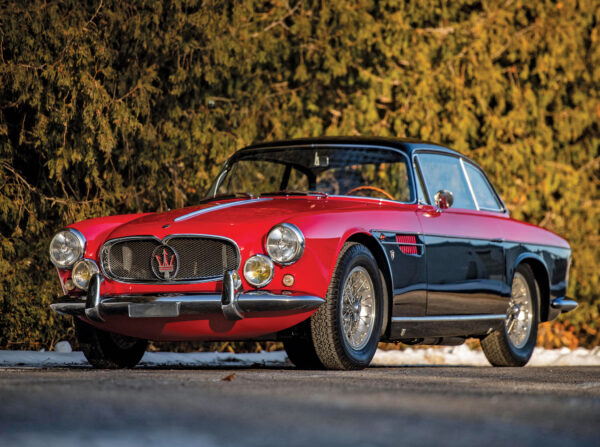
1956 Maserati A6G/2000
The A6GCS sports cars and A6GCM monopostos were consistently successful, and competitive buyers took notice until in 1954 Maserati responded with the A6G/54 (later named A6G/2000) Gran Turismo, a barely disguised competition car with wider and more-comfortable bodywork from a variety of coachbuilders. One of the competitive-minded individuals attracted to Maserati was an American living…
-
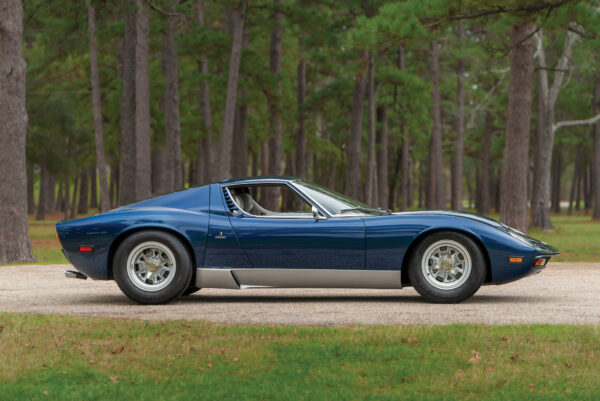
1971 Lamborghini Miura P400 SV
The Spanish bull referred to as the Miura may have first entered the pop-culture lexicon with the publication of Ernest Hemingway’s enduring 1926 classic The Sun Also Rises. Hemingway’s disaffected expatriates travel to Spain to watch the bullfights, and there they are impressed by the brutal capabilities of the Miura, a creature that is muscular, powerful,…
-
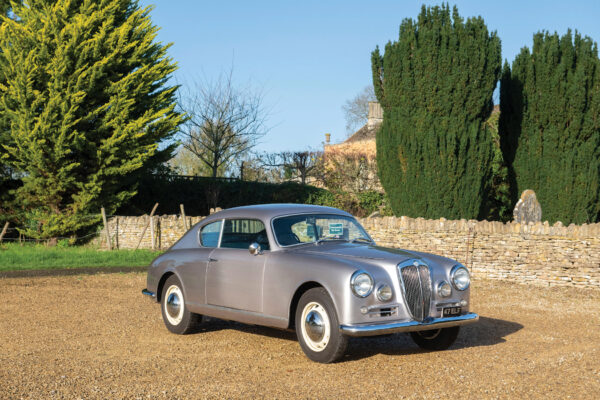
1954 Lancia Aurelia B20 GT Series IV
This B20 GT is one of the first right-hand-drive Series IV cars built. According to the official build records, it was released on June 25, 1954, finished in Grigio and fitted with engine number 3576, which it retains to this day. This car has been comprehensively restored by marque specialists Omicron Engineering Ltd. and is…
-
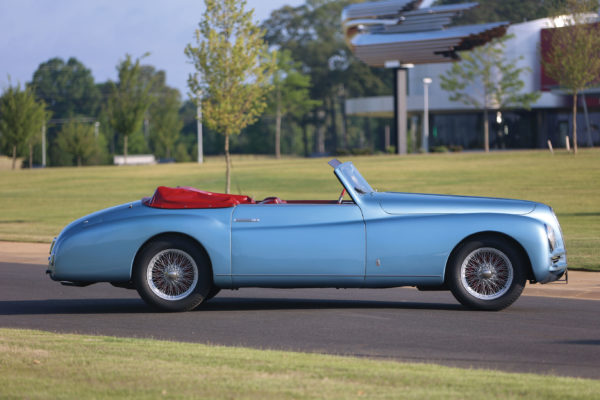
1947 Alfa Romeo 6C 2500 S Cabriolet Pinin Farina
The 6C 2500 Sport offered here is one of the most classic and desirable examples of coachwork on the standard-wheelbase chassis, the svelte cabriolet by Pinin Farina. Like the chassis itself, an elegant evolution of pre-war design, the body is steel with aluminum doors, hood and rear deck, and features smooth lines with covered headlamps…
-

1968 Fiat Dino Spider
As the importer’s plate confirms, this Fiat Dino Spider was sold new in France and registered on April 23, 1968. It was then registered in 1981 in the Saône et Loire and its engine rebuilt by Pozzi. Its service history has been kept since this time. Displayed at the Musée de Sanary-sur-Mer, it was subsequently…
-
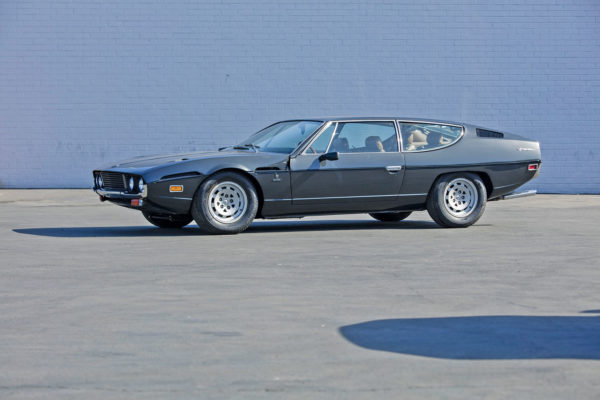
1973 Lamborghini Espada Series III
Named after a matador’s sword, the Espada was styled along lines similar to those of the stillborn, rear-engined, 6-cylinder Marzal, but carried its 4.0-liter, 4-cam V12 up front. It produced 325 hp, an output sufficient to propel the distinctive, Bertone-styled coupe to 150 mph. Islero running gear was employed, but wedded to a platform-type, semi-monocoque…
-

1963 Maserati Sebring
Built on the short-wheelbase but otherwise similar chassis of the Vignale-bodied 3500 GT Spyder, the Sebring 2+2 coupé arrived in 1962, named in honor of the Bolognese manufacturer’s 1957 victory at the eponymous American endurance race. By now a 5-speed gearbox, four-wheel disc brakes and fuel injection were standard equipment, while automatic transmission, air conditioning…