
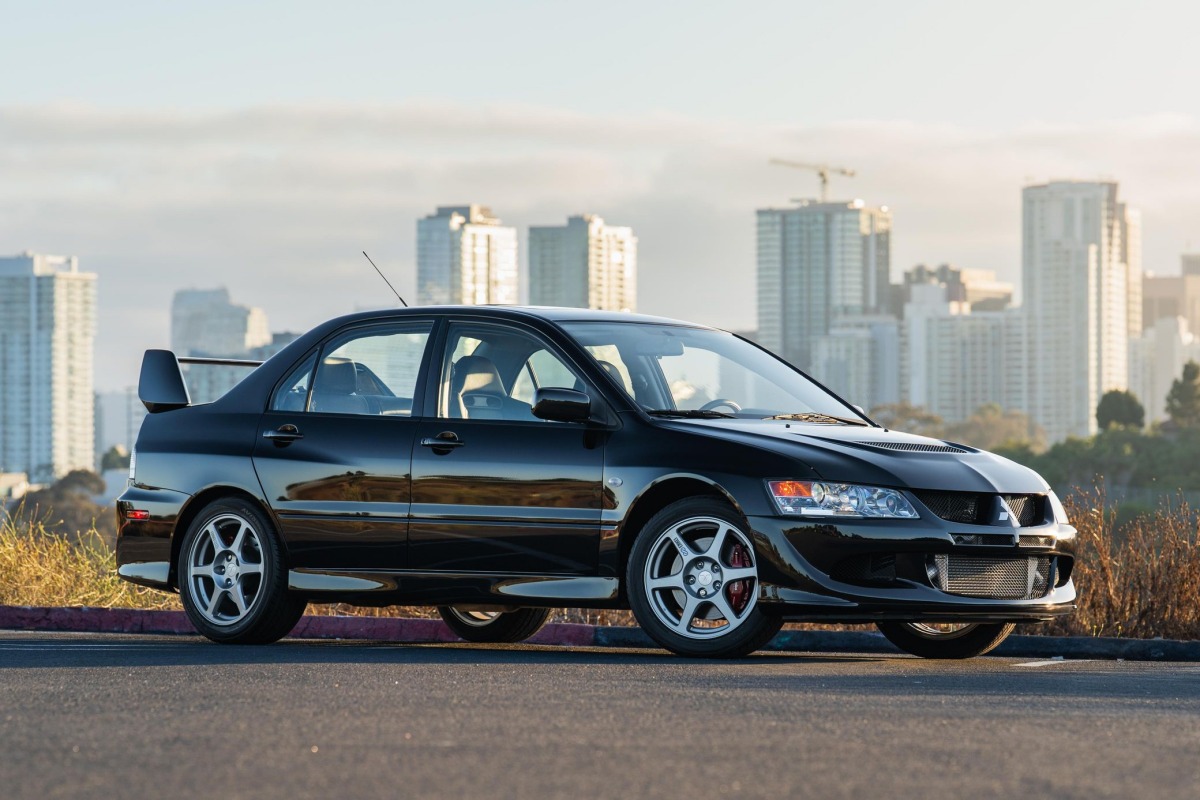

Photo courtesy Cars & Bids BUY: 2003–15 Mitsubishi Lancer Evolution Mitsubishi’s racing aspirations were part of its DNA from inception. Seduced by the World Rally Championship (WRC) series, it sent the Galant VR-4 sedan into competition. The midsizer could be mistaken for a grocery-getter but for its phenomenal performance in every metric. A modicum of creature comforts let buyers pretend it was a family car. Maintaining the same approach, Mitsubishi fitted its compact economy model, the Lancer sedan, with its DOHC turbocharged 4G63T engine, an all-wheel-drive system, a 5-speed manual and a limited-slip differential. This was the 1992 Lancer Evolution I, […]
Photo courtesy Cars & Bids
BUY: 2003–15 Mitsubishi Lancer Evolution
Mitsubishi’s racing aspirations were part of its DNA from inception. Seduced by the World Rally Championship (WRC) series, it sent the Galant VR-4 sedan into competition. The midsizer could be mistaken for a grocery-getter but for its phenomenal performance in every metric. A modicum of creature comforts let buyers pretend it was a family car.
Maintaining the same approach, Mitsubishi fitted its compact economy model, the Lancer sedan, with its DOHC turbocharged 4G63T engine, an all-wheel-drive system, a 5-speed manual and a limited-slip differential. This was the 1992 Lancer Evolution I, sold only in Japan. Development was rapid, aimed at decreasing weight, increasing horsepower and improving grip. WRC wins followed, as Tommi Mäkinen drove his Evo to four consecutive drivers’ championships from 1996 to ’99. Mitsubishi won the constructors’ championship in 1998.
The first Evo to hit our shores was the VIII, arriving in 2003. Output registered 271 hp, though power delivery was beset by turbo lag. The IX, launched in 2005, employed variable timing, a new twin-scroll turbo and an anti-lag system, curing drivability issues. The 2008 Evo X was another animal altogether — heavier and slower but more refined. Only about 43k Evos were sold here, including at least a dozen sub-models. While earlier JDM examples are importable, keep in mind they will be right-hand-drive models.
Growing appreciation for niche rally cars has sent Evo prices skyward. Think of these as the Lancia Delta Integrales of the Millennial generation. Special and lightweight variants such as the MR and the RS can garner six figures. Low-mileage, unmodified examples from almost any generation will draw four and five times the prices of high-mileage, modified cars, with a 960-mile, bone-stock 2004 Evo VIII recently selling for $147k on Cars & Bids. The IX is preferred by both drivers and collectors for its sensible balance between technology and usability, with values for a driver hovering around $35k to $55k, while the X is — thus far — the least-desirable model and often available in the mid-$20k area. But as the tiny population of top-notch Evos are garaged into collections, even less-pampered cars will continue to rise in value.
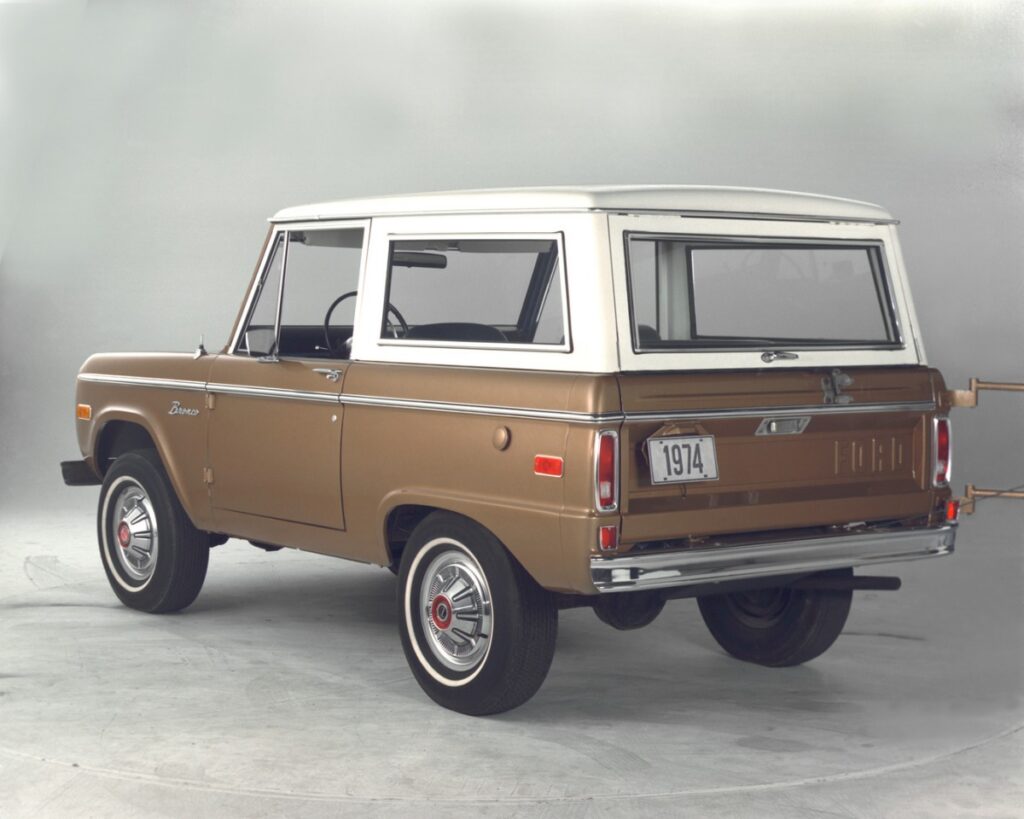
Photo courtesy Ford Heritage Vault
SELL: 1966–77 Ford Bronco
Does it feel like every early Bronco ever made is for sale these days? The impressive increase in prices that began in 2015, coupled with the ease of replacing sheet metal and mechanical parts, has drawn Broncos off fields and out of barns, garages and storage units. A quick check of a typical sales venue turned up over 400 offerings at the time of writing.
Ford made more than 225,000 first-generation Broncos from 1966 through 1977, but finding an unrestored, factory-original example today is almost impossible. Not long ago, a prospective Bronco owner’s primary worry was if the fenders had been cut. Today, many have fallen into the hands of talented resto-mod shops. These barely resemble the bare-bones SUV that emerged in 1966 to compete with the Jeep CJ-5 and International Scout.
Situated on a bespoke chassis, the Bronco attempted to bring a measure of cabin comfort and a more-forgiving spring-coil suspension to the off-road experience. But belying the Bronco’s popularity today, it never sold more than about 25,000 units per year through 1977 — fewer than the Scout in nearly every year. Still, its short-coupled, cheerful styling hit just the right chord with collectors over the past decade. Today, projects requiring everything from rust repair to mechanical work will cost close to $20k, while unmodified drivers are topping $50k. At the right auction at the right moment for the right Bronco, prices will hit the low six figures, especially for well-done resto-mods. If you own a nice example that you no longer use, consider selling before the market becomes even more saturated than it already is.
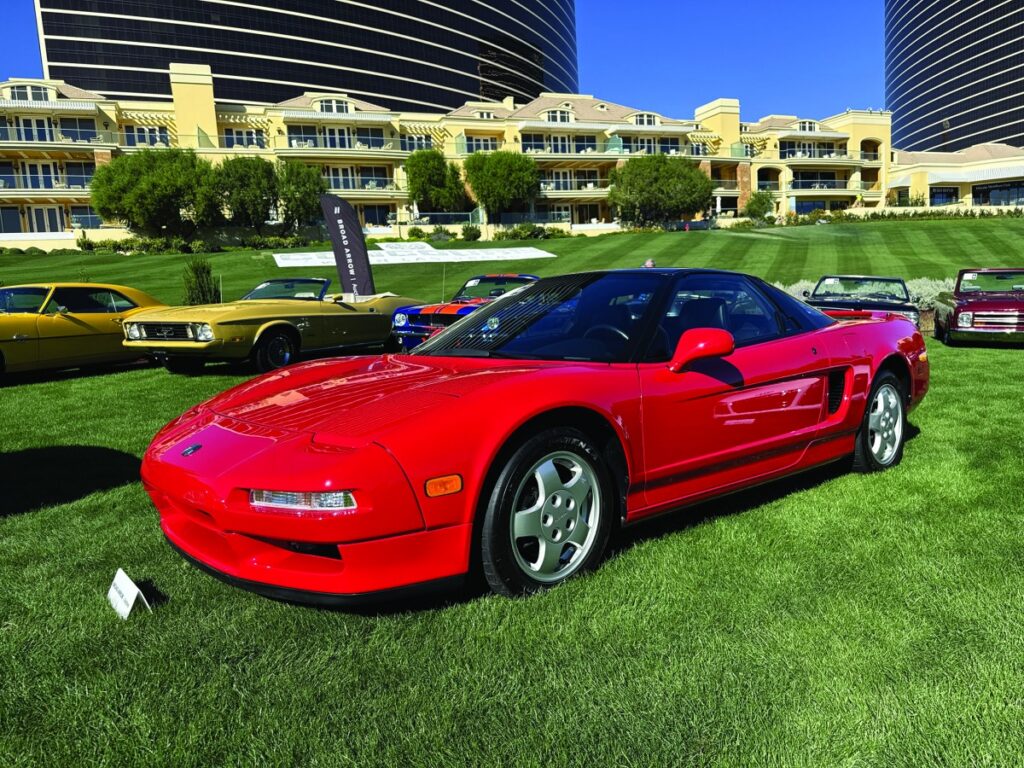
HOLD: 1990–2006 Acura NSX
Honda’s first-generation NSX arrived in 1990 like some sort of automotive alien in an America grown accustomed to temperamental sports cars. It was competent, comfortable and devoid of styling gimmicks — the “anti-Ferrari.” Made of aluminum from stem to stern — body panels, chassis and engine — it tipped the scales at only 3,000 pounds. Its 3-liter mid-mounted VTEC V6 coupled with a 5-speed manual gearbox produced a 0–60-mph time that matched Ferrari’s 348. What didn’t match was the sticker price: The NSX cost at least 50% less than its Italian competitor. Automotive journalists swooned, but the public, not so much. Performance hounds wanted more cylinders. Badge snobs sniffed at its Japanese origins.
A refresh in 1997 brought a cosmetic makeover, plus an upgraded 3.2-liter engine mated to a close-ratio 6-speed manual — a big improvement over the long-legged early ’box. Several special variants were made, most notably the Alex Zanardi edition for North America and the NSX-R and NSX Type S in Japan, but overall, sales barely broke 200 units per year. Honda’s first attempt at a supercar ended with a whimper in 2005.
NSX values vary widely around model years and variants. Considerable price appreciation has already accrued for most models, with the NSX-R at the top of the heap, the best examples of which now bring $1 million. Average early standard cars hover in the $75k–$95k area, with pristine later base models reaching into six figures. Today’s collectors view the first of the breed not as a competitor to the Ferraris, Corvettes and Porsches of the day, but as one step on the path to Honda’s ascendency to motorsports fame. The NSX served as a rolling testbed to elevate Honda’s technological prowess, and its best days on the price curve are likely still ahead.