Photo: Tom Gidden ©2026, courtesy of RM Sotheby’s
If you ever found a standard DB5 too impractical, this was your car
Aston Martin Chairman Sir David Brown held a clear vision for every model bearing the “DB” designation: effortless performance, composed handling and the ability to carry four passengers in comfort over long distances, with adequate space for their luggage or sporting equipment. While the DB5 saloon came to define this ideal, Brown himself recognized a shortcoming. An avid sportsman, he found it impractical for his polo gear, while his hunting dog was less-than-compatible with the Connolly leather interior. As company lore recounts, Brown famously placed the dog on a boardroom table and instructed his engineers to “build me something for him to sit in.”
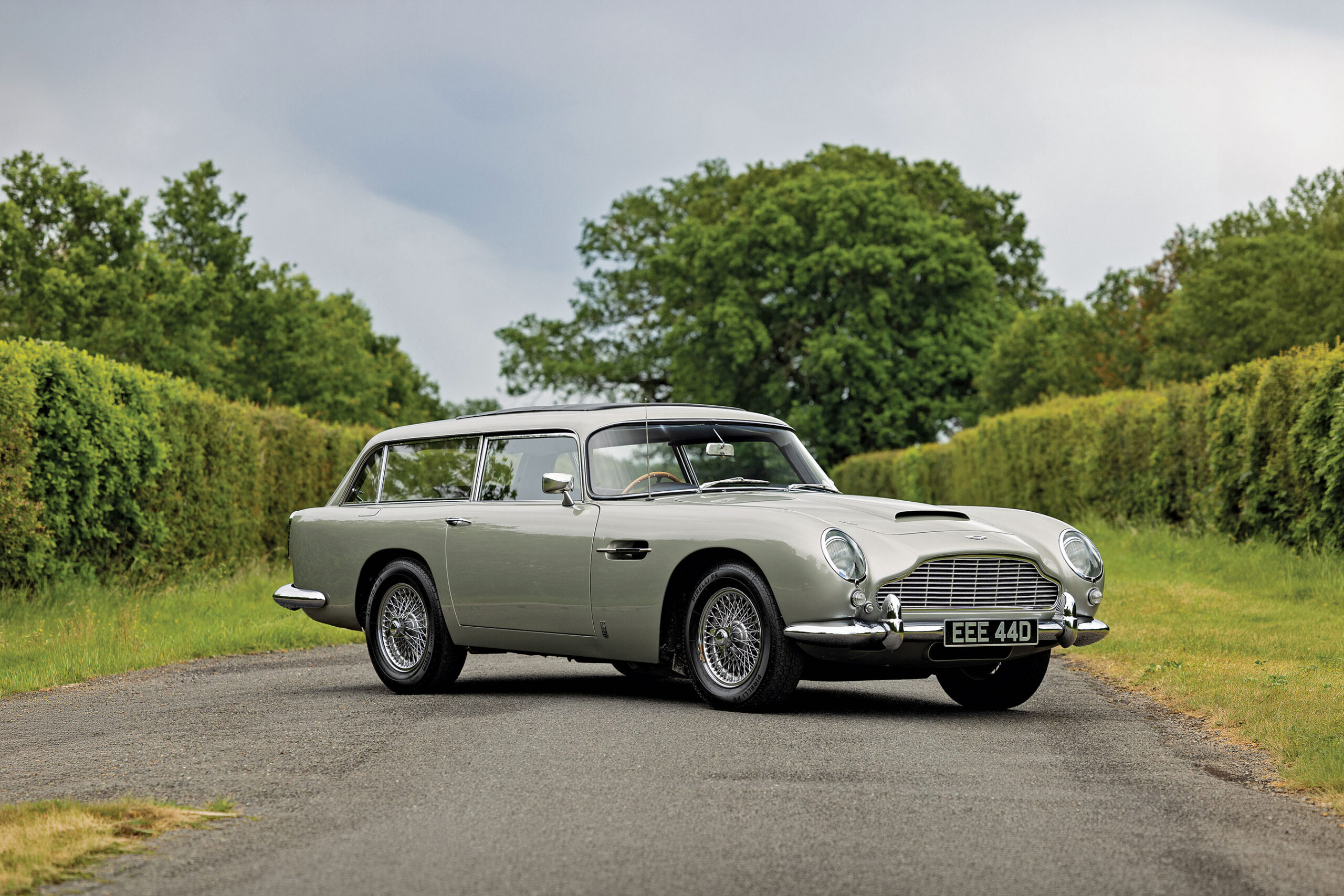
The solution proved as distinctive as it was practical. Retaining the DB5’s proven chassis, Aston Martin developed a shooting brake that introduced genuine versatility without compromising the model’s elegance or performance. Arriving amid the wave of fresh orders generated by the success of “Goldfinger,” the DB5 shooting brake was entrusted to coachbuilder Harold Radford.
The conversion required rebuilding the car from the windscreen back, with the original Superleggera tubular roof structure removed and extended using custom steel fabrications, culminating in the addition of a single-piece rear hatch. Inside, the shooting brake was modified with folding rear seats, offering a full payload space of more than 40 cubic feet. Despite being four inches longer than the standard saloon, the shooting brake could still achieve a top speed of 150 mph and decelerate from 100 mph to a standstill in just six seconds.
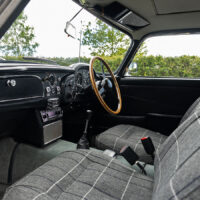
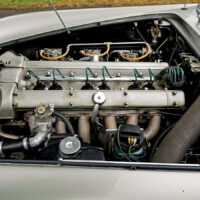
Offered here is chassis number DB52014R, one of only 12 DB5 shooting brakes built by Radford and among just eight right-hand-drive cars produced for the home market. Presented for sale after almost 20 years of continuous family ownership, it is finished in silver over a cabin of gray Machir wool-tweed and black leather upholstery complemented by a black Webasto folding panoramic roof. Notably, the car retains its matching-numbers engine, which bears a “V” suffix. While the car was not known as a Vantage-engined example from new, this stamping could indicate that at some point it was upgraded to Vantage specification.
It has been carefully maintained throughout its current ownership, with invoices documenting over £105,000 in servicing and upkeep by respected British marque specialists, including more than £92,000 of work by the renowned RS Williams in Cobham. In addition to numerous engine, clutch, braking and suspension services, the car notably benefits from a full paint rectification and restoration in 2021 by Ball Hill Garage in Newbury, as well as a thorough electrical service and road test in January 2025 by RS Williams.
As the rarest variant of the DB5 and among the most exclusive Aston Martins of any type, the DB5 shooting brake remains as compelling today as when it left Radford’s workshop more than 60 years ago. Both elegant and practical, it is the epitome of Sir David’s distinctly British sense of escape — open roads, country pursuits and the satisfaction of a motorcar built not merely to be admired, but to be lived with.
(Introductory description courtesy of RM Sotheby’s.)